Introduction
The digital product market is exploding in 2026, creating massive opportunities for entrepreneurs, creators, and side hustlers.
That’s why we’ve put together a collection of digital product ideas built to show you what’s working, where demand is growing, and how to create something scalable that fits your skills and goals.
The real challenge is focus. With so many directions to explore, it’s easy to get stuck in research mode, distracted by trends, or worse commit to an idea that never gains traction.
This guide is here to simplify that process. Inside, you’ll find the most relevant digital product ideas for 2026 organized by niche, backed by market demand, and designed to help you take action with confidence.
Whether you’re launching your first offer or expanding an existing business, this is where clarity begins.
Key Takeaways
- Digital product ideas that solve real problems in proven niches continue to outperform trends
- Online education, AI automation, wellness, finance, and marketing tools dominate the digital marketplace
- Simpler products like templates, planners, and kits still deliver scalable results when positioned right
- Validating your digital product idea before building is what separates profitable launches from wasted effort
- Your monetization model; one-time, subscription, or bundled will determine how fast and far you can scale
Disclaimer: I am an independent Affiliate. The opinions expressed here are my own and are not official statements. If you follow a link and make a purchase, I may earn a commission.
Best Digital Product Ideas by Niche (2026)
Before you commit to an idea, you need to know where the real demand is.
Each niche below has one thing in common: people are actively buying solutions in it. But not all niches require the same level of effort or offer the same long-term upside. That’s why we broke it down by ease of entry, monetization model, and sustainability.
This isn’t theory. It’s your fast lane to finding a niche that matches your skills, timeline, and goals.
🔥 Niche Ideas at a Glance
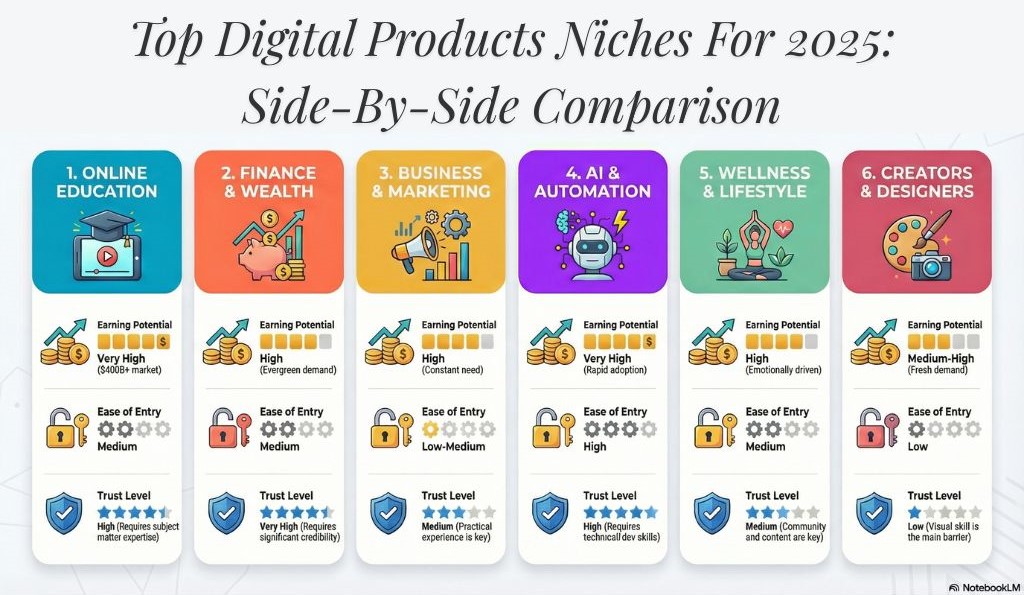
| Niche | Ease of Entry | Monetization Style | Long-Term Potential |
|---|---|---|---|
| Online Education | Medium (needs course creation) | One-time sales, subscriptions | Very High – $400B+ market |
| Finance & Wealth | Medium (requires trust/credibility) | High-ticket sales, memberships | High – evergreen demand |
| Business & Marketing | Low–Medium (templates & kits are fast to build) | Subscriptions, bundles | High – constant need for content |
| AI & Automation | High (technical or SaaS dev needed) | SaaS, usage-based models | Very High – rapid adoption |
| Wellness & Lifestyle | Medium (content + community) | Subscriptions, group programs | High – emotional + sticky |
| Creators & Designers | Low (template-based or visual assets) | Instant downloads, marketplaces | Medium–High – always fresh demand |
You don’t need to chase every opportunity just the right one for you.
Start by picking a niche that fits your current strengths. If you’re technical, AI tools might be your playground. If you’re a designer or coach, templates or wellness products could scale fast.
The point? Don’t overthink your first move. Pick a space with proven demand, then build your offer for the people already looking.
Profitable Digital Product Niches for 2026
Choosing the right digital product niche can determine how fast you scale and how much you earn. While digital products offer unlimited scalability, not all niches are equally profitable.
The best-performing categories solve pressing consumer problems, provide on-demand value, and require low upfront investment.
For 2026, the most lucrative niches focus on automation, education, finance, wellness, and digital tools. Below are high-demand digital product niches that present strong earning potential and long-term sustainability.

1. Online Education & E-Learning Resources
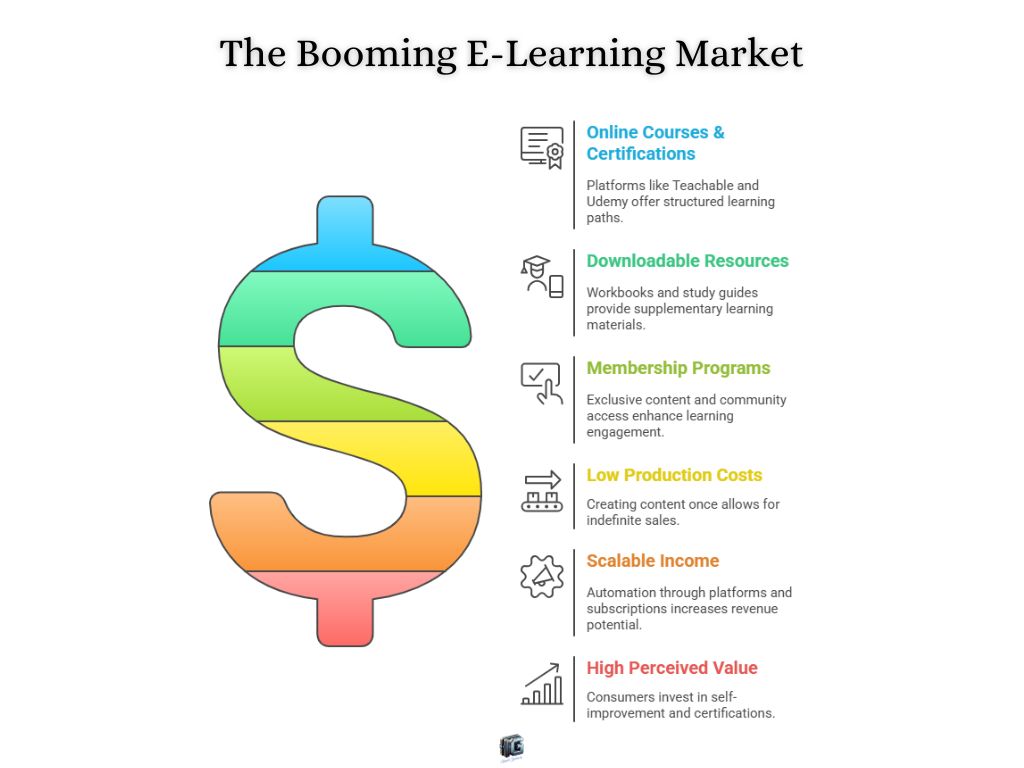
With the e-learning market projected to exceed $400 billion by 2026, digital courses and educational tools have become one of the fastest-growing digital product categories. Consumers are actively seeking knowledge in business, personal finance, and creative skills, creating a massive market for on-demand education.
Why This Niche is Profitable
- Low production costs: Create a course once and sell it indefinitely.
- Scalable income: Automate sales through learning platforms and subscriptions.
- High perceived value: People are willing to invest in self-improvement and certifications.
Top-Selling Digital Products in This Niche
- Online Courses: Example: “Smartphone Photography Masterclass for Real Estate Agents” (Targeting a specific profession).
- Downloadable Workbooks: Example: “The 30-Day ‘Confidence Bootcamp’ Workbook for Introverts.”
- Niche Certification: Example: “Certified ‘Notion Workspace Expert’ Training Program.”
💡 Pro Tip: Focus on a specialized skill or niche industry training to stand out in a crowded market.
2. Personal Finance & Wealth Growth Resources
Consumers are actively searching for tools to help them save, invest, and grow wealth. With inflation and economic uncertainty on the rise, digital finance solutions have become a must-have resource.
Why This Niche is Profitable
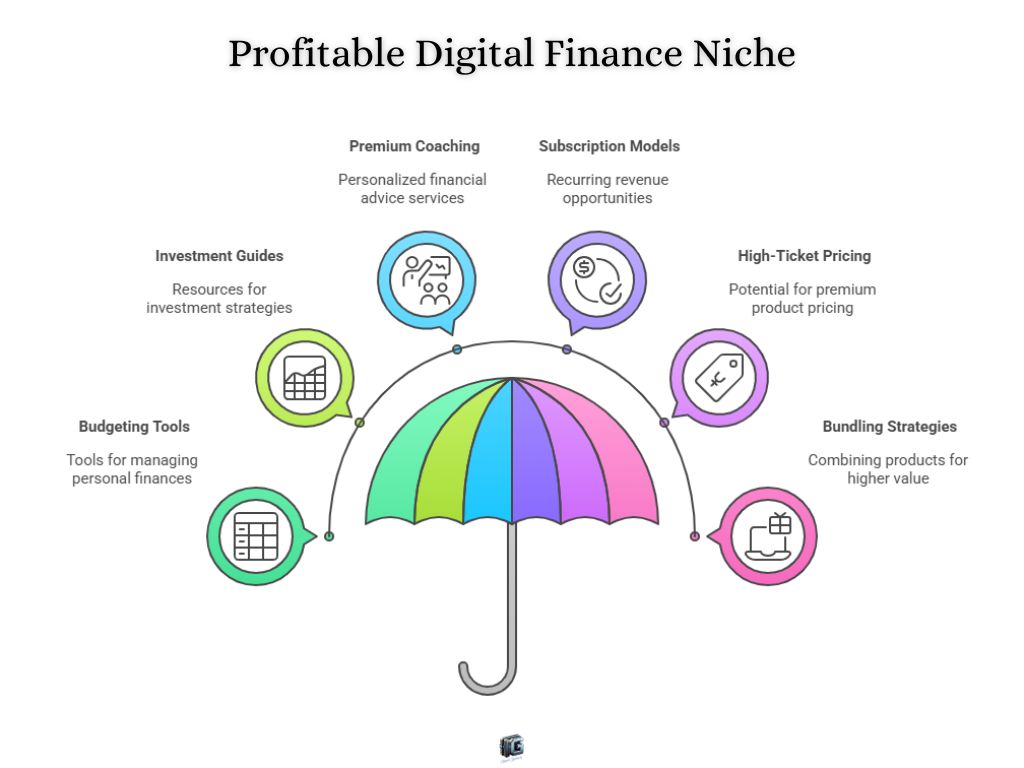
- People are willing to pay for financial security: they see it as an investment.
- Subscription potential: Budget planners and investment memberships offer recurring revenue.
- High-ticket pricing opportunities: Finance-related products often command premium prices.
Top-Selling Digital Products in This Niche
- Automated Spreadsheets: Example: “The ‘Debt Snowball’ Calculator for Recent College Grads (Google Sheets).”
- Investment Strategy Guides: Example: “The ‘Dividend Daddy’ Tracker: A Passive Income Dashboard for Beginners.”
- Private Memberships: Example: “The ‘Frugal Living’ Inner Circle: Weekly Meal Plans & Coupon Hacks.”
💡 Pro Tip: Create bundles (e.g., “Financial Freedom Toolkit”) for higher perceived value.
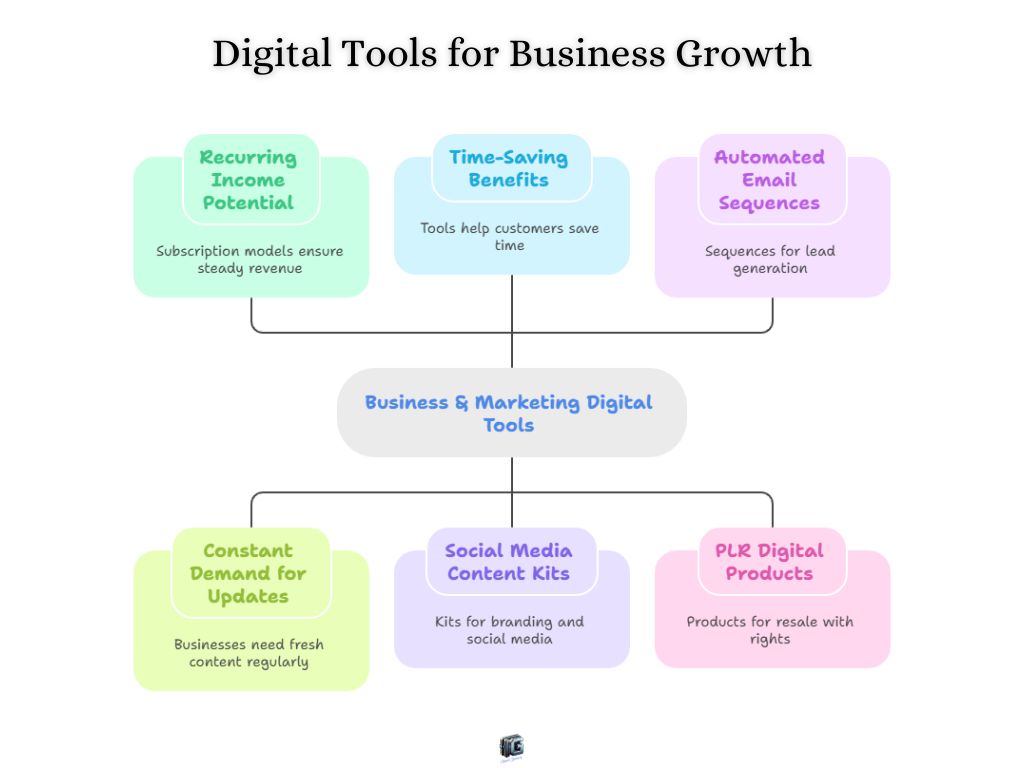
3. Business & Marketing Digital Tools
Entrepreneurs, small business owners, and content creators are constantly looking for digital resources to streamline marketing, automate processes, and grow their brands. This makes business-focused digital products highly profitable and scalable.
Why This Niche is Profitable
- Recurring income potential. Sell templates and toolkits on a subscription model.
- Businesses constantly need updated content, creating demand for new products.
- Digital templates & marketing tools save customers hours of work.
Top-Selling Digital Products in This Niche
- Social Media Kits: Example: “365-Day ‘Faceless’ Instagram Reels Content Bank (Canva).”
- Email Sequences: Example: “The ‘Abandoned Cart’ Recovery Sequence for Shopify Store Owners.”
- PLR Content: Example: “Done-For-You ‘Mindset Coaching’ Blog Posts (Buy & Rebrand).”
💡 Pro Tip: Niche down by industry (e.g., “Marketing Templates for Fitness Coaches”) for higher conversions.
To learn more about PLR Digital Products check out our full guide here.
4. AI-Powered Automation Tools
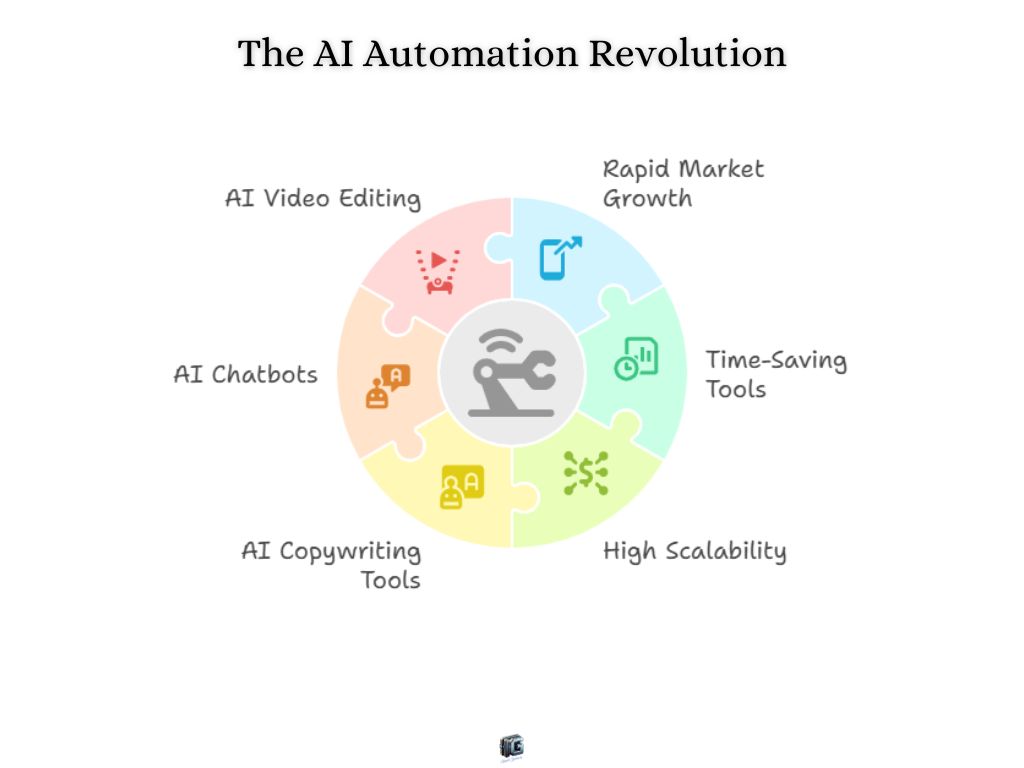
AI is revolutionizing how businesses and individuals work, creating a surge in demand for AI-powered digital products that improve efficiency and productivity.
Why This Niche is Profitable
- Rapid market growth: AI adoption is skyrocketing.
- Time-saving tools = high-value products: People pay for automation.
- High scalability: AI tools can be monetized through one-time sales or subscriptions.
Top-Selling Digital Products in This Niche
- AI Prompts: Example: “500+ Midjourney Prompts for Fantasy Book Cover Designers.”
- Automated Systems: Example: “A Custom GPT for ‘Grant Writing Assistance’ for Non-Profits.”
- AI Workflows: Example: “Zapier Automation Script: Auto-Post Instagram Photos to Pinterest.”
💡 Pro Tip: Sell AI-integrated tools that work with existing platforms (e.g., “AI-Powered Ad Copy Generator for Facebook”).
5. Health, Fitness, & Wellness Digital Products
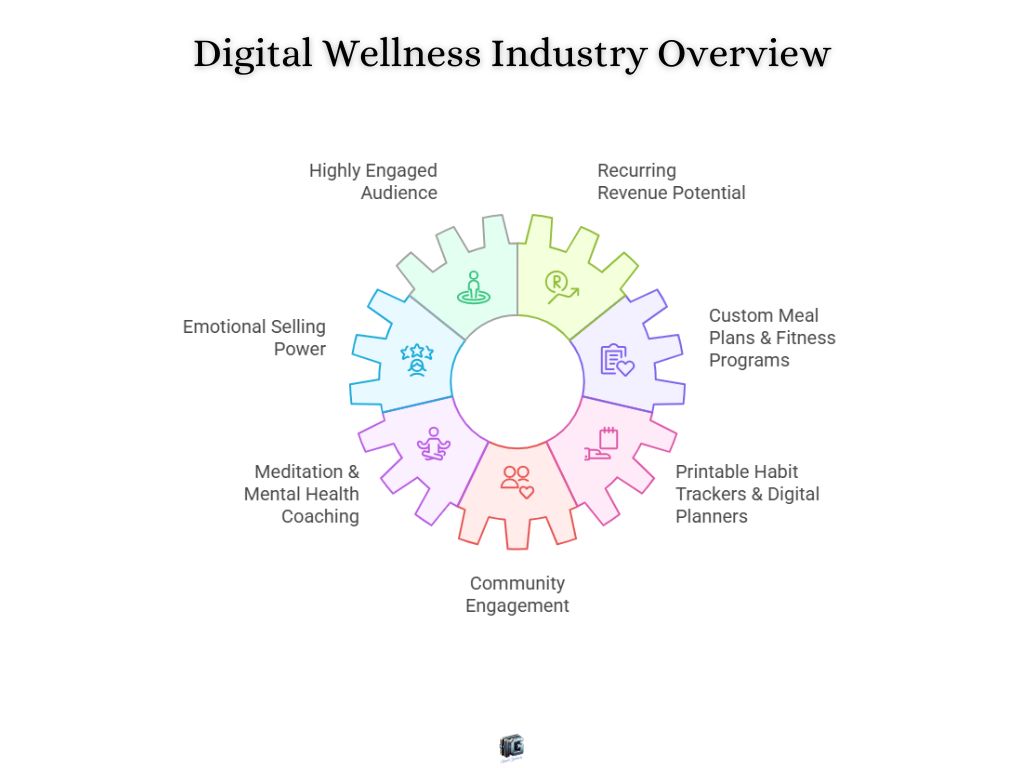
The global wellness industry is valued at over $1 trillion, and more people are turning to digital fitness, mental health, and wellness solutions.
Why This Niche is Profitable
- Highly engaged audience: People actively look for solutions to improve their health.
- Recurring revenue potential: Subscription-based fitness or nutrition programs generate steady income.
- Emotional selling power: Wellness products directly impact quality of life.
Top-Selling Digital Products in This Niche
- Custom Programs: Example: “The ‘Postpartum Core Recovery’ 6-Week Plan.”
- Mental Health Audio: Example: “5-Minute ‘Anxiety Relief’ Guided Meditations for Corporate Executives.”
- Printable Trackers: Example: “The ’75-Hard’ Challenge Visual Habit Tracker.”
💡 Pro Tip: Add community engagement private Facebook groups or coaching calls to increase perceived value.
6. Creative & Design Digital Assets
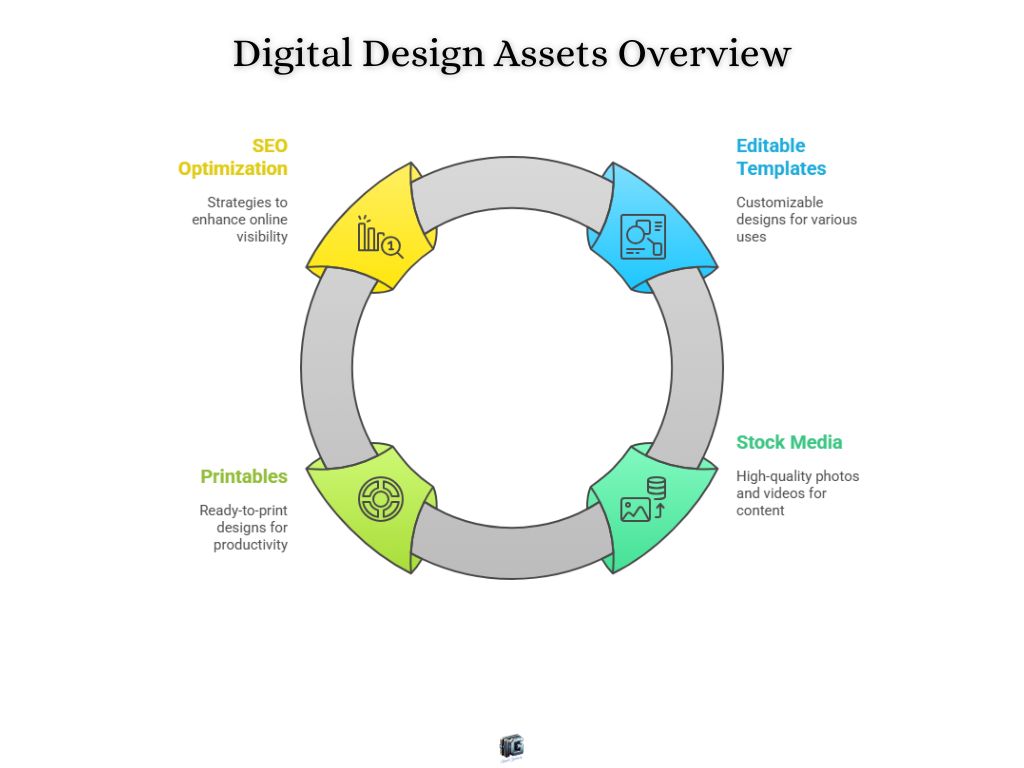
Small businesses, influencers, and content creators rely on high-quality digital design resources to produce visually appealing content without hiring a designer.
Why This Niche is Profitable
- Instant sales: People buy and download immediately.
- Scalable income: Create once, sell repeatedly.
- Businesses and marketers constantly need fresh designs.
Top-Selling Digital Products in This Niche
- Editable Templates: Example: “Minimalist ‘Open House’ Flyer Bundle for Realtors.”
- Stock Assets: Example: “Boho-Chic Lightroom Presets for Travel Bloggers.”
- Digital Planners: Example: “The ‘Wedding Timeline’ Planner for DIY Brides.”
💡 Pro Tip: Optimize listings with SEO keywords on Etsy, Creative Market, or your website to increase visibility.
📱 Best Platforms for Digital Products (2026)
| Product Type | Best Platform(s) | Control Over Branding | Audience Access |
|---|---|---|---|
| Online Courses | Udemy, Teachable, Kajabi | Medium – platform branding still visible | Built-in learners and search traffic |
| Financial Tools & Templates | Etsy, Gumroad, Own Website | High – you can customize fully on your own site | Marketplace traffic for Etsy/Gumroad; must drive traffic for own site |
| AI-Powered Tools | SaaS Platforms, Own Website | Very High – full product + customer experience | No built-in audience; traffic comes from SEO, ads, or partnerships |
| Creative Assets | Etsy, Creative Market, Canva Marketplace | Low–Medium – limited customization | Large pool of creators, small businesses, and DIY buyers |
The best platform isn’t always the one with the biggest audience. If you want quick visibility, marketplaces like Etsy and Udemy give you traction.
If long-term branding and higher profit margins matter more, selling through your own website or SaaS platform gives you control. The smartest creators often combine both approaches.
Trending Digital Product Ideas for 2026
The digital product landscape is constantly evolving, with new trends shaping consumer demand. Entrepreneurs who stay ahead of these shifts can create high-value, in-demand products that generate consistent revenue.
In 2026, automation, AI-driven solutions, and personalized content will dominate the digital marketplace. Below are some of the most promising digital product ideas, backed by growing market trends and consumer preferences.
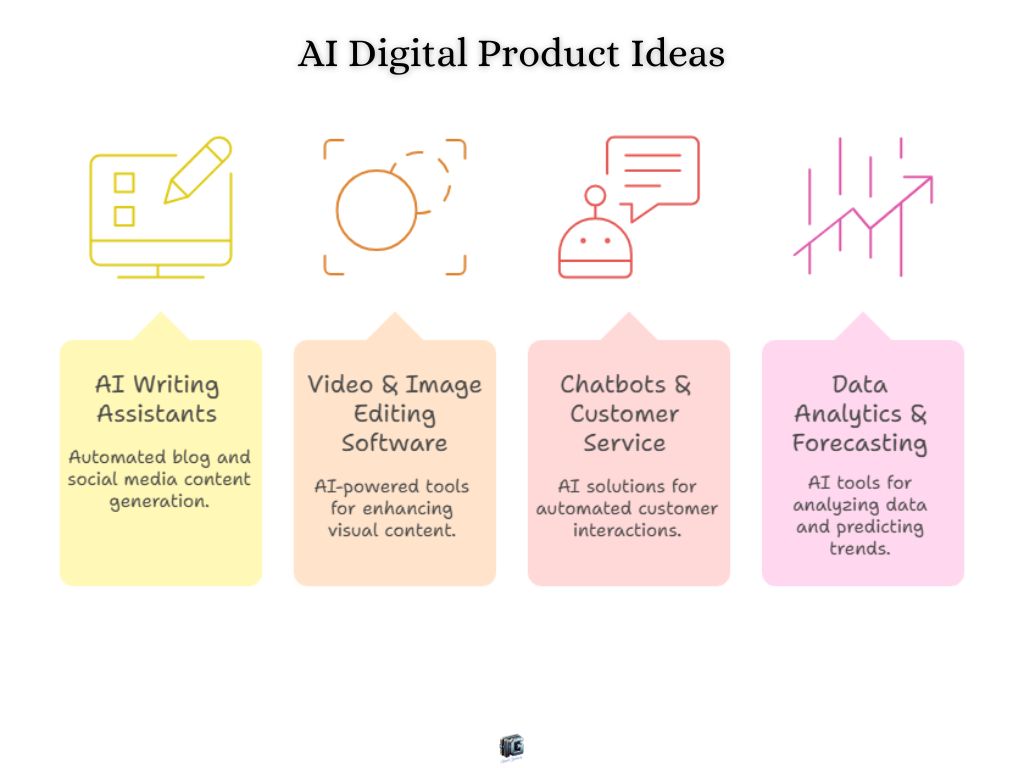
1. AI-Powered Digital Products
AI has transformed how businesses and individuals work, increasing demand for AI-driven solutions that enhance productivity and automate repetitive tasks.
Why This Product is Trending
- Time-saving & efficiency-focused: Consumers value tools that streamline workflows.
- Recurring revenue potential: AI-powered products often use subscription models.
- Growing business adoption: Companies seek AI solutions to optimize operations.
Popular AI Digital Product Ideas
- The “SEO Blog Writer” Custom GPT Agent: A pre-trained AI assistant that writes articles in a specific brand voice.
- AI Headshot Generator for Realtors: A tool that turns selfies into professional LinkedIn profile photos.
- “Voiceover Clone” Services: An AI workflow that turns blog posts into audio using the creator’s voice.
💡 Pro Tip: AI-based products that integrate with existing tools (e.g., CRM software) are highly sought after.
2. Notion Templates & Productivity Tools
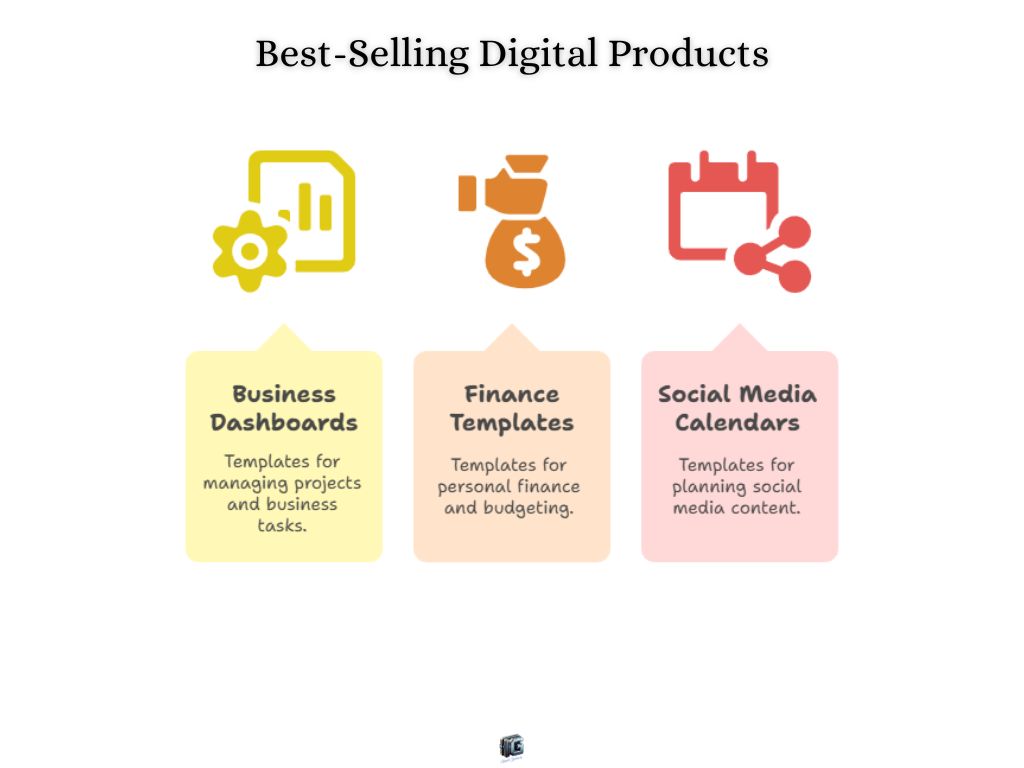
The rise of remote work and digital organization has increased demand for customizable productivity templates, particularly for platforms like Notion, ClickUp, and Trello.
Why This Product is Trending
- Highly scalable: Templates can be sold repeatedly with no additional costs.
- Fast-growing user base: More professionals rely on Notion and similar tools for business organization.
- Saves customers time: Users prefer ready-made solutions over creating templates from scratch.
Best-Selling Notion & Productivity Digital Products
- The “Second Brain” Dashboard for ADHD Entrepreneurs: A template specifically designed for neurodivergent focus.
- The “Student Semester Tracker” (Aesthetic Edition): A grade and assignment tracker styled for the “StudyGram” aesthetic.
- “The Ultimate Airbnb Host” Hub: A Notion portal for hosts to manage guests, cleaners, and supplies.
💡 Pro Tip: Offering niche-specific templates (e.g., “Notion Template for Freelancers”) improves targeting and sales.
3. Digital Printables & Design Assets
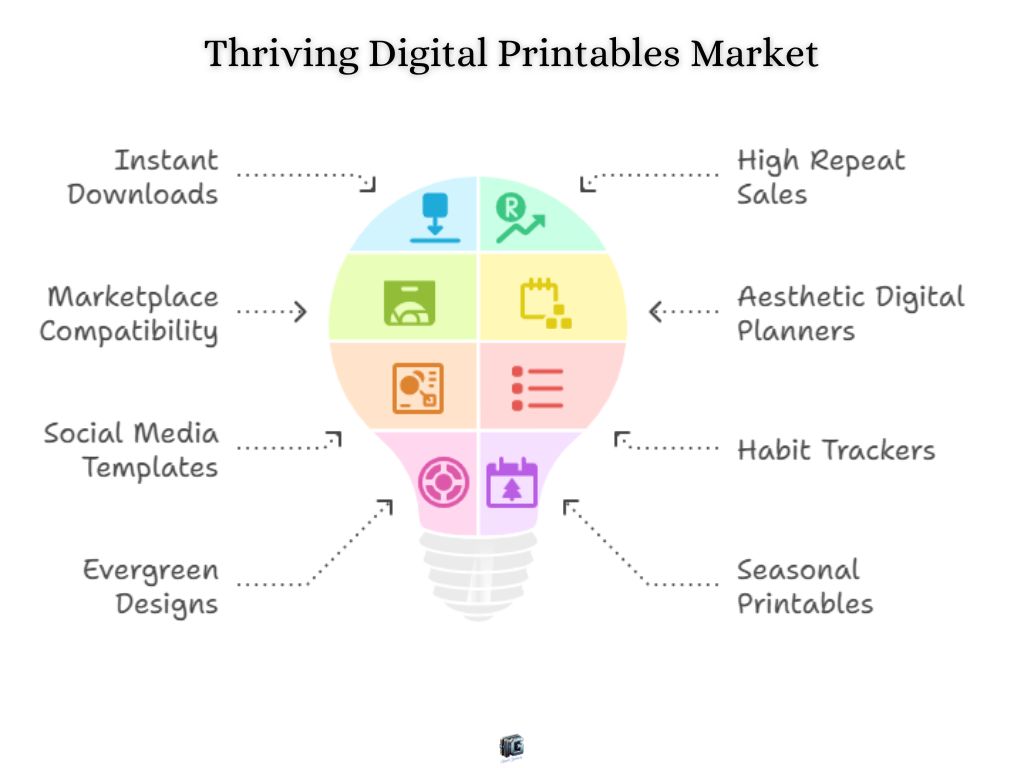
The printables market continues to thrive, with digital products like planners, aesthetic templates, and business branding kits driving sales.
Why This Product is Trending
- Instant downloads = passive income. No shipping, no inventory.
- High repeat sales potential. People buy updated designs regularly.
- Perfect for Etsy, Shopify, and digital marketplaces.
Popular Digital Printables
- Homeschooling Curriculum Planner: A printable set for parents managing K-5 education at home.
- Bachelorette Party Game Bundles: “Download & Print” games for maid-of-honors who need last-minute activities.
- “Visual Debt Payoff” Thermometers: Coloring sheets that help people visualize paying off credit cards.
💡 Pro Tip: Evergreen designs sell year-round, while seasonal printables (e.g., holiday planners) bring spikes in revenue.
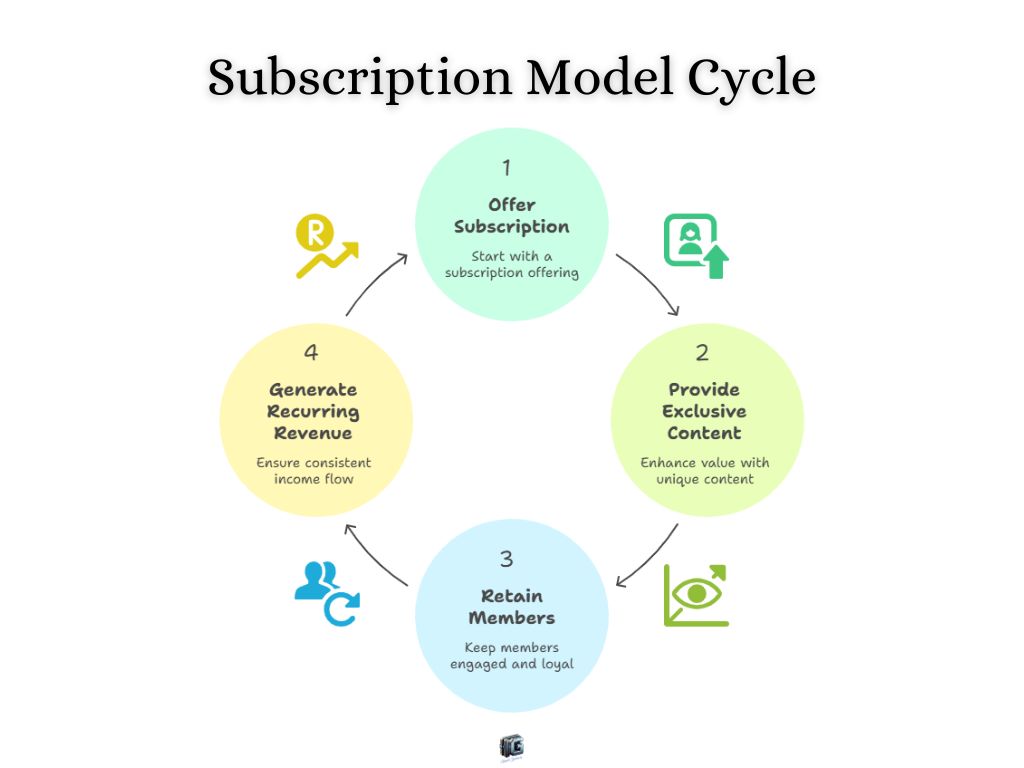
4. Subscription-Based Memberships
Consumers are shifting toward subscription-based digital products, creating opportunities for recurring income streams.
Why This Product is Trending
- Predictable, recurring revenue: Members pay monthly or yearly.
- Exclusive content increases perceived value: Loyalty drives retention.
- Ideal for business, wellness, or creative industries.
Top-Selling Subscription Digital Products
- The “Crypto Signals” Daily Newsletter: A paid daily email summarizing market movements for busy investors.
- “The 5 AM Club” Accountability Group: A monthly membership for morning zoom check-ins and goal setting.
- “Gluten-Free Weekly” Meal Plans: A weekly PDF grocery list and recipe guide for celiacs.
💡 Pro Tip: Add live Q&A calls or exclusive content access to increase retention rates.
5. Digital Courses & Coaching Programs
The e-learning industry continues to expand, with consumers seeking skill-building resources for career growth, entrepreneurship, and personal development.
Why This Product is Trending
- High perceived value: Courses are seen as investments in skill development.
- Evergreen content: Courses can be sold continuously with minimal updates.
- Works for nearly any niche: Business, fitness, personal finance, and more.
Best-Selling Course Topics for 2026
- YouTube Scriptwriting Masterclass: A specific course on writing hooks and retention strategies (not just “how to edit”).
- “Midjourney for Book Covers” Workshop: Teaching authors how to generate their own cover art using AI.
- “Excel to Python” Bridge Course: A specific track for data analysts wanting to upgrade their coding skills.
💡 Pro Tip: Include bonus materials (workbooks, exclusive templates) to increase perceived value.
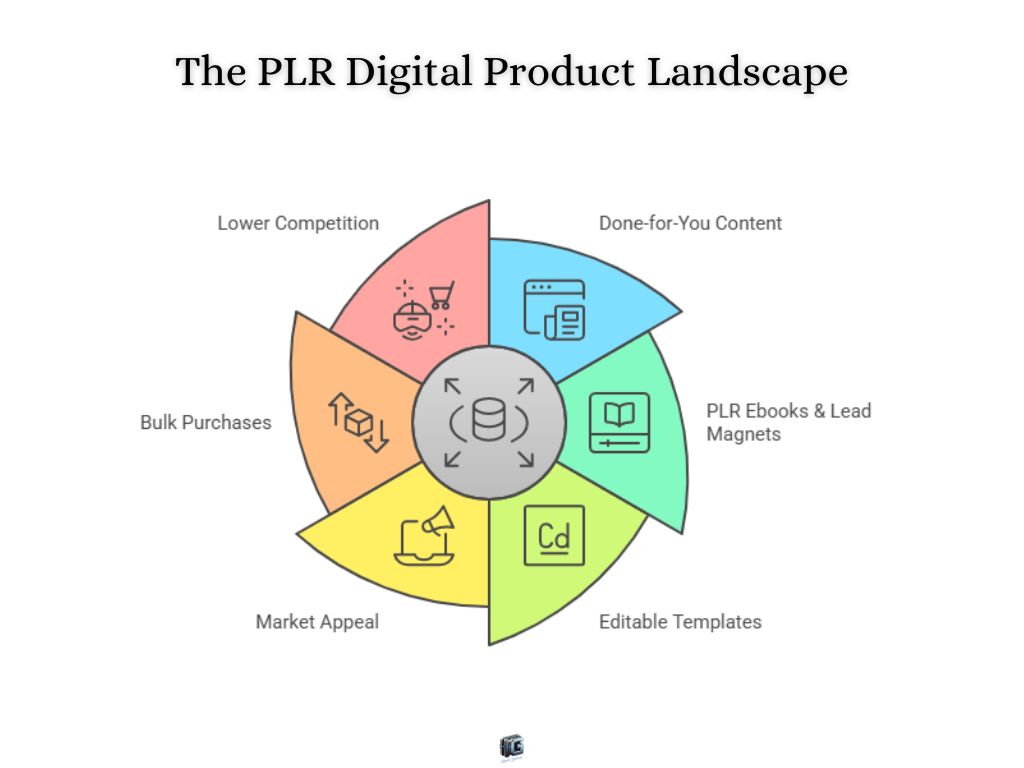
6. PLR (Private Label Rights) Digital Products
PLR digital products allow buyers to resell and rebrand content, making them highly profitable for content creators.
Why This Product is Trending
- Appeals to marketers, bloggers, and business owners looking for ready-made content.
- Buyers purchase PLR products in bulk, increasing revenue potential.
- Lower competition compared to other digital product categories.
Top-Selling PLR Digital Products
- 30-Day “Gut Health” Challenge: A complete guide that wellness coaches can rebrand and sell to their clients.
- “Real Estate Social Media” Content Bank: 100 pre-written captions and Canva graphics for realtors to post.
- The “Mindset Journal” Template: A journal layout that Etsy sellers can resell as a physical book.
💡 Pro Tip: High-quality, customizable PLR content sells best avoid generic, outdated material.
🚀 Trending Digital Product Ideas at a Glance
| Product Idea | Who It’s For | Effort to Create | Recurring Income Potential |
|---|---|---|---|
| Mini Online Courses | Coaches, Educators, Creators | Medium–High | High (subscriptions, bundles) |
| Finance Templates | Budgeters, Investors, Biz Owners | Low–Medium | Medium (bundles, memberships) |
| Marketing Funnels & Kits | Freelancers, Agencies, Service Pros | Low–Medium | High (licensing, subscriptions) |
| AI Tools & Assistants | SaaS Founders, Tech Creators | High | Very High (SaaS, usage-based) |
| Wellness Programs | Fitness Coaches, Lifestyle Brands | Medium | High (memberships) |
| Printables & Planners | Etsy Sellers, Bloggers, Creatives | Low | Medium (evergreen + seasonal) |
| Notion/ClickUp Templates | Solopreneurs, Remote Teams | Low | Medium (repeat sales) |
| PLR Digital Products | Marketers, Info Product Sellers | Low–Medium | High (bulk licensing) |
| Subscription Memberships | Content Creators, Coaches, Influencers | Medium–High | Very High (monthly or yearly) |
How to Validate, Create, and Sell Digital Products (2026 Strategy)
Creating a digital product requires a strategic approach. The goal is to move from “idea” to “launch” efficiently, ensuring you are building something the market actually wants.
Here is the step-by-step process to build a sustainable digital product business.
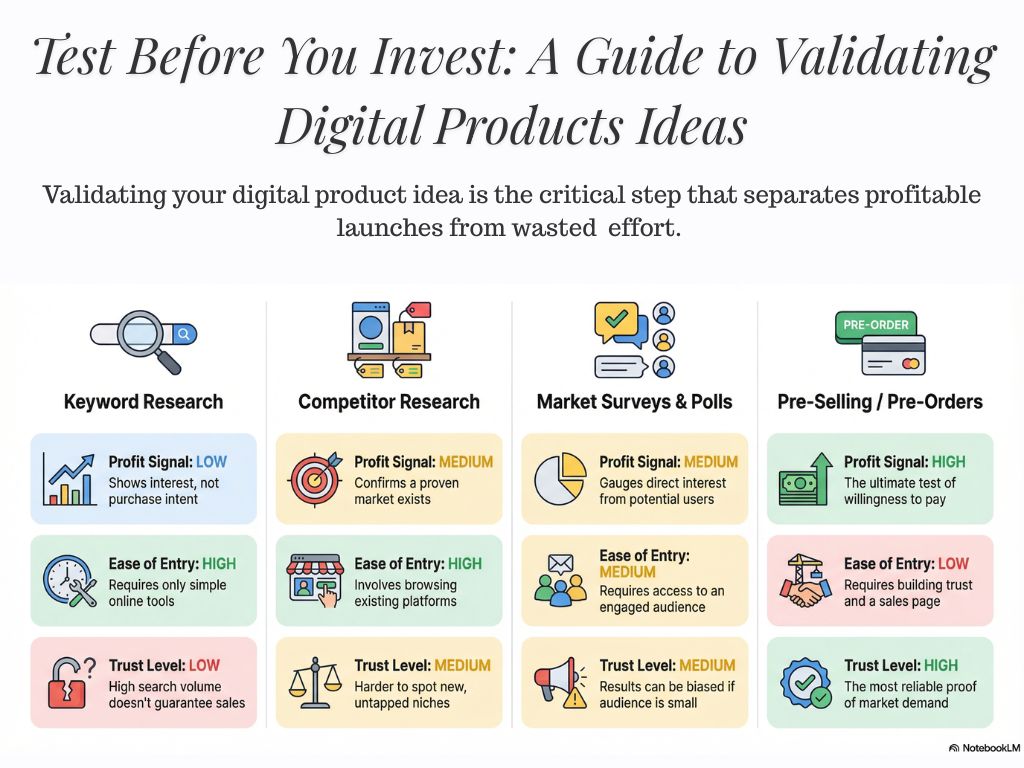
1. Validate Your Idea (Before You Build)
The biggest mistake creators make is spending months building a product without testing demand. Validation minimizes risk.
- Analyze Competitor Reviews: Go to Amazon or Etsy and look at 3-star reviews for products in your niche. Look for what is missing. If customers keep saying, “I wish this guide had more examples,” that is your opportunity to build a better version.
- Check Search Intent: Use tools like Google Trends or AnswerThePublic. Are people asking specific questions about your topic? High search volume with low satisfaction signals a gap in the market.
- The “Pre-Sell” Method: Create a simple landing page describing your product before it is finished. Ask people to join a waitlist. If you can’t get people to give you their email, they likely won’t give you their money.
2. Start with a Minimum Viable Product (MVP)
Don’t try to launch a massive masterclass as your first product. Start with a smaller, focused version to get feedback faster.
- Focus on the “Quick Win”: Your product should solve one specific problem immediately. Instead of a “Complete Guide to Graphic Design,” create a “10-Pack of Social Media Templates.”
- Use Accessible Tools: You don’t need expensive software to start.
- For Ebooks: Canva or Google Docs (Export as PDF).
- For Courses: Loom (Screen recording) or your smartphone.
- For Templates: Notion or Google Sheets.
3. Choose the Right Sales Platform
Where you sell determines your profit margins and your marketing workload.
- Marketplaces (Etsy, Udemy, Amazon): Best for beginners. These platforms have built-in traffic, so customers can find you via search. However, they charge higher fees and you have less control over branding.
- Owned Storefronts (Shopify, Gumroad, Your Website): Best for creators with an audience. You keep more profit and own your customer data (email list), but you are responsible for driving all the traffic yourself.
4. Price for Profitability
Pricing is not just about covering costs; it’s about perceived value.
- Tiered Pricing: Offer three levels to maximize revenue.
- Basic: The core product (e.g., The Ebook).
- Standard: The core product + a bonus resource (e.g., Ebook + Audio version).
- Premium: The bundle + personal access (e.g., Bundle + 30-min consultation).
- The “Outcome” Rule: Don’t price based on how long it took you to make. Price based on how much time or money it saves the customer.
5. Build a Marketing System
Posting once on social media isn’t a strategy. You need a repeatable system to drive sales.
- Content Marketing: Create blog posts or videos that answer questions related to the problem your product solves. (e.g., “How to organize your finances” $\rightarrow$ Sell your Budget Template).
- Email Nurturing: Most people won’t buy on the first visit. Capture their email by offering a free sample (Lead Magnet), then send automated follow-up emails that add value and offer your paid product.
Pro Tip: Focus on getting your first 10 reviews. Social proof is the strongest driver of sales for new digital products. Offer a discount to beta testers in exchange for honest feedback.
🚫 Common Mistakes to Avoid When Choosing Digital Product Ideas
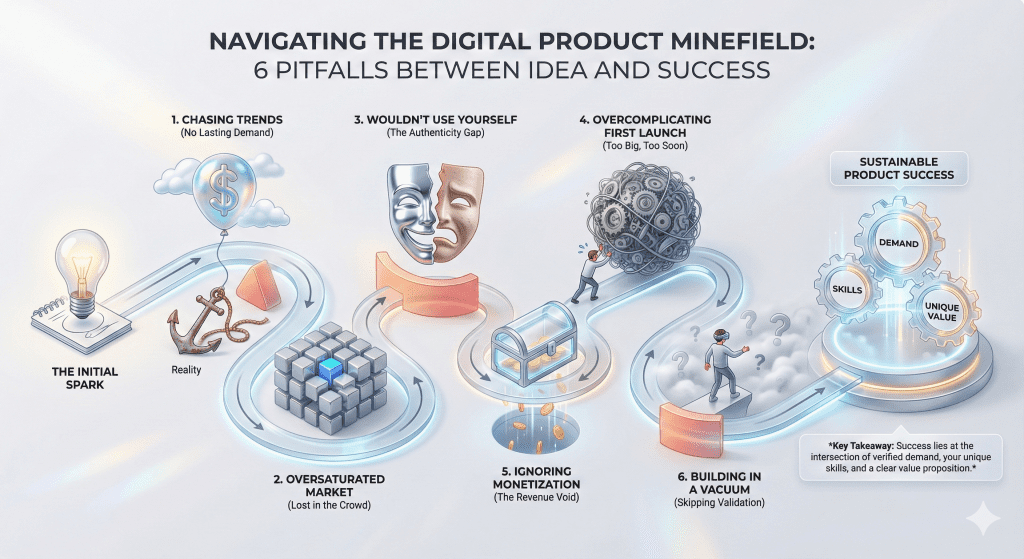
Not every digital product idea is worth pursuing. Many entrepreneurs jump into the wrong niche or product type and end up wasting time, money, and motivation.
Here are the biggest pitfalls to avoid:
1. Chasing Trends Without Demand
Just because something sounds “new” (like NFTs or a viral app idea) doesn’t mean there’s lasting demand. Always validate your idea with keyword research, competitor analysis, or pre-selling.
2. Choosing an Oversaturated Market Without Differentiation
Popular niches like fitness, finance, and design assets can be profitable but they’re crowded. Entering without a unique angle (e.g., “fitness trackers for busy moms” instead of generic workout plans) makes it hard to stand out.
3. Creating Products You Wouldn’t Use Yourself
If you don’t believe in or understand your own product, it shows. Selling a budgeting spreadsheet when you don’t manage your own finances will make marketing harder and less authentic.
4. Overcomplicating the First Product
Many beginners try to launch a massive course, an app, or a full membership site right away. Starting smaller (with templates, planners, or a mini-course) lets you test demand faster and build momentum.
5. Ignoring the Monetization Model
A great idea without a strong business model won’t last. Before committing, decide: will it be a one-time sale, subscription, or bundled offer? The revenue model should fit both your niche and your audience’s preferences.
6. Skipping Validation Before Launch
One of the biggest mistakes is building in a vacuum. Always validate through surveys, pre-orders, or competitor analysis before spending months creating the product.
💡 Key takeaway: The right digital product idea isn’t just about what’s popular it’s about what has demand, fits your skills, and allows you to stand out with a clear value proposition.
⚠️ Digital Product Ideas: Mistakes vs. Fixes
Before you jump into creating your first product, it helps to know the most common traps that derail beginners. The table below breaks down typical mistakes, why they hurt, and what to do instead.
| Mistake ❌ | Why It Hurts | Fix ✅ |
|---|---|---|
| Chasing trends blindly | Short-lived hype, no lasting sales | Validate with keyword research & competitor analysis |
| Entering oversaturated markets | Hard to stand out, low visibility | Find a niche angle or underserved sub-market |
| Creating products you wouldn’t use | Weak marketing, lack of authenticity | Build products aligned with your skills/experience |
| Overcomplicating first product | Delays launch, higher risk of failure | Start small (templates, mini-courses, planners) |
| Ignoring monetization model | Revenue inconsistency, wasted effort | Choose a model: one-time, subscription, or bundles |
| Skipping validation | Risk of no demand | Test with pre-orders, surveys, or beta users |
By steering clear of these mistakes, you’ll not only save time and money but also increase your chances of building a product that sells consistently. The right idea, backed by a clear strategy, is the fastest path to digital product success.
Final Thoughts
Digital products remain one of the smartest ways to build an online business in 2025. With no inventory to manage, instant delivery, and near-zero overhead, they give entrepreneurs, creators, and professionals a path to scalable income that physical products can’t match.
But success isn’t just about picking any idea. It’s about choosing the right idea in the right niche, validating demand, and positioning your product with a clear value promise.
From AI tools to wellness programs, from finance templates to design assets, the most profitable digital products all share one trait: they solve a real problem people are actively willing to pay for.
If you’re just starting out, focus on a single idea, validate it, build it, and launch it fast. If you’re already selling, look at the 2025 trends like AI, automation, and memberships to expand your product line and add recurring revenue streams.
The opportunity is massive, but it rewards action. The sooner you test your digital product idea, the sooner you’ll know if it has the power to turn into a profitable business.
Next step: explore our Digital Products Guide to see step-by-step strategies for planning, creating, and scaling your own digital products.
Frequently Asked Questions (FAQs)
What is the most profitable digital product?
If you look purely at margins, High-Ticket Group Coaching ($1,000+) beats everything else because it requires zero inventory and zero software development costs. However, if you want passive profit, niche B2B templates (like “Agency Client Contracts”) are superior because business owners will pay a premium ($97–$297) for something that saves them legal headaches, whereas consumers hesitate to spend $5 on a printable.
What digital products are trending in 2026?
The market is shifting from “Information” to “Implementation.” People are tired of 10-hour video courses. The real trend is “Micro-Tools”, specifically Custom AI Agents (GPTs) that do the work for the user, and “Notion Operating Systems” that organize a user’s life instantly. If it saves time, it’s trending. If it just adds “more to learn,” it’s dying.
What is the easiest digital product to make?
Most people say “Printables,” but the market is flooded. The actual easiest product to sell right now is a “Curated Swipe File.” For example, a folder of “Top 50 Viral Hooks for LinkedIn” or “100 Best Wedding Photo Poses.” You don’t need to design anything; you just need to curate valuable examples. You can build this in a Google Doc in 2 hours.
Is selling digital products worth it?
It is the only business model where Product Development is a one-time cost, but Revenue is infinite. Unlike dropshipping (where you pay for goods every time you sell) or consulting (where you pay with time every time you sell), a digital product sold in 2025 can still pay you in 2030 with zero extra effort. It is the purest form of leverage.
Do I need a large social media following to sell?
No, you need Search Volume, not followers. If you sell a “knitting pattern,” you don’t need 10k followers on Instagram; you just need to rank on Etsy for “easy knitting pattern.” By leveraging “Search-Based” platforms (Etsy, Pinterest, Amazon KDP, YouTube SEO), you catch buyers who are already looking, rather than interrupting strangers on social media.
Can I really make passive income with digital products?
“Passive” is a dangerous word. The delivery is passive (automatic downloads), but the traffic is rarely passive. To make it truly passive, you need to build an “Evergreen Funnel”: Content (YouTube/Blog) → Lead Magnet → Email Sequence → Sale. Once that system is built, then it becomes passive. Until then, you are actively marketing.

1 Comment
Digital Products: What to Sell and How to Make It Passive - Ismel Guerrero. · April 24, 2025 at 1:28 pm
[…] our Best Digital Product Ideas for 2025 — packed with trending niches, proven formats, and profitable ideas for beginners and […]