PLR digital products tend to create two unhelpful reactions. Some people see them as an easy shortcut. Others write them off as low-value from the start.
Neither view gets to the real issue.
The value of PLR is not that it removes the work. It is that it changes the kind of work you have to do. Instead of starting with a blank page, you start with an existing asset and decide whether you can shape it into something specific, useful, and credible.
That is where the difference usually shows up. When PLR is used with intention, it can support lead magnets, paid offers, content systems, and product development without forcing you to create everything from scratch. When it is used carelessly, it stays generic and quickly loses value.
This guide takes a practical view of PLR. We will look at what it is, where it fits, where it falls short, and what it takes to turn it into something worth publishing or selling.
Let’s start with what PLR actually means in practice.
- PLR digital products let you start with existing content instead of creating everything from scratch.
- They work best when you treat them as a draft to adapt, not a finished product to publish.
- Most PLR fails because it’s used with little or no customization.
- A single well-adapted asset is more useful than collecting large amounts of unused content.
- Clear positioning (who it’s for and what it helps with) matters more than the amount of content included.
- PLR is most effective when it supports a specific role, such as a lead magnet, low-ticket offer, or content base.
- The quality of the source material and the license terms directly affect how you can use it.
- PLR can save time, but it doesn’t replace the need to think through structure, audience, and purpose.
Disclaimer: I am an independent Affiliate. The opinions expressed here are my own and are not official statements. If you follow a link and make a purchase, I may earn a commission.
What PLR Digital Products Are (In Practical Terms)
PLR stands for Private Label Rights, but the label itself matters less than how it works in use.
At a basic level, PLR digital products are pre-created assets that come with permission to edit, rebrand, and use as part of your own business. These assets can take many forms, including eBooks, courses, templates, email sequences, or design files.
What makes PLR different from standard digital products is the level of control you’re given. Instead of only consuming the content, you’re allowed to modify it, restructure it, and present it under your own brand, within the limits of the license.
In practice, that means you’re not starting from zero. You’re starting from a draft.
That draft might be rough or it might be well-developed, depending on the source. But either way, it is not a finished product. It becomes useful only when it’s adapted to fit a specific audience, outcome, or offer.
It’s also worth noting that not all PLR is the same. The quality can vary widely, and the usage rights are not identical across providers. Some licenses allow full resale and modification, while others place limits on how the content can be distributed or where it can be published.
Because of that, PLR is less about the files themselves and more about how you use them. The asset is the starting point. The value comes from what you turn it into.

Where PLR Fits (and Where It Doesn’t)
PLR works well in certain roles, and poorly in others. Understanding that early saves time and avoids a lot of frustration.
Where it tends to fit best is in situations where speed and structure matter more than originality from the first draft.
For example, PLR can be a practical starting point for:
- Lead magnets that solve a narrow, specific problem
- Supporting products that sit alongside a main offer
- Content that needs to be produced consistently (emails, blog posts, social content)
- Early-stage offers where you are still testing positioning or demand
In these cases, PLR helps you move forward without building everything from scratch. It gives you something to work with, refine, and improve.
Where PLR tends to fall short is in areas that rely heavily on originality, depth, or personal perspective.
For example, it is usually a poor fit for:
- Flagship products that define your brand
- Content built around personal experience or unique frameworks
- Highly competitive niches where similar PLR content is widely used
- Situations where credibility depends on demonstrated expertise
In these cases, starting from existing material can create limitations. The content may feel generic, or it may not reflect how you actually think or work.
There is also a middle ground. PLR can still play a role in higher-value offers, but usually as a foundation rather than the final product. The more visible or important the asset is, the more it needs to be reshaped.
The key point is this: PLR is not a universal solution. It is a tool that works well when the goal is to move faster with structure, and less well when the goal is to stand out through originality alone.
Understanding that distinction makes the rest of the process much easier.
Why Most PLR Digital Product Fails
PLR itself is not the problem. Most of the issues come from how it’s used.
The most common mistake is treating PLR as a finished product. When content is published with minimal changes, it tends to feel generic. Even if a reader cannot identify why, they can usually tell when something lacks a clear point of view or relevance.
Another issue is sourcing. A large portion of PLR content is outdated, overly broad, or written without a specific audience in mind. Starting with weak material makes everything that follows harder, no matter how much you try to improve it later.
There is also a positioning problem. PLR is often used without a clear role in a broader offer or system. A file is downloaded, lightly edited, and published without answering a simple question: what is this meant to do? Without that clarity, the content has no real direction.
Finally, there is the assumption that speed alone creates value. PLR can reduce the time it takes to produce something, but it does not replace the need for judgment. Decisions still need to be made about audience, structure, messaging, and usefulness.
When these pieces are missing, the result is predictable. The content exists, but it does not connect, convert, or get used.
On the other hand, when PLR is treated as a starting point rather than a shortcut, the outcome changes. The focus shifts from “how quickly can this be published” to “how well does this fit what I’m trying to build.”
That shift is what determines whether PLR becomes an asset or just another unused file.
How to Customize PLR So It Actually Feels Original
Customization is where PLR either becomes useful or stays forgettable.
The mistake most people make is focusing on surface-level edits too early. Changing a title, adjusting a few sentences, or swapping colors can help, but it doesn’t solve the core issue. If the positioning stays generic, the content will feel generic.
The starting point is not the file. It’s the context you’re placing it in.
Start with Positioning, Not Editing
Before changing anything, define three things:
- Who this is for
- What specific problem it solves
- What outcome it leads to
Without that, every edit becomes random. With it, every change has direction.
The same PLR file can become completely different products depending on how it’s positioned. That’s where most of the value comes from.
Reshape the Structure
Once the positioning is clear, the next step is to adjust the structure.
PLR content is usually written to be broad and reusable. That often means:
- sections that feel generic
- ideas that are loosely connected
- unnecessary filler
Your job is to tighten it.
That might include:
- removing sections that don’t support the main outcome
- reordering content to improve flow
- adding summaries, frameworks, or steps to make it easier to follow
You’re not trying to make it longer. You’re trying to make it more focused.
Rewrite the Key Sections
You don’t need to rewrite everything.
In most cases, the sections that matter most are:
- the introduction
- transitions between sections
- the conclusion
These are the parts that shape how the content is perceived.
Rewriting them allows you to:
- align the tone with your voice
- connect more directly to your audience
- reinforce the outcome the content is meant to deliver
Even if parts of the core content remain similar, these changes can significantly shift how original the product feels.
Update Examples and Language
Generic examples are one of the main signals that content hasn’t been adapted.
Replace them with:
- situations your audience actually recognizes
- terminology they already use
- simple references that reflect current context
This doesn’t require adding complexity. It requires being specific.
When readers see themselves in the content, it stops feeling recycled.
Improve Presentation
Presentation affects how content is judged before it’s even read.
Basic improvements can make a noticeable difference:
- consistent fonts and spacing
- clear section breaks
- simple visual elements (icons, highlights, checklists)
The goal is not to make it look impressive. It’s to make it easy to engage with.
Add Direction
Most PLR content is informational. What’s often missing is direction.
Adding:
- next steps
- prompts
- calls to action
- ways to apply what was just explained
turns passive content into something more useful.
This is especially important if the content is part of a funnel or offer.
The Real Goal of Customization
The goal is not to hide that the content started as PLR.
The goal is to make it align with how you think, how you communicate, and what your audience needs.
When that alignment is clear, the origin becomes irrelevant. What matters is whether the content is specific, usable, and worth paying attention to.
How to Turn PLR Into Real Offers
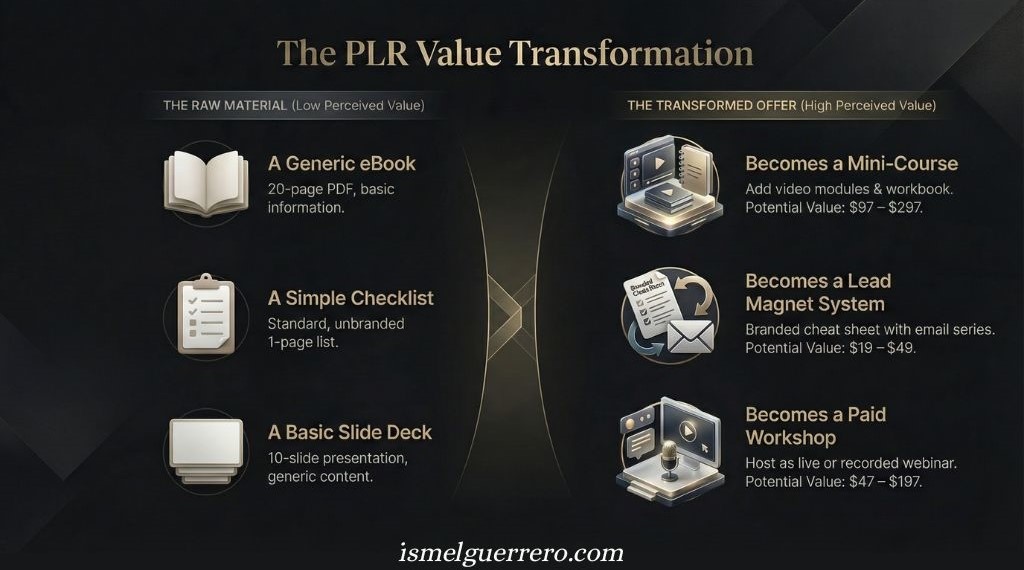
A PLR file on its own is not a product. It becomes one when it’s shaped around a clear outcome and placed in the right context.
The transition from “file” to “offer” is less about adding more content and more about defining what the content is meant to do.
Start with the Outcome
Before deciding how to package anything, clarify the result the content should help someone achieve.
For example:
- Solve a specific problem quickly
- Help someone take a first step
- Support a larger transformation
- Provide a tool or reference they can reuse
When the outcome is clear, the format becomes easier to choose.
Choose the Right Format
The same core content can be delivered in different ways, depending on how you want it to be used.
A written guide might become:
- a short paid product
- a structured email course
- a workshop or training
- a supporting resource inside a larger offer
The goal is not to change everything, but to match the format to the outcome and the audience.
Package for Clarity, Not Volume
One of the common mistakes is trying to increase value by adding more.
In practice, clarity tends to matter more than quantity.
Instead of expanding the content, focus on:
- a clear promise
- a defined scope
- a logical flow from start to finish
Sometimes a smaller, more focused offer is easier to understand and more likely to be used.
Decide Where It Fits
An offer doesn’t exist in isolation. It should have a role.
PLR-based products often work best when they are part of a simple structure, such as:
- an entry-level paid product
- a lead magnet that introduces a topic
- a bonus that supports a main offer
- a resource inside a course or program
Thinking this through early prevents the content from feeling disconnected.
Set a Realistic Price
Pricing should reflect how the content is positioned and how it’s delivered, not just how much material is included.
A short, well-focused resource can be more valuable than a long, unfocused one if it helps someone reach a clear outcome.
Rather than trying to maximize price, aim for alignment:
- Does the offer feel worth it for what it helps someone do?
- Does it fit naturally with your other products or services?
Refine Through Use
The first version of an offer rarely needs to be perfect.
PLR makes it easier to put something into use, gather feedback, and improve it over time.
That might mean:
- adjusting the structure
- clarifying the messaging
- expanding or simplifying parts of the content
In this sense, the offer evolves through use, not just planning.
The Shift That Matters
Turning PLR into an offer is not about transforming content into something completely new.
It’s about making it specific enough that someone can understand:
- what it is
- who it’s for
- and why it’s useful
When those pieces are clear, even a simple asset can become something people are willing to engage with or pay for.
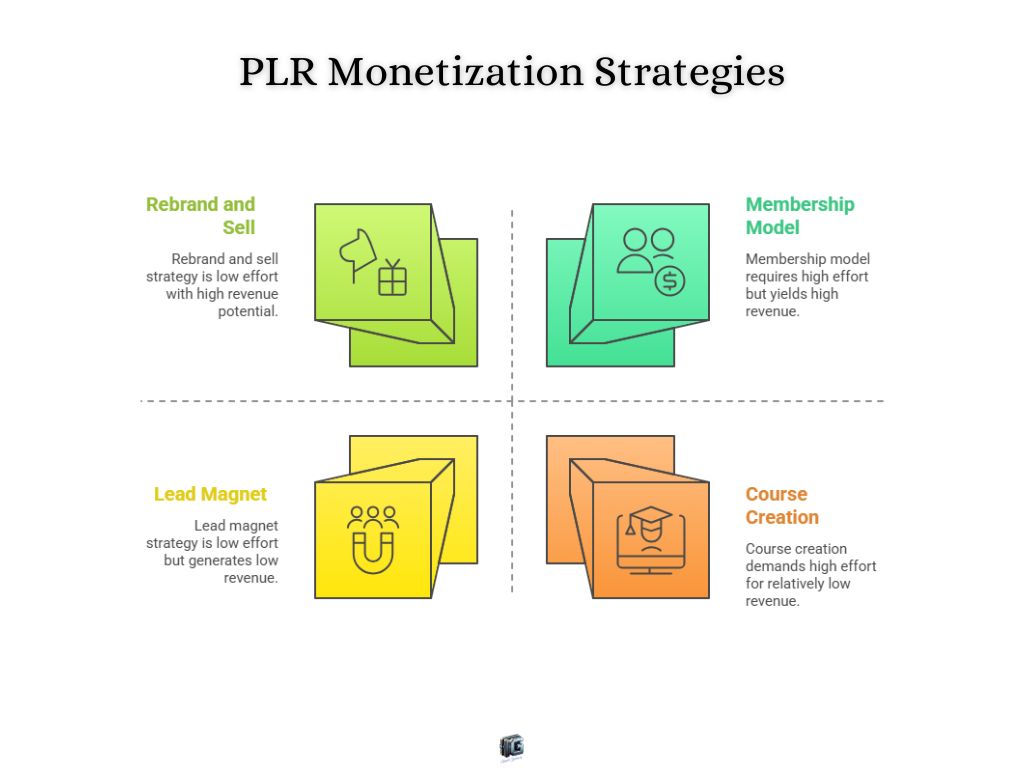
Ways to Use PLR in a Business
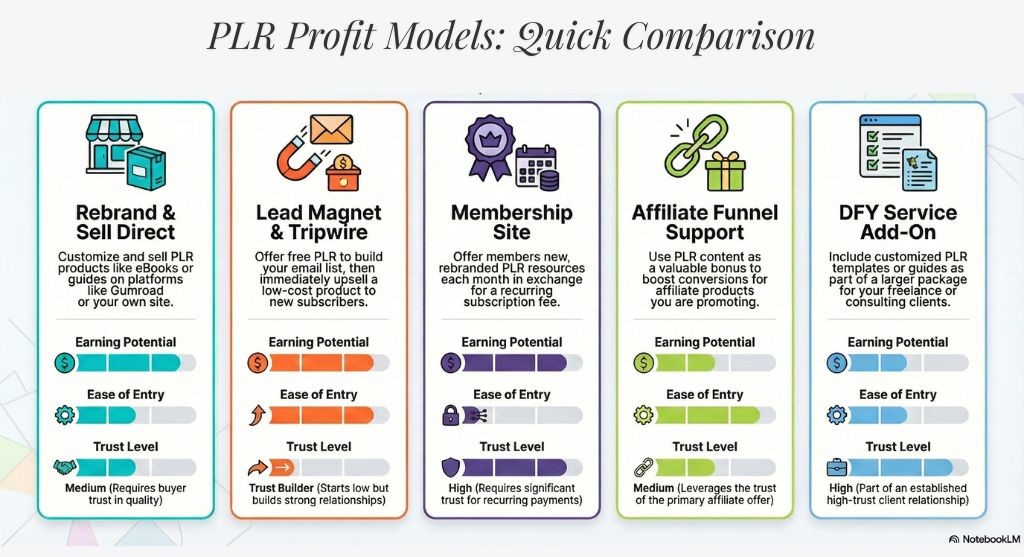
PLR is rarely the business on its own. It’s more useful as a component inside a broader system.
The same asset can serve different roles depending on how it’s used. What matters is not the format of the file, but the function it serves.
Here are some of the most common ways PLR fits into a business.
As a Lead Magnet
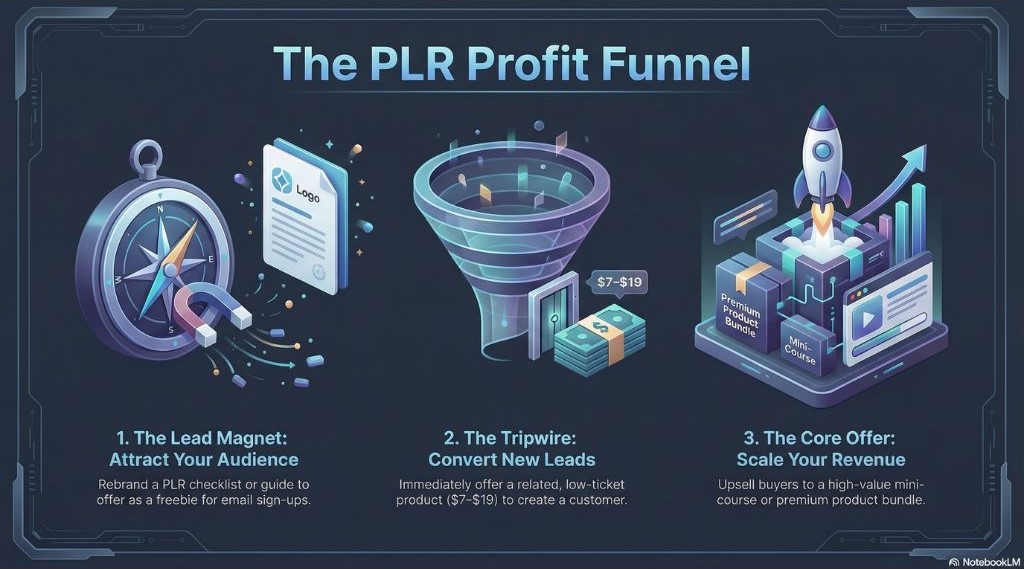
One of the simplest uses for PLR is as a starting point for a free resource.
A short guide, checklist, or worksheet can be adapted to address a specific problem and offered in exchange for an email address.
In this role, the goal is not to be comprehensive. It’s to be relevant and easy to act on.
When done well, this creates a clear entry point into your ecosystem.
As a Low-Ticket Offer
PLR can also be shaped into a small paid product.
This usually works best when the content:
- focuses on one outcome
- is easy to consume
- leads naturally into something more advanced
These types of offers often sit at the front of a funnel, helping turn attention into initial buyers.
As Part of a Larger Product
PLR is often more effective when it supports something bigger.
For example, it can be used to:
- provide additional resources inside a course
- create worksheets or templates that accompany training
- expand on specific topics without building everything from scratch
In this context, PLR adds depth without requiring you to create every supporting asset yourself.
As a Content Foundation
A single PLR asset can be broken down into multiple pieces of content.
Sections can be adapted into:
- blog posts
- email sequences
- social content
- scripts or outlines
This helps maintain consistency without constantly starting over.
The key is to adapt the tone and examples so the content aligns with your voice.
As a Starting Point for New Offers
PLR can also be used to test ideas before investing time into building something from scratch.
Instead of creating a full product upfront, you can:
- adapt an existing asset
- position it around a specific audience
- release a simplified version
If the idea gains traction, you can expand or rebuild it later with more original material.
Choosing the Right Role
Not every PLR asset needs to become a standalone product.
In many cases, it’s more useful as:
- a supporting resource
- a content base
- or a test version of an idea
The more clearly you define its role, the easier it becomes to decide how much effort to invest in customizing it.
A Simple Way to Think About It
Instead of asking, “What can I make with this?” it’s often more useful to ask, “Where does this fit?”
That shift keeps PLR connected to your overall strategy, rather than turning it into a collection of disconnected assets.
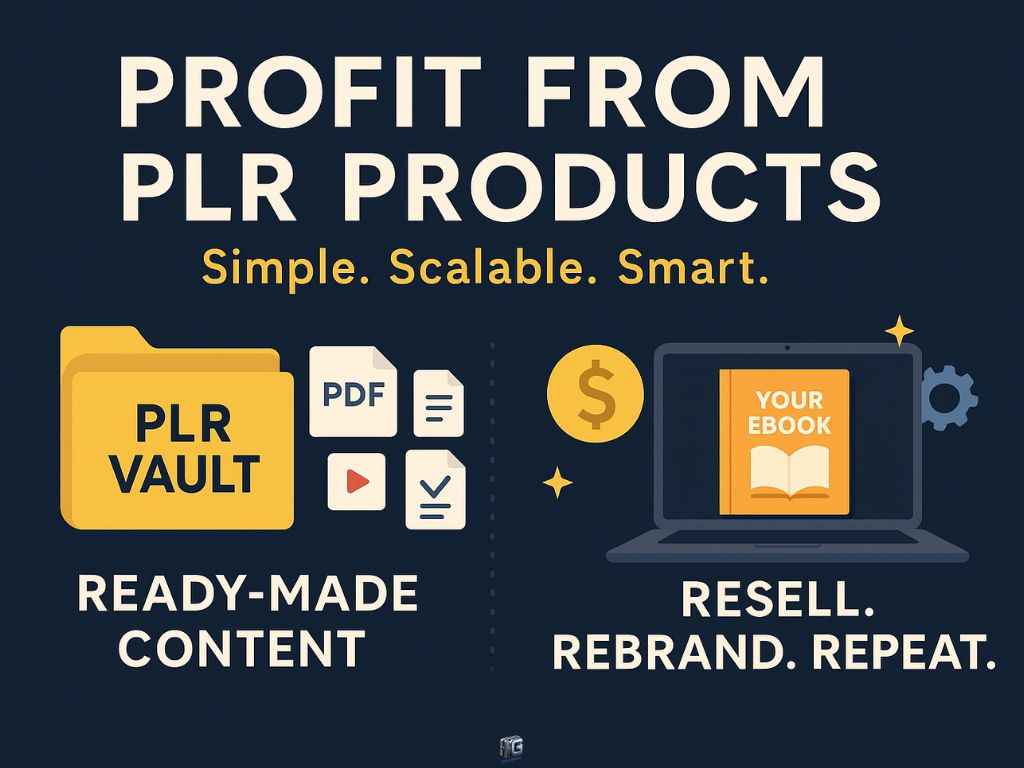
How to Choose Good PLR Digital Product
The quality of your final product is heavily influenced by the quality of what you start with.
PLR varies widely. Some of it is well-structured and usable with reasonable effort. Some of it is outdated, overly generic, or difficult to adapt in a meaningful way.
Because of that, choosing the right material is less about finding more content and more about being selective.
Look for Relevance First
A common mistake is choosing PLR based on topic alone.
A file might match your niche, but still miss the mark if:
- it addresses problems too broadly
- the examples feel disconnected from your audience
- the language doesn’t match how people actually think or speak
Before anything else, ask:
- Does this solve a specific problem?
- Can I clearly see who this is for?
- Would this still make sense with minimal explanation?
If the answer is unclear, it will likely require more work than it’s worth.
Check the Structure, Not Just the Topic
Well-structured content is easier to adapt than poorly organized content, even if the topic is less exciting.
Look for:
- a logical flow from start to finish
- sections that build on each other
- ideas that are easy to follow without heavy rewriting
Disorganized content can be fixed, but it often takes more effort than starting with something cleaner.
Assess the Writing Quality
You don’t need perfect writing, but you do need something workable.
Watch for:
- overly vague statements
- repetitive phrasing
- outdated references or examples
If most of the content would need to be rewritten to sound natural, it may not be a good starting point.
Review the License Carefully
Not all PLR comes with the same rights.
Before using anything, confirm:
- whether you can edit and rebrand it
- whether you can sell or distribute it
- whether there are platform restrictions
This step is often overlooked, but it directly affects how you can use the asset.
Be Cautious with Volume-Based Libraries
Large PLR libraries can be useful for exploration, but they come with trade-offs.
Because of their size:
- quality is often inconsistent
- older content may still be included
- popular files may be widely reused
This doesn’t make them unusable, but it does mean you need to filter more carefully.
Start Smaller Than You Think
It’s easy to download multiple files with the idea of “using them later.”
In practice, it’s more effective to:
- choose one asset
- evaluate it properly
- adapt it with a clear purpose
This keeps the process focused and reduces unused content.
What You’re Really Selecting
You’re not just choosing content. You’re choosing a starting point.
The more aligned that starting point is with your audience and your goals, the less effort it takes to turn it into something useful.
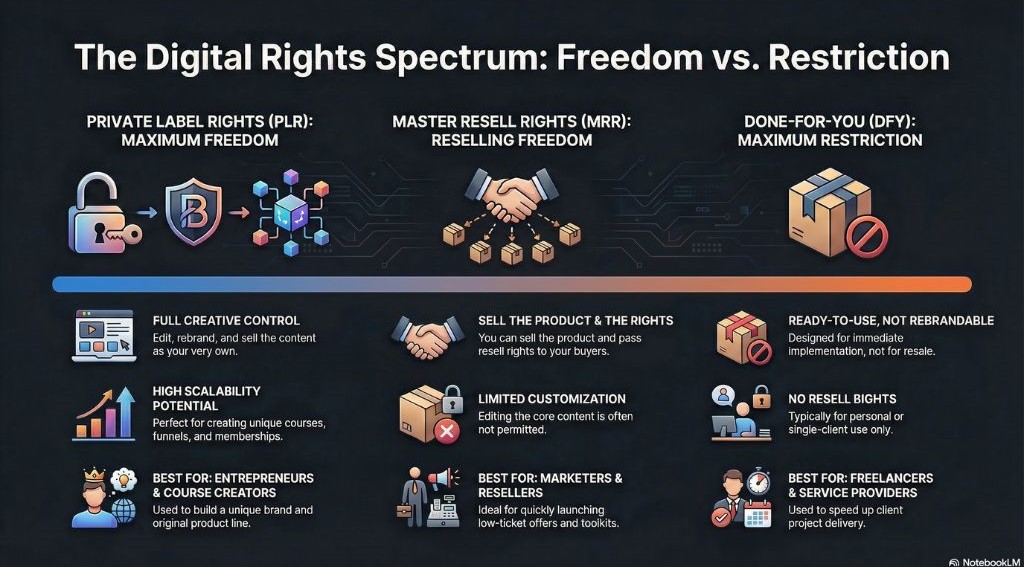
PLR vs DFY Digital Products (What’s the Difference?)
PLR and DFY digital products are often grouped together because they both reduce the need to create something from scratch. But they serve different purposes and come with different levels of control.
PLR digital products are built to be modified.
You’re given content that you can:
- edit
- rebrand
- restructure
- and often resell
The expectation is that you will adapt it. The value comes from turning it into something that fits your audience and your offer.
DFY (Done-For-You) digital products are built to be used as they are.
They are typically:
- templates
- funnels
- systems
- or client deliverables
In many cases, they are not meant to be heavily edited or resold. Their purpose is to help you implement something quickly, rather than create something new.
The Practical Difference
A simple way to think about it:
- PLR gives you a starting point to build from
- DFY gives you something ready to put into use
With PLR, you are stepping into a creator role.
With DFY, you are stepping into an implementer role.
When Each One Makes Sense
PLR tends to be the better fit when:
- you want to create products under your own brand
- you need flexibility in how content is structured or delivered
- you are building assets that connect to your audience directly
DFY tends to make more sense when:
- you need something operational quickly
- you are delivering services or setting up systems
- customization is less important than speed
How They Can Work Together
In practice, they are often used together.
For example:
- a DFY funnel can provide the structure
- PLR content can fill in the emails, lead magnets, or supporting materials
This allows you to move quickly without relying entirely on generic content.
Why the Distinction Matters
Confusing the two can lead to problems.
Using PLR without adapting it leads to generic content.
Using DFY expecting full control can lead to licensing issues or limitations.
Understanding the role of each makes it easier to choose the right starting point for what you’re trying to build.
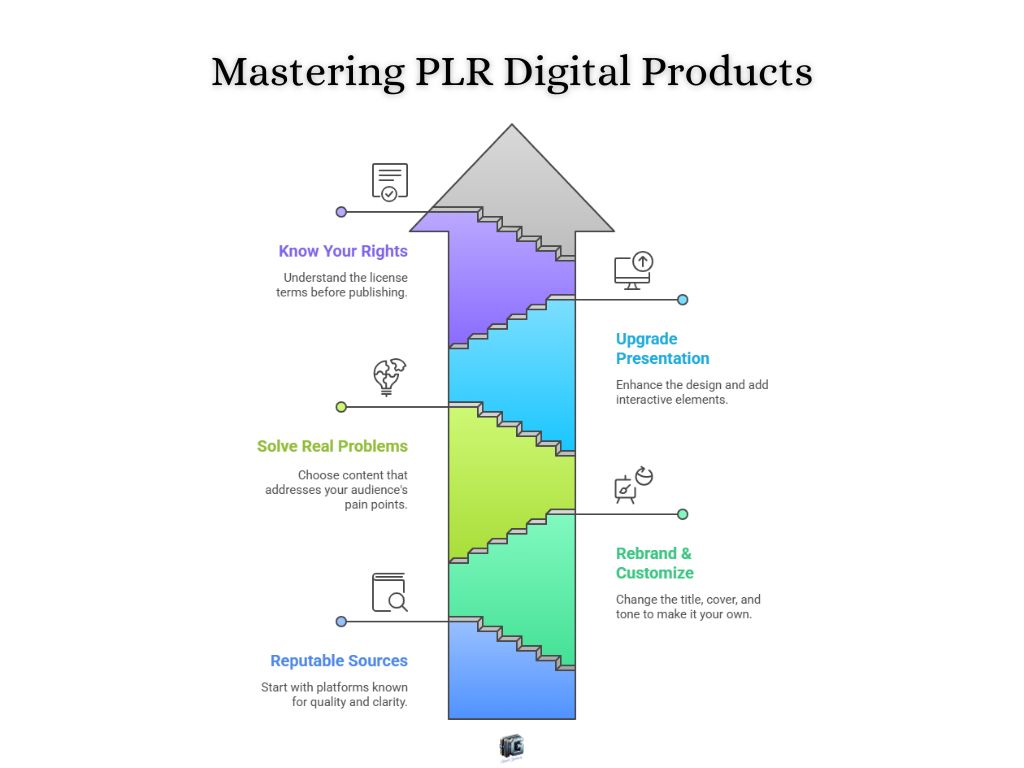
Common Mistakes to Avoid
PLR works best when it’s used with intention. Most problems come from a few predictable patterns that are easy to overlook.
Publishing Without Enough Adaptation
This is the most common issue.
When PLR is used with minimal changes, it tends to feel generic. Even if someone can’t point to the source, they can usually tell when content hasn’t been shaped for a specific audience.
What to do instead: Focus on positioning first, then adjust structure, tone, and examples so the content clearly reflects your perspective.
Choosing Content Based on Volume Instead of Fit
It’s easy to collect multiple PLR files with the idea of using them later. In practice, most of them go unused.
More content doesn’t create more value if it isn’t aligned with a clear purpose.
What to do instead: Start with one asset that fits a specific need, and build from there.
Using PLR Without a Defined Role
A file on its own doesn’t do much. Problems arise when content is published without a clear function.
For example:
- Is it meant to generate leads?
- Support a paid offer?
- Act as a standalone product?
Without that clarity, the content often feels disconnected.
What to do instead: Decide where the asset fits before you start customizing it.
Over-Relying on the Source Material
PLR is a starting point, not a finished perspective.
When too much weight is placed on the original content, the final result can feel flat or interchangeable with other versions.
What to do instead: Use the structure as support, but bring in your own framing, examples, and direction.
Ignoring License Details
This is less visible, but it matters.
Different PLR products come with different usage terms. Misunderstanding them can limit how you use the content or create issues later.
What to do instead: Review the license before you publish, especially if you plan to sell or distribute the content widely.
Expecting Speed to Replace Judgment
PLR can reduce the time it takes to create something, but it doesn’t remove the need for decisions.
Rushing to publish without thinking through audience, outcome, or positioning usually leads to weak results.
What to do instead: Use the time saved on creation to improve clarity, relevance, and structure.
A Simple Check
Before publishing anything based on PLR, it helps to ask:
- Does this clearly serve a specific audience?
- Is the outcome easy to understand?
- Does it reflect how I would actually explain this?
If the answer is unclear, there’s usually more refinement needed.
My Hard Lesson With PLR Digital Products
When I first discovered PLR products, I thought I had struck gold. Everything was already packaged and written, ready for me to use. I even grabbed the email swipes that came with affiliate programs and sent them out exactly as they were.
And when you’re talking about emails, that duplication doesn’t just make you blend into the noise, it can actually get you flagged as spam and destroy your deliverability. That was the hard lesson for me.
PLR can be a powerful tool, but only if you reshape it, inject your own perspective, and make it uniquely yours. Otherwise, you’re just publishing the same thing everyone else already threw into the world.
At first, it felt like I was saving time but what I didn’t realize was how dangerous that shortcut really was. PLR content used “as is” comes with a hidden cost: duplication. The same words get recycled by hundreds, sometimes thousands of people.
Ismel Guerrero.
Final Thoughts
PLR digital products are often framed as a way to move faster. That’s true, but it’s only part of the picture.
What they really offer is a different way to start.
Instead of building everything from scratch, you begin with existing material and decide how to shape it into something that fits your audience and your work. That shift can save time, but it also requires judgment.
The outcome depends less on the content itself and more on how it’s used.
When PLR is treated as a shortcut, it usually leads to generic results that don’t hold attention for long. When it’s treated as a starting point, it can support useful products, consistent content, and simple offers that are easier to build and maintain.
There’s no need to overcomplicate it.
Start with one asset. Give it a clear role. Adapt it so it actually reflects how you think and communicate.
From there, you can improve, expand, or replace it as needed.
Over time, the value doesn’t come from the volume of content you have. It comes from how well each piece fits into what you’re building.

Frequently Asked Questions About PLR Digital Products
What are PLR digital products?
PLR (Private Label Rights) digital products are pre-created assets such as eBooks, templates, or courses that you’re allowed to edit, rebrand, and use within your own business, depending on the license.
Can I sell PLR products as they are?
In many cases, the license allows resale, but selling PLR without adapting it often leads to weak results. Content that hasn’t been shaped for a specific audience tends to feel generic and is less likely to be used or valued.
How much do I need to change a PLR product?
There’s no fixed rule, but the goal is clarity and alignment. At minimum, the content should reflect:
- a specific audience
- a clear outcome
- your way of explaining the topic
In practice, that usually means rewriting key sections, adjusting structure, and updating examples.
Is PLR still worth using?
It can be, when used as a starting point rather than a finished product. PLR is most useful when it helps you move forward with structure, test ideas, or support existing offers without starting from zero.
Where can I use PLR in a business?
PLR is often used for:
- lead magnets
- low-ticket products
- supporting materials inside courses
- content for emails or blogs
Its role depends on how it fits into your overall setup.
How do I know if a PLR product is good quality?
Look for:
- clear structure
- relevant, specific content
- writing that doesn’t require a full rewrite
- a license that matches how you plan to use it
If it feels too broad or outdated, it may not be worth adapting.
What’s the difference between PLR and DFY digital products?
PLR is meant to be modified and rebranded.
DFY (Done-For-You) products are typically designed to be used as-is, with more limited flexibility.
Can PLR be used for passive income?
It can contribute to income when it’s part of a structured offer or system. On its own, PLR is just content. The results depend on how it’s positioned, adapted, and integrated into a business.
Do I need design or technical skills to use PLR?
Not necessarily. Basic formatting and simple design improvements are usually enough. The more important skills are understanding your audience and shaping the content so it’s relevant.
What’s the biggest mistake to avoid with PLR?
Treating it as a finished product.
Most issues come from publishing too quickly without adapting the content to a specific audience or purpose.

4 Comments
MRR vs PLR: What You Need to Know in 2025 - Ismel Guerrero. · March 20, 2025 at 1:55 pm
[…] Next, read our PLR Digital Products Guide. […]
Top PLR Websites: Free Digital Products to Resell - Ismel Guerrero. · March 30, 2025 at 1:46 pm
[…] Once you see how easy it is to build momentum with PLR, you’ll never go back to starting from scratch again. To learn more check out our PLR Digital Products Guide. […]
Digital Product Ideas: Best Niches & Trending Products for 2025 - Ismel Guerrero. · April 19, 2025 at 2:46 pm
[…] To learn more about PLR Digital Products check out our full guide here. […]
DFY Digital Products: Your Shortcut to Online Income in 2025 - Ismel Guerrero. · April 24, 2025 at 9:32 pm
[…] For a deeper breakdown of PLR digital products and how to monetize them, check out our full PLR Digital Products Guide. […]