Introduction
Influencer marketing has moved from a trend to a structural force in digital business. Scroll through any social platform today and you’ll see it in action. Product recommendations woven into daily routines. Tutorials that double as endorsements. Personal stories tied to brand partnerships. It no longer looks like traditional advertising, yet it drives real attention, influence, and sales.
In 2026, influence is currency. Platforms reward personalities over logos. Audiences trust individuals more than institutions. As a result, influencer marketing has become one of the most powerful ways ideas, products, and brands spread online.
But influencer marketing is often misunderstood. Some see it as simple sponsored posts. Others think it only works for celebrities or massive accounts. The reality is more layered. It is a structured system built on attention, trust, distribution, and measurable outcomes.
This guide breaks influencer marketing down clearly and completely. You’ll learn what it is, how it works, the different types, real-world examples, common mistakes, regulations, ethical considerations, and how it compares to other digital models. By the end, you will understand influencer marketing not as hype, but as a defined and evolving system shaping modern digital growth.
Key Takeaways
- Influencer marketing is a digital strategy where individuals with audience trust promote products, services, or ideas through native content on social platforms and media channels.
- It works by transferring trust from the influencer to the brand, turning attention into influence and influence into measurable action.
- Influencer marketing includes multiple formats such as sponsored posts, affiliate partnerships, brand ambassadorships, product seeding, and collaborative campaigns.
- Success depends on audience alignment, authenticity, clear disclosure, and strategic content integration rather than follower count alone.
- Regulations and ethical standards play a critical role, requiring transparency and responsible promotion practices.
- Influencer marketing differs from UGC, affiliate marketing, and paid advertising in who controls the audience, how trust is built, and how compensation is structured.
- As platforms evolve, micro-influencers, performance-based partnerships, and creator-led brands are shaping the future of influencer marketing.
Disclaimer: I am an independent Affiliate. The opinions expressed here are my own and are not official statements. If you follow a link and make a purchase, I may earn a commission.
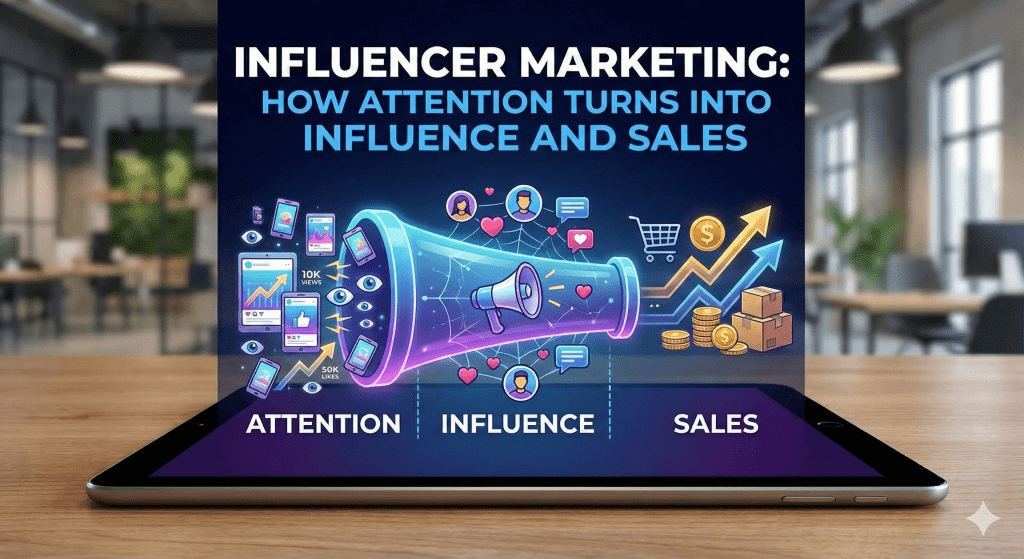
What Is Influencer Marketing?
Influencer marketing is a digital marketing approach where individuals with established credibility and audience trust promote products, services, or ideas through content on social platforms or media channels.
At its core, influencer marketing is built on influence rather than interruption. Instead of placing an advertisement in front of an audience, a brand collaborates with a person who already has the audience’s attention. The promotion appears within the creator’s normal content flow, making it feel native rather than disruptive.
This distinguishes influencer marketing from traditional advertising. Traditional ads rely on placement and repetition. Influencer marketing relies on trust and perceived authenticity. The value does not come from the platform alone. It comes from the relationship between the influencer and their audience.
It is also important to distinguish influencer marketing from celebrity endorsements. While both involve public figures promoting products, influencer marketing is often more niche and community-driven. Many influencers are not mainstream celebrities. They are specialists in specific areas such as fitness, technology, beauty, finance, gaming, education, or local communities. Their influence is rooted in relatability and consistency rather than fame alone.
In practical terms, influencer marketing usually involves:
- A brand partnering with an influencer
- The influencer creating content that features or discusses the product
- The content being shared with the influencer’s audience
- The audience taking some form of action, such as engaging, clicking, or purchasing
The format can vary widely, but the structure remains consistent. A trusted voice integrates a message into content that the audience already consumes voluntarily.
Today, influencer marketing extends beyond social media posts. It includes podcasts, newsletters, live streams, online communities, and even long-form educational content. As digital platforms continue to prioritize personality-driven content, influencer marketing has become embedded in how modern audiences discover and evaluate products.
Influencer marketing is not simply about popularity. It is about attention, trust, and distribution working together in a structured system.
How Influencer Marketing Works
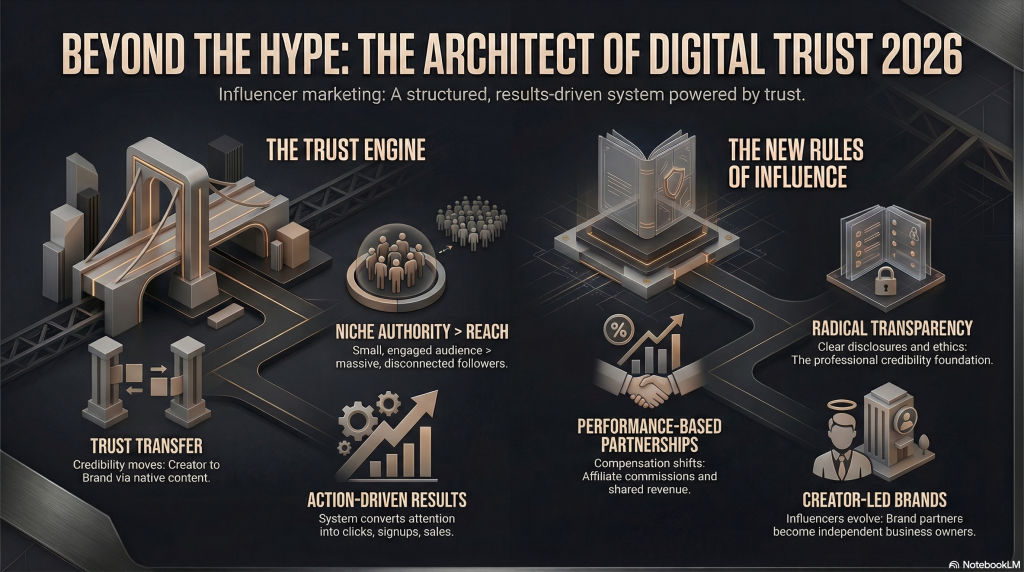
Influencer marketing operates as a structured system built on attention, trust, content, and measurable outcomes. While formats vary, the underlying mechanics remain consistent.
At a high level, four elements drive the system:
- The influencer
- The audience
- The platform
- The brand or message being promoted
1. Attention Is the Starting Point
Influencers build attention over time by consistently publishing content around a niche or identity. This attention is not random. It is usually topic-driven. Fitness creators attract fitness audiences. Tech reviewers attract tech enthusiasts. Educators attract learners.
Platforms amplify this attention through algorithms that reward engagement, consistency, and watch time. The influencer becomes a distribution channel with built-in trust.
2. Trust Creates Influence
Attention alone does not create results. Trust does.
Audiences follow influencers because they:
- Provide value
- Share personal experiences
- Offer opinions
- Maintain consistency
When a trusted individual introduces a product or service within their content, the message carries more weight than a traditional advertisement. This is known as trust transfer. The credibility of the influencer influences how the audience perceives the brand.
3. Content Integrates the Message
Unlike traditional advertising, influencer marketing integrates promotional messages into native content formats such as:
- Short-form videos
- Tutorials
- Reviews
- Story-based posts
- Long-form discussions
The promotion appears inside content the audience already consumes voluntarily. When done well, the brand message feels aligned with the influencer’s niche rather than forced into the feed.
4. Action and Measurement Close the Loop
Influencer marketing is not only about visibility. It aims to drive action.
Actions may include:
- Website visits
- Product purchases
- App downloads
- Email signups
- Engagement metrics
Performance can be tracked using affiliate links, discount codes, unique landing pages, or engagement analytics. This measurement component transforms influencer marketing from pure exposure into a results-driven channel.
The Flow in Simple Terms
The system follows a predictable flow:
Attention → Trust → Content → Influence → Action
When each stage aligns correctly, influencer marketing converts audience attention into measurable outcomes.
At its best, it does not interrupt the audience. It participates in their existing content experience while guiding decisions through credibility and relevance.
What Are the Different Types of Influencer Marketing?
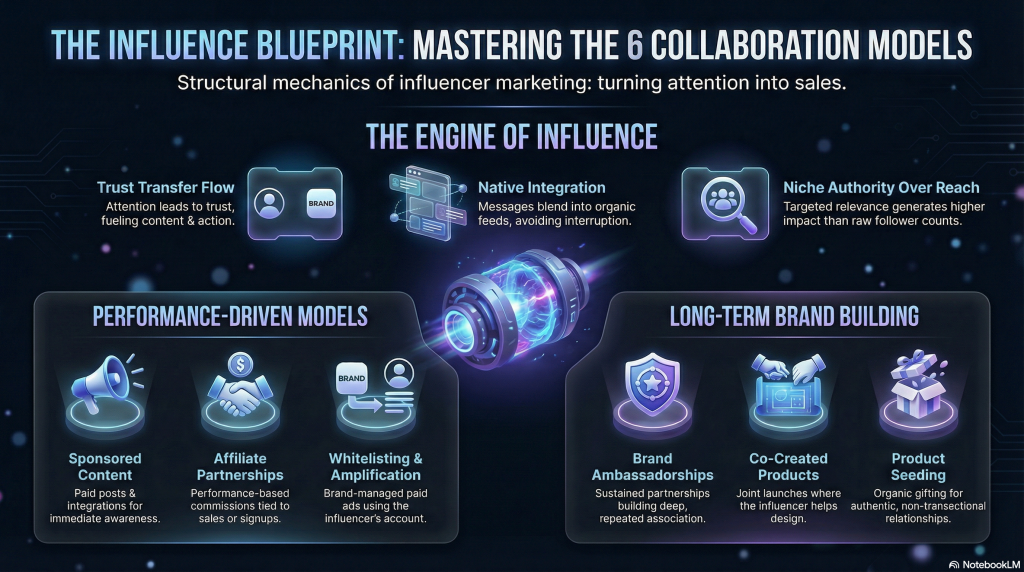
Influencer marketing is not a single format. It includes multiple collaboration models, each designed for different goals, audiences, and levels of involvement. Understanding these types helps clarify how influencer marketing is applied in practice.
1. Sponsored Content
Sponsored content is the most recognizable form of influencer marketing. A brand pays an influencer to create and publish content that features a product or service.
This can include:
- Short-form videos
- Instagram posts or stories
- YouTube integrations
- Podcast mentions
- Newsletter features
The influencer discloses the partnership, and the content blends into their regular publishing style. The primary goal is awareness, engagement, or direct response depending on the campaign.
2. Affiliate Partnerships
Affiliate-based influencer marketing ties compensation to performance. Instead of a flat payment, the influencer earns a commission for each sale or action generated through a unique link or code.
This model is common in:
- Product reviews
- Tutorial content
- Resource recommendations
- Long-term content libraries
Affiliate partnerships align incentives. The influencer benefits when the audience converts.
3. Product Seeding
Product seeding involves sending products to influencers without guaranteed payment. The influencer may choose to feature the product if it aligns with their interests.
This approach works best when:
- The product fits naturally within the influencer’s niche
- The influencer genuinely values the product
- The relationship is long-term rather than transactional
Product seeding relies heavily on authenticity.
4. Brand Ambassadorships
Brand ambassadorships are longer-term partnerships where an influencer represents a brand over an extended period.
This may include:
- Multiple content pieces over months
- Event participation
- Exclusive collaborations
- Consistent brand mentions
Ambassadorships build repeated exposure and stronger audience association between influencer and brand.
5. Whitelisting and Paid Amplification
Whitelisting occurs when a brand runs paid advertisements using content created by the influencer, sometimes through the influencer’s own account.
In this structure:
- The influencer produces the content
- The brand controls ad targeting and budget
- The content reaches audiences beyond the influencer’s organic followers
This blends influencer credibility with paid distribution.
6. Co-Created Products and Collaborations
Some influencer partnerships move beyond promotion into collaboration. This includes:
- Limited-edition product lines
- Co-branded merchandise
- Joint launches
- Revenue-sharing agreements
In this model, the influencer becomes part of the product narrative rather than just its promoter.
7. Event and Experience Collaborations
Influencers may participate in:
- Brand-sponsored events
- Launch activations
- Travel campaigns
- In-person community experiences
These collaborations generate content around shared experiences and often extend across multiple platforms.
Each type serves a different purpose. Some focus on awareness. Others emphasize performance. Some are short-term transactions, while others build long-term alignment.
Despite the variation, all forms share the same foundation: a trusted individual integrates a brand message into content consumed voluntarily by an engaged audience.
Real Examples of Influencer Marketing in Action
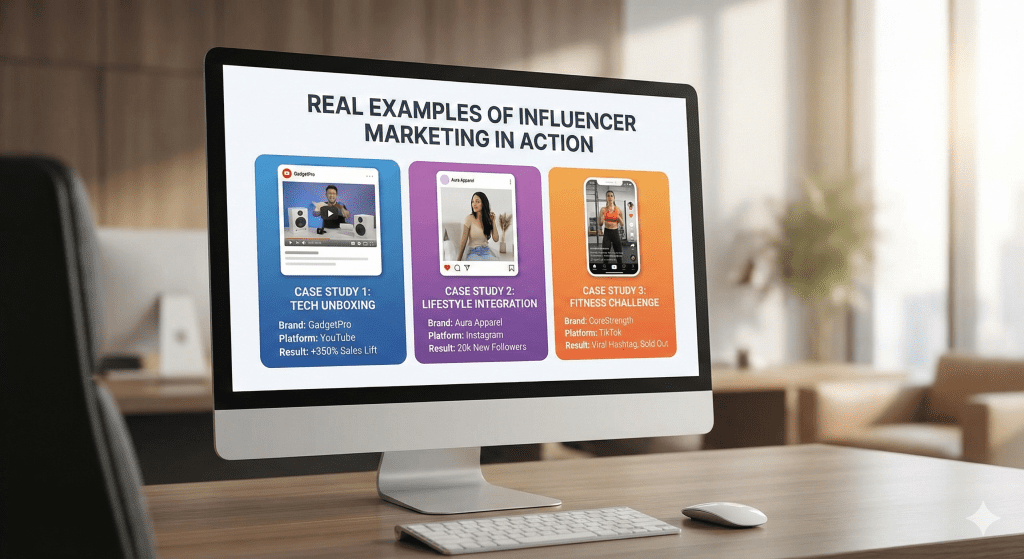
Understanding the structure is important. Seeing how it plays out in real situations makes it clearer.
Below are realistic scenarios that show how influencer marketing functions across different contexts.
1. A Small Online Brand Partnering With Micro-Influencers
A small skincare brand launches a new moisturizer. Instead of running only traditional ads, the company partners with several micro-influencers in the beauty niche.
Each influencer:
- Creates a short routine-style video
- Shows how the product fits into daily use
- Shares honest feedback
- Includes a discount code
Because the influencers already have trust within a skincare-focused audience, the promotion feels relevant. The brand gains targeted exposure without needing a massive advertising budget.
This example highlights how niche alignment often matters more than large follower counts.
2. A Fitness Influencer Promoting a Digital Program
A fitness coach with a dedicated audience partners with a nutrition app. Instead of posting a simple advertisement, the influencer:
- Documents their own experience using the app
- Shares progress updates
- Integrates the app into workout content
- Offers a limited-time signup code
The promotion becomes part of an ongoing narrative rather than a one-time mention. Engagement remains high because the integration feels authentic.
This demonstrates how storytelling strengthens promotional impact.
3. A Local Business Using Regional Creators
A local café collaborates with several city-based content creators. Each influencer:
- Visits the café
- Shares the experience through short-form videos
- Tags the location
- Encourages followers to visit
The campaign increases local foot traffic and online visibility. Because the creators are embedded in the local community, the recommendations feel personal and relevant.
Influencer marketing does not require global reach to be effective. Local influence can drive meaningful results.
4. A Technology Reviewer Launch Integration
A technology YouTuber integrates a software sponsor into a long-form review video. Instead of interrupting the content flow, the influencer:
- Introduces the sponsor during a natural transition
- Explains how they personally use the software
- Provides a clear call to action
Because the audience expects tool recommendations within that niche, the sponsorship feels aligned with the content.
This illustrates how platform format shapes execution.
5. Long-Term Brand Ambassadorship
A wellness brand builds a year-long relationship with a health-focused influencer. Over time, the influencer:
- Mentions the brand consistently
- Shares results across seasons
- Participates in product launches
- Engages in live Q&A sessions
The repeated exposure builds association and familiarity. Instead of one isolated promotion, the audience sees sustained endorsement.
Long-term partnerships often generate stronger brand recall than one-off posts.
These examples show that influencer marketing is not limited to a single industry or platform. It adapts to audience type, niche, and campaign goal.
What remains consistent is the underlying structure: a trusted individual integrates a brand message into content that an audience already chooses to consume.

Common Mistakes in Influencer Marketing (And What to Avoid)
Influencer marketing can be powerful, but it is also easy to misuse. Many campaigns underperform not because the model fails, but because the execution is flawed.
Understanding these common mistakes helps avoid wasted budget, damaged credibility, or ineffective results.
1. Choosing Based on Follower Count Alone
Large audiences can look impressive, but reach does not guarantee influence.
A creator with 500,000 followers may generate less impact than someone with 20,000 highly engaged followers in a focused niche. When audience alignment is weak, engagement drops and trust declines.
Relevance and audience fit matter more than raw numbers.
2. Ignoring Audience Alignment
Even when an influencer has strong engagement, the audience must match the product.
Promoting financial tools through a gaming-focused account or fitness supplements through a travel channel often leads to poor results. The closer the alignment between niche and message, the stronger the outcome.
Influence works best when the product feels like a natural extension of the content.
3. Over-Scripting the Content
Heavy scripting removes authenticity. When the message sounds corporate or forced, audiences recognize it immediately.
Influencer marketing works because of personal tone and natural integration. Over-controlling the messaging often reduces credibility and engagement.
Clear guidelines help. Overly rigid scripts hurt.
4. Failing to Disclose Sponsorships
Transparency is not optional. Sponsored content must be disclosed clearly.
Hidden sponsorships damage trust and may violate advertising regulations. Even when disclosure feels less “organic,” it protects credibility and legal compliance.
Trust once broken is difficult to rebuild.
5. Neglecting Performance Tracking
Without measurement, it is impossible to evaluate success.
Tracking tools such as:
- Unique discount codes
- Affiliate links
- Custom landing pages
- Engagement metrics
Allow performance to be evaluated properly. Campaigns should be assessed on defined goals, not just impressions.
6. Treating Influencer Marketing as a One-Time Experiment
One isolated post rarely produces lasting results.
Influence compounds over time. Repeated exposure, consistent messaging, and ongoing collaboration strengthen brand association.
Short-term thinking often limits long-term impact.
7. Over-Reliance on a Single Platform
Platforms change. Algorithms shift. Audiences migrate.
Relying entirely on one channel increases risk. Diversification across platforms and formats improves stability and resilience.
The Bigger Pattern
Most influencer marketing mistakes come from misunderstanding what drives influence.
The model depends on trust, relevance, and integration. When campaigns ignore those elements and focus only on visibility, performance declines.
Influencer marketing is not just exposure. It is credibility applied strategically.
What Are the Regulations Surrounding Influencer Marketing?
Influencer marketing operates within advertising laws. Even though the content often feels casual and personal, it is still considered commercial communication when compensation or benefits are involved.
Understanding the regulatory landscape is essential for maintaining transparency and avoiding legal risk.
1. Disclosure Requirements
In many countries, influencers must clearly disclose when content is sponsored or when they receive compensation.
Compensation can include:
- Direct payment
- Free products
- Affiliate commissions
- Travel or event invitations
- Discounts or gifts
Disclosures should be:
- Clear
- Visible
- Easy to understand
Common disclosure labels include:
- “Ad”
- “Sponsored”
- “Paid partnership”
Hiding disclosures in hashtags or placing them at the end of long captions may not meet regulatory standards.
Transparency protects both credibility and compliance.
2. Platform Policies
Major social platforms have built-in tools for sponsored content disclosures. These tools help indicate paid partnerships clearly within the post itself.
Each platform has its own policies regarding:
- Sponsored labeling
- Affiliate links
- Branded content tools
- Prohibited industries
Violating platform policies can result in reduced visibility, demonetization, or account suspension.
3. Consumer Protection Laws
Advertising regulations are designed to prevent misleading or deceptive practices.
Influencers and brands are generally prohibited from:
- Making false claims
- Exaggerating product benefits
- Omitting critical information
- Presenting paid endorsements as independent opinions
This is particularly important in sensitive industries such as:
- Health and wellness
- Financial products
- Education services
- Supplements
Accuracy matters as much as disclosure.
4. Responsibility Shared Between Parties
In most regulatory frameworks, both the influencer and the brand share responsibility for compliance.
Brands must:
- Provide clear disclosure guidelines
- Avoid encouraging deceptive practices
Influencers must:
- Disclose partnerships clearly
- Represent products honestly
Legal accountability does not disappear because the format feels informal.
5. International Considerations
Influencer marketing often crosses borders. Regulations vary by country, but most developed markets enforce some form of transparency requirement.
When content reaches a global audience, compliance becomes more complex. Influencers and businesses must consider:
- Local advertising standards
- Regional consumer protection laws
- Platform-specific enforcement
The general principle remains consistent across regions: sponsored content must be clearly identified.
Why Regulation Matters
Regulation exists to protect consumers from hidden persuasion and misleading claims.
In influencer marketing, trust is the foundation. If audiences feel misled, long-term credibility declines. Transparent disclosure does not weaken influence. It strengthens it by reinforcing honesty.
Influencer marketing may look informal, but it operates within formal legal frameworks. Understanding those

What Are the Ethical Considerations in Influencer Marketing?
Beyond legal compliance, influencer marketing carries ethical responsibilities. Even when disclosure rules are followed, ethical judgment determines whether the promotion strengthens or weakens trust over time.
Influencer marketing works because audiences believe the person behind the content. When that trust is compromised, the entire system weakens.
1. Authenticity and Honest Representation
Audiences expect influencers to share genuine opinions. Promoting products that are not personally used, understood, or aligned with the influencer’s niche creates tension.
Ethical influencer marketing requires:
- Promoting products that fit the creator’s identity
- Avoiding exaggerated claims
- Representing real experiences honestly
When endorsements feel disconnected from reality, credibility declines.
2. Transparency Beyond Minimum Disclosure
Legal disclosure may require labeling sponsored content, but ethical transparency goes further.
It includes:
- Clearly explaining affiliate relationships
- Being open about long-term partnerships
- Avoiding vague language that hides commercial intent
Ethical transparency respects the audience’s ability to make informed decisions.
3. Responsibility in Sensitive Industries
Certain industries demand higher ethical standards, including:
- Health and wellness
- Financial products
- Education programs
- Supplements
- Mental health services
Misleading claims in these areas can cause real harm. Ethical practice requires careful messaging, evidence-based statements, and responsible promotion.
Influence carries weight. That weight must be handled carefully.
4. Audience Trust and Long-Term Credibility
Short-term gains can damage long-term relationships.
Frequent promotions, irrelevant brand deals, or inconsistent messaging may increase immediate revenue but reduce audience loyalty. Ethical influencer marketing balances commercial activity with content value.
Trust compounds slowly. It can decline quickly.
5. Power Dynamics and Vulnerable Audiences
Influencers often have direct access to young or impressionable audiences. This creates an ethical responsibility to avoid manipulative tactics.
Examples of ethical concerns include:
- Overstating scarcity or urgency
- Exploiting insecurities
- Promoting unrealistic outcomes
- Targeting vulnerable groups without safeguards
Responsible influence prioritizes informed choice over emotional pressure.
6. Data and Privacy Awareness
Influencer campaigns may involve tracking links, discount codes, or audience data. Ethical practice includes respecting privacy and avoiding deceptive data collection tactics.
As digital ecosystems grow more complex, privacy awareness becomes part of responsible marketing.
Why Ethics Matter in Influencer Marketing
Influencer marketing depends on trust as its core asset. Regulations enforce minimum standards, but ethics sustain long-term credibility.
When influencers and businesses prioritize transparency, honesty, and responsible messaging, the system remains sustainable. When those principles are ignored, audiences disengage and platforms intervene.
Influencer marketing is powerful because it feels personal. Ethical considerations ensure that personal connection remains intact.
Influencer Marketing vs Other Digital Models
Influencer marketing does not exist in isolation. It operates alongside other digital growth models such as UGC, affiliate marketing, and paid advertising. Each model uses attention differently, distributes risk differently, and generates results through different mechanisms.
Understanding these differences helps clarify where influencer marketing fits in the broader digital ecosystem.
Influencer Marketing vs UGC
The primary difference between influencer marketing and user-generated content lies in distribution.
In influencer marketing:
- The influencer controls the audience
- The content is published through the influencer’s platform
- The value comes from reach and existing trust
In UGC:
- The content creator produces assets
- The brand controls distribution
- The value comes from relatability and performance in ads or product pages
Influencer marketing leverages audience ownership. UGC leverages content production.
One centers on distribution power. The other centers on creative assets.
Influencer Marketing vs Affiliate Marketing
Affiliate marketing is performance-based by design. Compensation depends on measurable actions such as sales or signups.
In influencer marketing:
- Payment may be flat-fee, performance-based, or hybrid
- The emphasis is often on awareness plus conversion
In affiliate marketing:
- Compensation is tied directly to conversion
- The risk is shifted toward the affiliate
- Long-term passive income structures are more common
Affiliate marketing prioritizes direct attribution. Influencer marketing blends branding and performance.
While they overlap in some campaigns, the incentive structures differ significantly.
Influencer Marketing vs Paid Advertising
Paid advertising relies on direct platform placement and targeting tools. Brands pay platforms for distribution.
In influencer marketing:
- Distribution happens through trusted individuals
- The message is integrated into native content
- The influence comes from relationship credibility
In paid advertising:
- The platform controls targeting and reach
- The message is often clearly identified as an ad
- The effectiveness depends on creative and targeting precision
Paid ads are platform-driven. Influencer marketing is relationship-driven.
Both can work together, but they operate through different trust dynamics.
Where Influencer Marketing Fits
Influencer marketing sits between organic content and paid media. It combines:
- Human credibility
- Platform amplification
- Measurable action
It works best when trust, niche alignment, and content integration are strong.
- Unlike UGC, it depends on audience ownership.
- Unlike affiliate marketing, it is not always strictly performance-based.
- Unlike paid ads, it is built on relationship capital.
Each model has strengths and trade-offs. Influencer marketing stands out because it transforms personal attention into commercial influence within communities that already exist.
The Future of Influencer Marketing
Influencer marketing continues to evolve alongside changes in technology, platforms, and audience behavior. What began as simple sponsored posts has become a more structured and performance-driven system. In 2026 and beyond, several shifts are shaping its direction.
1. The Rise of Micro and Nano Influencers
Larger audiences once dominated influencer marketing. Today, smaller and highly focused communities are gaining more attention.
Micro and nano influencers often deliver:
- Higher engagement rates
- Stronger niche authority
- More direct audience relationships
Brands and businesses increasingly value relevance over reach. As audiences grow more selective, influence becomes more specialized.
2. Performance-Based Partnerships
Flat-fee sponsorships are still common, but performance-based compensation is expanding.
Models such as:
- Affiliate commissions
- Revenue sharing
- Hybrid payment structures
Align incentives between influencers and businesses. As measurement tools improve, campaigns are becoming more accountable and results-focused.
3. Creator-Led Brands
Many influencers are moving beyond partnerships and launching their own products.
Examples include:
- Skincare lines
- Fitness programs
- Digital courses
- Subscription communities
In these cases, influence becomes the foundation for entrepreneurship. The line between influencer and business owner continues to blur.
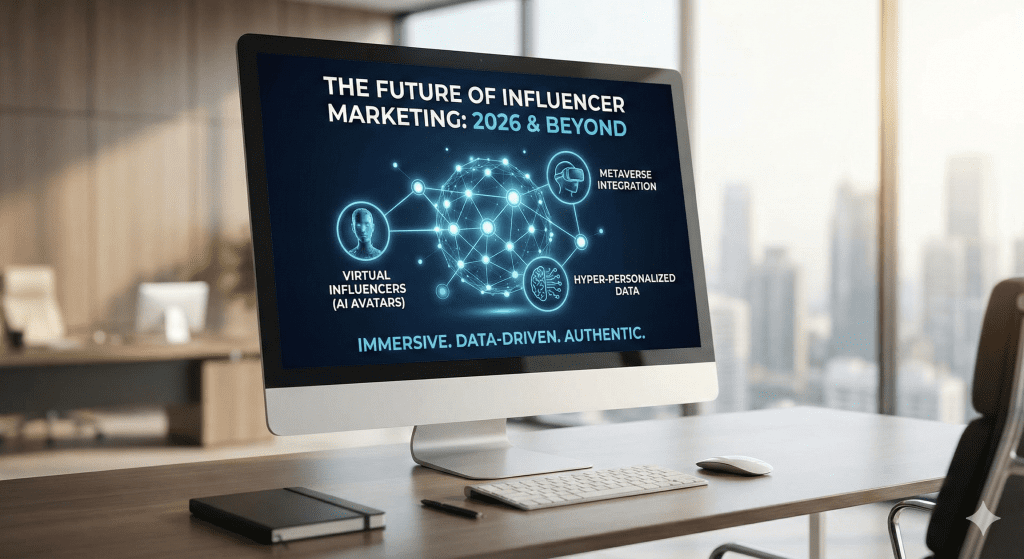
4. AI and Virtual Influencers
Artificial intelligence is introducing new dynamics into influencer marketing.
AI-generated personalities and virtual influencers are already active on major platforms. While they may lack personal experience, they can scale consistently and operate across markets.
This raises questions about authenticity, trust, and long-term sustainability.
5. Increased Regulation and Transparency
As influencer marketing grows, regulatory oversight continues to tighten.
Disclosure standards, advertising guidelines, and platform enforcement are becoming stricter. Transparency is no longer optional. Clear communication is becoming part of professional credibility.
6. Platform Diversification
Influence is no longer limited to one or two platforms.
Short-form video, long-form video, podcasts, newsletters, live streaming, and private communities all play roles in modern campaigns. Influencer marketing is expanding beyond feeds into ecosystem-based presence.
7. Community-Driven Influence
Audiences increasingly value interaction over passive consumption.
Community-based platforms, private groups, and membership models allow influencers to build deeper relationships. Influence shifts from broadcasting to participation.
The Long-Term Direction
Influencer marketing is unlikely to disappear. Instead, it is becoming more professional, more measured, and more integrated into broader digital strategies.
The future favors:
- Niche authority over mass reach
- Transparent partnerships over hidden promotions
- Long-term credibility over short-term visibility
- Structured collaboration over one-off posts
As attention becomes more fragmented and audiences grow more selective, trust will remain the defining asset.
Influencer marketing will continue to adapt, but its foundation remains consistent: attention combined with credibility creates influence. Influence, when applied responsibly, drives action.
Conclusion
Influencer marketing is no longer a niche tactic or a passing trend. It has become a structured system built on attention, credibility, and digital distribution. In 2026, influence operates as a measurable and scalable asset within the online economy.
At its core, influencer marketing works because people trust people. Platforms amplify individuals. Audiences follow personalities. When that trust intersects with relevant products or services, influence turns into action.
This guide has shown that influencer marketing is more than sponsored posts. It includes multiple collaboration models, clear structural mechanics, regulatory responsibilities, ethical considerations, and evolving future trends. It exists alongside UGC, affiliate marketing, and paid advertising, but it functions differently from each of them.
Its strength lies in trust-based distribution. Its risk lies in misuse, over-commercialization, and loss of credibility.
As platforms evolve and attention becomes more competitive, the long-term advantage will belong to those who understand the system clearly. Influence is not accidental. It is built through consistency, alignment, and responsible communication.
Influencer marketing continues to shape how products are discovered, how brands grow, and how individuals build digital authority. It is not simply a marketing tactic. It is part of the architecture of modern online commerce.

Frequently Asked Questions
What qualifies as influencer marketing?
Influencer marketing occurs when an individual with audience trust promotes a product, service, or idea through their content in exchange for compensation or strategic collaboration.
Is influencer marketing only for social media?
No. While social platforms are the most visible channels, influencer marketing also appears in podcasts, newsletters, blogs, live streams, and private communities.
Do influencers need large audiences?
Not necessarily. Many campaigns prioritize niche alignment and engagement over raw follower numbers. Micro and nano influencers often deliver strong results within specific communities.
Is influencer marketing regulated?
Yes. Most countries require clear disclosure of sponsored content. Influencers and businesses must follow advertising and consumer protection laws.
How is influencer marketing different from UGC?
Influencer marketing relies on the influencer’s own audience and distribution. UGC focuses on content creation that brands distribute through their own channels.
Is influencer marketing saturated?
Competition has increased, but demand continues to grow. Success depends on differentiation, niche alignment, and strategic execution rather than simply entering the space.
Can small businesses use influencer marketing?
Yes. Small and local businesses often collaborate with micro-influencers or regional creators to reach targeted audiences effectively.

0 Comments