Introduction
Generating leads is only part of the revenue process. The real challenge begins when a company needs to determine which prospects are actually ready to talk to sales.
Many leads show interest early in the journey. They download resources, attend webinars, or explore product pages. But not all of them are prepared to evaluate a purchase. If sales teams pursue these leads too early, conversations stall and valuable time is lost.
This is where the concept of a Sales Qualified Lead (SQL) becomes essential.
A Sales Qualified Lead is a prospect who has demonstrated clear buying intent and meets the criteria that indicate readiness for direct sales engagement. At this stage, the lead has moved beyond general interest and is considered a realistic opportunity for the sales team.
In this guide, you will learn what a Sales Qualified Lead is, how companies identify SQLs, and how they fit into the broader marketing and sales funnel.
- A Sales Qualified Lead (SQL) is a prospect who has shown strong buying intent and is ready for sales engagement.
- SQLs typically emerge after a lead progresses through earlier marketing qualification stages.
- Signals such as demo requests, pricing inquiries, or trial sign-ups often indicate SQL status.
- SQL qualification helps sales teams focus on leads that are more likely to convert.
- Clear SQL definitions improve alignment between marketing and sales teams.
Disclaimer: I am an independent Affiliate. The opinions expressed here are my own and are not official statements. If you follow a link and make a purchase, I may earn a commission.
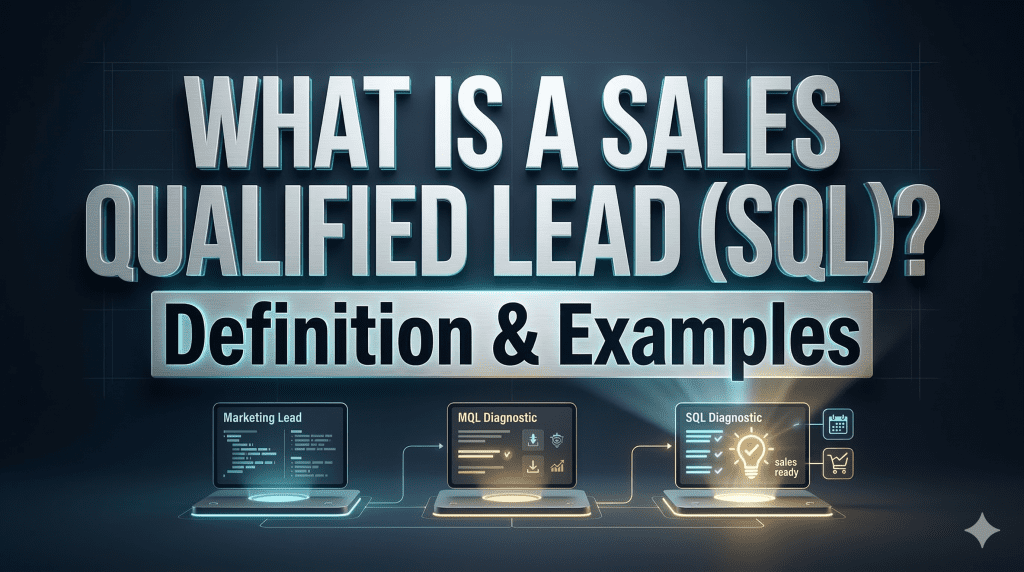
What a Sales Qualified Lead (SQL) Actually Is
A Sales Qualified Lead (SQL) is a prospect who has progressed far enough in the buying journey to be considered ready for direct engagement with the sales team.
At this stage, the lead has moved beyond early research and general interest. Their behavior suggests they are evaluating solutions and may be preparing to make a purchasing decision.
This distinction matters because not every interested lead is ready to talk to sales. Many prospects are still learning about the problem, exploring possible solutions, or comparing options. Engaging too early can lead to unproductive conversations and wasted effort.
An SQL represents a clear step forward in readiness.
Signals That Indicate Sales Readiness
Sales qualification typically occurs when a lead demonstrates stronger buying intent. These signals often include actions that indicate the prospect wants more specific information about the product or service.
Common examples include:
- Requesting a product demo
- Asking for pricing information
- Signing up for a product trial
- Contacting the sales team directly
- Scheduling a consultation
These actions suggest the prospect is no longer just exploring. They are actively evaluating whether the offering fits their needs.
The Role of SQLs in the Funnel
The SQL stage acts as a bridge between marketing and sales.
Before reaching this stage, leads are usually nurtured by marketing through content, email campaigns, and educational resources. Once a lead becomes sales-qualified, the responsibility shifts toward the sales team, who begin direct conversations to understand needs, address objections, and guide the prospect toward a purchase.
This transition helps ensure that sales teams spend their time on prospects who are genuinely considering a solution.
In simple terms, a Sales Qualified Lead is a lead that is ready for a real sales conversation.

Why SQLs Matter in the Sales Process
A Sales Qualified Lead (SQL) plays a crucial role in turning marketing activity into actual revenue. Without a clear SQL stage, sales teams often spend time pursuing leads that are not yet ready to buy, which reduces efficiency and lowers conversion rates.
They Help Sales Focus on Real Opportunities
Sales teams have limited time and resources. If every lead were passed directly to sales, representatives would spend much of their time speaking with people who are still researching rather than evaluating a purchase.
SQLs help solve this problem by filtering leads based on readiness and intent. When a lead reaches the SQL stage, the sales team can be more confident that the prospect is worth engaging.
They Improve Conversion Rates
Leads that reach the SQL stage have already demonstrated meaningful interest and intent. Because of this, they are typically much closer to making a purchasing decision.
By focusing on these higher-intent prospects, sales teams can increase the likelihood that conversations turn into real opportunities and eventually into customers.
They Strengthen Marketing–Sales Alignment
SQLs also improve collaboration between marketing and sales teams.
Marketing focuses on generating interest and nurturing leads until they show clear signals of readiness. Once those signals appear, the lead is passed to sales as an SQL.
This shared process ensures that:
- Marketing delivers leads with stronger potential
- Sales receives prospects who are more prepared for conversation
- Both teams work toward the same revenue goals
They Create a More Efficient Sales Funnel
A well-defined SQL stage helps maintain a healthy funnel. Instead of pushing leads too quickly toward sales, companies allow prospects to progress naturally through the buying journey.
When a lead becomes sales-qualified, the transition is smoother because the prospect has already built familiarity with the brand and its offering.
In this way, SQLs help transform early interest into structured opportunities that sales teams can actively pursue.
How a Lead Becomes an SQL
A lead becomes a Sales Qualified Lead (SQL) when it demonstrates clear signals that a purchase decision may be approaching. At this point, the lead has progressed beyond general interest and is considered ready for direct interaction with the sales team.
While the exact criteria vary between organizations, the transition to SQL usually happens when both intent signals and qualification checks align.
Strong Buying Intent
The most common trigger for SQL status is a clear indication that the prospect wants to explore the product or service more seriously.
Examples of strong intent include:
- Requesting a product demonstration
- Asking for pricing or a proposal
- Starting a free trial
- Booking a meeting with the sales team
- Contacting the company for more detailed information
These actions suggest that the prospect is no longer just learning about the topic. Instead, they are actively evaluating whether the solution fits their needs.
Sales Qualification Frameworks
Once a lead shows intent, sales teams often apply qualification frameworks to confirm that the opportunity is legitimate.
Common frameworks include:
- Budget – Does the prospect have the financial capacity to purchase?
- Authority – Is the person speaking with sales able to influence or make the buying decision?
- Need – Does the prospect have a clear problem the product can solve?
- Timing – Is there a realistic timeline for the purchase?
These criteria help sales teams determine whether the lead should move forward in the pipeline.
Sales Acceptance of the Lead
Another important step in the SQL process is sales acceptance.
Even if marketing identifies a lead as promising, the sales team typically reviews and confirms whether the lead is truly ready for direct engagement. Once the sales team accepts the lead, it officially becomes an SQL.
This handoff ensures that marketing and sales maintain a shared understanding of lead quality.
Transition Into the Sales Pipeline
After qualification, the SQL enters the active sales pipeline. From this point forward, sales representatives begin deeper conversations with the prospect to understand needs, present solutions, and guide the decision-making process.
The goal of this stage is simple: transform qualified interest into a real business opportunity.

SQL vs MQL: What Changes at This Stage?
Both Marketing Qualified Leads (MQLs) and Sales Qualified Leads (SQLs) represent important stages in the lead lifecycle, but they signal very different levels of readiness.
The key difference is simple: an MQL shows interest, while an SQL shows buying intent.
The Role of an MQL
A Marketing Qualified Lead is still in the exploration phase. The prospect has interacted with marketing efforts in meaningful ways, such as downloading content, attending webinars, or engaging with email campaigns.
These actions indicate curiosity and potential, but they do not necessarily mean the person is ready to make a purchase decision.
At the MQL stage, marketing continues to nurture the lead by providing helpful information, answering common questions, and building trust.
The Role of an SQL
A Sales Qualified Lead has moved beyond exploration. The prospect is actively evaluating whether the product or service fits their needs.
Signals that often indicate this shift include:
- Requesting a product demonstration
- Asking for pricing details
- Starting a free trial
- Contacting the company directly
Once these signals appear, the lead becomes suitable for direct sales engagement.
The Transition Between Stages
The move from MQL to SQL usually occurs when a prospect demonstrates stronger intent combined with a good fit for the product or service.
Marketing teams identify early engagement and nurture the lead. As the lead becomes more informed and interested, certain actions indicate readiness for a deeper conversation.
At that point, the lead is passed to the sales team as an SQL.
Why This Distinction Matters
Separating MQLs from SQLs helps organizations manage leads more effectively.
- Marketing focuses on generating interest and nurturing prospects.
- Sales focuses on leads that are closer to making a purchasing decision.
This division improves efficiency and increases the chances that sales conversations result in real opportunities.

Common Criteria Used to Define an SQL
Although the concept of a Sales Qualified Lead (SQL) is widely used, the specific criteria that define it vary between companies. Each organization determines what signals indicate that a prospect is ready for direct engagement with the sales team.
In most cases, SQL qualification combines intent signals, prospect fit, and sales validation.
Clear Buying Intent
The strongest indicator of an SQL is a clear signal that the prospect is seriously considering a purchase. Unlike earlier marketing interactions, these actions suggest that the lead wants to evaluate the solution more directly.
Typical examples include:
- Requesting a product demo
- Asking for detailed pricing information
- Signing up for a free trial
- Scheduling a meeting with a sales representative
- Submitting a contact form requesting more information
These actions show that the prospect is moving from research toward decision-making.
Fit With the Ideal Customer Profile
Intent alone does not always mean the opportunity is viable. A prospect may request a demo out of curiosity even if their organization is not a good fit for the product.
For this reason, companies often verify whether the lead matches their ideal customer profile (ICP).
Common fit criteria include:
- Company size
- Industry sector
- Geographic location
- Budget capacity
- Job role or decision-making authority
When a lead demonstrates both intent and strong profile alignment, the chances of a successful sale increase.
Confirmation Through Sales Interaction
In many organizations, the final step in SQL qualification involves direct validation by the sales team.
After a lead shows intent, a sales representative may conduct an initial conversation or discovery call to confirm:
- The prospect’s needs
- Their timeline for purchasing
- Whether the product or service can realistically solve their problem
If the lead meets these criteria, it is formally accepted as an SQL and moved into the active sales pipeline.
Qualification Frameworks
Sales teams sometimes use structured frameworks to evaluate whether a lead should be considered sales-qualified. These frameworks help ensure that opportunities meet consistent standards.
Examples include:
- BANT (Budget, Authority, Need, Timing)
- MEDDIC (Metrics, Economic Buyer, Decision Criteria, Decision Process, Identify Pain, Champion)
These frameworks help sales teams confirm that a lead is not just interested, but also capable of moving forward with a purchase.
Mistakes Companies Make With SQL Qualification
Defining Sales Qualified Leads (SQLs) helps sales teams focus on real opportunities, but the process can break down if the criteria are poorly defined or inconsistently applied. Many companies struggle with SQL qualification because they either move leads forward too quickly or delay engagement when prospects are ready to buy.
Here are some common mistakes organizations make.
Passing Leads to Sales Too Early
One of the most frequent problems occurs when leads are labeled as SQLs before they truly demonstrate buying intent.
For example, a lead might download a guide or attend a webinar and immediately be pushed into the sales pipeline. In reality, the prospect may still be researching the problem and not ready for a sales conversation.
When this happens, sales teams waste time pursuing leads that are not yet prepared to evaluate a solution.
Waiting Too Long to Engage
The opposite problem can also occur. Sometimes companies keep nurturing leads in marketing campaigns even after they have shown strong buying intent.
If a prospect requests pricing information or schedules a demo but receives only automated marketing emails, the opportunity may lose momentum.
When a lead signals readiness, timely sales engagement is critical.
Lack of Clear Qualification Criteria
Another common mistake is failing to define SQL criteria clearly.
Without clear guidelines, marketing and sales teams may disagree about which leads are truly ready. Marketing might consider a lead qualified based on engagement, while sales may expect stronger signals of intent.
A shared definition of SQL helps prevent this confusion.
Ignoring Lead Fit
Strong interest alone does not guarantee that a lead is a good opportunity.
For example, a prospect might request a demo but work for a company that is too small, in the wrong industry, or outside the target market. If the lead does not match the company’s ideal customer profile, pursuing the opportunity may not be productive.
Successful SQL qualification balances intent with fit.
Poor Communication Between Marketing and Sales
SQL qualification works best when marketing and sales teams collaborate closely.
If marketing passes leads without feedback from sales, or if sales ignores qualified leads, the system breaks down. Regular communication helps both teams refine qualification criteria and improve the quality of leads entering the pipeline.

Example of an SQL in a Real Sales Funnel
To understand how a Sales Qualified Lead (SQL) works in practice, it helps to walk through a typical prospect journey inside a sales funnel.
Step 1: Early Awareness
A potential customer begins researching a problem they want to solve. They might search online, read blog posts, or download educational resources.
At this stage, the person is still learning. They may interact with marketing content but are not yet ready to evaluate specific products or services.
The company may capture their contact information through a form or newsletter signup. This person is now a lead, but not yet qualified for sales.
Step 2: Marketing Qualification
Over time, the lead continues engaging with the company’s marketing efforts.
For example, they might:
- Download additional guides
- Attend a webinar
- Open several marketing emails
- Visit product pages on the website
These behaviors indicate growing interest. Based on this engagement and their profile information, the marketing team may classify the lead as a Marketing Qualified Lead (MQL).
At this stage, marketing continues nurturing the lead with relevant information.
Step 3: Strong Buying Signals
Eventually, the prospect performs actions that indicate stronger buying intent.
Examples might include:
- Requesting a product demonstration
- Asking for pricing information
- Starting a free trial
- Booking a consultation with a sales representative
These actions show that the prospect is actively evaluating solutions rather than simply researching the topic.
Step 4: Sales Qualification
Once these signals appear, the lead is reviewed by the sales team. A sales representative may conduct an initial conversation to understand the prospect’s needs, timeline, and decision-making process.
If the lead demonstrates a clear need and fits the company’s target customer profile, the lead becomes a Sales Qualified Lead (SQL).
Step 5: Entry Into the Sales Pipeline
After qualification, the SQL enters the active sales pipeline. From here, sales representatives work with the prospect to present solutions, answer questions, and guide the decision process.
The goal at this stage is to convert the qualified opportunity into a closed deal.
Conclusion
A Sales Qualified Lead (SQL) represents the moment when interest becomes a real sales opportunity. At this stage, a prospect has moved beyond early research and shown clear signals that they are ready to evaluate a solution more seriously.
By identifying SQLs, companies help their sales teams focus on prospects who are most likely to convert. Instead of spending time on leads that are still exploring the topic, sales representatives can engage with people who have demonstrated both interest and potential fit.
A clear SQL definition also strengthens the relationship between marketing and sales. Marketing focuses on generating and nurturing leads until they show meaningful intent, while sales takes over when a prospect is ready for direct engagement.
Ultimately, the purpose of the SQL stage is not simply to categorize leads. It is to ensure that the right prospects enter the sales pipeline at the right time, increasing the chances that conversations turn into real business opportunities.

FAQs About Sales Qualified Leads (SQL)
What is a Sales Qualified Lead (SQL)?
A Sales Qualified Lead (SQL) is a prospect who has shown strong buying intent and meets the criteria required for direct engagement with the sales team. At this stage, the lead is considered a realistic opportunity rather than just a marketing contact.
How is an SQL different from an MQL?
A Marketing Qualified Lead (MQL) shows meaningful interest in a company’s content or marketing activities but may still be researching. An SQL, on the other hand, has demonstrated clear buying intent and is ready for direct sales conversations.
What signals usually indicate that a lead is an SQL?
Common signals include actions that suggest a prospect is evaluating a purchase. Examples include requesting a demo, asking for pricing details, starting a product trial, or scheduling a call with a sales representative.
Who decides when a lead becomes an SQL?
In most organizations, the sales team confirms SQL status. Marketing may identify leads that show strong intent, but sales representatives usually review the lead to verify that it meets the company’s qualification criteria.
Can a lead move back from SQL to an earlier stage?
Yes. If a lead initially appears ready for sales but later shows lower interest or does not meet key requirements, it may return to marketing nurturing campaigns rather than remaining in the sales pipeline.
Why are SQLs important for sales teams?
SQLs help sales teams focus their efforts on prospects who are more likely to convert. By filtering out early-stage leads, companies improve sales efficiency and increase the chances of closing deals.
Are SQL criteria the same for every company?
No. Each company defines SQL criteria based on its industry, target customers, and sales process. While the concept is widely used, the exact signals that qualify a lead as an SQL can vary between organizations.

0 Comments