Introduction
Squeeze pages are widely used in online marketing, but they are often misunderstood.
At a glance, they look simple. A headline, a short message, and a form. Because of that, they are often treated as easy to create.
In practice, the results vary.
Some pages consistently capture leads with very little friction. Others receive traffic but produce little to no response, even when they appear similar on the surface.
Part of the confusion comes from how the term is used.
“Squeeze page” is often grouped together with terms like “opt-in page” and “landing page,” which makes it unclear what the page is actually meant to do and how it should be structured.
There is also a gap between simplicity and effectiveness.
A squeeze page does not need many elements, but each one has to serve a clear purpose. When the message, the offer, or the timing is slightly off, the page quickly loses effectiveness.
In this article, we’ll clarify what a squeeze page is, how it differs from related page types, why some work better than others, and how to build one that is clear, focused, and more likely to convert.
- A squeeze page is a focused page designed to collect contact information by guiding the visitor toward one specific action
- The key difference is focus squeeze pages remove distractions and limit choices
- Performance depends on alignment between the offer, the audience, and expectations
- A strong squeeze page follows a simple structure clear headline, brief explanation, and an easy opt-in
- Small details like clarity and reducing friction matter more than design complexity
- Most issues come from vague offers or mismatched traffic
- Squeeze pages work best as part of a larger system, not as a standalone solution
Disclaimer: I am an independent Affiliate. The opinions expressed here are my own and are not official statements. If you follow a link and make a purchase, I may earn a commission.
What a Squeeze Page Actually Is
A squeeze page is a page designed to collect a visitor’s contact information, usually an email address, by asking them to take one specific action.
In most cases, that action is tied to a simple exchange. The visitor gives their email, and in return receives something useful, such as a guide, a checklist, a discount, a free resource, or access to a short piece of content.
What makes a squeeze page distinct is its narrow focus. It is not built to explain everything, offer multiple paths, or let the visitor browse. Its job is much smaller than that. It is meant to move the visitor toward a single decision without distraction.
That is why squeeze pages are usually minimal. They tend to include a clear headline, a short explanation, a form, and a call to action. Anything beyond that is only there if it supports the same goal.
So the defining feature of a squeeze page is not just that it asks for an email. It is that the entire page is built around one action, one offer, and one outcome.
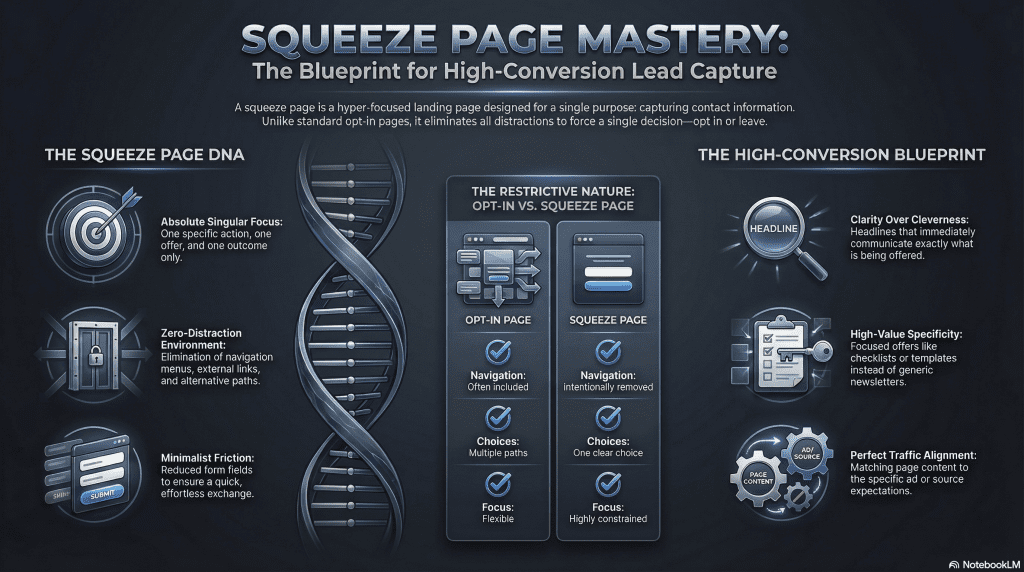
Squeeze Page vs Opt-In Page: What Is the Difference?
The terms “squeeze page” and “opt-in page” are closely related, but the difference comes down to how focused the page is.
An opt-in page is any page designed to collect contact information.
A squeeze page is a more restrictive version of that idea. It removes anything that does not directly support the opt-in.
That difference becomes clearer when you look at how each one is typically structured.
Side-by-Side Comparison
| Aspect | Opt-In Page | Squeeze Page |
|---|---|---|
| Primary Goal | Collect contact information | Collect contact information |
| Focus | Can include multiple elements or paths | Focused on one action only |
| Navigation | May include menus or links | Typically no navigation |
| Content Length | Can be short or more detailed | Usually short and minimal |
| Distractions | Some may be present | Intentionally removed |
| User Choices | May have more than one option | One clear choice: opt in or leave |
| Structure | Flexible | Highly constrained |
What This Means in Practice
An opt-in page gives the visitor more room to explore.
A squeeze page removes that option.
Everything on a squeeze page is designed to narrow attention toward a single decision. There are no alternative paths, and no additional actions to take.
That is the key difference.
The Key Distinction
All squeeze pages are opt-in pages.
But a squeeze page goes further by limiting choice and reducing friction around one specific action.
That added focus is what can make it more effective when used in the right context.
Why Some Squeeze Pages Work Better Than Others
Squeeze pages are simple by design, but their performance is not guaranteed.
Two pages can look nearly identical and produce very different results. The difference usually comes down to how well the page aligns with the visitor’s expectations and intent.
Clarity of the Offer
A visitor should be able to understand what they are getting within a few seconds.
If the offer is:
- vague
- too broad
- or unclear
then hesitation increases.
Clear offers tend to perform better because they reduce uncertainty. The visitor knows what they will receive and can decide quickly whether it is worth it.
Relevance to the Visitor
Even a well-written page will struggle if it reaches the wrong audience.
A squeeze page works best when:
- the visitor already has some level of interest
- the offer matches what they were looking for
If there is a mismatch between the traffic source and the page, conversions drop quickly.
Simplicity Without Confusion
Removing distractions helps, but removing too much can also create uncertainty.
A strong squeeze page is simple, but still answers basic questions:
- What is this?
- What do I get?
- Why should I care?
If those answers are missing, visitors hesitate instead of acting.
Perceived Value of the Exchange
The visitor is making a trade.
They are giving their contact information in exchange for something.
If the value of that “something” feels:
- useful
- specific
- relevant
they are more likely to opt in.
If it feels generic or unnecessary, they leave.
Timing and Context
Squeeze pages do not exist in isolation.
They are usually part of a flow:
- an ad
- a search result
- a piece of content
If the page matches what the visitor expects based on where they came from, it feels natural.
If not, it creates friction.
The Core Pattern
Squeeze pages perform well when three things align:
- The right visitor arrives
- The offer is clear and relevant
- The page makes the decision easy
When one of these is missing, performance drops even if the page itself looks well-designed.
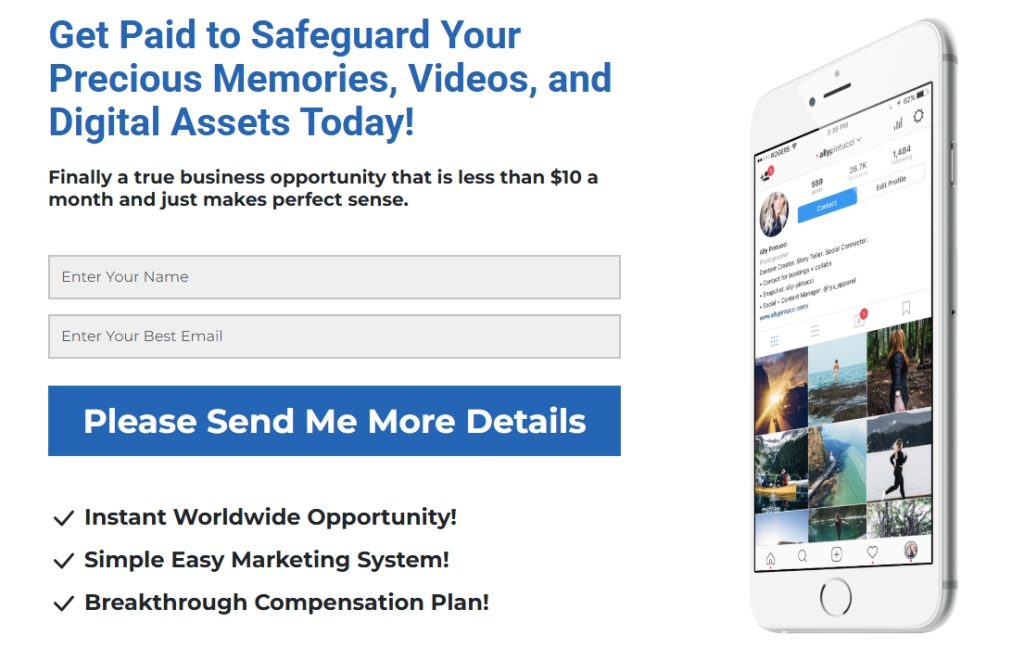
How a Strong Squeeze Page Should Be Structured
A strong squeeze page does not need many elements, but the ones it includes need to appear in a clear and logical order.
The goal is simple: help the visitor understand the offer, see its value, and take action without distraction.
Start With a Clear Headline
The headline is the first thing the visitor sees, so it needs to communicate the offer quickly.
It should make clear:
- what is being offered
- and why it matters
If the headline is vague or too general, the rest of the page has to work harder than it should.
Clarity matters more than clever wording.
Follow With a Short Explanation
After the headline, the page should briefly explain the offer.
This section should answer the basic questions a visitor is likely to have:
- what they will get
- who it is for
- and why it is useful
It does not need to be long. Its purpose is to remove uncertainty, not add detail.
Make the Offer Easy to Understand
The visitor should be able to recognize the value of the offer without effort.
This can be done with:
- a short description
- a few supporting points
- or a simple visual reference
The goal is to make the offer feel clear and concrete, not abstract or generic.
Place the Opt-In at the Natural Decision Point
Once the offer is clear, the next step should be obvious.
This is where the form and call to action come in.
The form should ask for as little information as possible, and the call to action should make the next step feel straightforward. If the action feels easy to complete, the page is more likely to convert.
Keep Supporting Elements in Their Place
Some squeeze pages include extra elements such as:
- brief bullet points
- a small image
- a light trust signal
These can help reinforce the decision, but only if they support the same goal.
If they distract from the offer or pull attention in another direction, they weaken the page.
Remove Anything That Competes for Attention
A squeeze page works by limiting choice.
That means avoiding:
- navigation menus
- unrelated links
- additional actions
Everything on the page should support the same outcome.
The Structure Should Create a Straight Path
A strong squeeze page follows a simple progression:
- the visitor sees the offer
- understands the value
- and knows exactly what to do next
That is what good structure is really doing.
It is not about adding more elements. It is about placing the right elements in the right order, with nothing unnecessary in the way.
Best Practices That Improve Conversions
A squeeze page does not need to be complex to perform well, but small details can make a noticeable difference.
These are not tricks or shortcuts. They are adjustments that improve clarity, reduce friction, and make the page easier to act on.
Be Specific About the Offer
General offers tend to be ignored.
A squeeze page performs better when the value is clear and specific.
Instead of something broad, the offer should make it obvious:
- what the visitor will receive
- and how it helps
Specificity reduces hesitation and makes the decision easier.
Match the Page to the Traffic Source
Visitors arrive with expectations.
If someone clicks from:
- a search result
- an ad
- or a piece of content
they already have a certain context in mind.
When the squeeze page matches that expectation, it feels consistent.
When it doesn’t, it creates friction.
Keep the Page Focused
A squeeze page works by limiting choice.
Adding extra elements can weaken that focus.
Avoid:
- unnecessary sections
- unrelated information
- multiple calls to action
The clearer the path, the easier it is to follow.
Reduce Friction in the Form
The opt-in process should feel quick and easy.
Asking for too much information can slow the visitor down or create hesitation.
In most cases, fewer fields lead to better results.
Make the Next Step Obvious
The visitor should not have to think about what to do next.
The call to action should clearly indicate:
- what will happen
- and what they will receive
Clarity at this stage improves completion rates.
Avoid Overpromising
Overstating the value of the offer can reduce trust.
If the page promises more than it delivers, visitors may hesitate or disengage.
A clear, realistic description tends to perform better over time.
The Core Idea
A high-performing squeeze page is not built by adding more.
It improves by becoming clearer, more relevant, and easier to act on.
Small improvements in these areas often have a greater impact than major changes in design
Common Mistakes That Hurt Performance
Squeeze pages are simple, but small mistakes can significantly reduce how well they perform.
Most issues are not obvious at first. They come from how the page is positioned, not just how it looks.
Using a Vague or Generic Offer
If the offer is unclear or too broad, visitors have no strong reason to act.
Common examples include:
- “Free guide” without specifics
- “Join our newsletter” with no clear benefit
These do not create enough value on their own.
Better approach:
Make the offer specific and outcome-focused so the visitor immediately understands what they will gain.
Asking for Too Much Information
Each additional field adds friction.
If the form asks for:
- name
- phone number
- or more
It increases hesitation.
Better approach:
Only ask for what is necessary. In many cases, just an email address is enough.
Adding Unnecessary Distractions
A squeeze page works by limiting choice.
Adding elements like:
- navigation menus
- external links
- multiple calls to action
can pull attention away from the main goal.
Better approach: Keep the page focused on one action and remove anything that does not support it.
Mismatch Between Traffic and Offer
If the visitor arrives expecting one thing and sees something else, conversions drop.
For example:
- clicking on a specific topic
- landing on a general or unrelated offer
creates friction.
Better approach: Make sure the page aligns with what the visitor expected based on where they came from.
Overcomplicating the Page
Trying to add too much information can make the page harder to process.
Long explanations, extra sections, or unnecessary detail can slow the decision.
Better approach: Keep the message clear and direct. The goal is to help the visitor decide quickly, not to explain everything.
Weak or Unclear Call to Action
If the next step is not obvious, visitors hesitate.
A generic or unclear button can reduce conversions.
Better approach: Use a clear call to action that tells the visitor exactly what will happen when they click.
The Core Pattern
Most mistakes come from adding too much or misaligning the page.
A squeeze page performs best when it is:
- clear
- focused
- and aligned with the visitor’s expectations
When those are in place, the page becomes easier to act on.
Real Examples of Squeeze Pages (And What They Get Right)
Squeeze pages can take different forms depending on the offer, but the structure behind them is usually similar.
Looking at common examples makes it easier to see how the principles apply in practice.
Free Guide or Download
One of the most common formats is offering a downloadable resource.
For example:
- a short guide
- a checklist
- a template
These pages usually work well because the value is clear and immediate.
What they get right:
- the offer is specific
- the benefit is easy to understand
- the exchange feels simple
When done well, the visitor knows exactly what they are getting before they decide.
Email Course or Series
Another common format is offering a short email-based course.
Instead of a single download, the visitor receives:
- a series of emails
- lessons delivered over time
This works because it extends the value beyond a one-time interaction.
What they get right:
- sets an expectation of ongoing value
- builds a reason to stay subscribed
- positions the signup as a starting point, not an endpoint
Discount or Incentive
Some squeeze pages offer a discount or incentive in exchange for an email.
For example:
- a percentage off a purchase
- access to a special offer
These pages rely on immediate motivation.
What they get right:
- clear, direct value
- strong reason to act now
- simple decision process
Access to Content or Early Release
In some cases, the offer is access.
This could include:
- exclusive content
- early access to a product
- members-only material
This works when the content itself is perceived as valuable.
What they get right:
- positions the offer as something not available to everyone
- creates a sense of access rather than transaction
What These Examples Have in Common
Even though the formats differ, effective squeeze pages share the same characteristics:
- the offer is clear
- the value is easy to understand
- the action feels simple
The format changes, but the structure stays consistent.
How to Create a Squeeze Page That Converts
Creating a squeeze page is straightforward in structure, but the effectiveness comes from how well each step is aligned.
The goal is not to build something complex. It is to build something clear, relevant, and easy to act on.
Start With the Audience and Intent
Before writing anything, define who the page is for.
Consider:
- what the visitor is looking for
- what problem they are trying to solve
- what would feel useful to them
A squeeze page performs better when it speaks to a specific need, not a general audience.
Choose a Relevant Offer
The offer is the foundation of the page.
It should feel:
- useful
- specific
- connected to the visitor’s situation
If the offer is weak or too broad, the page will struggle regardless of how it is designed.
Write a Clear Headline
The headline introduces the offer.
It should make clear:
- what the visitor will get
- why it matters
Avoid vague language. The visitor should understand the value immediately.
Build the Page Around the Offer
Keep the page focused.
Include only what helps the visitor:
- understand the offer
- see the value
- take action
Avoid adding extra sections or information that does not support that goal.
Add a Simple Opt-In Form
The form should be easy to complete.
In most cases:
- fewer fields lead to better results
- the process should feel quick
The call to action should clearly indicate what happens next.
Align the Page With Its Source
The page should match where the visitor came from.
If the page follows:
- an ad
- a search result
- or a piece of content
it should feel like a natural continuation.
When expectations and content align, conversions improve.
Test and Adjust Over Time
Even well-structured pages can improve.
Small adjustments can make a difference:
- headline wording
- clarity of the offer
- placement of elements
Improvement usually comes from refining what is already there, not rebuilding from scratch.
The Core Process
A high-converting squeeze page is built through alignment:
- the right audience
- a relevant offer
- a clear message
- and a simple path to action
When these are in place, the page becomes easier to use and more likely to convert.

When a Squeeze Page Makes Sense
A squeeze page is not always the right choice.
It works best in situations where the goal is clear and the visitor is ready to take a simple, focused action.
When You Want to Build an Email List
The most common use case is collecting email subscribers.
If your goal is to:
- grow a list
- deliver content over time
- or build a direct line of communication
a squeeze page provides a clear entry point.
When You Have a Specific Offer
Squeeze pages perform better when the offer is defined and relevant.
For example:
- a guide tied to a specific topic
- a checklist solving a clear problem
- a resource connected to a piece of content
When the offer is focused, the page becomes easier to act on.
When Traffic Has Clear Intent
A squeeze page works best when the visitor already has some level of interest.
This often comes from:
- targeted content
- search intent
- or specific campaigns
When the visitor expects something related to the offer, the page feels like a natural next step.
When You Want a Simple Entry Point
In a larger system, a squeeze page can act as the first step.
It allows you to:
- introduce an offer
- capture interest
- and continue the interaction later
This makes it useful as a starting point rather than a complete experience.
When It Doesn’t Make Sense
There are also situations where a squeeze page is not the best fit.
For example:
- when the offer needs detailed explanation
- when the visitor is not yet interested
- or when multiple actions are required
In these cases, a more detailed or flexible page may perform better.
The Core Fit
A squeeze page works best when:
- the goal is clear
- the offer is relevant
- and the visitor is ready to decide
When those conditions are present, the simplicity becomes an advantage.
Final Thoughts
Squeeze pages are simple in structure, but they depend on how well everything is aligned.
The page itself does not need many elements. What matters is whether the offer is clear, the value is relevant, and the action feels easy to take.
That is where the difference comes from.
Two pages can look similar, but if one speaks directly to what the visitor needs and the other does not, the results will reflect that.
This is why squeeze pages are often misunderstood.
They are easy to build, but not always easy to get right.
Used well, they provide a direct and efficient way to capture interest and begin a longer interaction. Used poorly, they become another page that visitors pass through without acting.
The structure is simple.
The outcome depends on how well that structure fits the situation.
Frequently Asked Questions
What is a squeeze page?
A squeeze page is a focused page designed to collect a visitor’s contact information, usually an email address, by offering something of value in return.
What is the difference between a squeeze page and an opt-in page?
All squeeze pages are opt-in pages, but not all opt-in pages are squeeze pages. A squeeze page removes distractions and focuses on one action, while an opt-in page may include additional content or options.
Do squeeze pages still work?
Yes, when they are aligned with the right audience and offer. Their effectiveness depends less on design and more on clarity, relevance, and timing.
What should you offer on a squeeze page?
The offer should be specific and useful to the visitor. Common examples include guides, checklists, templates, discounts, or access to content.
How many fields should a squeeze page form have?
As few as necessary. In many cases, just an email address is enough. Additional fields can reduce conversions by adding friction.
How long should a squeeze page be?
It should be as short as possible while still clearly explaining the offer. The goal is clarity, not length.
Can a squeeze page include links or navigation?
It can, but it usually shouldn’t. Removing distractions helps keep the visitor focused on one action.
Where do squeeze pages fit in a marketing system?
They are often used as an entry point. After a visitor signs up, communication typically continues through email or another follow-up process.

0 Comments