Introduction
A letter writing side hustle involves getting paid to write personalized letters for individuals or businesses who want clear, thoughtful communication. Interest in this type of work has grown as people look for more human, intentional ways to connect in a digital-first world.
At the same time, many readers question whether letter writing is actually legitimate or just another online scam. This uncertainty is understandable, especially with misleading claims circulating on social media.
This article explains what a letter writing side hustle really is, whether it’s legit, how earning potential works, and what it takes to get started safely and professionally.
For more ways to monetize your writing skills. Check out these profitable writing side hustles.
Key Takeaways
Letter Writing as a Freelance Service
- Letter writing is a legitimate freelance service when offered with clear scope and professional standards.
- Income varies by niche, format, and positioning, not just writing ability.
- Specializing in a specific type of letter helps build trust and justify higher rates.
- Handwritten and event-based letters often carry higher perceived value than digital-only work.
- Legitimate opportunities involve real clients, defined deliverables, and secure payment methods.
- Understanding common misconceptions and scams is essential before getting started.
Disclaimer: I am an independent Affiliate. The opinions expressed here are my own and are not official statements. If you follow a link and make a purchase, I may earn a commission.

What Is a Letter Writing Side Hustle
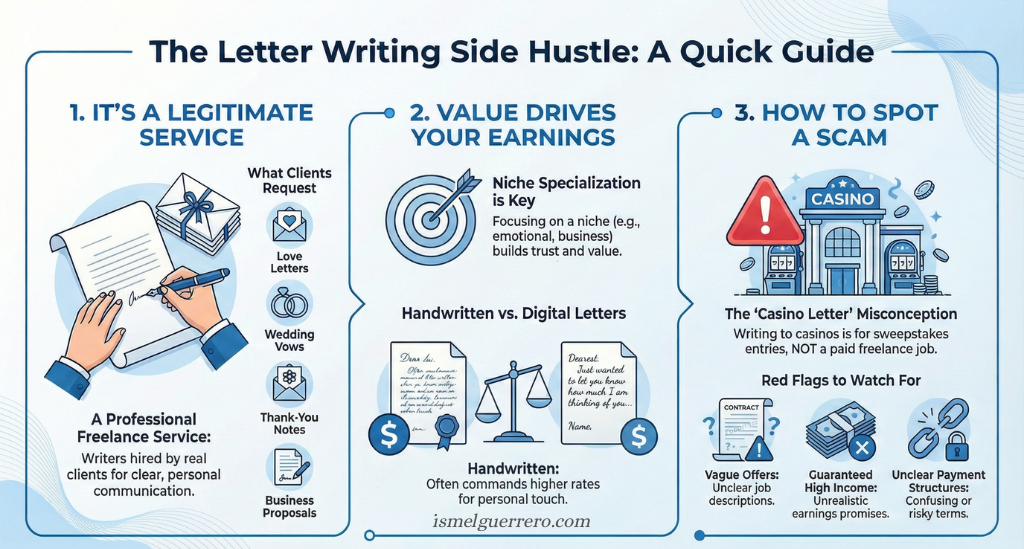
A letter writing side hustle is a freelance service where writers are paid to create personalized letters for specific purposes. These letters can be emotional, professional, creative, or event-based, depending on the client’s needs. The work focuses on clarity, tone, and intention rather than volume or keyword optimization.
Purpose-Driven Communication
Unlike general content writing or copywriting, letter writing is purpose-driven and highly personal. Clients are not looking for blog posts or sales pages. They want help expressing something meaningful, whether that is gratitude, apology, celebration, or professionalism. The value comes from shaping words that sound natural, thoughtful, and appropriate for the situation.
Why Clients Hire Writers
People hire letter writers for several reasons. Some struggle to express emotions clearly. Others lack time or confidence when writing formal correspondence. In many cases, clients want their message to feel intentional and well-crafted, especially when the letter carries emotional or reputational weight.
Custom and Event-Based Examples
Common examples include love letters, wedding vows, thank-you notes, resignation letters, business proposals, and creative or fictional correspondence. These are not mass-produced tasks. Each project is tailored to a specific person, audience, and outcome, which is why clients are willing to pay for the service.
Want to know even more ways to make money writing letters? Read this detailed guide on 15 legit ways to get paid for writing letters.

Is Letter Writing a Legitimate Way to Make Money
Letter writing can be a legitimate way to make money when it is treated as a professional service. Like any freelance work, legitimacy depends on having real clients, clear expectations, and a defined payment structure. When those elements are present, letter writing functions much like other communication-based services such as editing, ghostwriting, or speech writing.
Value Beyond Words Alone
Writers are paid to create letters because the work requires judgment, tone control, and emotional or professional awareness. Clients often turn to letter writers when the message matters and mistakes feel costly. This includes situations involving relationships, career decisions, business communication, or meaningful life events. In these cases, people are not paying for words alone. They are paying for clarity, confidence, and presentation.
Realistic Expectations and Income Mindset
That said, letter writing is not a shortcut to guaranteed income. It is not passive, and it does not come with fixed rates or automatic demand. Income varies based on specialization, quality of work, and how well the service is positioned. Writers who approach it casually may struggle, while those who treat it as a focused offering are more likely to find consistent opportunities.
What About “Casino Letter Writing”? Clearing Up the Confusion
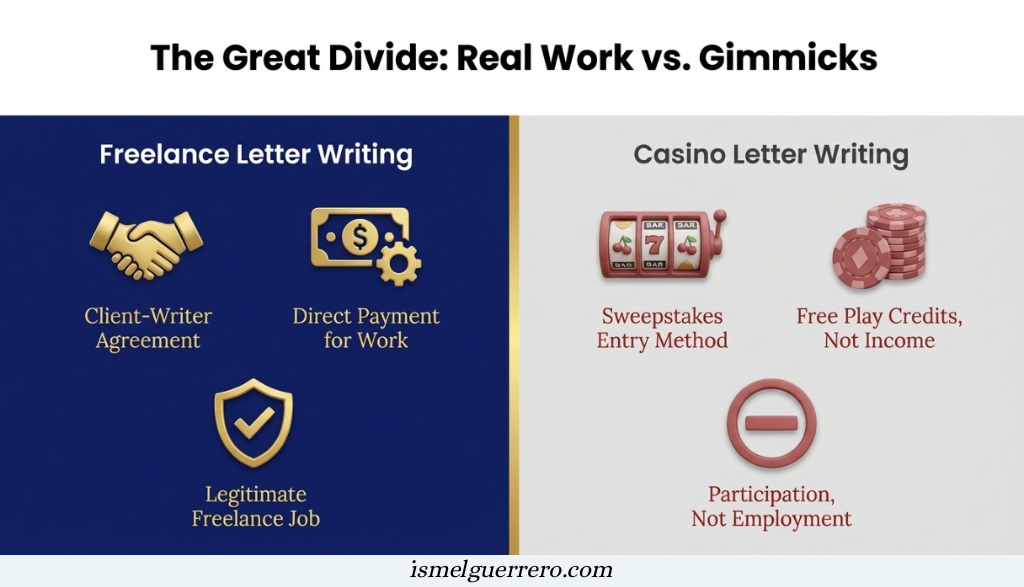
Confusion around letter writing often comes from claims about writing letters to casinos for money. Some sweepstakes casinos allow players to mail in handwritten letters or envelopes as an alternative way to enter promotions. This practice is legal and exists to meet sweepstakes rules, but it is not employment. Participants are not hired as writers, and there is no guaranteed payment. The outcome is typically free play credits, not income.
Misleading “Job” Claims
Claims about “casino letter writing jobs” that promise payment per letter are often misleading. These offers usually lack a real client, a contract, or platform protections. In many cases, they involve upfront fees or recruitment tactics rather than paid writing work. The absence of a clear employer and defined compensation is a common red flag.
How Legitimate Work Functions
A legitimate letter writing side hustle works differently. Writers are hired by individuals or businesses to create personalized communication such as love letters, business proposals, thank-you notes, or event-related writing. Payment is agreed upon upfront, expectations are clear, and the work is delivered through trusted freelance platforms or direct client arrangements.
Casino Letters vs. Freelance Letter Writing
| Aspect | Casino Letter Writing | Freelance Letter Writing |
|---|---|---|
| Purpose | Enter sweepstakes or promotions | Provide personalized communication services |
| Relationship | Participation, not employment | Client–writer service agreement |
| Compensation | Free play credits, not income | Direct payment for completed work |
| Legitimacy | Legal entry method, not a job | Legitimate freelance work |
| Earnings | No guaranteed payment | Paid per project or package |
| Risk level | High confusion, frequent scams | Low when using trusted platforms |
| Typical platforms | Not a freelance marketplace | Fiverr, Upwork, Etsy, LinkedIn |
How Much Can You Earn Writing Letters
Earnings from letter writing vary widely because the work is highly situational. There is no single rate card or fixed income level. What writers earn depends on the type of letters they offer, how specialized the service is, and the expectations of the client. In most cases, pricing reflects perceived value rather than word count or time spent.
Beginners often start with lower rates as they build samples and learn how to manage client requests. As writers gain experience, confidence, and repeat clients, rates typically increase. More complex or emotionally sensitive letters, such as wedding vows or professional correspondence, tend to command higher fees than simple or informal requests.
Monthly income is influenced by volume and workflow, not just price per letter. Some writers focus on a small number of higher-value projects, while others earn through consistent, lower-priced work. Both approaches can be valid, depending on availability and goals. What matters most is setting expectations clearly and pricing in a way that supports sustainability.
What Affects Letter Writing Rates
Several factors influence how much a letter writer can reasonably charge.
Letter Type and Format
The type of letter matters. Emotional or high-stakes letters often require more care and revision, which increases value. Format also plays a role. Handwritten letters usually cost more than digital ones because they involve physical materials and additional time.
Turnaround Time and Customization
Turnaround time affects pricing as well. Rush requests or tight deadlines often justify higher rates. Customization is another factor. Letters that require detailed background information, tone matching, or multiple revisions are typically priced higher than standard requests.
Client Type and Relationships
Client type can influence rates too. Individual clients may pay differently than businesses, and recurring work often allows for package pricing or subscriptions rather than one-off fees.
Handwritten vs Digital Letters: Which Pays More and Why
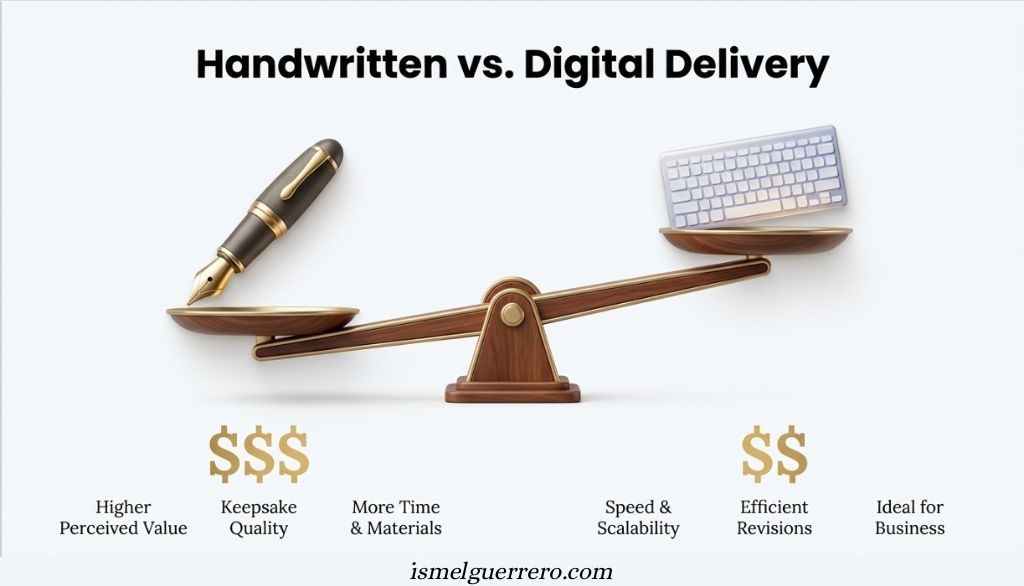
Handwritten and digital letters serve different purposes, and the difference often affects how they are priced. Neither format is inherently better, but clients tend to value them in different ways based on effort, presentation, and use case.
Handwritten Letters
Handwritten letters usually command higher rates because they involve more than writing alone. They require physical materials, careful presentation, and additional time for drafting, writing, and mailing. Clients often see handwritten letters as keepsakes or meaningful gestures, which increases their perceived value. This is especially true for wedding vows, anniversary letters, thank-you notes, or calligraphy-style projects.
Digital Letters
Digital letters are more common and easier to scale. They are typically delivered as documents or messages and work well for business communication, job-related correspondence, or situations where speed matters. While digital letters may pay less per project on average, they allow writers to complete more work in less time and handle revisions more efficiently.
Choosing the Right Option
The better option depends on the writer’s goals and workflow. Handwritten letters suit writers who enjoy slower, detail-oriented work and physical presentation. Digital letters are often a better fit for writers who want flexibility, faster turnaround, or higher volume. Both formats can be profitable when priced appropriately and matched to the right audience.
Handwritten vs Digital Letter Writing at a Glance
| Aspect | Handwritten Letters | Digital Letters |
|---|---|---|
| Delivery format | Physically written and mailed | Delivered as a document or message |
| Typical pricing range | Higher due to time and materials | Lower but more scalable |
| Perceived value | Seen as keepsakes or meaningful gestures | Valued for speed and clarity |
| Time investment | Higher (writing, materials, mailing) | Lower (writing and revisions only) |
| Common use cases | Wedding vows, thank-you notes, anniversaries | Business letters, job-related correspondence |
| Best suited for | Writers who enjoy detail and presentation | Writers who prefer flexibility and volume |
How to Start a Letter Writing Side Hustle Step by Step
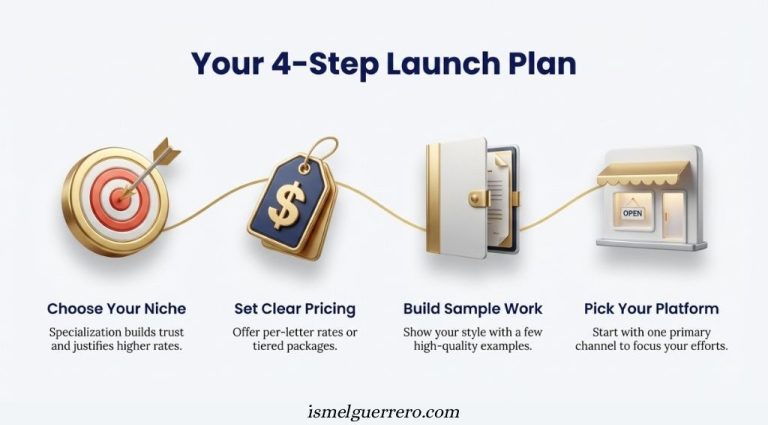
Starting a letter writing side hustle does not require formal credentials or expensive tools, but it does require clarity. Writers who approach this as a defined service, rather than a vague gig, are more likely to attract the right clients and set realistic expectations.
The steps below focus on building a simple, professional foundation.
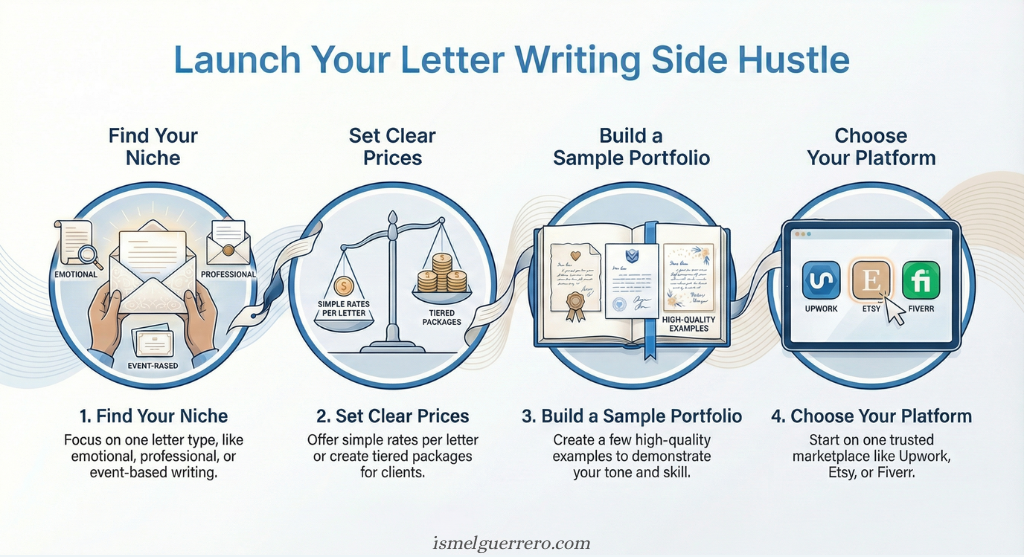
Choose a Clear Letter Writing Niche
Specializing helps clients understand what you offer and why they should hire you. Instead of presenting yourself as someone who writes “any letter,” it is more effective to focus on one or two categories where your strengths are clear.
Common niches include emotional writing, such as love letters or apologies, professional communication like resignation letters or proposals, event-based writing such as wedding vows or speeches, and creative work like fictional letters or poetry.
Choosing a niche makes your service easier to explain and easier to price.
Set Simple and Transparent Pricing
Clear pricing reduces confusion and builds trust. Many letter writers charge per letter, while others offer tiered packages based on length, complexity, or turnaround time. When starting out, simple pricing works best.
Rates should reflect the effort required, including research, revisions, and delivery format. It is also helpful to decide in advance how many revisions are included and whether rush requests cost extra. Transparent terms prevent misunderstandings and protect your time.
Build a Focused Sample Portfolio
A portfolio shows potential clients how you handle tone and structure. Even without paid experience, you can create sample letters based on realistic scenarios within your niche. These samples should demonstrate clarity, emotional awareness, and professionalism.
Samples can be hosted on a simple website, a shared document, or a professional profile. Quality matters more than quantity. A few well-crafted examples are enough to establish credibility.
Decide Where to Offer Your Services
Where you offer your services influences the type of clients you attract. Freelance marketplaces provide structure and visibility, while direct outreach allows for more control but requires stronger communication skills. Many writers start on platforms that offer payment protection, then expand to direct clients once they gain confidence and experience.
The key is to choose one primary channel at first. This keeps your efforts focused and makes it easier to refine your offer based on real feedback.
Where to Find Clients for Letter Writing Work
Finding clients is less about being everywhere and more about choosing platforms that match your type of letter writing. Different platforms attract different buyers, so aligning your service with the right environment improves both visibility and client quality.
Freelance Marketplaces
Freelance marketplaces are often the starting point for new letter writers. These platforms connect writers with individuals or businesses actively looking for custom writing services and usually include built-in payment protection. They work well for digital letters, business correspondence, and one-off personal requests.
Creative and Marketplace-Style Platforms
Creative and marketplace-style platforms are better suited for handwritten or gift-oriented letters. Buyers on these platforms often value presentation, personalization, and emotional impact. Writers who enjoy visual storytelling or physical delivery tend to perform better in these environments.
Professional Networks and Direct Outreach
Professional networks are another option, especially for business-focused letter writing. Direct outreach can lead to higher-paying work, but it requires clear communication and a polished portfolio. This approach works best once you are confident explaining your service and managing expectations independently.
Starting Practical and Growing Strategically
For most beginners, starting with one platform is the most practical approach. It allows you to learn how clients respond to your offer, refine your pricing, and build samples without spreading your effort too thin. As experience grows, expanding to additional channels becomes easier and more strategic.
Common Scams and Red Flags to Avoid
Like many freelance services, letter writing attracts both legitimate clients and misleading offers. Understanding common red flags helps protect your time, your work, and your income. Treating letter writing as a business means being selective about who you work with and how projects are structured.
Offers That Sound Too Good to Be True
One common warning sign is an offer that sounds too good to be true. Promises of high pay for vague tasks, especially without clear details about the letter’s purpose or audience, often signal a scam. Legitimate clients are usually specific about what they need and why.
Unclear Payment Structure
Another red flag is unclear payment structure. If a client avoids discussing rates, timelines, or payment methods, or asks you to complete work before agreeing on compensation, proceed with caution. When working outside established platforms, requesting a deposit before starting is a standard professional practice.
Pressure to Move Off-Platform
Pressure to move off-platform too quickly can also indicate risk. While direct clients are common in freelance work, rushing the process before trust is established removes important safeguards. Reliable clients are comfortable working within clear systems and contracts, especially at the beginning of a relationship.
Problematic Communication Style
Finally, pay attention to communication style. Clients who avoid questions, change requirements repeatedly, or rely on urgency instead of clarity often create problems later. Clear, respectful communication from the start is a strong indicator of a legitimate working relationship.
Common Mistakes New Letter Writers Make
Many new letter writers struggle not because the work is illegitimate, but because they approach it without structure. Most early mistakes are simple to fix once they are recognized.
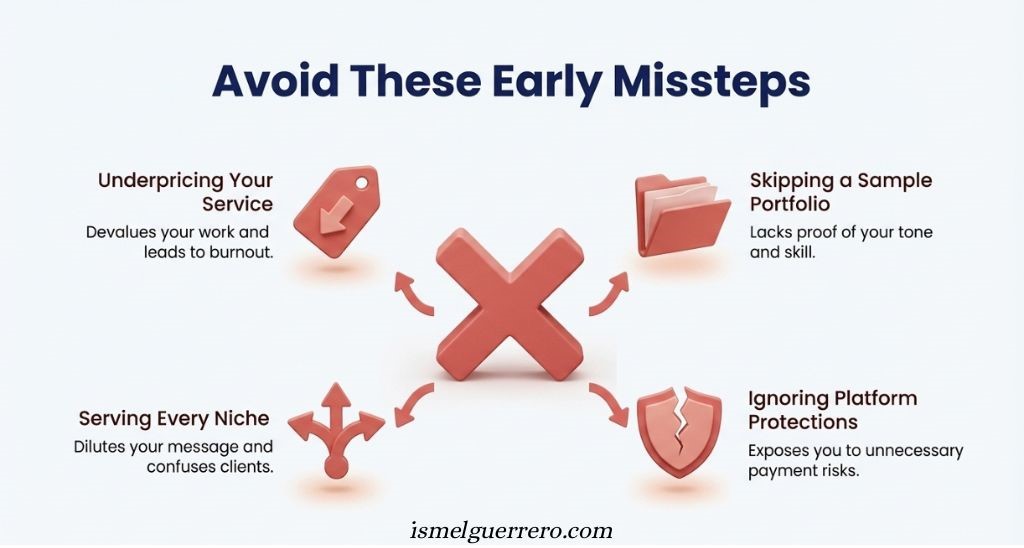
Underpricing
One common mistake is underpricing. Charging too little can make the service seem low-value and can quickly lead to burnout. While competitive pricing matters at the beginning, rates should still reflect the time, care, and responsibility involved in writing personal or professional letters.
Skipping a Portfolio
Another issue is skipping a portfolio. Even when clients do not ask for samples explicitly, having examples ready builds confidence and speeds up decision-making. A few well-crafted mock letters are often enough to demonstrate tone and skill.
Ignoring Client Instructions
Ignoring client instructions is another avoidable problem. Letter writing relies heavily on purpose and tone. Failing to clarify the audience, message, or emotional intent often leads to unnecessary revisions and dissatisfaction. Asking a few focused questions upfront usually saves time later.
Trying to Serve Every Niche at Once
Some writers also make the mistake of trying to serve every niche at once. Offering too many services can dilute your message and make it harder for clients to understand what you do best. Focusing on one or two letter types creates clarity and improves positioning.
Moving Off Platforms Too Quickly
Finally, moving off platforms too quickly can expose writers to unnecessary risk. While direct clients are common over time, platform protections are useful when starting out. Building trust gradually helps prevent payment issues and misunderstandings.
🌐 Top Platforms to Get Paid for Letter Writing
| Platform | Best For | Strengths | Watch Out For |
|---|---|---|---|
| Upwork | Business & professional letters (resignation, proposals, client outreach) | Large client base, trusted payment system | High competition, platform fees |
| Etsy | Handwritten, creative, or gift-style letters | Visual marketplace, good for artisanal & romantic niches | Success depends on strong visuals & presentation |
| Fiverr | Quick gigs like love letters, apologies, thank-you notes | Easy to set up, beginner-friendly, global reach | Prices can be low until you build reviews |
| Professional letters, business communications | Direct access to business clients & decision-makers | Requires proactive outreach, less built-in gig system | |
| Reedsy | Creative/literary commissions (fictional letters, story-based writing) | Premium clients, high-paying gigs for strong portfolios | Selective platform, not beginner-friendly |
| PeoplePerHour | Mix of creative & business writing gigs | Flexible projects, global audience | Less visibility compared to Fiverr/Upwork |
| Textbroker | Shorter professional or business-related letters | Great for beginners to gain experience | Lower pay rates, limited creative work |
Conclusion: Start Your Letter Writing Side Hustle Today
Letter writing as a side hustle is neither a gimmick nor a guaranteed path to income. It is a legitimate form of freelance work when approached with clarity, professionalism, and realistic expectations. The value lies not in writing quickly, but in communicating thoughtfully and matching tone to purpose.
Writers who succeed in this space understand that clients are paying for confidence, discretion, and emotional or professional accuracy. By choosing a clear niche, setting transparent pricing, and working through trusted channels, letter writing can become a flexible and sustainable way to earn with your skills.
Like any service-based side hustle, results depend on consistency and positioning rather than shortcuts. Starting small, refining your offer, and learning from each project creates momentum over time. With the right approach, letter writing can be both a practical income stream and a meaningful use of your ability to communicate clearly.

FAQs About Letter Writing as a Side Hustle
Can beginners really get paid to write letters?
Yes. Beginners can get paid to write letters if they present the service clearly and provide basic samples. Many clients prioritize tone, clarity, and intention over formal credentials, especially for personal or event-based letters.
What types of letters usually pay the most?
Letters tied to important moments or outcomes tend to pay more. Wedding vows, professional correspondence, and handwritten or keepsake-style letters often command higher rates because clients value accuracy, emotional impact, and presentation.
Do you need professional writing experience to start?
No professional background is required. What matters more is the ability to follow instructions, adapt tone, and communicate clearly. A small portfolio of well-written sample letters is usually enough to begin.
How long does it take to get the first client?
The timeline varies. Some writers find their first client within a few weeks, while others take longer depending on platform choice, pricing, and niche clarity. Consistent visibility and a clear offer tend to shorten the process.
Is handwritten letter writing worth the extra effort?
Handwritten letters often pay more, but they also require more time and materials. For writers who enjoy slower, detail-focused work, the higher perceived value can make handwritten projects worthwhile.
Can letter writing replace a full-time income?
In some cases, yes, but it depends on specialization, pricing, and workload. For most people, letter writing works best as a side hustle that can grow gradually rather than an immediate replacement for full-time income.

2 Comments
Writing Letters for Money: How to Get Paid in 2025 - Ismel Guerrero. · February 9, 2025 at 8:04 pm
[…] you’re specifically interested in letter writing as a side hustle, here’s how to maximize your […]
Remote Side Hustles: Best Ways to Earn Extra Income - Ismel Guerrero. · February 26, 2025 at 11:31 pm
[…] Letter Writing Side Hustle Guide. […]