Introduction: Why This Skill Pays in 2026
Most communication today is fast, rushed, and written just to be sent. That works fine for everyday chats, but when a message actually matters a resignation, an apology, or a relationship-mending note people freeze. They overthink it, say too much, or default to something flat and impersonal.
That gap between what someone wants to say and what they are able to write is your business opportunity.
In 2026, with AI handling everyday emails, the value of communication that feels genuinely human has skyrocketed. Anyone can generate words in seconds. What people actually struggle with is getting the tone, clarity, and intention exactly right.
Writing letters for money solves that problem. If you can help people communicate clearly when the stakes are high, you have a service clients will gladly pay for. This step-by-step guide will show you exactly how to start.
- Writing letters for money is a practical communication service. The value comes from clarity, tone, and getting the message right not from creativity or word count.
- Start simple: choose one type of letter, one platform, and one clear offer. Build experience before expanding.
- Strong letters follow a clear process: understand the goal, match the tone, and keep the message focused and usable.
- Pricing should reflect the importance and complexity of the message, not length. Higher-stakes communication allows for higher rates.
- Consistency and professionalism lead to repeat clients and more stable income over time.
- This works because people struggle with important communication. If you can help them express it clearly, there is ongoing demand for the service.
Disclaimer: I am an independent Affiliate. The opinions expressed here are my own and are not official statements. If you follow a link and make a purchase, I may earn a commission.
Step 1: Choose the Type of Letters You’ll Offer
The fastest way to get stuck is trying to offer everything at once.
There are many types of letters you could write. But at the start, what matters is choosing one lane you can handle well and build from.
Each category attracts different clients, expectations, and price points.
Here are the main ones to consider:
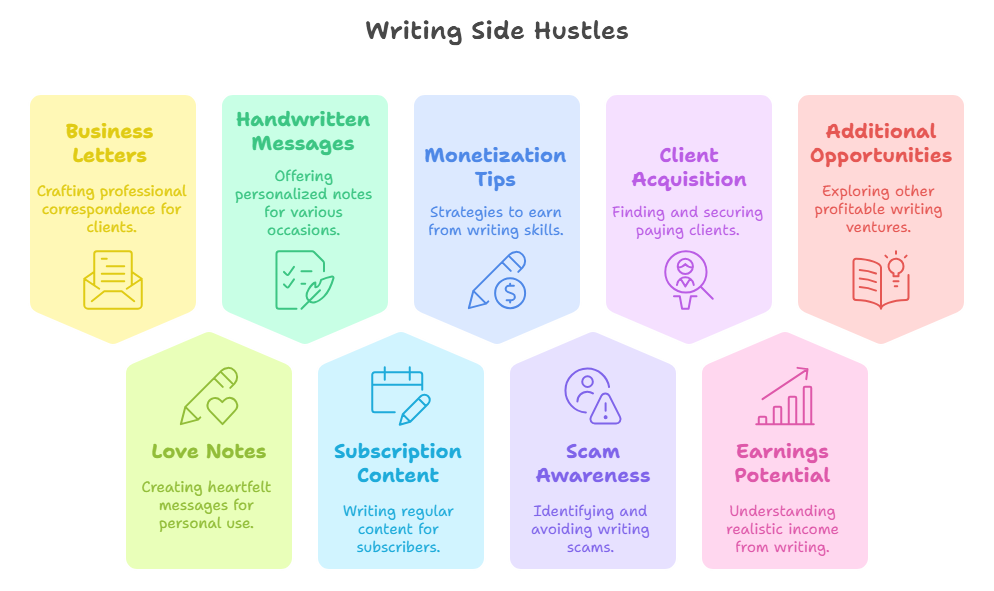
Business and Professional Letters
These include resignation letters, client emails, proposals, follow-ups, and internal communication.
The focus here is structure and clarity. Clients are not looking for personality, they want something that sounds confident, appropriate, and well put together.
This is one of the most stable entry points because businesses consistently need help communicating clearly.
Personal and Emotional Letters
This covers love letters, apologies, relationship messages, and personal reflections.
In this category, tone matters more than structure. Clients usually know what they feel, but they struggle to express it in a way that sounds natural and sincere.
If you’re good at translating emotion into simple, honest language, this is a strong option.
Handwritten Letters and Gift-Based Messages
These are often purchased as keepsakes or gifts.
The writing still matters, but presentation becomes part of the product paper quality, formatting, packaging, and delivery all add value.
This category tends to perform well on platforms where visuals matter, and it allows for higher pricing when done properly.
Subscription or Themed Letters
This is a different model.
Instead of one-off projects, you create ongoing content monthly letters, motivational notes, fictional correspondence, or themed series.
It takes time to build, but it can create predictable income once you have a consistent audience.
Start Narrow, Then Expand
You don’t need to decide your entire business upfront.
Pick one category based on:
- what you understand best
- what feels easiest to write consistently
- where you can deliver reliably
Get a few projects done. Learn what clients actually ask for. Then expand if it makes sense.
Clarity at the start will save you time, confusion, and inconsistent results later.
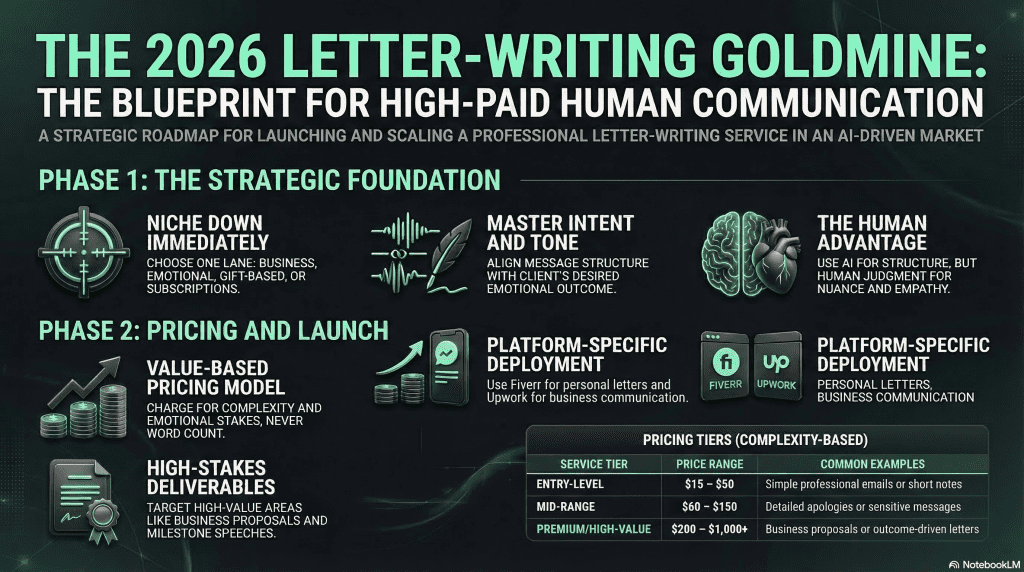
Step 2: Learn How to Write Letters People Will Actually Pay For
This is where most people either separate themselves or blend in.
Writing for money is not the same as writing for yourself. The goal is not to sound impressive. The goal is to make the message land the way the client needs it to.
That requires a simple but disciplined approach.
Start With Intent, Not Words
Before you write anything, you need to understand what the letter is supposed to do.
Ask yourself:
- What is the outcome the client wants?
- How should the reader feel after reading this?
- Is the goal to inform, persuade, repair, or express?
A resignation letter and an apology letter may both be “letters,” but they require completely different decisions.
If the intent is unclear, the writing will feel off no matter how polished it is.
Match the Tone to the Situation
Tone is the difference between a message that works and one that creates problems.
There are two common mistakes:
- sounding too formal and distant
- sounding too casual or emotional for the situation
Your job is to find the middle that fits the context.
For example:
- Business writing → clear, direct, respectful
- Apology → calm, accountable, not defensive
- Romantic → personal, natural, not exaggerated
If the tone feels forced, the message loses credibility.
Keep It Clear and Controlled
Most clients struggle because they either say too much or not enough.
A strong letter does three things:
- Gets to the point early
- Stays focused on one purpose
- Avoids unnecessary detail
Clarity builds trust. Overwriting weakens it.
If a sentence doesn’t move the message forward, it should not be there.
Use a Simple Structure That Works
Most effective letters follow a predictable flow:
- Opening: why you’re writing
- Body: the message itself (clear and focused)
- Closing: what happens next or how it ends
You don’t need to reinvent structure. You need to execute it cleanly.
Write Like a Person, Not a Template
Clients are paying because they don’t want something generic.
Even if you use a framework, the final result should feel specific to:
- the situation
- the relationship
- the tone requested
Avoid phrases that sound copied or overly polished. Natural language almost always performs better.
Edit for Tone, Not Just Grammar
Most people stop at spelling and grammar. That’s not enough.
You should also check:
- Does this sound like the client?
- Is anything too harsh, too soft, or unclear?
- Does the message flow naturally from start to finish?
Reading the letter out loud is one of the simplest ways to catch issues.
The Standard to Aim For
A good letter doesn’t draw attention to the writing itself.
It feels clear, appropriate, and easy to understand.
If the reader finishes it and thinks, “That said exactly what it needed to say,” then you’ve done the job well.
That’s what people are paying for.

Step 3: Decide Where to Sell Your Service
Once you know what you’re offering and how to write it well, the next step is simple: put it in front of people who are already looking for it.
You don’t need a complex setup. You need one place where your service is clear and easy to buy.
Here are the most practical options:
Freelance Platforms (Fastest Way to Start)
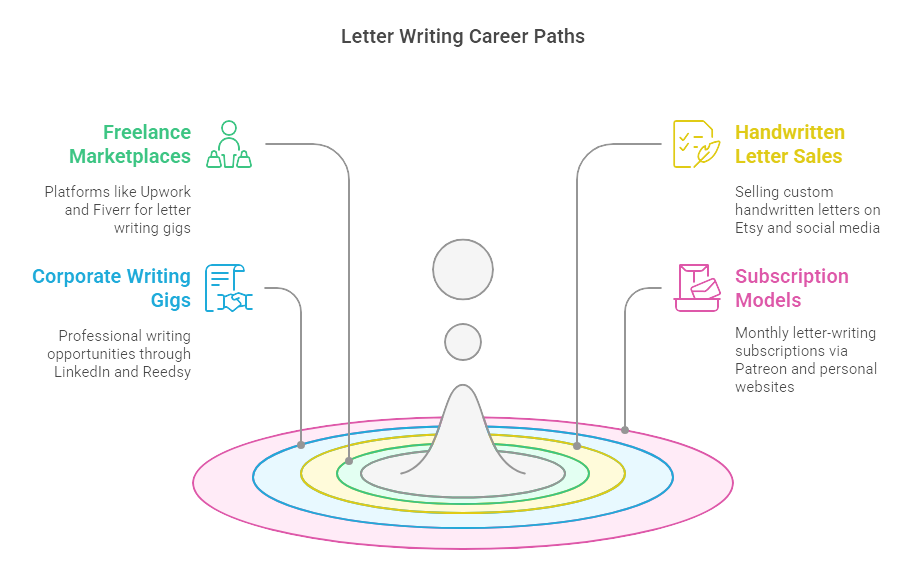
Fiverr and Upwork are the most direct entry points.
- Fiverr works well for personal and creative letters love letters, apologies, custom messages. Buyers are browsing, so clear packages help.
- Upwork leans more toward business writing resignation letters, client communication, proposals. Clients post jobs, so you respond with a tailored pitch.
These platforms handle payments and bring traffic, which makes them useful when you’re starting out.
Marketplaces for Physical Products
If you want to offer handwritten letters or gift-style products, platforms like Etsy are a better fit.
Presentation matters here:
- clean visuals
- clear descriptions
- defined options (paper, style, delivery)
You’re not just selling writing, you’re selling a finished product.
Subscription Platforms
If you want recurring income, you can use platforms like Patreon or Ko-Fi.
This works best if you create ongoing content, such as:
- monthly letters
- themed series
- motivational or reflective writing
It takes longer to build, but it can become stable over time.
Direct Channels (More Control, More Effort)
You can also sell directly through:
- a simple website
- an Instagram page
- LinkedIn (especially for business writing)
This gives you more control over pricing and positioning, but you’ll need to bring your own traffic.
Keep It Simple
You do not need multiple platforms to begin.
Choose one based on your offer:
- personal writing → Fiverr
- business writing → Upwork or LinkedIn
- handwritten/gifts → Etsy
Set up one clear service. Let the work teach you what to improve.
Expansion comes later.
Step 4: Create a Simple Offer (Don’t Overcomplicate It)
At this stage, most people make things harder than they need to be.
They try to offer too many options, cover every scenario, or sound overly polished. The result is confusing for both them and the client.
A strong offer is simple. It tells the client exactly what they’ll get and what problem it solves.
Start With One Clear Service
Instead of listing everything you can do, define one offer:
- “I write professional resignation letters”
- “I help you write a thoughtful apology message”
- “I create custom handwritten love letters”
This makes it easier for someone to understand if you’re the right fit.
Clarity converts better than variety.
Define the Outcome
Clients are not buying a “letter.” They’re buying a result.
Be clear about what your service helps them achieve:
- communicate professionally
- repair a relationship
- express something meaningful
- make a strong impression
When the outcome is clear, the value becomes easier to understand.
Set the Scope Upfront
You want to avoid open-ended work.
Define:
- what’s included
- how long the letter will be (range, not exact word count)
- how many revisions are included
- delivery time
This protects your time and makes the process smoother.
Use Simple Tiers (If Needed)
You don’t need complex packages, but a basic structure can help:
- Basic: short, lightly personalized letter
- Standard: more detailed, tone-matched writing
- Premium: fully customized or handwritten version
Each level should add clear value, not just length.
Avoid Overpromising
Keep your language grounded.
Don’t promise outcomes you can’t control (like guaranteed results). Focus on what you do control:
- clarity
- tone
- structure
- quality of writing
That builds trust and avoids difficult client expectations later.
What a Good Offer Feels Like
When someone reads your offer, they should quickly understand:
- what you do
- who it’s for
- what they’ll receive
- how to move forward
If they have to guess, the offer needs to be simpler.
Start with something clear and manageable. You can refine it as you gain experience.
Step 5: Price Your Work Based on Value, Not Length
One of the easiest mistakes to make is pricing your work by word count.
That approach turns your service into a commodity. It also ignores what the client actually cares about.
People are not paying for the number of words. They’re paying for getting the message right.
What Actually Drives Price
A short letter can be more valuable than a long one if the stakes are higher.
Pricing is usually influenced by:
- Complexity — Is this straightforward, or does it require careful framing?
- Emotional weight — Does the message involve conflict, vulnerability, or sensitivity?
- Context — Is this personal, professional, or tied to a real outcome?
- Urgency — Does the client need it quickly?
- Presentation — Is it typed, formatted, or physically delivered?
The more responsibility the message carries, the more valuable your work becomes.
Use Simple Price Ranges to Start
You don’t need perfect pricing on day one. You need something reasonable and clear.
A practical starting point:
- Entry-level ($15–$50): short, simple letters
- Mid-range ($60–$150): more detailed or sensitive messages
- Premium ($200–$500+): complex requests, handwritten work, or bundled letters
- High-value ($1,000+): business or outcome-driven communication
These are not fixed rules, they’re reference points.
As your confidence and results improve, your pricing should follow.
Add Value Without Adding Workload
Instead of lowering your prices, increase perceived value.
You can do this by offering:
- faster delivery options
- better formatting or presentation
- bundles (e.g., multiple related letters)
- handwritten or premium versions
These allow you to increase revenue without significantly increasing effort.
Be Clear and Consistent
Your pricing should be easy to understand.
Avoid:
- vague ranges with no explanation
- constantly changing prices
- underpricing just to get clients
Consistency builds trust. It also helps you avoid difficult conversations later.
A Better Way to Think About Pricing
You are not selling time or word count.
You are helping someone say something that matters correctly, clearly, and without regret.
Price your work in a way that reflects that responsibility.

Step 6: Show Proof (Even If You’re Starting From Zero)
Before someone pays you, they need a reason to trust that you can handle their message.
That doesn’t require a long history or a formal portfolio. But it does require proof.
Create a Few Strong Samples
If you don’t have client work yet, create your own.
Write a small set of example letters that reflect the type of work you want:
- a professional resignation letter
- a thoughtful apology
- a clear business email
- a personal message with emotional depth
Keep them realistic. Avoid exaggeration. These should feel like real situations, not dramatic writing exercises.
Quality matters more than quantity. Three to five strong samples are enough to start.
Show Range, Not Volume
You don’t need dozens of examples.
What matters is demonstrating that you can handle different tones:
- professional and structured
- calm and respectful
- personal and sincere
If your samples show that range, clients will understand what you can do.
Use Early Work Carefully
Once you start getting clients, you can build on that.
- Share anonymized excerpts (with permission if needed)
- Highlight the type of request and how you approached it
- Keep details private and respectful
This shows real-world application without crossing boundaries.
Collect Feedback Early
Reviews matter more than most people expect.
After completing a project:
- ask for a short testimonial
- keep it simple and natural
- focus on clarity and results
Even a few honest reviews can make a significant difference in how your service is perceived.
What Clients Are Looking For
They are not looking for perfect writing.
They are looking for reassurance:
- that you understand their situation
- that you can handle tone correctly
- that the final result will feel right
Your samples and early feedback should answer those concerns before they even ask.
That’s what builds trust and makes it easier for someone to hire you.
Step 7: Deliver Professionally and Build Repeat Clients
Getting the first client matters. What you do after that matters more.
This is where your service either becomes consistent or stays unpredictable.
Set Expectations Early
Before you begin writing, make sure both sides are clear on:
- the purpose of the letter
- the tone and context
- delivery time
- number of revisions
A short clarification upfront prevents most issues later.
If something is unclear, ask. It’s easier to adjust direction early than rewrite everything at the end.
Keep Communication Simple and Direct
You don’t need long updates or constant check-ins.
What clients value is:
- clear questions
- timely responses
- no confusion about next steps
Professional communication builds confidence before they even see the final letter.
Deliver Clean, Ready-to-Use Work
Your final delivery should not need explanation.
Make sure the letter:
- reads smoothly from start to finish
- matches the intended tone
- is properly formatted
- has no unnecessary errors or inconsistencies
The client should be able to send or use it immediately.
Handle Revisions Calmly
Revisions are part of the process.
When a client asks for changes:
- focus on understanding what feels off
- adjust tone or phrasing without overcomplicating it
- avoid defensiveness
Most revision requests come from misalignment, not poor writing.
Look for Patterns
As you complete more work, you’ll start to notice:
- common types of requests
- repeated tone challenges
- similar client concerns
Use this to improve your process, refine your offers, and work more efficiently over time.
Build for Repeat Work
A single project is useful. A returning client is better.
You increase repeat work by being:
- reliable
- consistent
- easy to work with
If someone trusts you with one important message, they’re likely to come back when the next one matters.
That’s how this becomes a stable service, not just occasional work.

Step 8: Avoid Bad Clients and Low-Quality Work
Not every opportunity is worth taking.
Some clients will be unclear, unrealistic, or simply not serious. If you accept everything, you’ll spend more time managing problems than doing good work.
Learning what to avoid is part of building a reliable service.
Work Within Structured Platforms (At First)
If you’re starting out, use platforms that handle payments and basic protections.
They reduce risk by:
- holding funds securely
- setting clear delivery expectations
- providing a record of communication
This helps you focus on the work instead of chasing payment or resolving disputes.
Be Careful With Vague Requests
If a client cannot clearly explain what they need, that usually leads to multiple revisions and frustration.
Before accepting a project, make sure you understand:
- the purpose of the letter
- who it’s for
- the tone they expect
If those are missing, ask for clarification or pass.
Avoid “Too Easy” Offers
If something sounds unrealistic, it usually is.
Examples to avoid:
- high pay for minimal effort with no clear scope
- requests that involve copying or reusing content
- payment in credits, tokens, or anything other than real money
Legitimate clients pay for a defined service with clear expectations.
Don’t Skip Scope and Payment Terms
Even for small projects, confirm:
- what you’re delivering
- when it’s due
- how many revisions are included
- how payment will be handled
This protects both sides and prevents scope creep.
Watch for Boundary Issues
Be cautious if a client:
- pushes you to start without details
- asks for unlimited revisions
- tries to move off-platform immediately (without trust established)
These are early signs of difficult projects.
Choose Quality Over Volume
It’s better to complete fewer, well-defined projects than take on constant low-quality work.
Good clients respect the process. They communicate clearly. They value the result.
Those are the clients worth building around.
Protect your time and your standards early. It makes everything else easier.
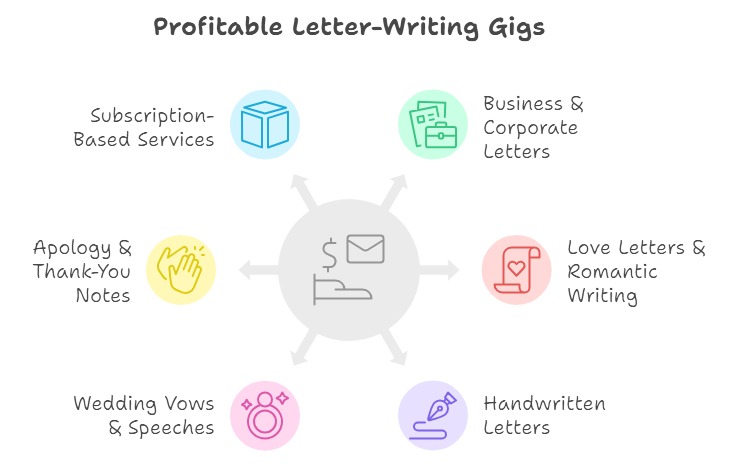
Step 9: What Types of Letters Make the Most Money
Not all letter writing is valued the same way.
Some requests are quick and low-stakes. Others carry real consequences, personal, professional, or financial. That difference is what drives pricing.
If you want to move beyond small, one-off gigs, it helps to understand where the higher-value work sits.
Business and Outcome-Focused Writing
This is where the highest rates usually come from.
Examples include:
- client communication
- proposals
- formal requests
- sales or fundraising letters
These messages are tied to results, closing deals, maintaining relationships, or protecting reputation. Because of that, clients are more willing to pay for clarity and precision.
Emotionally Complex Letters
Messages that involve tension or vulnerability require more care.
This includes:
- serious apologies
- relationship conversations
- difficult personal messages
Clients in these situations are not looking for speed. They want the message handled correctly.
That increases the value of your work.
Event-Based and Milestone Writing
Certain moments carry weight and visibility.
Examples:
- wedding vows
- speeches
- anniversary letters
- major life transitions
These are often one-time events, but the importance is high. Clients are willing to invest more to get it right.
Handwritten and Premium Presentation
When writing is combined with physical presentation, the product changes.
Higher-value elements include:
- quality materials
- custom formatting
- thoughtful packaging
In these cases, you’re not just selling a message, you’re selling a complete experience.
Ongoing or Retainer Work
This is where stability comes in.
Instead of one-off projects, you work with:
- businesses needing regular communication
- creators or professionals outsourcing writing
- subscription-based audiences
Recurring work reduces the need to constantly find new clients and allows you to build predictable income.
Positioning Matters
You don’t need to offer all of these. But you should be aware of how they differ.
- If you stay only in low-cost, simple requests, your income will reflect that.
- If you move toward higher-stakes communication, your value and pricing can increase.
The shift is not about writing more. It’s about working on messages where getting it right matters more.
Conclusion: Why Clients Come Back
This is a simple service, but it requires care. People are not hiring you just to put words on a page. They are trusting you to handle something that matters personally, professionally, or both.
If you approach it that way, the path becomes clear. Start with one type of letter. Choose one platform to offer it. Focus on getting the tone right and delivering work that feels complete and ready to use.
You don’t need to overbuild the setup. You just need to do a small number of things well, consistently. As you gain experience, you will start to recognize patterns: what clients ask for, where they struggle, and how to guide their message more effectively.
Once someone has a great experience with this service, they tend to reuse it. Not because they can’t write, but because they recognize the incredible value of having someone objective, precise, and reliable in their corner.
This side hustle is not about writing more words. It is about writing with accuracy, context, and intention. Do that reliably, and letter writing becomes much more than a one-off gig. It turns into a stable business, built on repeat clients who return to you every time their message matters.

Frequently Asked Questions
Is writing letters for money a legitimate way to earn?
Yes. Individuals and businesses regularly pay for help with communication, especially when the message carries weight.
This is not a new idea. What’s changed is how visible the demand is. Platforms and marketplaces have made it easier for clients to find writers for specific situations.
Do I have to handwrite letters?
No. Most work is delivered digitally. Handwritten letters are a premium option, usually tied to gifts or special occasions.
You can choose to offer them, but they are not required to start.
Can I use AI tools to help?
You can use them for structure or rough drafts, but they should not replace your judgment.
Clients are paying for:
- tone
- context
- accuracy
If the final result feels generic or misaligned, it reduces the value of your work.
Use tools carefully, but make sure the final letter reads as intentional and human.
What if I don’t have experience?
You can start without formal experience.
What matters is your ability to:
- understand what the client is trying to say
- organize it clearly
- match the tone to the situation
You can build early proof through sample letters and small projects.
How long does it take to start earning?
That depends on how quickly you:
- choose a clear offer
- set up on a platform
- complete your first few projects
Some people get their first order within days. For others, it takes longer.
Consistency matters more than speed.
Should I offer multiple types of letters right away?
No. Start with one category. It’s easier to position, easier to deliver, and easier to improve.
Once you understand what clients are asking for, you can expand your offers with more confidence.
How do I stand out if others are offering the same service?
Most writers compete on volume or price.
You can stand out by focusing on:
- clarity in your offer
- consistency in your tone
- reliability in delivery
Clients remember services that feel easy to work with and produce results they’re confident using.

0 Comments