AI is reshaping many forms of online work, and side hustles are no exception. Tasks that once required specialized skills or long hours can now be streamlined by tools that handle research, content creation, and routine organization.
The challenge, however, is distinguishing which AI-driven opportunities are genuinely practical and which are just experimental trends.
This guide explores approachable ways to earn online using AI. It outlines the specific work these tools support, the effort involved, and the situations where each idea works best. The goal is to provide a clear, realistic view of the current landscape so you can decide which path aligns with your abilities and interests.
Key Takeaways
AI-Powered Side Hustles
- AI can support side hustles by reducing the time spent on research, planning, and routine tasks.
- Practical opportunities work best when they match your skills and the level of complexity you’re comfortable managing.
- Most AI-driven ideas require consistent human input, especially for quality control and decision-making.
- Sustainable earning comes from choosing ideas with clear demand rather than chasing trends or automation shortcuts.
- Understanding the effort involved helps you select options that align with your goals and available time.
Disclaimer: I am an independent Affiliate. The opinions expressed here are my own and are not official statements. If you follow a link and make a purchase, I may earn a commission.
Why AI is creating new side hustle opportunities
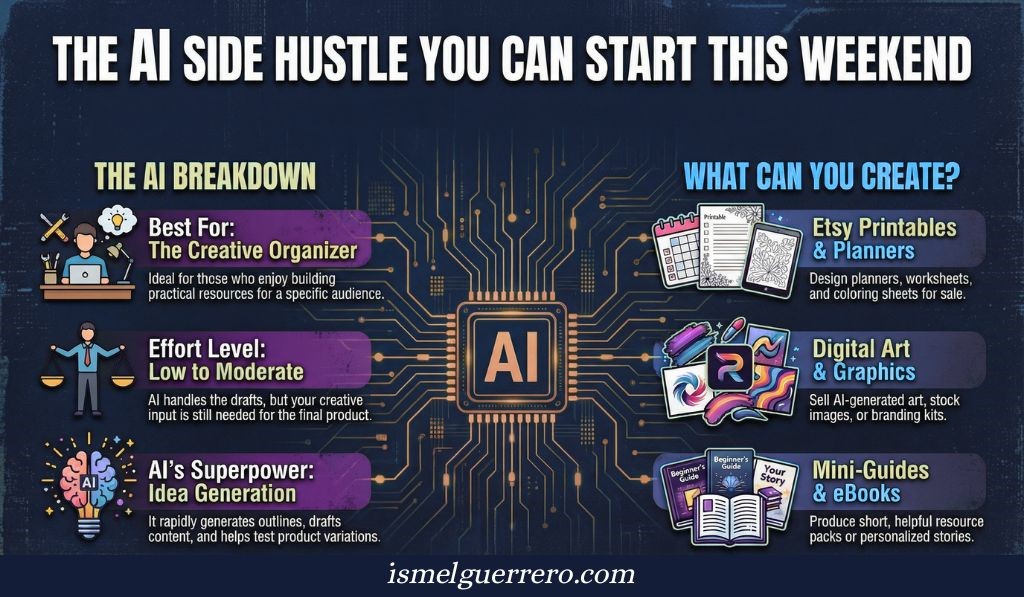
AI is changing the economics of small online projects by reducing the time and effort needed for tasks that once required specialized skills. Tools that generate drafts, summarize information, or organize workflows now make it easier for individuals to start and maintain side hustles without extensive training. This shift doesn’t replace human decision-making, but it does lower the threshold for getting an idea off the ground.
The practical advantage is speed: AI helps people test concepts more quickly, refine ideas with fewer resources, and handle repetitive work that often slows early progress. As these tools improve, they enable more experimentation, allowing users to focus on the parts that require judgment, creativity, or personal insight.
Note: These observations reflect broader trends in how productivity and creative tools have evolved across digital work.
How to choose an AI-driven side hustle that actually fits you
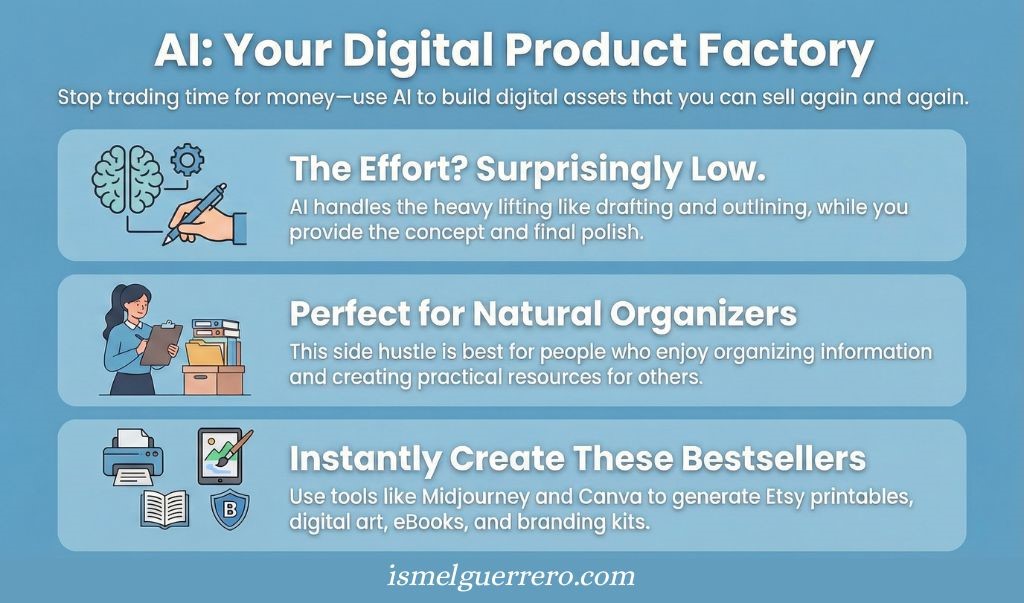
Choosing a side hustle is often harder than starting one, especially when AI expands the list of possibilities. The goal isn’t to pick the idea that sounds the most promising; it’s to select one you can sustain with your current skills, interests, and available time. A good fit results from matching what you can reliably contribute with what AI can reasonably support.
Match your strengths and comfort level
AI can streamline tasks, but it cannot compensate for a complete lack of interest or familiarity. Ideas that align with skills you already use writing, design, organization, communication—tend to feel more manageable and produce clearer results over time.
Evaluate demand and audience needs
Practical side hustles begin with real problems people are already trying to solve. AI tools can help you analyze common questions, recurring themes, or content gaps, but the direction still comes from observing where genuine interest exists.
Consider long-term sustainability
Some AI-related opportunities emerge quickly and fade just as fast. Focusing on ideas that create value rather than ones that rely on novelty helps ensure your efforts remain relevant even as tools evolve.
Note: These principles reflect common patterns in individual online work and small-scale digital entrepreneurship.
Practical AI-driven side hustle ideas (beginner-friendly)
AI supports a range of side hustles that rely less on technical skills and more on thoughtful use of available tools. The ideas below focus on opportunities that are accessible for beginners while still offering room for learning and refinement. Each example highlights how AI fits into the workflow and what type of effort the work generally requires.
AI-assisted content creation services
AI can streamline the early stages of writing by helping you generate outlines, drafts, or alternative phrasing. This makes tasks like blog posts, short articles, social captions, and newsletters easier to complete, especially when clients provide topics or direction. The value you contribute comes from selecting the right angle, improving clarity, and shaping the final voice so the content aligns with the client’s needs.
Beginners often start by offering simple services, content refreshes, short-form posts, or email drafts because these tasks have predictable workflows and benefit directly from AI support. As you gain confidence, you can expand into more detailed writing where strategy and structure matter as much as the words themselves.
Practical implication: This idea works well for people who enjoy communication and editing, even if they don’t consider themselves full-time writers.
| Category | Details |
| What this involves | Using AI to assist with drafting, outlining, and refining content such as blog posts, newsletters, social captions, or articles. |
| Who this is best for | Individuals comfortable with writing, editing, or shaping ideas into clear, readable content. |
| Effort required | Moderate—AI supports early drafts, but human editing, structure, and accuracy remain essential. |
| How AI helps | Reduces drafting time, improves idea generation, suggests variations, and supports research. |
| Where to start | Create sample pieces in one topic area and offer simple writing or content-refresh services to small businesses. |
| Key tools | ChatGPT (drafting & editing), Claude (long-form writing), Jasper (marketing copy) |
Micro-Examples from Common AI Side Hustles
- AI content creation and curation for blogs or business websites
- AI-generated social media caption bundles for niche industries
- Repurposing long-form content into short posts using AI
- AI-powered email newsletter drafting for small brands
- Creating AI-assisted podcast show notes and episode summaries
- Generating blog post ideas or outlines with AI tools
- Producing simple ad copy variations for small businesses
AI-powered digital product creation
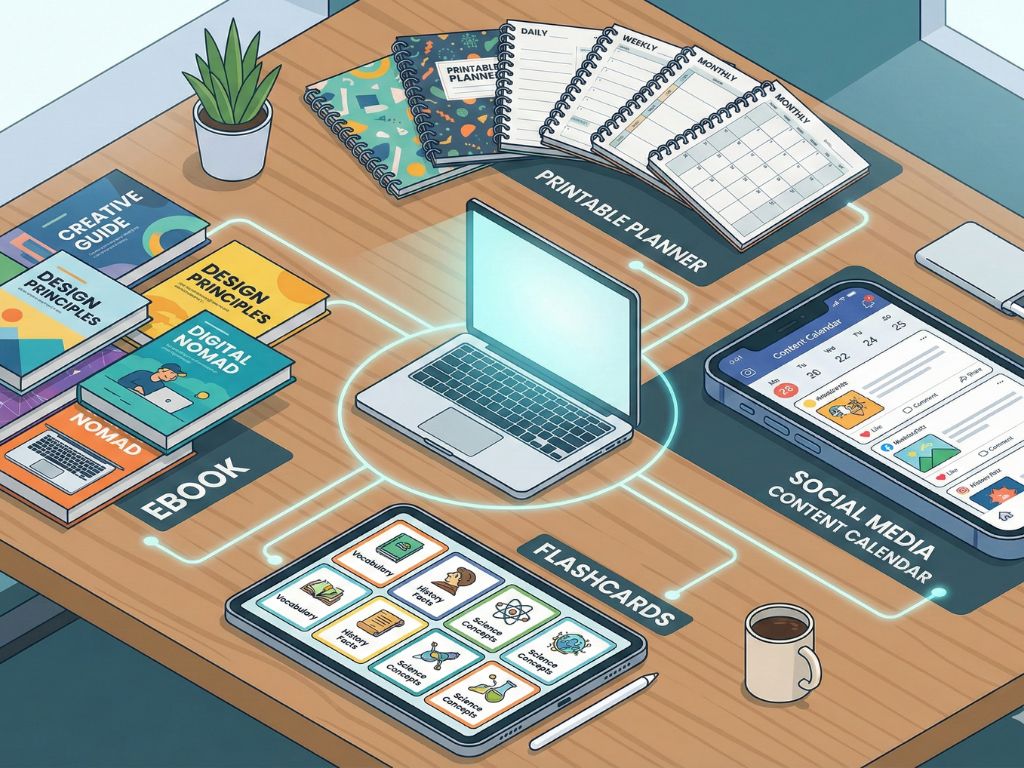
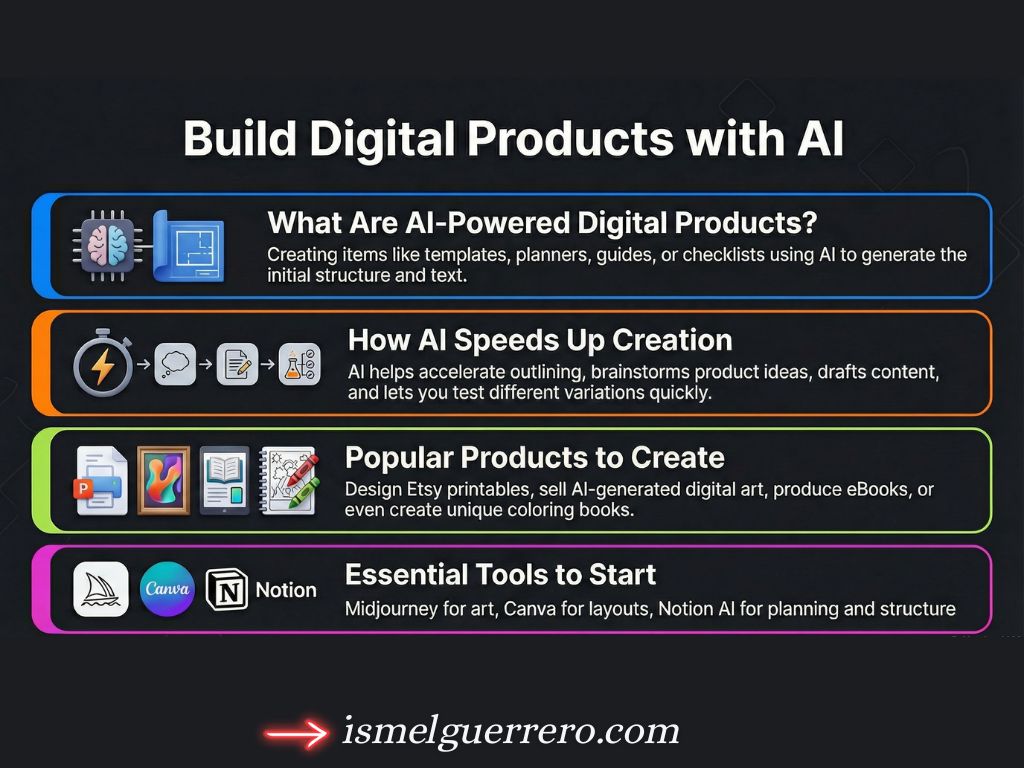
Digital products like templates, planners, checklists, and short guides can be developed more quickly using AI to help structure ideas, suggest layouts, or produce initial text. AI assists with brainstorming variations, organizing information, and refining instructions, which shortens the creation cycle. The strength of the product, however, still comes from your ability to make it clear, useful, and appropriate for a specific audience.
Beginners often appreciate this idea because it allows them to build something once and refine it over time. Testing early versions with small audiences can help you determine what needs adjustment before expanding your offerings.
Practical implication: This path suits those who enjoy organizing information and creating tools that help others complete tasks more efficiently.
| Category | Details |
| What this involves | Creating digital items such as templates, planners, guides, or checklists using AI for structure and draft text. |
| Who this is best for | People who enjoy organizing information and building practical resources for a specific audience. |
| Effort required | Low to moderate—concept development and final formatting still require human input. |
| How AI helps | Speeds up outlining, idea generation, and content drafting; helps test variations. |
| Where to start | Develop one small product, refine through feedback, and publish it on a marketplace. |
| Key tools | Midjourney (art & graphics), Canva (layouts & templates), Notion AI (structure & planning) |
Micro-Examples from Common AI Side Hustles
These examples are pulled directly from your 100-idea database and represent digital products or creative assets beginners can create using AI:
- Designing Etsy printables (planners, worksheets, coloring sheets)
- Selling AI-generated digital art, graphics, or stock-style images
- Creating AI-generated music loops or sound effects for creators
- Producing AI-assisted eBooks, mini-guides, or resource packs
- Making AI-generated personalized children’s stories
- Selling AI-created branding kits (logo concepts, color palettes, font pairings)
- Developing AI-generated coloring books for adults
- Offering AI-assisted book cover mockup sets
- Creating AI-powered presentation slide templates
Micro-agency services for small businesses
Many small businesses need ongoing support with tasks like content batching, email sequences, basic ad variations, or simple customer-facing materials. AI makes these tasks more manageable by reducing drafting time, generating alternative ideas, or improving clarity. This allows one person to deliver consistent support without the workload becoming overwhelming.
A micro-agency model often develops naturally: you begin with one or two tasks for a client, refine your workflow, and gradually add complementary services. The emphasis is on reliability, clear communication, and steady improvement rather than high-volume output.
Practical implication: This option fits individuals who prefer a service-based approach and enjoy steady working relationships with clients.
| Category | Details |
| What this involves | Providing recurring support such as social content batching, email sequences, simple ad variations, or basic customer material. |
| Who this is best for | Individuals who enjoy structured tasks, client communication, and building predictable workflows. |
| Effort required | Moderate—AI reduces repetition, but consistency and reliability matter most. |
| How AI helps | Generates multiple content variations, reduces drafting time, and keeps messaging consistent. |
| Where to start | Offer one clear service to one client, refine the workflow, then expand. |
| Key tools | Buffer (scheduling), ChatGPT (emails & scripts), AdCreative.ai (ad variations) |
Micro-Examples from Common AI Side Hustles
These examples represent micro-services small businesses frequently outsource, making them perfect for a beginner-friendly micro-agency:
- AI-driven social media management (planning, scheduling, batching content)
- AI-powered social media caption bundles tailored to niche industries
- AI-driven competitor analysis for social media strategies
- AI-assisted email newsletter creation and simple segmentation
- AI-powered ad copy generation for Meta/Google ads
- AI-driven landing page optimization suggestions
- AI-driven cold email outreach for local or B2B clients
- AI-assisted podcast guest outreach (research + message drafting)
- AI-driven local SEO tasks like citation building or hyper-local keyword mapping
AI-enhanced tutoring or learning support
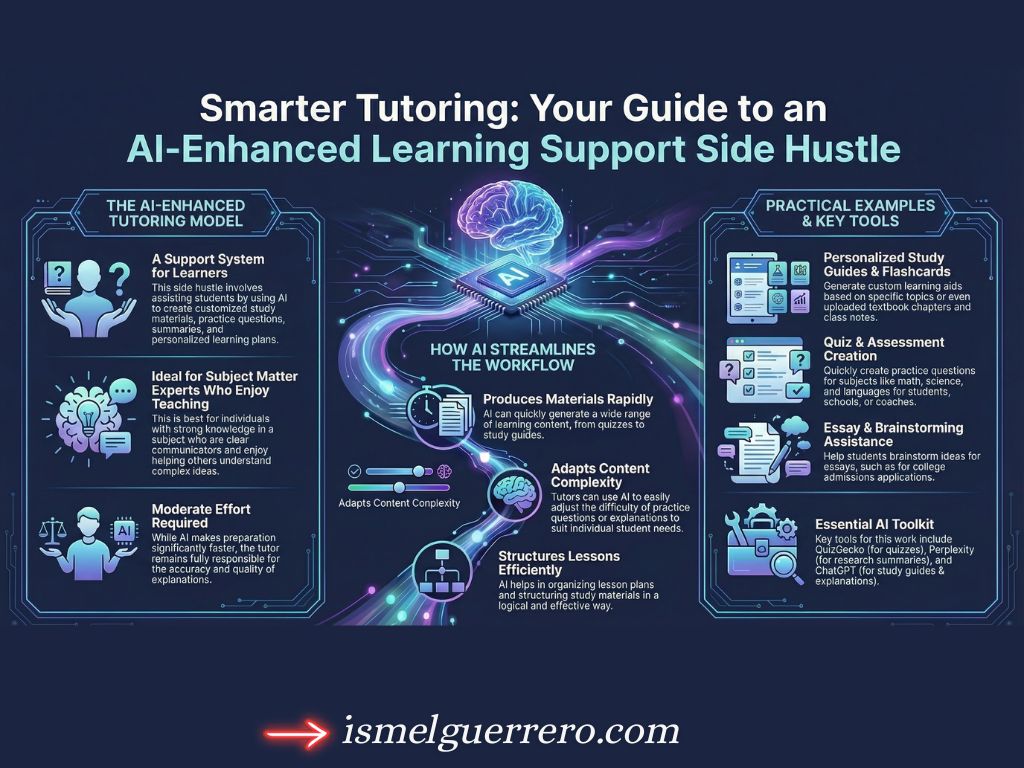
AI can help tutors create customized practice materials, summaries, or study plans, which makes preparation faster and more consistent. While AI provides structure and variety, the tutor remains responsible for accuracy, explanation, and adapting content to different learning styles. This makes AI a supportive tool rather than a replacement for teaching.
Beginners who have a strong grasp of a subject; language skills, math foundations, writing, or test prep can use AI to standardize their materials and create a more personalized learning experience for students. This reduces the time spent preparing lessons and increases time spent on direct support.
Practical implication: This approach works well for people who communicate clearly and enjoy helping others understand complex ideas.
| Category | Details |
| What this involves | Assisting learners using AI to create study materials, practice questions, summaries, or personalized plans. |
| Who this is best for | Those with strong subject knowledge who communicate clearly and enjoy helping others learn. |
| Effort required | Moderate—preparation is faster with AI, but accuracy and explanation still depend on the tutor. |
| How AI helps | Produces material quickly, adapts complexity, and structures lessons efficiently. |
| Where to start | Build materials for one topic and offer a trial session to test your approach. |
| Key tools | QuizGecko (quizzes), Perplexity (research summaries), ChatGPT (study guides & explanations) |
Micro-Examples from Common AI Side Hustles
These examples represent tasks tutors or learning-support freelancers can realistically offer using AI:
- AI-generated personalized flashcards and study guides
- AI-assisted academic research summaries for students
- AI-powered language learning companions (practice bots)
- AI-generated personalized learning plans
- AI-driven quiz and assessment creation for schools or coaches
- AI-assisted brainstorming for essay topics, such as college admissions essays
- AI-created study materials based on uploaded textbooks or class notes
- AI-written practice questions for math, science, and language subjects
AI-assisted ecommerce or reselling operations
Sellers often use AI to handle tasks such as writing product descriptions, identifying keywords, or drafting customer responses. This helps maintain consistent listings and improves efficiency, especially when managing multiple products. AI can also support research by summarizing product reviews or highlighting common questions buyers ask.
AI does not replace the responsibilities of sourcing products, managing quality, or fulfilling orders, but it can lighten the administrative load. Many beginners find this combination appealing because it allows them to focus on the hands-on aspects of ecommerce while keeping written tasks organized and consistent.
Practical implication: This path suits individuals who are comfortable with basic online selling and want tools that streamline repetitive parts of the process.
| Category | Details |
| What this involves | Selling items online while using AI for product descriptions, keywords, customer replies, and listing optimization. |
| Who this is best for | Individuals comfortable with basic ecommerce tasks and managing product sourcing or fulfillment. |
| Effort required | Low to moderate—AI handles writing and organization, but order and quality management remain manual. |
| How AI helps | Streamlines listing creation, summarizes reviews, writes clear replies, and improves keyword relevance. |
| Where to start | Begin with a small set of products on one marketplace and improve listings using AI. |
| Key tools | PhotoRoom (image editing), Shopify Magic (listing support), ChatGPT (descriptions & replies) |
Micro-Examples from Common AI Side Hustles
These examples represent real AI-powered tasks ecommerce sellers frequently outsource or perform themselves:
- AI-powered ecommerce product review summaries
- AI-generated product descriptions for Amazon, Etsy, or Shopify
- AI-driven keyword research for ecommerce listings
- AI-assisted product photography concepts and staging ideas
- AI-powered background removal or bulk image editing
- AI-assisted returns policy writing for small ecommerce stores
- AI-generated customer response templates for common support messages
- AI-driven inventory forecasting to avoid stockouts or excess inventory

Common pitfalls to avoid when starting an AI side hustle
Even with accessible tools, it’s easy to take a wrong turn when exploring AI-supported work. Many early challenges come from assumptions about what AI can do or how much it can automate, rather than from the work itself. Recognizing these patterns early helps you make more grounded decisions and build a side hustle you can sustain.
Relying too heavily on automation
AI can generate drafts or assist with ideas, but it cannot fully replace judgment or quality control. Work that performs well usually reflects a combination of AI support and thoughtful human refinement.
Using generic outputs without adding perspective
AI often produces broad or familiar content unless guided carefully. Adding your own examples, structure, or insights helps distinguish the final result and improves clarity for the people you’re serving.
Switching tools too frequently
Constantly exploring new AI platforms can interrupt progress. Developing confidence with a small set of tools makes the work more reliable and easier to manage.
Chasing fast results instead of building a process
Some AI side hustles appear simple at first glance, but consistent results come from refining routines rather than relying on quick wins. Small improvements often have more impact than large shifts.
Note: These pitfalls reflect common patterns observed among beginners adjusting to new productivity and creative technologies.
Simple steps to launch your first AI-powered side hustle
The easiest way to build momentum with an AI-supported side hustle is to start with a narrow, manageable process. AI can reduce the time it takes to test an idea, but it cannot replace your judgment or the structure you create around the work. A focused approach helps you understand where AI genuinely supports you and where your own input shapes the final result. Over time, these early habits form the foundation for a side hustle that grows at a comfortable pace.
Step 1 — Choose one idea to test with a clear purpose
Selecting a single idea allows you to understand its requirements without competing priorities. A helpful way to start is by defining what “testing” means for you whether it’s producing one sample piece of content, offering a small service to a friend, or listing one digital product. A defined outcome gives the experiment direction and keeps you from feeling pulled toward every new possibility.
Step 2 — Learn one core AI tool well before adding more
Most beginners benefit from choosing one primary tool and learning how to prompt, edit, and refine outputs effectively. This reduces confusion and makes the work more predictable. As your comfort grows, you can explore additional tools with a clearer sense of what you need. Mastery of a single tool often produces better results than shallow familiarity with many.
Step 3 — Create a small, functional sample to understand the workflow
A sample isn’t meant to be perfect, it’s meant to reveal the actual steps involved. Drafting a short article, building a simple template, or preparing a few product descriptions helps you see how AI handles certain tasks and where it needs your guidance. This early snapshot makes it easier to estimate time, effort, and repeatability, which are essential when turning an idea into ongoing work.
Step 4 — Share your work where feedback is likely to be constructive
Posting your sample in a community, showing it to someone you trust, or offering it to a small audience gives you insight that AI alone cannot provide. Feedback reveals whether your output is clear, useful, and aligned with what people actually want. It also helps pinpoint improvements in formatting, tone, or focus that strengthen your overall process.
Step 5 — Adjust your process based on what you learn from real use
Iteration is where AI becomes most valuable. Adjusting prompts, reorganizing steps, or refining your workflow turns early experiments into a repeatable system. This stage also helps you understand what part of the work feels sustainable and what may need simplification. Small, steady refinements often create clearer progress than large, infrequent changes.
Note: This step-by-step approach reflects common methods used in early-stage digital projects where lightweight testing and gradual refinement lead to more sustainable long-term practices.
Conclusion
AI is changing what’s possible for small online projects by lowering the effort required to test and refine new ideas. While these tools make early steps more accessible, the most dependable side hustles still come from matching your abilities with opportunities that have steady demand.
When AI supports the work rather than replacing it, the process becomes easier to manage and more adaptable as your experience grows.
The ideas outlined in this article are designed to help you understand where AI can genuinely contribute and where your own input remains essential. As you explore them, the goal isn’t to chase the most promising trend but to find a path that feels practical for your time, interests, and pace.
With a thoughtful approach, AI becomes less about shortcuts and more about expanding what you can accomplish on your own terms.

Frequently Asked Questions
Are AI-driven side hustles suitable for beginners?
Yes. Many AI-supported tasks are accessible for beginners because the tools reduce the amount of technical work needed to get started. The most important part is choosing a side hustle that matches skills you already have or are willing to develop gradually. AI can support tasks, but it still benefits from human judgment, clarity, and creativity.
How much time does an AI side hustle usually take each week?
Most people begin with a few hours per week. AI shortens early steps like outlining, drafting, or organizing information, which helps you progress even with limited time. As your workflow becomes more consistent, you can adjust your schedule based on interest, demand, and the complexity of the work you choose.
Do I need paid AI tools to get started?
Not at first. Many free AI tools are strong enough to help you test ideas and understand the workflow. Paid tools become useful once you know which features support your process—such as better export options, improved accuracy, or more consistent output. Starting free helps you avoid paying for tools you don’t need yet.
Can AI produce all the work for me?
AI can handle drafts, variations, and repetitive tasks, but it cannot fully replace your input. Most successful side hustles rely on your ability to edit, contextualize, and decide what the final output should be. AI is efficient, but the direction, quality, and relevance still come from you.
How can I keep my AI-assisted work original and not generic?
Originality comes from how you guide the tool and how you refine what it produces. Adding specific examples, structuring ideas clearly, and bringing your own perspective to the final version all contribute to uniqueness. AI provides a starting point; your interpretation shapes the outcome.
Which AI tools are most useful when starting out?
A single general-purpose AI writing or workflow tool is usually enough. Additional tools image generators, transcription tools, research assistants can be added once you know what you need. Most beginners see the best results by learning one tool well rather than experimenting with many at once.
How do I choose the right AI side hustle for my skills?
Start by identifying tasks you already feel comfortable with writing, design, communication, organization—and select ideas that build on those strengths. AI can reduce the workload, but a basic interest in the underlying skill makes the process easier to maintain over time. Matching your strengths to audience needs usually leads to better results.
Can an AI-driven side hustle grow into a full-time business?
Some can, but the growth depends more on consistent processes, audience demand, and your ability to provide value than on AI alone. AI helps you scale certain tasks, but building a dependable business still involves planning, reliability, and gradual improvement. It’s possible, but it comes from structure not shortcuts.
Is it still worth starting an AI side hustle now that many people are doing it?
Yes. While AI tools are widely used, most people do not apply them consistently or strategically. Opportunities remain strong in areas where human clarity, organization, and communication matter. The value often comes from how effectively you use AI, not whether the tool itself is unique.
How do I avoid relying too heavily on AI?
Use AI to speed up early stages research, drafting, or generating ideas but allow yourself to make the final decisions and revisions. When you stay involved in shaping the work, you maintain quality and develop a clearer understanding of the service or product you’re offering.

0 Comments