Introduction
A digital marketing funnel is a simple way to understand how people move from discovering your business to taking action. Most beginners feel overwhelmed by funnels because they hear terms like “awareness,” “nurture,” and “conversion” without knowing how they connect. The truth is much simpler. A funnel is just a path that guides someone step by step.
When you understand how a funnel works, you can communicate more clearly, create content with purpose, and offer the right information at the right time. You do not need advanced tools or complex strategies to begin. You only need a basic structure that helps people move forward at their own pace.
This guide explains what a digital marketing funnel is, how each stage works, and how to build your first funnel from scratch. By the end, you will understand the flow and know how to create a simple funnel that supports your goals.
Key Takeaways
- A digital marketing funnel shows the path people follow from discovering your brand to taking a meaningful action.
- Funnels guide visitors through four common stages: awareness, interest, consideration, and action.
- Each stage serves a different purpose and requires the right type of content and communication.
- A simple funnel can be built using basic elements such as content, a landing page, email follow-up, and a clear offer.
- Consistent messaging and helpful information help build trust and move people through the funnel naturally.
- Successful funnels focus on clarity, value, and a smooth step-by-step experience rather than complex tools.
Disclaimer: I am an independent Affiliate. The opinions expressed here are my own and are not official statements. If you follow a link and make a purchase, I may earn a commission.
What is a digital marketing funnel
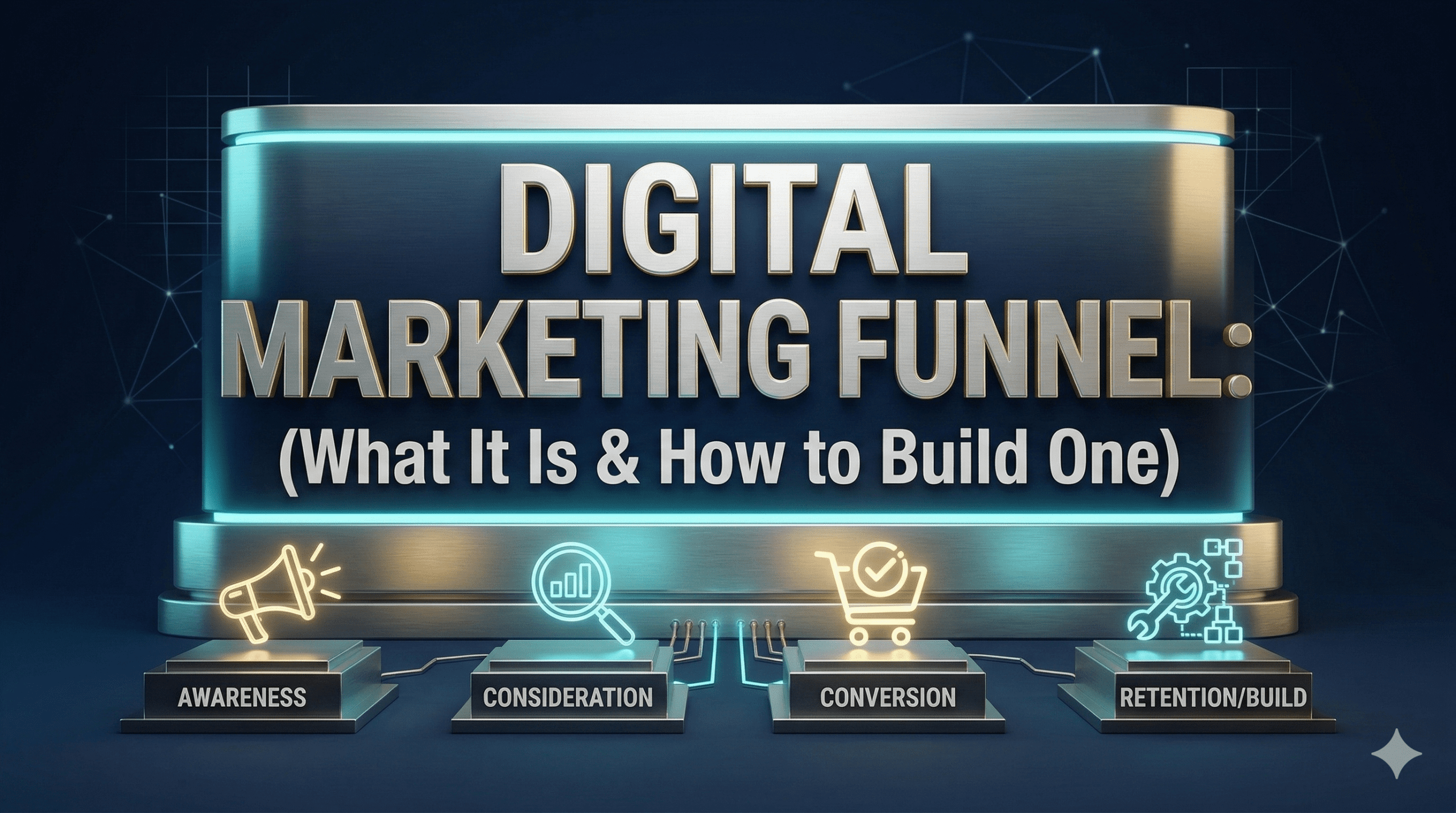
A digital marketing funnel is a simple model that shows how someone goes from first learning about your business to taking a final action. It breaks the journey into clear stages so you can understand what people need at each step. Instead of guessing how to communicate or what to share, the funnel gives you a structure you can follow.
The funnel exists because people rarely act the moment they discover something new. They need time to understand who you are, why your message matters, and how your offer fits their situation. A funnel gives them that space and guides them forward with clarity.
Every funnel has the same core purpose. It helps you attract the right people, keep their interest, earn their trust, and make it easy for them to take the next step. This structure works for any business size, any niche, and any platform. The process stays the same even when the tools change.
A simple funnel is often enough to build real momentum. When each stage makes sense and flows naturally, people move through it without feeling pressured or confused.

How a digital marketing funnel works step by step
A digital marketing funnel shows how someone moves from first discovering your content to taking a meaningful action. Instead of happening all at once, this process usually unfolds through a series of stages. Each stage gives the person the information they need to move forward with more clarity and confidence.
Step-by-step breakdown of the funnel
Step 1: Awareness
The journey begins when someone first discovers your content. This may happen through a social post, a video, a search result, or a shared piece of content.
At this stage, people are usually exploring and learning something new. Content that works well here includes short videos, social posts, blog articles, or simple tips that introduce a helpful idea.
Step 2: Interest
After discovering your content, the person becomes more interested in the topic. They may start reading, exploring your website, or learning more about your approach.
This stage focuses on providing clear explanations and useful information that keeps people engaged and encourages them to continue learning.
Step 3: Consideration
At this point, the visitor begins evaluating whether your approach or offer can help them. They look for more detailed information that answers their questions and helps them understand the value of what you provide.
Resources such as guides, tutorials, email sequences, or case studies often support this stage by building trust and reducing uncertainty.
Step 4: Action
The final stage happens when the person feels ready to take the next step. After learning from your content and receiving helpful information, they understand the value of the offer.
This makes it easier for them to sign up for a course, purchase a product, book a consultation, or take another meaningful action.
A simple example of a marketing funnel
To see how this works in practice, imagine someone scrolling through YouTube and finding a short video that explains a useful tip about digital marketing funnels. The idea catches their attention, so they decide to learn more.
They click the link in the video description and land on a beginner-friendly blog article that explains the concept in more detail. While reading, they see an invitation to download a free checklist that summarizes the steps for building a funnel.
After downloading the checklist, they start receiving a few short emails that explain the process, share examples, and answer common beginner questions.
By the end of the email sequence, they feel confident enough to take the next step and enroll in a course that teaches how to build a funnel from start to finish.
That entire journey is a digital marketing funnel.
This step-by-step flow is what defines a digital marketing funnel. Each stage builds on the previous one, helping people move from discovery to decision in a natural and structured way.

How TOFU, MOFU, and BOFU fit into the funnel stages
Many beginners hear TOFU, MOFU, and BOFU and assume they refer to a separate system. They are simply another way to describe the same stages you just learned.
These terms help you understand what people need at each point in the funnel and what type of content supports their journey. Seeing both models side by side gives you a clearer picture of how the funnel works in real situations.
The table below breaks down each stage from a practical angle. It shows the purpose of the stage, how people think at that moment, and the content types that move them forward.
TOFU, MOFU, and BOFU Explained
Every piece of content you publish should have a job. This breakdown shows how TOFU, MOFU, and BOFU each play a different role in moving someone from first contact to confident action, so you can plug your content into the right stage instead of posting at random.
| Stage | Purpose | Audience Mindset | Best Content Types | How It Connects to the Funnel |
|---|---|---|---|---|
| TOFU (Top of Funnel) | Help people discover you and understand your main idea. | Curious, exploring, lightly aware. | Short videos, social posts, simple blogs, tips, quick value. | Matches the Awareness stage. It introduces your message and brings people into your world. |
| MOFU (Middle of Funnel) | Build trust and deepen interest by giving people useful context. | Interested, learning, evaluating options. | Guides, tutorials, email follow ups, examples, supportive resources. | Covers the Interest and Consideration stages. It helps people understand your value. |
| BOFU (Bottom of Funnel) | Present the offer clearly and guide people to a final action. | Ready to decide, needs clarity, wants confidence. | Offer pages, demos, product details, comparisons, simple explanations. | Matches the Action stage. It makes the next step obvious and easy to take. |
Why this framework matters
Understanding TOFU, MOFU, and BOFU helps you match your message to the stage your audience is in. People at the top need simple introductions. People in the middle need clarity and trust. People at the bottom need a clear reason to act. When each stage gets the right type of content, your funnel feels smooth, natural, and easier for visitors to follow.
How to build a simple digital marketing funnel
A beginner friendly funnel does not require complicated tools or long setups. It starts with understanding who you want to reach and giving people one clear path to follow. Each step builds on the one before it. The goal is to create a smooth flow rather than a long list of tasks.
Step 1: Know who you want to reach
Clarity makes everything easier. When you understand the goals, challenges, and interests of the people you want to help, your message becomes more focused. A clear audience allows you to shape content that speaks directly to their situation.
Step 2: Create one awareness entry point
Choose a simple starting point. It can be a social post, a short video, a helpful blog, or a piece of content that introduces your main idea. This entry point should create curiosity and show the visitor what your work is about.
Step 3: Capture attention with value
Once someone discovers you, keep them engaged. Share something useful, practical, or insightful that helps them understand your approach. This can be a quick tip, a short explanation, or a small piece of your method. The goal is to build interest by being genuinely helpful.
Step 4: Offer a simple next step
Give visitors a clear direction. This can be an email signup, a lead magnet, or a helpful resource that deepens the connection. The next step should feel natural, not forced. Make it easy for people to understand what they will receive.
Step 5: Provide consistent follow up
Your follow up builds trust. Use email, guides, or short content to answer questions and give more context. Steady communication helps someone move from interest to consideration because you continue to be useful and relevant.
Step 6: Present a clear offer
Once visitors understand your value, guide them toward a simple offer. It can be a product, a service, a booking, or any action that aligns with your goal. The message should be direct. People should know exactly what the offer is and why it matters.
What every strong funnel needs
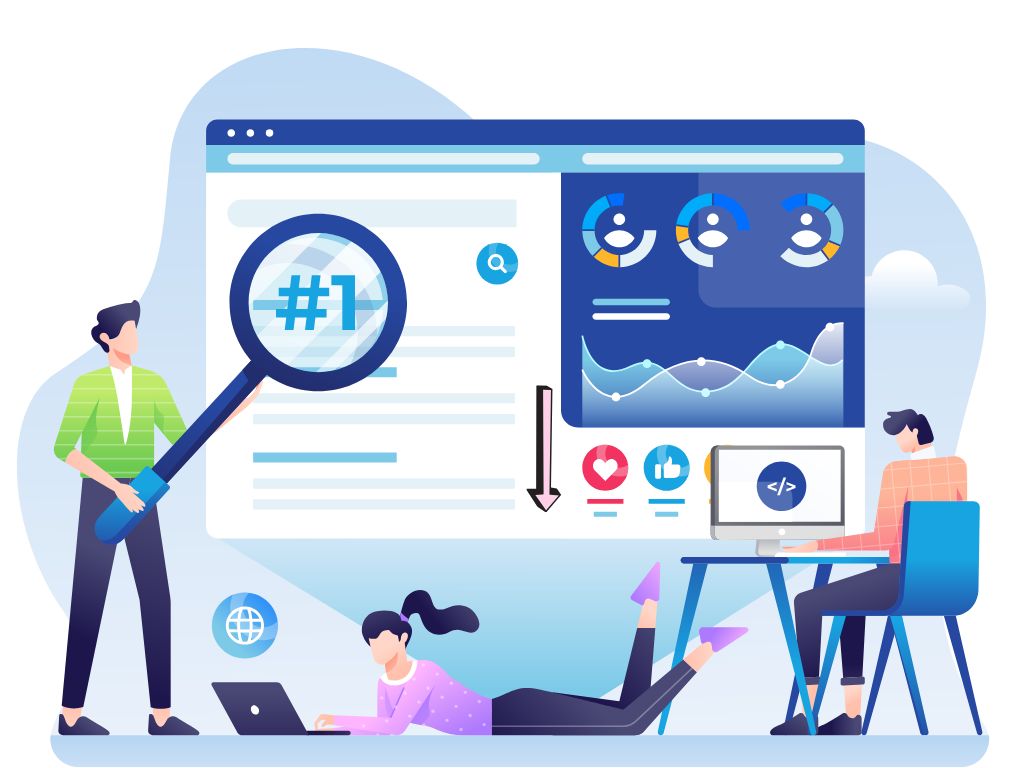
A strong funnel is built on a few core elements. These parts work together to guide people from the first moment of awareness to the final action. When these pieces are in place, the funnel becomes clearer for you and more natural for the person moving through it.
A clear message
People should understand who you help and how you help them. A simple message creates direction. It also keeps every stage of the funnel aligned with the same idea.
A single goal
Every funnel needs one main purpose. It might be collecting email signups, selling a product, or booking a call. When you choose one goal, the steps become easier to design and easier for visitors to follow.
Useful content
Value is what keeps people moving. Each stage should offer something helpful that matches where the person is in their decision process. Clear content builds trust and keeps attention.
Smooth transitions between stages
A visitor should know what to do next. Each step should feel like a natural continuation of the last. When the next action is obvious, the funnel moves more efficiently.
A simple way to track results
Tracking helps you understand what is working and what needs improvement. Even basic tools give enough clarity to see how people are moving through the funnel. Small adjustments become easier when you can see the flow clearly.
Tools that help beginners build funnels
You do not need advanced software to build a simple digital marketing funnel. A few basic tool categories can help you create pages, follow up with your audience, and understand how your funnel is performing. The goal is to choose tools that support your flow without adding unnecessary complexity.
Page builders
Page builders help you create landing pages, signup pages, or simple bridge pages. They offer templates, visual editors, and clean layouts that make it easy to guide visitors through each step. These tools keep your design consistent and help you set up pages quickly.
Email platforms
Email tools help you stay connected with people after they join your list. They allow you to send follow up sequences, share helpful content, and guide subscribers toward your offer. A simple email platform is enough to support a beginner friendly funnel.
Analytics tools
Analytics tools show how people move through your funnel. They help you understand how many visitors reach each stage, where drop-offs happen, and which parts need improvement. Even basic tracking gives you enough insight to make steady progress.
Content platforms
Content platforms help you attract new visitors at the top of the funnel. This can be social media, blogs, short videos, or any platform where you share useful information. The goal is to create one reliable entry point that introduces your message.
Common mistakes beginners make
Beginners often assume they need complex funnels to make progress. The truth is that most issues come from unclear steps or too many moving parts. Avoiding a few common mistakes helps you build a funnel that feels simple and works smoothly.
Trying to build too many stages at once
A funnel becomes confusing when it includes more steps than necessary. Starting with one clear path makes the structure easier to manage and easier for visitors to follow.
Adding unnecessary steps
Extra pages, extra forms, and extra decisions slow people down. A simple funnel with a clear direction is usually more effective than a long sequence of actions.
Using unclear messaging
If people cannot understand who you help or what you offer, they will not move forward. A clear message improves every stage of the funnel and builds trust naturally.
Overcomplicating offers
A beginner friendly funnel works best with a simple offer. When the offer feels clear and accessible, visitors feel more confident taking the next step.
Forgetting to follow up
Many funnels fail because they stop too early. Consistent follow up builds trust, reinforces value, and guides people toward the right action at the right time.

Conclusion
A digital marketing funnel helps you guide people from first discovering your work to taking a meaningful action. It gives your content direction and helps visitors understand the next step without feeling rushed. When you focus on clarity, each stage of the funnel becomes easier to design and easier for your audience to follow.
You do not need advanced tools or complex frameworks to start. A simple funnel with a clear message, one entry point, and a straightforward offer can create steady momentum. As you learn how people move through your funnel, you can make small improvements and refine the experience over time.
Building your first funnel is less about perfection and more about understanding the flow. When each stage serves a clear purpose, the entire path feels natural for both you and your audience. That clarity is what makes a funnel effective.
Frequently Asked Questions About Digital Marketing Funnels
What is a digital marketing funnel?
A digital marketing funnel is a model that shows how people move from first discovering your brand to taking a final action, such as signing up for a service, downloading a resource, or making a purchase. The funnel organizes the customer journey into stages so businesses can provide the right information at the right time and guide visitors toward a decision.
Do I need special software to build a digital marketing funnel?
No. You can build a simple funnel using basic tools such as a page builder, an email platform, and a content channel like a blog or social media account. Advanced funnel software can be helpful later, but it is not required to get started.
How long does it take to build a simple funnel?
A beginner can set up a basic funnel in a few days. The timeline depends on how quickly you create your content and connect the steps, such as your landing page, email signup, and follow-up messages. Starting simple helps you launch faster and improve the funnel over time.
How many stages should a beginner include?
Most beginner funnels use four stages: awareness, interest, consideration, and action. These stages reflect the natural decision-making process people go through when they discover something new and decide whether to move forward.
What type of content works best at the top of the funnel?
Top-of-funnel content should be short, helpful, and easy to understand. Social posts, short videos, blog articles, and simple tips work well because they introduce your message without overwhelming the audience.
Do digital marketing funnels work for small businesses or solo creators?
Yes. Funnels are not only for large companies. Small businesses, freelancers, and content creators use funnels to guide visitors toward meaningful actions like joining an email list, booking a consultation, or purchasing a product.
How do I know if my funnel is working?
You can track basic metrics such as page visits, email signups, engagement, and conversions. If people move steadily from one stage to the next, your funnel is working well. If many visitors leave at a certain step, that stage may need clearer messaging or a simpler next action.
Should I build more than one funnel?
Not at the beginning. It is better to start with one simple funnel and improve it over time. Once you understand how your audience responds and which steps work best, you can create additional funnels for different offers or audiences.

0 Comments