Most online money advice is loud. Dividend investing is not.
It does not promise overnight income, viral growth, or a shortcut around financial reality. It is slower than trading, less exciting than the latest side hustle, and easier to overlook because the basic idea is simple: own dividend-paying investments and collect income when those dividends are paid.
This guide explains dividend investing from a practical money-making perspective. You will learn what dividends are, how dividend income works, how people use reinvestment to build over time, what beginners should check before starting, and which risks to understand before treating dividends like passive income.
- Dividend investing can create income over time, but it is not guaranteed income.
- Dividends are payments made by companies or funds to shareholders when they choose to distribute part of their earnings.
- Dividend income can be taken as cash or reinvested to buy more shares, which can help the income stream grow over time.
- A higher dividend yield is not always better. Extremely high yields can signal risk, financial stress, or an unsustainable payout.
- Dividend stocks and dividend ETFs can both be used for income, but they offer different levels of control, diversification, and risk.
- Beginners should focus on understanding the investment, the payout history, the risks, and the tax implications before chasing income.
Disclaimer: This article is for educational purposes only and is not financial advice. I am an independent affiliate, and the opinions expressed here are my own. If you follow a link and make a purchase or open an account, I may earn a commission.
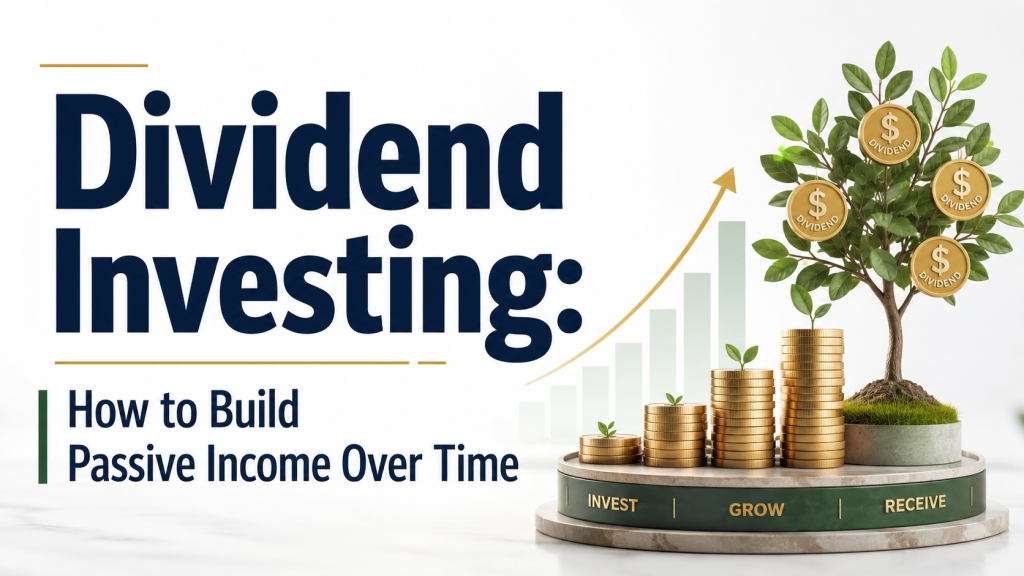
What Is Dividend Investing?
Dividend investing is a strategy built around owning stocks or funds that pay dividends. A dividend is a payment a company may make to shareholders, usually from its earnings, when the company decides to distribute part of its profits instead of keeping all of that money inside the business.
In simple terms, dividend investors are looking for assets that can produce income while they hold them. That income may come from individual dividend-paying stocks, dividend-focused exchange-traded funds, or mutual funds that distribute income from the investments they own.
The key word is may. Dividends are not guaranteed. A company can raise, reduce, pause, or stop its dividend depending on its financial condition, business priorities, or market environment.
That is what makes dividend investing different from quick money tactics. The goal is not to guess tomorrow’s stock price or chase a fast payout. The goal is to build ownership in income-producing investments and understand how those payments can contribute to a broader long-term money strategy.
How Dividend Investing Makes Money
Dividend investing can create money in three main ways: dividend payments, reinvestment, and possible long-term growth.
The first creates income. The second can help that income compound. The third depends on whether the investment itself increases in value.
Dividend Payments
Dividend payments are the most direct form of income.
When a company or fund pays a dividend, eligible shareholders receive a payment based on how many shares they own. That payment may arrive as cash in the brokerage account or be reinvested automatically, depending on the account settings.
For example, if a stock pays a $0.50 dividend per share and you own 20 shares, the dividend payment would be $10 before any taxes or account considerations. The math is simple, but the payout still depends on the company or fund continuing to issue dividends.
Dividend Reinvestment
Dividend reinvestment means using dividend payments to buy more shares instead of taking the money as cash.
This can help income grow over time because additional shares may generate additional dividends in the future. Many brokerages and funds allow investors to reinvest dividends automatically, which is often called a dividend reinvestment plan or DRIP. Investor.gov explains that some plans allow shareholders to buy more shares by reinvesting dividend payments into the company.
Reinvestment does not remove risk. It simply changes what happens to the dividend after it is paid. Instead of spending the cash, you use it to increase ownership.
Long-Term Growth Potential
Dividend investing may also make money if the stock or fund increases in value over time. This is separate from the dividend itself.
For example, an investor may receive dividend payments while also owning shares that become more valuable. But the opposite can happen too. Stock prices can fall, and investors can lose money even when a company pays dividends. Investor.gov notes that stock prices can move up or down and that investors can lose money in stocks.
That is why dividend investing should not be treated as guaranteed income. The appeal is that it can combine income and long-term ownership, but both sides depend on the quality of the investment and the risks involved.
According to Investor.gov, dividend reinvestment plans can let shareholders use cash dividends to buy more shares of stock.
Can Dividend Investing Really Be Passive Income?
Dividend investing can be passive in the sense that you do not need to actively trade, manage customers, create content, or sell a product to receive a dividend payment.
Once you own dividend-paying stocks or funds, the income process can become relatively low-maintenance. If a company or fund declares a dividend and you are eligible to receive it, the payment is deposited into your brokerage account based on the payout schedule.
That is the appeal.
But passive does not mean guaranteed. You still need to choose investments carefully, understand what you own, review the risks, and know that dividends can be reduced or stopped. Stock prices can also fall, which means the value of your investment can decline even if you receive dividend payments.
So dividend investing is not passive income in the effortless internet-money sense. It is better understood as a low-maintenance income strategy that can work over time when it is built carefully and managed responsibly.
That makes it different from many online earning methods. You are not getting paid for clicks, referrals, surveys, or daily tasks. You are getting paid because you own an asset that may distribute part of its earnings to shareholders.
FINRA explains that when a company pays a dividend, the dividend amount is not guaranteed and the company can cut or eliminate it.
How To Start Dividend Investing Without Overcomplicating It
You do not need to become a trader to understand dividend investing.
The basic process is simple. You open an investment account, choose dividend-paying investments, decide whether to take the income as cash or reinvest it, and track how those payments perform over time.
The important part is not moving fast. It is understanding what you are buying before expecting it to pay you.
Choose A Brokerage Account
A brokerage account is the account you use to buy and sell investments such as stocks, mutual funds, and ETFs. For dividend investing, the account should make it easy to research investments, view dividend information, and manage dividend payments.
Useful features may include:
- Fractional shares
- Dividend reinvestment
- Low or no trading commissions
- Clear account fees
- Simple tax documents
- Access to stocks and ETFs
The app matters less than the habits it supports. A clean platform can help, but the account is only the tool. The investment decisions still matter.
Decide Between Dividend Stocks And Dividend ETFs
Dividend stocks give you ownership in individual companies that may pay dividends. Dividend ETFs give you exposure to a basket of investments through one fund. ETFs trade on exchanges like stocks, and some funds may earn income from dividends paid by the stocks they hold.
For beginners, this choice matters because it affects risk and maintenance. Individual stocks give you more control, but each company carries its own business risk. Dividend ETFs can offer broader exposure, but they still carry market risk and may charge expense ratios.
Neither option is automatically better. The right choice depends on how much research, control, and diversification you want.
Understand Dividend Yield
Dividend yield shows how much a company or fund pays in dividends compared with its share price.
For example, if an investment has a 4% annual dividend yield, a $1,000 investment would produce about $40 per year before taxes, assuming the dividend is maintained and the share price does not change.
That number can be useful, but it should not be the only thing you look at. A high yield can look attractive, but it can also signal risk. Sometimes the yield rises because the stock price has fallen. Other times, the payout may be difficult for the company to sustain.
Look For Dividend Consistency
Dividend investing works best when the income is supported by a company or fund with a reasonable payout history. That does not mean the future is guaranteed. It means you are looking for signs that the dividend has been part of the company’s long-term capital return approach, not a temporary attempt to attract investors.
When reviewing a dividend investment, look at:
- How long it has paid dividends
- Whether the payout has been stable, growing, or declining
- Whether earnings and cash flow appear strong enough to support the payout
- Whether the company has cut its dividend before
- Whether the yield looks unusually high compared with similar investments
The goal is not to find the highest payout. The goal is to understand whether the payout appears sustainable.
Consider Dividend Reinvestment
Dividend reinvestment lets you use dividend payments to buy more shares instead of taking the money as cash. Some dividend reinvestment plans allow shareholders to automatically reinvest cash dividends into additional shares.
This can be useful if your goal is long-term growth. More shares may lead to larger future dividend payments if the investment continues paying dividends. Taking dividends as cash may make more sense if your goal is current income.
Neither option is wrong. The better choice depends on whether you want income now or want to build the income stream over time.
Investor.gov describes a brokerage account as an investment account that lets investors buy and sell products such as stocks, bonds, mutual funds, and ETFs.
Dividend Stocks vs Dividend ETFs
Dividend investors usually choose between individual dividend stocks and dividend-focused ETFs.
Both can produce dividend income. The difference is how much control, research, and risk concentration you take on.
| Option | How It Works | Best Fit | Main Trade-Off |
|---|---|---|---|
| Dividend Stocks | You buy shares of individual companies that may pay dividends. | People who want more control over which companies they own. | More research is required, and one company’s problems can affect your income and account value. |
| Dividend ETFs | You buy shares of a fund that holds a group of dividend-paying investments. | People who want broader exposure through one investment. | You have less control over the specific holdings, and the fund may charge expenses. |
Understanding Dividend Stocks
Dividend stocks give you more control. You can choose the companies you want to own, review their dividend history, and build a portfolio around specific businesses or industries.
The trade-off is concentration risk. If one company cuts its dividend, struggles financially, or drops sharply in price, your portfolio can be affected more directly.
Understanding Dividend ETFs
Dividend ETFs spread your money across multiple holdings inside one fund. That can make them simpler for beginners who do not want to research every company one by one. Investor.gov explains that mutual funds and ETFs pool money from investors and invest in stocks, bonds, or other assets, although a fund is not automatically diversified if it focuses too narrowly on one area.
The trade-off is that you give up some control. You do not personally choose every stock inside the fund. You also need to review costs, since ETF operating expenses can be passed on to investors through the fund’s expense ratio.
For many beginners, the question is not which option is “better.” The better question is which option you understand well enough to use responsibly.
Investor.gov explains that ETFs pool money from many investors and invest that money across stocks, bonds, other securities, or a combination of assets.
What Makes A Dividend Investment Worth Reviewing?
A dividend payment by itself does not make an investment strong.
Some companies pay dividends because they have stable earnings and enough cash to return money to shareholders. Others may offer a high yield because the stock price has fallen, the business is under pressure, or investors doubt the payout can continue.
That is why beginners should review the business behind the dividend, not just the dividend amount.
Dividend History
Dividend history shows how consistently a company or fund has paid dividends over time.
A long history of steady or rising payments can be a useful signal, but it does not guarantee future payouts. Companies can change their dividend policies when profits fall, debt rises, or management decides to use cash for something else.
The goal is not to find a perfect record. The goal is to see whether the dividend has been supported through different market conditions.
Payout Ratio
The payout ratio shows how much of a company’s earnings are being paid out as dividends.
A very high payout ratio can be a warning sign because it may mean the company is distributing more than it can comfortably afford. A lower payout ratio may give the company more flexibility, but it does not automatically make the investment better.
Use payout ratio as one clue, not the whole decision.
Business Stability
Dividend income depends on the business or fund behind the payment.
A company with steady demand, durable revenue, manageable debt, and consistent profits may have a better chance of supporting dividends over time. A company with unstable earnings, falling sales, or heavy debt may have a harder time maintaining payouts.
Public companies file reports that can help investors review financial statements, business results, risks, and operations. Investor.gov explains that a company’s Form 10-K includes audited financial statements, such as the income statement, balance sheet, and statement of cash flows.
Earnings And Cash Flow
Dividends are easier to trust when they are supported by real earnings and cash flow.
Earnings show whether the company is profitable. Cash flow shows whether the company is generating enough money to run the business, pay obligations, invest in growth, and return cash to shareholders.
A dividend that looks attractive on the surface may be less appealing if the company is borrowing heavily, selling assets, or weakening its balance sheet to maintain the payout.
Yield Sustainability
Dividend yield is useful, but it can be misleading.
A high yield may reflect a generous payout. It may also reflect a falling stock price. When the price drops sharply, the yield can rise even if the company’s situation is getting worse.
That is why yield should be reviewed alongside the company’s payout history, earnings, cash flow, debt, and industry conditions.
ETF Expense Ratio
For dividend ETFs, the expense ratio matters because it represents the ongoing cost of owning the fund.
A dividend ETF can make investing simpler by giving you exposure to multiple holdings, but the fund still has operating costs. Investor.gov explains that fund fees and expenses can affect returns, so investors should understand what they are paying before investing.
The best question is not, “Which investment pays the most?”
A better question is:
“Does this income stream appear sustainable, understandable, and worth the risk?”
Investor.gov says a company’s Form 10-K can include important information about the business, the risks it faces, and its audited financial statements.
Realistic Expectations: How Much Can Dividends Pay?
Dividend investing can produce real income, but the numbers are often smaller than beginners expect at first.
That is not a weakness. It is how the model works.
Dividend income depends on three main factors:
- How much money you invest
- The dividend yield of the investment
- Whether the dividend continues to be paid
For example, if an investment has a 4% annual dividend yield, the basic income estimate would look like this:
| Amount Invested | Example Annual Yield | Estimated Annual Dividend Income |
|---|---|---|
| $100 | 4% | $4 |
| $1,000 | 4% | $40 |
| $10,000 | 4% | $400 |
| $100,000 | 4% | $4,000 |
This is before taxes, fees, price changes, or dividend changes.
The Power of Time and Reinvestment
That is why dividend investing should not be sold as fast money. A small starting amount can help you learn the process, but it will not create meaningful income by itself.
The real power comes from time, consistency, reinvestment, and portfolio growth. If dividends are reinvested, those payments can buy more shares. Those additional shares may then produce more future dividends if the investment keeps paying.
Risks to Consider
But the word may matters.
Dividend income can grow, but it can also slow down, shrink, or stop. Stocks and funds can lose value, and Investor.gov notes that investors may lose some or all of the money they invest when securities held by a fund decline in value.
A better way to think about dividend income is this:
It usually starts small. It becomes more useful as the invested amount grows. It works best when expectations are realistic from the beginning.
Risks And Trade-Offs To Understand
Dividend investing can be useful, but it is still investing.
That means the income is not fixed, the account value can move up or down, and the payout depends on what the company or fund does in the future.
Dividends Can Be Reduced Or Stopped
A dividend is never guaranteed.
A company may pay dividends for years and still reduce, pause, or eliminate the payout if its business weakens, cash becomes tighter, or management decides to use money elsewhere.
FINRA notes that if a company pays a dividend, the amount is not guaranteed and can be cut or eliminated.
This is why dividend history matters, but it should not be treated as a promise.
Stock Prices Can Fall
Dividend payments do not protect you from market losses.
You may receive income from a stock or fund while the value of the investment declines. If the share price falls enough, the loss in account value can be larger than the dividend income you collected.
Investor.gov explains that stock prices can move down and investors can lose money in stocks.
High Yields Can Signal Risk
A high dividend yield can look attractive, but it deserves extra caution.
Sometimes a yield is high because the company pays a strong dividend. Other times, it is high because the stock price has fallen sharply. That can be a sign that investors are worried about the business or the dividend itself.
The goal is not to chase the biggest number. The goal is to understand whether the payout appears sustainable.
Concentration Can Increase Risk
Owning only a few dividend stocks can make your income more fragile.
If one company cuts its dividend, misses expectations, or falls in value, the impact on your portfolio can be larger. Dividend ETFs may help spread exposure across more holdings, but they still carry the risks of the investments inside the fund.
Investor.gov notes that the risk of a fund depends on the risks of the underlying stocks, bonds, or other investments it holds.
Taxes May Apply
Dividends may be taxable, even if you reinvest them instead of withdrawing the cash.
The IRS explains that ordinary dividends and qualified dividends are reported for tax purposes, and qualified dividends may be taxed differently from ordinary dividends when they meet certain requirements.
This does not mean dividends are bad. It means taxes should be part of the calculation.
Dividend Income Usually Starts Small
Dividend investing is often slow at the beginning. A small account can help you learn how dividends work, but it usually will not create meaningful income right away.
The income becomes more noticeable when the invested amount grows, dividends are reinvested, and the strategy has time to compound.
That is the trade-off. Dividend investing can be low-maintenance, but it is not instant.
FINRA explains that when a company pays a dividend, the dividend amount is not guaranteed and the company can cut or eliminate it. The IRS also explains that ordinary and qualified dividends are reported differently for tax purposes.
Common Mistakes To Avoid
Dividend investing is simple to understand, but it is still easy to approach the wrong way.
Most mistakes come from treating dividends like automatic income instead of investment income. The difference matters. Automatic income sounds guaranteed. Investment income depends on the asset, the business, and the market.
Chasing The Highest Yield
A high dividend yield can look like the fastest path to more income.
That is often where beginners get into trouble.
A high yield may mean the company pays a strong dividend, but it can also mean the stock price has dropped sharply. When that happens, the yield can look attractive even while the business is under pressure.
Do not judge a dividend investment by yield alone. Review the company, the payout history, the financial strength, and whether the dividend appears sustainable.
Confusing Dividends With Guaranteed Income
Dividend payments are not the same as a paycheck.
A company can reduce or stop its dividend. A fund can change its distributions. The account value can also fall even when dividends are being paid.
This does not make dividend investing useless. It simply means the income should be treated as conditional, not guaranteed.
Ignoring Diversification
Owning one or two dividend stocks may feel simple, but it can create unnecessary risk.
If one company cuts its dividend or drops in value, your income and account balance can take a larger hit. Diversification helps spread money across different investments, sectors, or asset types, which can reduce the impact of one holding performing poorly.
Investor.gov describes diversification as not putting all your eggs in one basket.
Dividend ETFs can help with diversification, but they still need review. A fund that focuses too narrowly on one sector may not provide as much protection as beginners expect.
Buying Only Because A Company Pays Dividends
A dividend is only one part of the investment.
A weak company can still pay a dividend for a while. A strong company may pay a modest dividend but have better long-term fundamentals. A company may also decide to use cash for debt reduction, growth, acquisitions, or share buybacks instead of raising the dividend.
The better question is not, “Does this pay?” The better question is:
“Do I understand why this investment may be able to keep paying?”
Forgetting Taxes
Dividends may be taxable, even when they are reinvested.
That can surprise beginners who assume reinvested dividends do not count because they never withdrew the cash. Taxes depend on the account type, dividend type, holding period, and personal tax situation.
This is why dividend income should be tracked. It is still income, and it may affect your tax reporting.
Expecting Fast Results
Dividend investing usually starts small.
A $100 investment can teach you how dividends work, but it will not create meaningful passive income. Larger income usually requires more capital, more time, reinvestment, or a combination of all three.
That slow start is not a flaw. It is the nature of the strategy.
Treating Dividend Investing Like A Shortcut
Dividend investing is not a loophole around work, risk, or patience.
It can support a passive income strategy, but it still requires money, research, discipline, and realistic expectations. The people who benefit most are usually not chasing the fastest payout. They are building a system they understand and can maintain over time.
Investor.gov describes diversification as spreading money among different investments so one poor-performing investment does not carry the entire portfolio.

Conclusion
Dividend investing is not the loudest way to make money online. That is part of why people overlook it.
It does not work like a quick side hustle, a cash-back app, or a referral bonus. It works by owning investments that may distribute part of their earnings to shareholders. Those payments can be taken as cash or reinvested to help build a larger income stream over time.
The appeal is clear. Dividend investing can be relatively low-maintenance once it is set up, and it does not require active trading or constant attention. But it is still investing. Dividends can be reduced, stock prices can fall, taxes may apply, and meaningful income usually takes time to build.
That is the honest view.
Dividend investing can be a useful passive income strategy when you understand how it works, review the risks, and avoid chasing payouts you do not fully understand. The goal is not to find easy money. The goal is to build income through ownership, patience, and realistic expectations.
Next: Check out our How to Earn Using Investing Platforms Guide.
Frequently Asked Questions
Is Dividend Investing Passive Income?
Dividend investing can be a form of passive income because dividend payments may be received without active trading, client work, or daily tasks.
But it is not effortless or guaranteed. You still need to understand what you own, review risk, and remember that companies can reduce or eliminate dividends.
Do You Need A Lot Of Money To Start Dividend Investing?
No. Many brokerage platforms allow fractional share investing, which can make it possible to start with a small amount.
That said, small amounts usually produce small dividend payments. A $100 investment at a 4% annual dividend yield would produce about $4 per year before taxes, assuming the dividend is maintained.
How Often Are Dividends Paid?
Dividend schedules vary.
Many companies pay dividends quarterly, while some funds or companies may pay monthly, annually, or on another schedule. When a company declares a dividend, it sets important dates that determine which shareholders are entitled to receive the payment.
Can Dividends Be Cut?
Yes. Dividends can be reduced, paused, or eliminated.
FINRA explains that when a company pays a dividend, the amount is not guaranteed and the company can cut or eliminate it.
Are Dividends Taxable?
Dividends may be taxable.
The IRS explains that ordinary dividends are included in ordinary income, while qualified dividends may qualify for different tax treatment when they meet certain requirements.
Are Dividend ETFs Better Than Dividend Stocks?
Not automatically.
Dividend ETFs can make diversification easier because ETFs pool money from many investors and invest across a group of assets. But an ETF can still carry risk, especially if it focuses narrowly on one sector or strategy.
Individual dividend stocks give you more control over what you own, but they also require more research and can create more concentration risk.
Can You Lose Money With Dividend Investing?
Yes.
Dividend payments do not prevent losses. Stock prices can fall, funds can decline in value, and dividend income may not be enough to offset a drop in the investment’s price.
Is Dividend Investing Better Than Trading?
Dividend investing and trading are different strategies.
Trading usually focuses on buying and selling for price movement. Dividend investing focuses more on ownership, income, and time. Dividend investing may be calmer and lower-maintenance, but it still carries market risk and requires patience.
Should Beginners Choose Dividend Stocks Or Dividend ETFs?
Beginners who want simplicity may prefer to research dividend ETFs because they can provide exposure to multiple holdings through one fund. Beginners who want more control may prefer individual dividend stocks.
The better choice is the one you understand well enough to review responsibly.
Is Dividend Investing A Good Way To Make Money Online?
Dividend investing can be part of a money-making strategy because it can create income through ownership instead of active work.
But it should not be treated like a quick online hustle. It requires capital, risk tolerance, time, and realistic expectations. The income usually starts small and grows only if the investment strategy is built carefully.
Investing Platforms
Grow Your Wealth
Discover the best online investing platforms to start building your portfolio and earning money online.
Passive Income Apps
Earn While You Sleep
Explore our top picks for apps that help you generate a steady stream of passive income with minimal effort.
Best Survey Apps
Share Your Opinion
Turn your spare time into extra cash by taking surveys on these highly-rated and trusted apps.
Make Extra Money
Boost Your Income
Discover proven strategies, side hustles, and legitimate ways to increase your earnings from home.

1 Comment
21 Proven Ways to Make Extra Money Online in 2025 - Ismel Guerrero. · July 14, 2025 at 8:10 pm
[…] out our Dividend Investing Guide […]