Introduction: Getting Paid to Write in 2026
Getting paid to write online is no longer limited to journalists or career authors. In 2026, companies, publications, and digital platforms pay writers for everything from blog articles and list-based content to technical documentation, humor pieces, and personal essays.
What separates real opportunities from noise is not talent alone, but knowing where legitimate pay exists and how each platform actually works. Some sites prioritize speed and volume. Others reward specialization, consistency, or long-term collaboration. Each comes with different expectations, pay structures, and trade-offs.
This guide breaks down 10 legitimate websites that pay writers, explaining what each platform is best for, how much you can realistically earn, and who should (and should not) use it. Whether you are testing writing as a side income or building toward a freelance career, the goal is to help you choose platforms intentionally instead of guessing.
Key Takeaways
- The article lists 10 specific platforms where writers can earn money in 2026, covering marketplaces, publications, and a curated remote job board.
- The opportunities split into two realities: easy-entry platforms with lower pay and higher-pay outlets that require pitching, stronger samples, or experience.
- Several platforms pay fixed rates per accepted submission (ex: list-based or editorial sites), while others pay per project, per word, per hour, or based on audience engagement.
- The article shows that “get paid to write” isn’t one job type, it includes blog writing, copywriting, listicles, humor writing, niche finance articles, and long-term remote roles.
- Beginners can start without credentials on some platforms, but long-term income grows faster when writers build samples, improve consistency, and move toward better-paying clients or outlets.
- The guide also flags that scams exist and highlights common warning signs, emphasizing that legitimate writing work does not require upfront payment.
Disclaimer: I am an independent Affiliate. The opinions expressed here are my own and are not official statements. If you follow a link and make a purchase, I may earn a commission.

Why Writing Online Is a Great Income Opportunity
Writing online isn’t a pipe dream. It’s one of the fastest, most flexible ways to start making money: no commute, no gatekeepers, no endless applications. If you have internet access and basic writing skills, you’re already qualified.
Remote work means you can write from anywhere your couch, a café, or halfway around the world. There’s always a demand for new content, fresh perspectives, and original ideas. Companies need articles, blogs, guides, emails, even simple product reviews.
You set your schedule. You choose your gigs. Start small, test different sites, and watch your income grow as you gain experience and confidence.
Some writers use these sites for extra cash. Others build entire careers.
The only real limit? How quickly you take that first step.
Top Freelance Writing Platforms Comparison (2025)
Not every writing platform pays the same, attracts the same clients, or demands the same skill level. This table gives you a side-by-side look at pay ranges, difficulty, and primary focus so you can choose where to invest your time instead of guessing.
10 Websites That Will Pay You to Write at a Glance
| Platform | Pay Range (Estimated) | Difficulty Level | Primary Niche Focus / Type of Work | Best For |
|---|---|---|---|---|
| Fiverr | $5–$1,000+ / project | Easy–Medium | Custom gigs: Copywriting, simple blogs, creative content, short emails. | Building a portfolio, offering niche services (e.g., resume reviews). |
| Upwork | $15–$150+ / hour | Medium–Hard | High-end SEO blogs, ghostwriting, technical docs, long-term contracts. | Experienced writers seeking repeat, high-value clients and hourly rates. |
| Medium Partner Program | Highly Variable | Medium | Thought pieces, essays, how-to guides, and personal stories. | Building a personal brand and earning passive income from engaged readers. |
| Listverse | $100 / accepted list | Easy–Medium | Entertaining, quirky listicles (Top 10s). | Beginners who can generate unique, engaging topics and follow strict formatting. |
| Textbroker | $0.02–$0.09 / word | Easy | Product descriptions, short, low-value content, and bulk articles. | Quick, low-commitment volume work to get your feet wet in commercial writing. |
| iWriter | $1.40–$80 / project | Easy | Entry-level blogs, short articles, and simple reviews. | Absolute beginners looking for any paid work; rates are among the lowest. |
| FlexJobs | $20–$100+ / hour | Hard | Vetted remote job board for high-level staff or long-term contract roles. | Professionals seeking stable, high-quality, fully remote employment (not gigs). |
| MoneyPantry | $50–$300 / article | Medium | Personal finance, making or saving money, and frugal living tips. | Writers with expertise in finance who can provide actionable, in-depth advice. |
| Cracked | $100–$200 / article | Medium | Humor, pop culture, and creative storytelling or listicles. | Writers with a sharp, funny voice and a knack for timely, quirky content. |
| Writers Weekly | $60 / article | Medium | Tips, news, and success stories for the writing industry. | Writers who understand the freelance or publishing world and want to write for peers. |
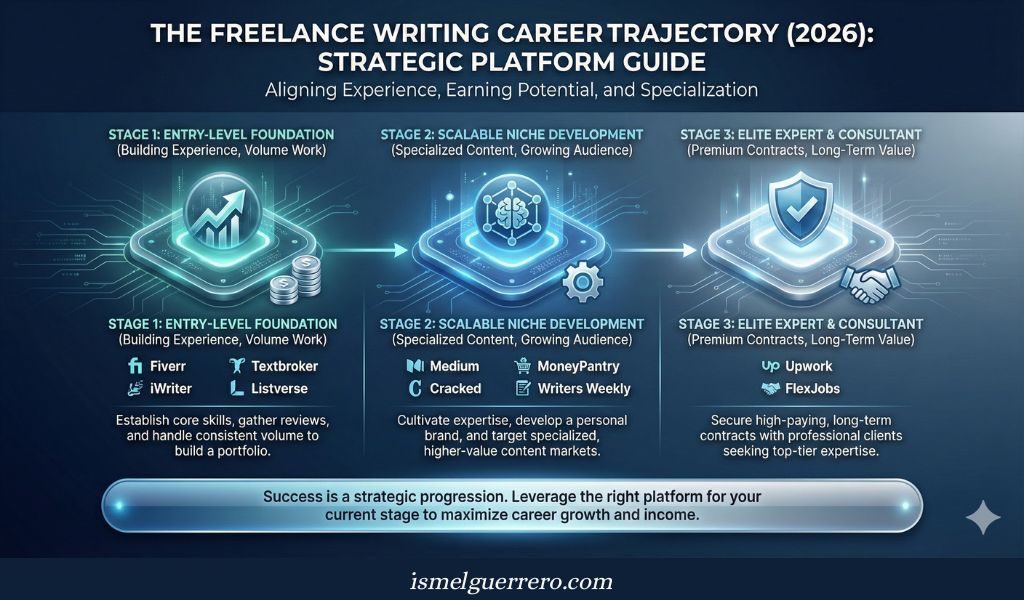
The Beginner Gateway: Platforms like Fiverr, Textbroker, and iWriter are the easiest to start on, but you must accept the trade-off of very low initial pay. Use them to build reviews and confidence.
Highest Earning Potential: Upwork (for high-level B2B/Technical work) and the top end of Fiverr (for specialized copywriting and web content) offer the best long-term income, but require a strong portfolio and competitive skills.
The Job Board Advantage: FlexJobs and similar boards (like ProBlogger’s job board) are excellent for finding jobs with set, competitive salaries or hourly rates, but competition is fierce for these full-time or long-term contracts.
The Power of Niche: The best pay per article comes from specializing, as seen with publications like MoneyPantry (Finance) or Copyhackers (Copywriting rates can be $300–$1,000+ per article).
1. Get Paid to Write: Personal Finance & Practical Advice — MoneyPantry
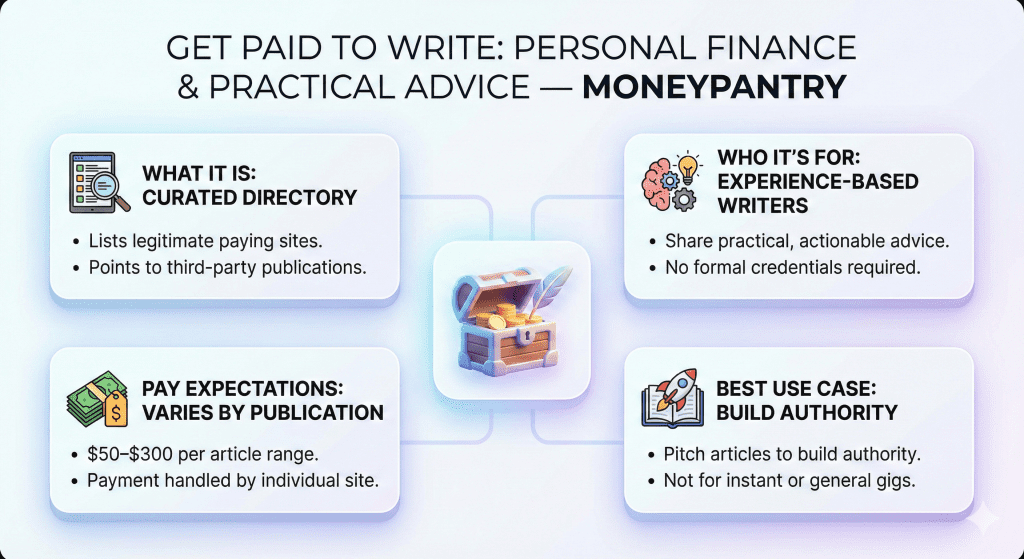
What it is
MoneyPantry is a curated directory that lists legitimate websites and publications paying writers for personal finance and frugal living content. It does not hire writers directly. Instead, it points you to third-party sites actively accepting pitches.
Who it’s for
This platform works best for writers who can share practical, experience-based advice on topics like saving money, budgeting, or side hustles. Formal credentials aren’t required, but clear, actionable insight is.
Pay expectations
Payment is handled by the individual publication you pitch.
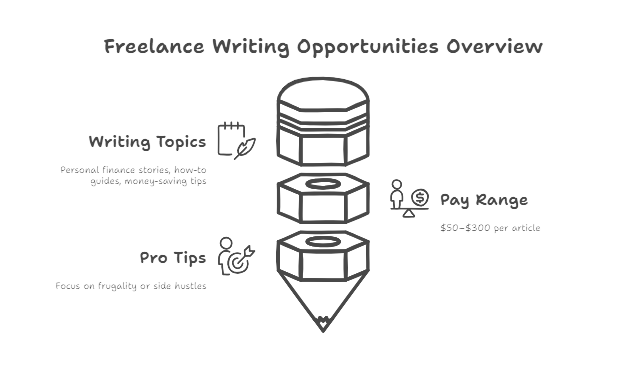
- Typical range: $50–$300 per article
- Payment method and timing vary by site
Writers should always confirm terms directly with the publisher.
Pros and limits
Pros
- Transparent pay ranges
- Legitimate, niche-focused opportunities
- Good fit for beginners with real-world experience
Limits
- Competitive pitching process
- Limited to finance and lifestyle topics
- No guaranteed assignments
Best use case
MoneyPantry is ideal if you want to pitch articles (not bid for gigs) and build authority in personal finance or practical lifestyle writing. It’s not suited for writers looking for instant or general-topic work.
2. Get Paid to Write Through Freelance Gigs — Fiverr
What it is
Fiverr is a freelance marketplace where writers sell predefined services (“gigs”) at fixed prices. Instead of pitching editors or applying for jobs, you list what you offer and buyers come to you.
Who it’s for
Fiverr works best for writers who want fast entry, flexible work, and control over their services. It’s commonly used by beginners, but experienced writers can earn significantly by specializing.
Pay expectations
You set your own prices.
- Entry-level gigs often start low
- Specialized writing (SEO, email copy, landing pages) can reach $100–$1,000+ per project
- Fiverr takes a 20% platform fee per order
Income scales with positioning, not seniority.
Pros and limits
Pros
- No pitching or applications required
- Immediate access to buyers
- Full control over services, pricing, and delivery
Limits
- High competition in generic writing categories
- Platform fee reduces take-home pay
- Visibility depends heavily on reviews and niche clarity
Best use case
Fiverr is best used as a skill-to-cash platform, not a long-term brand. Writers who niche down and package clear outcomes (not “I’ll write anything”) see the strongest results.
3. Get Paid to Write Through Long-Term Freelance Contracts — Upwork
What it is
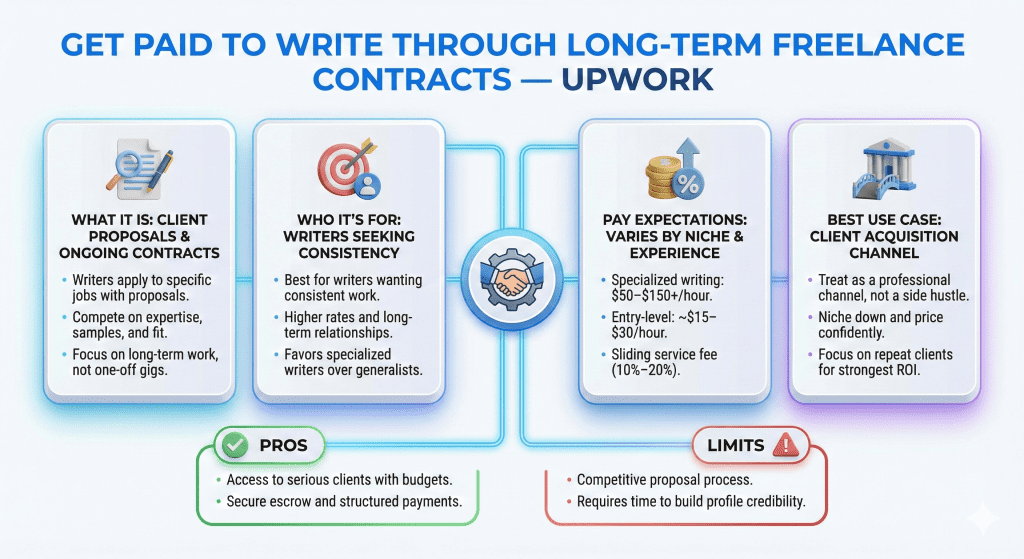
Upwork is a freelance platform built around client proposals and ongoing contracts, not one-off gigs. Writers apply to specific jobs and compete based on expertise, samples, and fit.
Who it’s for
Upwork works best for writers who want consistent work, higher rates, and long-term client relationships. It favors writers who can specialize rather than generalists.
Pay expectations
Rates vary widely by niche and experience.
- Entry-level writing: ~$15–$30/hour
- Specialized writing (SEO, B2B, technical, ghostwriting): $50–$150+/hour
- Upwork charges a sliding service fee (10%–20%)
Strong profiles compound. Once established, repeat clients become common.
Pros and limits
Pros
- Access to serious clients with real budgets
- Long-term and retainer-style contracts
- Secure escrow and structured payment system
Limits
- Competitive proposal process
- Requires time to build profile credibility
- Not ideal for writers who want instant wins
Best use case
Upwork is best treated as a client-acquisition channel, not a side hustle platform. Writers who niche down, price confidently, and focus on repeat clients see the strongest ROI.
4. Get Paid to Write Short, High-Impact Lists — Listverse
What it is
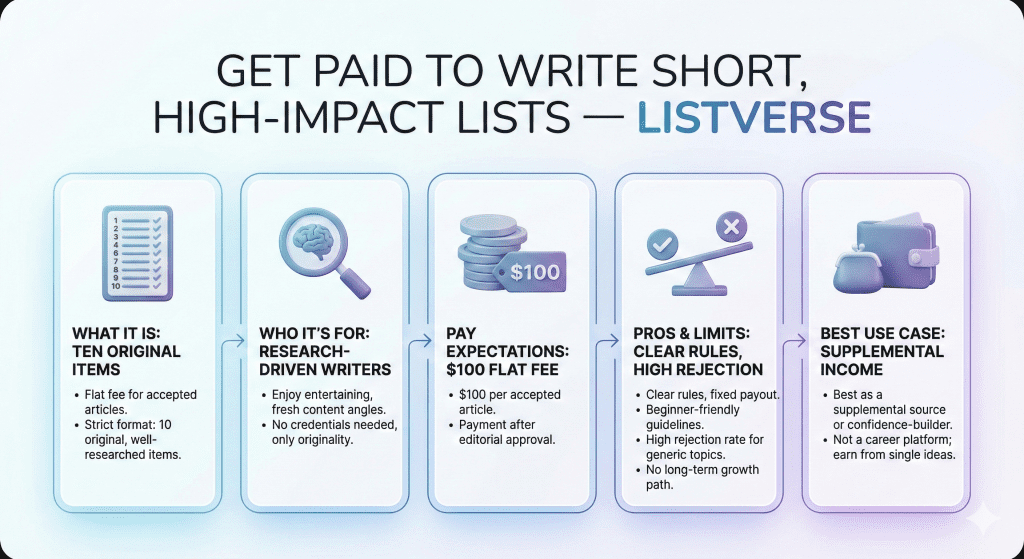
Listverse pays writers a flat fee for accepted list articles. Each submission must follow a strict format: ten original items, well-researched, and genuinely unusual.
Who it’s for
Listverse is a good fit for writers who enjoy research-driven, entertaining content and can consistently generate fresh angles. You don’t need credentials, but you do need originality.
Pay expectations
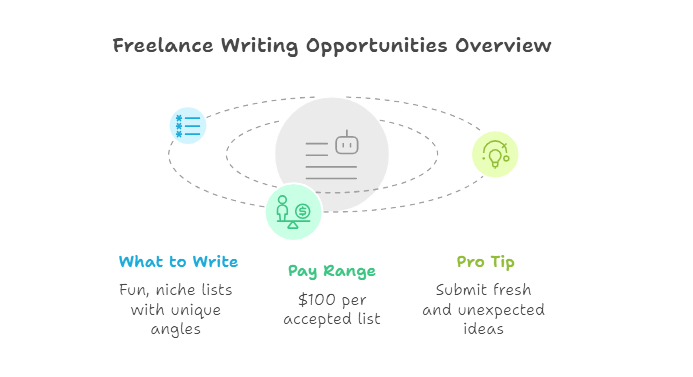
- $100 per accepted article
- Payment is made after editorial approval and publication
There’s no scaling mechanism here. Each piece stands alone.
Pros and limits
Pros
- Clear rules and fixed payout
- No pitching back-and-forth
- Beginner-friendly if you follow guidelines closely
Limits
- High rejection rate for generic topics
- No long-term relationship or growth path
- Limited to one specific format
Best use case
Listverse works best as a supplemental income source or confidence-builder. It’s not a career platform, but it’s a straightforward way to earn from a single well-executed idea.
5. Get Paid to Write by Publishing Directly — Medium Partner Program
What it is
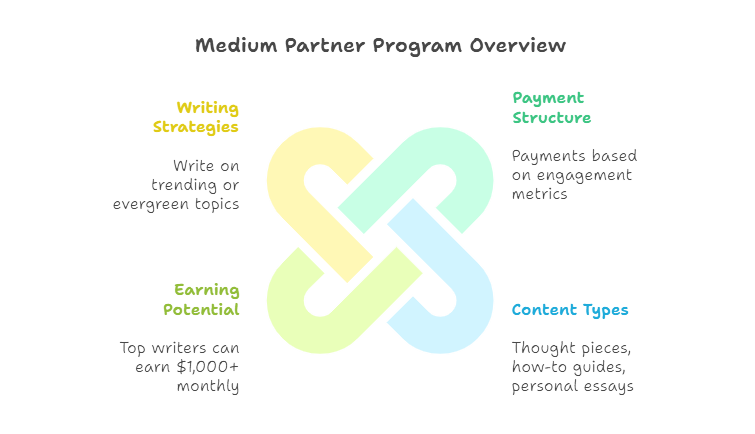
The Medium Partner Program pays writers based on reader engagement, not word count or assignments. You publish articles on Medium, and earnings are tied to how long paying members read and interact with your work.
Who it’s for
This model works best for writers who want creative freedom and are comfortable building visibility over time. It favors strong hooks, clear thinking, and topics with broad or evergreen appeal.
Pay expectations
- Earnings are variable
- Some writers earn a few dollars per article
- Consistent, well-performing writers can reach $500–$1,000+ per month
Income depends on readership, distribution, and consistency.
Pros and limits
Pros
- No pitching or client approval process
- Built-in audience and distribution
- Strong upside for evergreen or viral content
Limits
- Income is unpredictable
- Requires regular publishing to build momentum
- You don’t control the platform or algorithm
Best use case
Medium works best as a visibility and leverage platform, not a guaranteed paycheck. It’s ideal for testing ideas, building authority, and stacking long-term upside alongside other writing income.
6. Get Paid to Write Humor and Pop Culture Content — Cracked
What it is
Cracked pays writers to produce humor-driven articles that mix comedy with insight. The focus is on sharp angles, original jokes, and entertaining storytelling, not generic listicles.
Who it’s for
Cracked is best for writers with a distinct comedic voice who enjoy pop culture, internet trends, and unconventional takes. Strong writing matters more than credentials.
Pay expectations
- $100–$200 per accepted article
- Payment is issued after publication
You’re paid per piece, not per word or hour.
Pros and limits
Pros
- Clear pay rates
- Large audience and strong brand recognition
- Great portfolio credit for humor or entertainment writers
Limits
- High editorial standards
- Not suitable for serious, technical, or instructional writing
- Rejections are common if the humor doesn’t land
Best use case
Cracked works best as a portfolio and exposure platform for comedy writers. It’s not scalable income, but it can open doors to other creative writing opportunities.
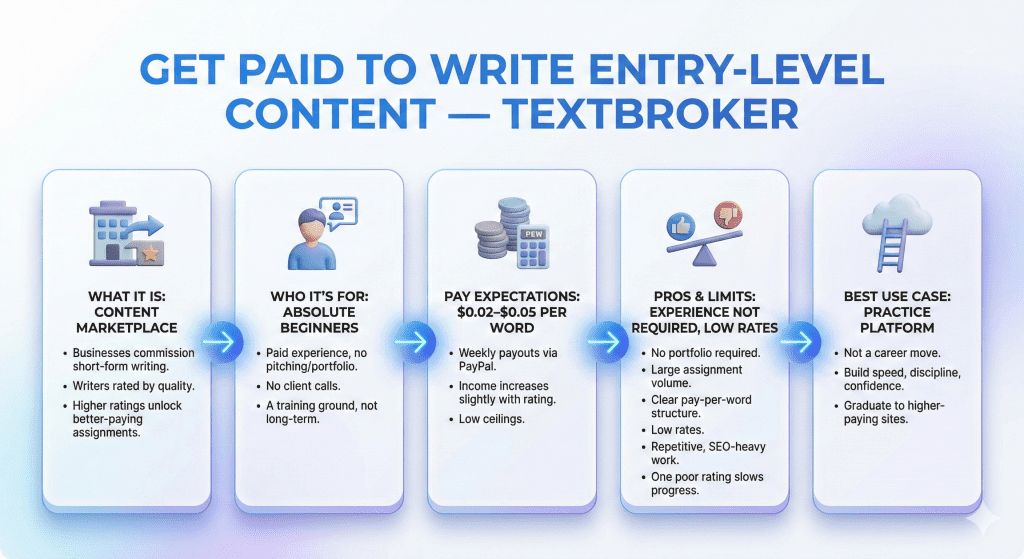
7. Get Paid to Write Entry-Level Content — Textbroker
What it is
Textbroker is a content marketplace where businesses commission short-form writing at scale. Writers are rated by quality, and higher ratings unlock better-paying assignments.
Who it’s for
Textbroker is best for absolute beginners who want paid writing experience without pitching, clients calls, or a portfolio. It’s a training ground, not a long-term income platform.
Pay expectations
- $0.02–$0.05 per word depending on rating
- Weekly payouts via PayPal
Income increases slightly as your rating improves, but ceilings remain low.
Pros and limits
Pros
- No experience or portfolio required
- Large volume of available assignments
- Clear pay-per-word structure
Limits
- Low rates compared to freelance standards
- Work can feel repetitive and SEO-heavy
- One poor rating can slow progress
Best use case
Textbroker works as a practice platform, not a career move. Use it to build speed, discipline, and confidence, then graduate to higher-paying sites once you’re comfortable delivering clean, structured content.
8. Get Paid to Write as a Beginner — iWriter
What it is
iWriter is an entry-level writing platform that assigns short articles and blog posts to writers based on their rating. As your quality score improves, higher-paying jobs become available.
Who it’s for
iWriter is designed for new writers with no portfolio who want structured practice and fast feedback. It’s not competitive freelancing, it’s skill-building through repetition.
Pay expectations
- $1.40–$80 per project, depending on level and length
- Weekly PayPal payouts
Rates start low and increase gradually as you earn better ratings.
Pros and limits
Pros
- Very low barrier to entry
- Consistent availability of assignments
- Clear progression system
Limits
- Low starting pay
- Volume-based work can feel mechanical
- Ratings heavily affect access to better jobs
Best use case
iWriter is useful as a training platform, not a destination. Use it to improve writing speed, accuracy, and client expectations, then move on once your confidence and samples are solid.
9. Get Paid to Write About Writing — Writers Weekly
What it is
Writers Weekly is a niche publication that pays freelancers to write about the business of writing. The audience is other writers, not general readers.
Who it’s for
This platform is best for writers who already understand freelancing, pitching, clients, or publishing and can turn that experience into clear, practical advice.
Pay expectations
- $60 per accepted article
- Payment via PayPal after publication
Pay is flat, but articles are evergreen and credibility-building.
Pros and limits
Pros
- Clear guidelines and fixed pay
- Builds authority within the writing industry
- No bidding or marketplace competition
Limits
- Narrow topic scope (writing-related only)
- Limited publishing volume
- Requires real insight, not generic tips
Best use case
Writers Weekly works well as an authority play. It won’t scale income on its own, but it strengthens your credibility and complements higher-paying freelance work.
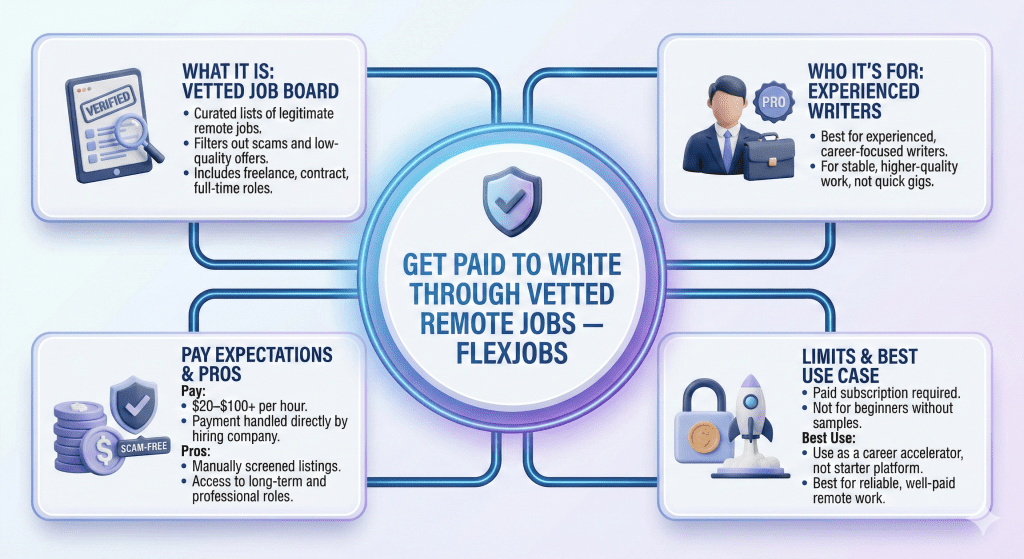
10. Get Paid to Write Through Vetted Remote Jobs — FlexJobs
What it is
FlexJobs is a curated job board, not a gig marketplace. It lists legitimate remote and flexible jobs, including freelance, contract, and full-time writing roles. Every listing is vetted to filter out scams and low-quality offers.
Who it’s for
This platform is best suited for experienced or career-focused writers who want stable, higher-quality work rather than quick gigs.
Pay expectations
- $20–$100+ per hour, depending on role and employer
- Payment handled directly by the hiring company (not FlexJobs)
Rates are typically higher than open marketplaces, but competition is stronger.
Pros and limits
Pros
- Scam-free, manually screened listings
- Access to long-term and professional writing roles
- Broad range of industries and writing types
Limits
- Requires a paid subscription to apply
- Not ideal for beginners without samples
- Application process resembles traditional job hunting
Best use case
FlexJobs works best as a career accelerator, not a starter platform. If you already have samples and want reliable, well-paid remote writing work, it’s one of the safest places to look.
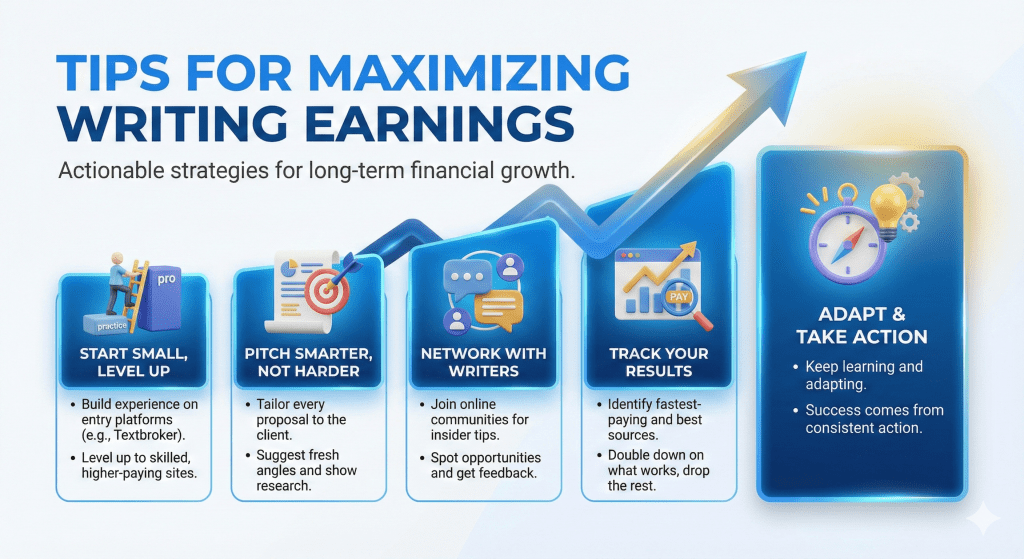
Tips for Maximizing Earnings
Start small, but don’t stay small. Test the waters on platforms like iWriter or Textbroker to build your experience and your confidence. As you improve, level up to sites that pay more and value skilled writers.
Pitch smarter, not just harder. Generic pitches get ignored. Take time to tailor your proposal for each client or publication. Mention what you like about their platform. Suggest a fresh angle or headline. Show you’ve done your homework.
Network with other writers. Join online communities, forums, or social media groups. You’ll pick up insider tips, spot hidden opportunities, and get real feedback on your work.
Track your results. Which sites pay fastest? Where do your best gigs come from? Drop anything that isn’t worth your time, and double down on what is.
The writers who earn the most aren’t always the most talented, they’re the ones who keep learning, adapting, and taking action.
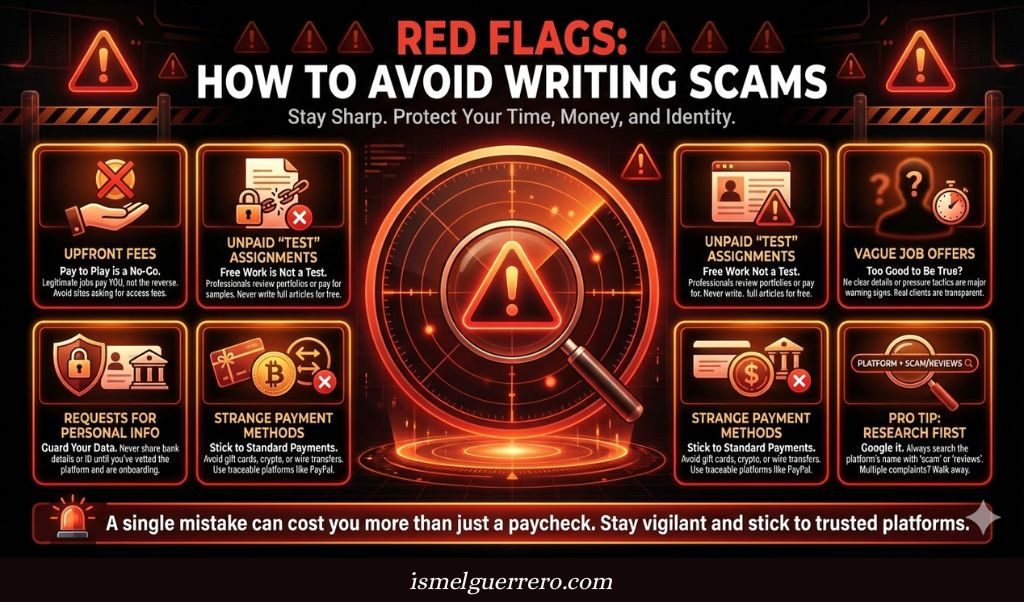
Red Flags: How to Avoid Writing Scams
Getting paid to write is real but so are the scams. Every day, fake platforms and shady “clients” prey on new writers hungry for their first gig. Miss the warning signs, and you’ll waste time, lose money, or worse.
Here’s what to watch for:
- Upfront Fees: Any site or “editor” asking you to pay for access, samples, or “priority placement” is hustling you, not hiring you. Legitimate writing jobs pay you, not the other way around.
- Unpaid “Test” Assignments: If someone wants a full article as a “sample” but never mentions payment, walk away. Professionals review your past work or pay for test pieces.
- Vague Job Offers: Be wary of listings with no company info, no clear assignment details, and promises that sound too good to be true. Scammers use pressure tactics real clients are patient and transparent.
- Requests for Personal Info: Never share your bank details, ID, or address with anyone until you’ve vetted the platform and completed a legitimate onboarding process.
- Strange Payment Methods: If they only offer to pay in gift cards, crypto, or wire transfer (and avoid standard, trackable platforms like PayPal or direct deposit), think twice.
Pro Tip: Google every platform’s name with the word “scam” or “reviews.” If you see lots of complaints or vague answers? Skip it and focus on the trusted sites in this guide.
Stay sharp. A single mistake can cost you more than just a paycheck.
Conclusion: Your Writing Earning Journey Starts Now
Getting paid to write online is not about finding a hidden shortcut or a single “best” website. It’s about understanding how different platforms work and choosing the ones that align with your current skill level, goals, and available time.
Some sites help you practice and get paid quickly. Others reward depth, expertise, or consistency over time. Each comes with trade-offs, whether that’s lower pay, higher competition, or stricter editorial standards. The writers who earn steadily are not necessarily the most talented, but the most intentional.
If you’re just starting, focus on learning how deadlines, guidelines, and client expectations work. If you’re more experienced, prioritize platforms that value specialization and long-term collaboration. And if a site consistently underpays or wastes your time, move on without hesitation.
Writing income compounds when effort is placed where it makes sense. Choose one platform, take action, refine your approach, and build forward from there.
Finished reading? Check out these profitable side hustle ideas!

Frequently Asked Questions (FAQs)
Can beginners really get paid to write online?
Yes. Platforms like iWriter, Fiverr, and Medium let you earn even if you have no published work. You don’t need years of experience just follow the instructions, deliver what’s asked, and improve as you go.
How much can I realistically earn?
New writers might earn $100–$500 a month by picking up simple gigs. Build skills, add more sites, and experienced writers can pull in $1,000–$5,000+ per month. It comes down to consistency, speed, and finding your best-paying clients.
Do I need to pay to join these platforms?
Most sites are free to join. Medium and iWriter cost nothing upfront. Some premium platforms (like WriterAccess) offer paid tiers, but you can start earning without spending a dime.
How do I choose a niche that pays well?
Start with topics you already know. The highest-paying niches include personal finance, tech, health, and marketing. But the real money is in what you enjoy and can write about with authority.
Can I use AI tools like ChatGPT to assist with writing?
Absolutely. AI can help you brainstorm, outline, or polish drafts. Just make sure your final work is original and fits what your client or platform expects.

4 Comments
15 Legit Ways to Get Paid to Write Letters in 2025. - Ismel Guerrero. · January 18, 2025 at 6:50 pm
[…] Check out this guide for a list of websites where you can get paid for your […]
Writing Side Hustles: Profitable Ideas to Earn in 2025 - Ismel Guerrero. · January 26, 2025 at 12:01 pm
[…] Next, check out even more websites that pay you for your words. […]
Writing Letters for Money: How to Get Paid in 2025 - Ismel Guerrero. · February 9, 2025 at 8:01 pm
[…] Want a broader list of platforms where you can make money writing? Check out our guide on websites that pay writers. […]
Letter Writing Side Hustle: Is It Legit & How to Get Started? - Ismel Guerrero. · March 27, 2025 at 10:03 am
[…] For even more ways to get paid for writing, check out this list of websites that pay writers. […]