Introduction
Digital products have become one of the most attractive business models for creators who want scale without complexity. Instead of managing inventory, shipping, or physical fulfillment, creators can package their knowledge, systems, or creative assets into products that deliver value instantly.
In 2026, this model is especially powerful because tools for design, automation, and distribution have lowered the barrier to entry more than ever.
What matters most is not the platform you use, but the type of product you create. High-profit digital products solve specific problems, save time, or remove friction for a clearly defined audience.
This guide breaks down ten digital product ideas that consistently generate strong margins, along with practical context to help you understand how they’re made and why they sell.
Key Takeaways
- Digital products offer high margins because they eliminate inventory, shipping, and physical fulfillment costs.
- The most profitable digital products solve narrow, clearly defined problems for specific audiences.
- Creators succeed by packaging knowledge, systems, or creative assets not by inventing something entirely new.
- Many high-performing digital products are built using simple tools and templates rather than custom development.
- Choosing the right product type matters more than the platform used to sell or deliver it.
Disclaimer: I am an independent Affiliate. The opinions expressed here are my own and are not official statements. If you follow a link and make a purchase, I may earn a commission.
1. AI Templates and Tools
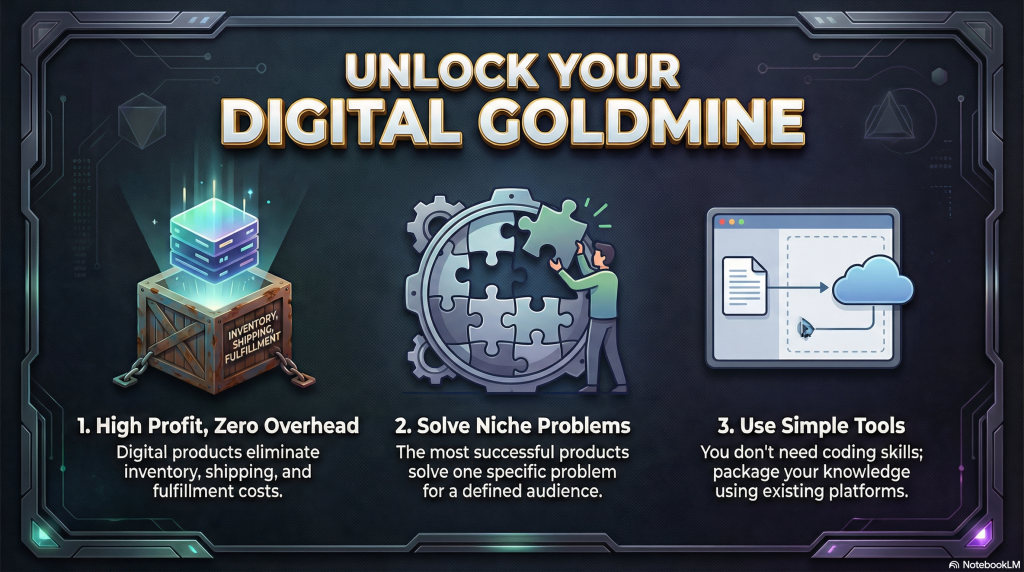
Artificial intelligence has moved from experimentation to everyday use. Many creators and businesses now rely on AI tools but struggle to use them efficiently. This gap creates a strong opportunity for digital products that simplify, structure, or accelerate AI-driven work.
Instead of selling software, creators in this space sell ready-made systems that help others get better results from tools they already use. These products work because they reduce trial-and-error and shorten the learning curve.
Examples of high-performing AI digital products include:
- AI Prompt Packs
Curated prompt libraries designed for specific outcomes, such as writing blog posts, generating ad copy, or drafting email campaigns. The value comes from structure and context, not the prompts themselves. - Voiceover and Script Templates
Pre-written scripts optimized for AI voice tools, tailored for use cases like YouTube videos, ads, or explainer content. Buyers save time and avoid starting from a blank page. - Automation and Workflow Templates
Plug-and-play systems built for tools like automation platforms or AI-enhanced productivity apps. These templates help businesses automate repetitive tasks without needing technical expertise.
AI products sell well because they are practical, repeatable, and easy to update as tools evolve. For creators, they offer fast build times and strong margins, especially when focused on a narrow audience or use case.
2. Digital Planners and Organizers
Digital planners appeal to people who want structure without friction. Instead of carrying notebooks or rewriting systems every year, users prefer flexible tools they can reuse, customize, and access across devices. This makes planners one of the most durable and beginner-friendly digital product categories.
What sells here is not decoration, but clarity. The most successful planners reduce mental load by helping users see priorities, track progress, and stay consistent over time. When designed well, they become part of a daily routine which increases perceived value and long-term use.
Common digital planner formats that perform well include:
- Tablet-Compatible Planners
Daily, weekly, or monthly planners designed for note-taking apps. These often include linked sections, reusable layouts, and simple navigation to replace paper systems. - Undated and Minimalist Planners
Planners without fixed dates remain relevant year after year. This lowers maintenance for the creator and appeals to users who want flexibility rather than rigid schedules. - Audience-Specific Planners
Planners designed for students, freelancers, or business owners with built-in sections for goals, deadlines, or reviews. Narrow focus helps these products stand out in a crowded category.
Digital planners work especially well for creators because they are easy to version, bundle, and refine over time. A single core system can be adapted into multiple products simply by changing the audience or use case.
3. Content Creation Kits
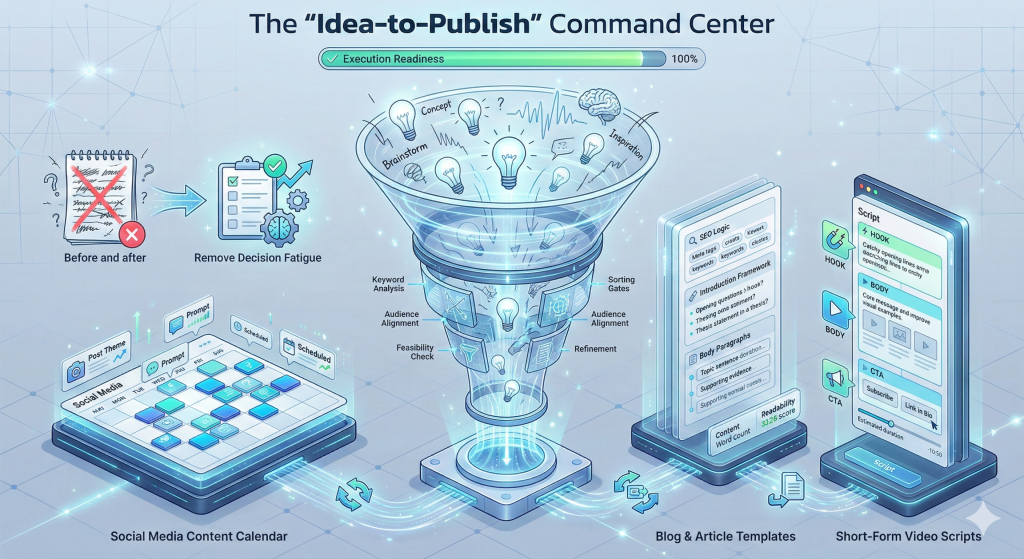
Consistency is one of the biggest challenges creators face. Most don’t struggle with ideas, they struggle with turning those ideas into publishable content on a regular schedule. Content creation kits solve this problem by removing decision fatigue and providing a clear starting point.
These products sell well because they offer direction, not just files. A good content kit tells the buyer what to create, how to structure it, and how often to publish, all within a defined context or platform.
Popular content kit formats include:
- Social Media Content Calendars
Pre-planned posting schedules that outline what to publish each day over a set period. These often include prompts, themes, or post angles to keep creators consistent without overthinking. - Blog and Article Templates
Structured outlines designed to speed up writing while maintaining clarity and flow. These are especially valuable when they incorporate SEO logic or repeatable frameworks. - Short-Form Video Scripts
Ready-to-use scripts for formats like short videos or reels, tailored to specific niches or goals. These help creators move from idea to recording without hesitation.
Content kits are effective because they are easy to customize for different audiences. A single framework can be repurposed across niches, platforms, or experience levels, making this category both scalable and resilient.
4. Design and Creative Assets
Many digital products sell not because they are complex, but because they remove visual friction. Creators and small businesses often need design assets that are clean, consistent, and usable immediately without hiring a designer or learning design software from scratch.
This category works because buyers are not looking for originality; they are looking for speed and reliability. Well-structured design assets help them present ideas professionally with minimal effort.
High-demand design assets include:
- Editable Design Templates
Pre-built layouts for lead magnets, guides, presentations, or simple digital products. These allow users to customize text and colors while keeping a polished structure. - Icon and UI Asset Packs
Sets of reusable icons, buttons, or interface elements designed for websites, dashboards, or apps. These are especially valuable for solo creators building projects without a design team. - Podcast and Media Branding Kits
Visual packages that include cover art, banners, and thumbnails sized correctly for different platforms. These save creators from guesswork and repeated revisions.
Design assets perform well as digital products because they can be reused indefinitely and bundled easily. For creators, they offer strong margins and clear differentiation when focused on a specific format or audience.

5. Marketing and Business Resources
Marketing and business-focused digital products tend to command higher prices because they are tied directly to revenue. Buyers in this category are not purchasing inspiration, they are purchasing tools that help them make decisions, execute faster, or avoid costly mistakes.
These products work best when they provide structure and clarity around complex processes. Instead of teaching everything from scratch, they give users a proven framework they can adapt to their own business.
High-value marketing and business resources include:
- Sales Funnel Blueprints
Visual maps that show how different pages, emails, and offers connect. These help creators understand what to build next instead of guessing. - Email Marketing Templates
Pre-written sequences for onboarding, promotions, or follow-ups. When positioned as adaptable frameworks rather than copy-and-paste scripts, they retain long-term value. - Analytics and Tracking Dashboards
Ready-made spreadsheets or workspace dashboards that help users monitor performance metrics without setting up systems themselves.
This category performs well because it targets buyers with a clear outcome in mind. For creators, marketing and business resources offer strong pricing power, especially when paired with practical explanations or examples of use.
6. Niche-Specific Planners
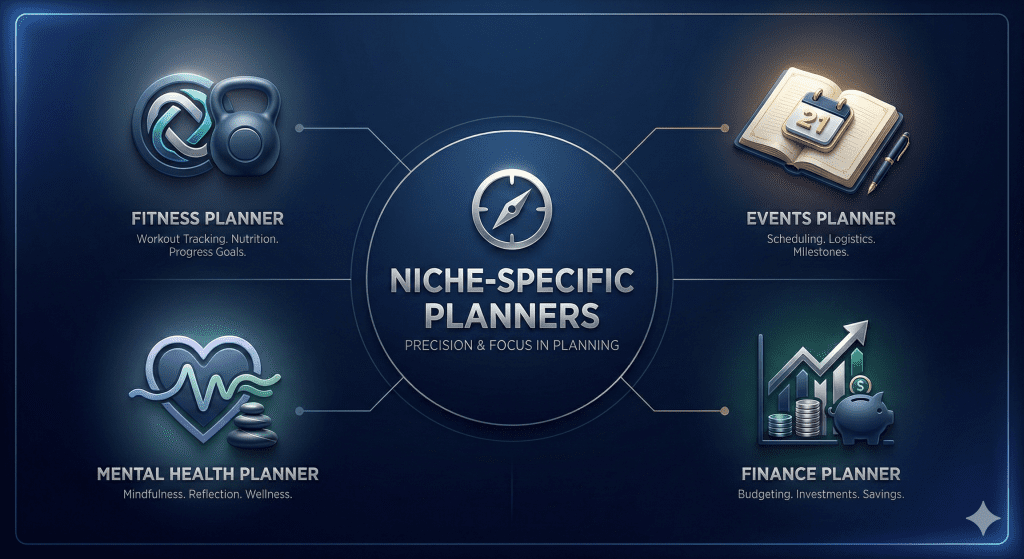
General-purpose planners appeal to broad audiences, but niche-specific planners often outperform them commercially. By focusing on a single context or goal, these products feel more relevant and easier to adopt. Buyers don’t need to adapt the system, the system already understands them.
The strength of niche planners lies in precision. They reflect the language, routines, and priorities of a specific group, which increases both perceived value and willingness to pay.
Examples of niche planners with strong demand include:
- Fitness and Wellness Trackers
Planners designed for workout tracking, meal planning, or habit consistency. These work best when they align with a specific approach rather than generic fitness goals. - Event and Project Planning Kits
Structured planners for weddings, conferences, or large personal projects. These help users manage timelines, vendors, and details without missing steps. - Mental Health and Self-Care Planners
Tools focused on reflection, mood tracking, or daily check-ins. When designed thoughtfully, they emphasize simplicity and emotional clarity over complexity. - Budgeting and Finance Planners
Financial planners built around household budgeting, debt reduction, or savings goals. Clear layouts and realistic workflows matter more than advanced calculations.
Niche planners are effective because they reduce the buyer’s cognitive effort. For creators, this category offers a clear way to differentiate without competing solely on design or price.
7. Audio and Voice Assets
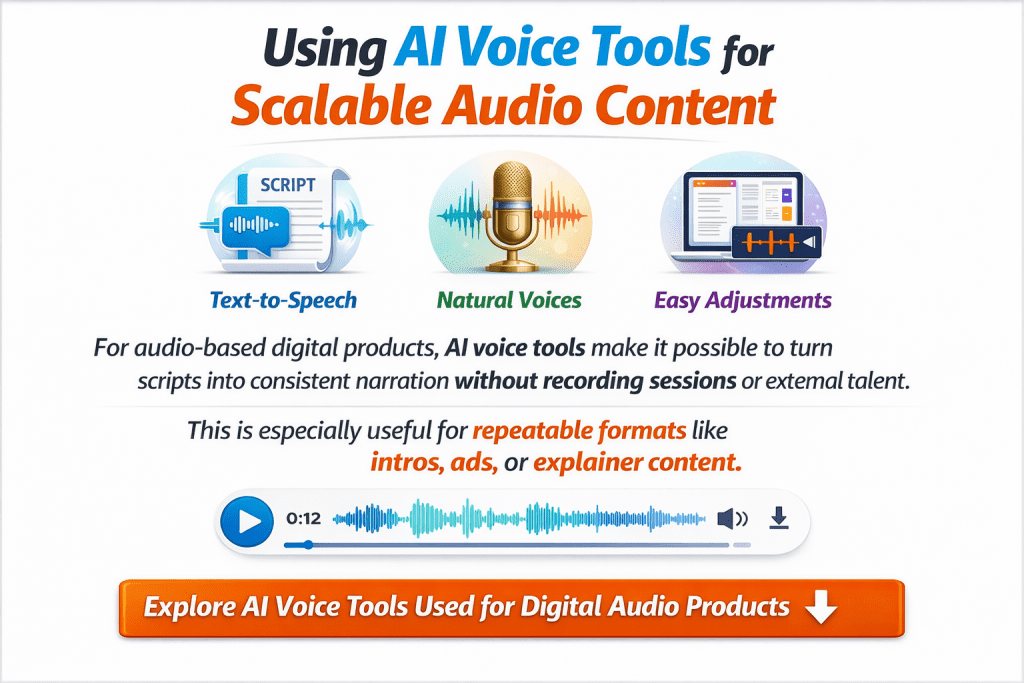
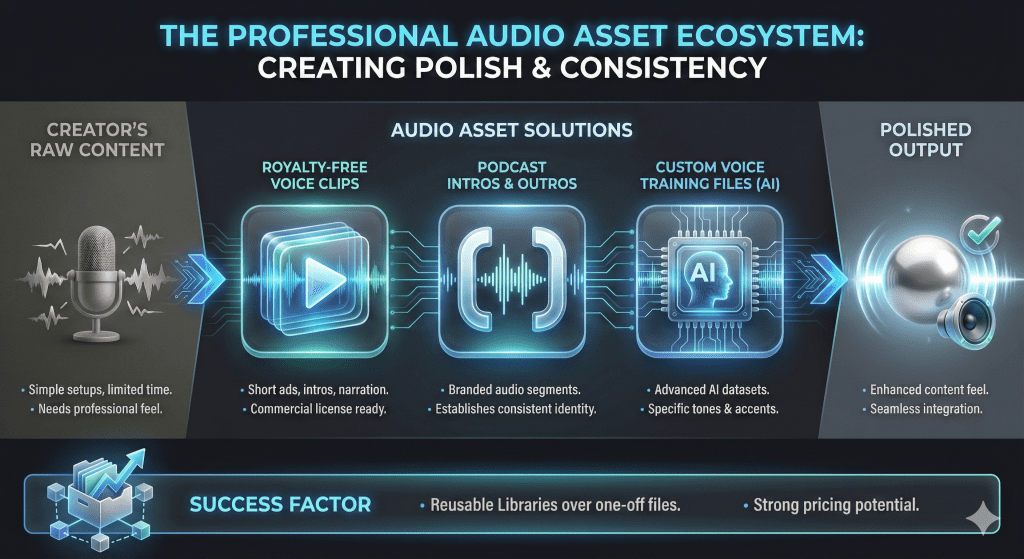
Audio-based digital products serve a growing group of creators who publish content in formats that depend on sound quality. Podcasters, video creators, and advertisers often need professional audio elements but lack the time or tools to produce them from scratch.
These products sell because they provide polish and consistency. A well-made audio asset improves how content feels, even when the creator’s setup is simple.
Common audio and voice products include:
- Royalty-Free Voice Clips
Short voice recordings for ads, intros, or background narration. These assets are especially useful when licensed for commercial use. - Podcast Intros and Outros
Branded audio segments that frame episodes consistently. Buyers value these because they help establish identity without repeated editing work. - Custom Voice Training Files
Audio datasets designed for use with AI voice tools. These are typically sold to advanced users who want specific tones, accents, or use cases.
Audio assets perform well when they are easy to integrate and clearly labeled. For creators, this category offers strong pricing potential when products are packaged as reusable libraries rather than one-off files.
8. Digital Courses and Workshops
Digital courses and workshops turn expertise into a structured learning experience. Unlike templates or assets, these products sell transformation rather than convenience. Buyers are investing in understanding a topic, building a skill, or solving a problem they can’t easily fix on their own.
What makes this category profitable is context and sequencing. Successful courses don’t overwhelm learners with information; they guide them through a clear path from confusion to competence.
Common formats for educational digital products include:
- Mini-Courses
Short, focused lessons designed to solve a specific problem or introduce a single skill. These work well as entry-level products or complements to other digital offerings. - In-Depth Programs
Comprehensive courses that cover a topic from fundamentals to application. These are typically structured into modules and supported by examples, worksheets, or exercises. - Live or Recorded Workshops
Time-bound sessions focused on practical execution, such as setting up a system or applying a strategy. Workshops often feel more personal and can justify higher pricing.
Courses and workshops perform best when they are anchored in real use cases rather than abstract theory. For creators, this category works well when paired with templates, tools, or follow-up resources that reinforce learning.
9. Editable Template Kits
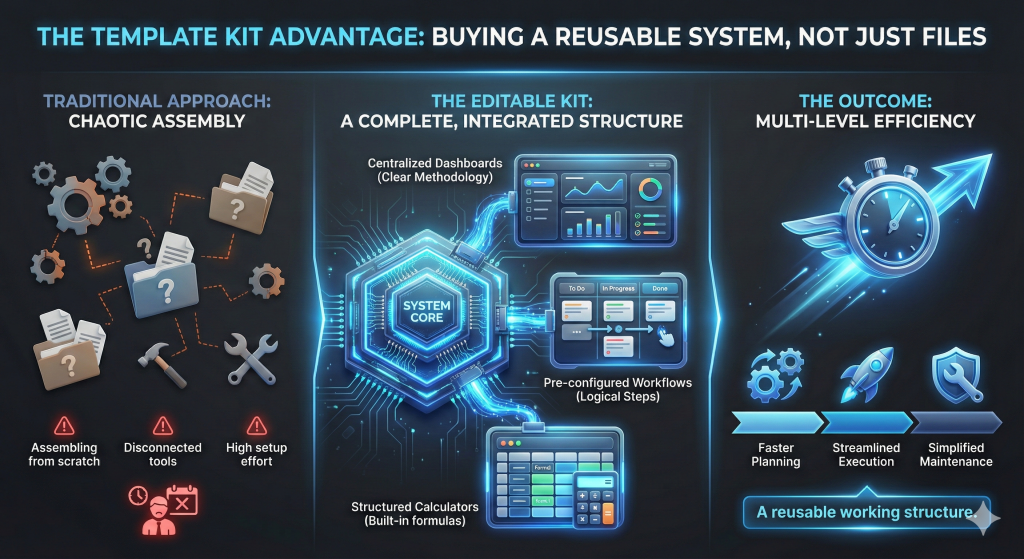
Editable template kits appeal to buyers who want an entire system, not individual pieces. Instead of assembling tools from scratch, users get a complete setup they can adapt to their own workflow. The value comes from integration, not just convenience.
These products perform well because they save time at multiple levels planning, execution, and maintenance. Buyers aren’t paying for files; they’re paying for a working structure they can reuse.
Common types of editable template kits include:
- Productivity and Workspace Dashboards
Centralized systems for task tracking, habit building, or personal organization. These templates work best when they reflect a clear methodology rather than generic layouts. - Project Management Boards
Pre-configured boards for managing launches, client work, or ongoing projects. Buyers value templates that reduce setup decisions and enforce a logical workflow. - Advanced Spreadsheets and Calculators
Structured sheets designed for budgeting, forecasting, or performance tracking. These products sell well when formulas are paired with clear instructions and use cases.
Template kits are effective because they scale easily across audiences and industries. For creators, they offer strong perceived value and pricing flexibility, especially when positioned as complete systems rather than standalone tools.
10. Lead Magnets for Upselling
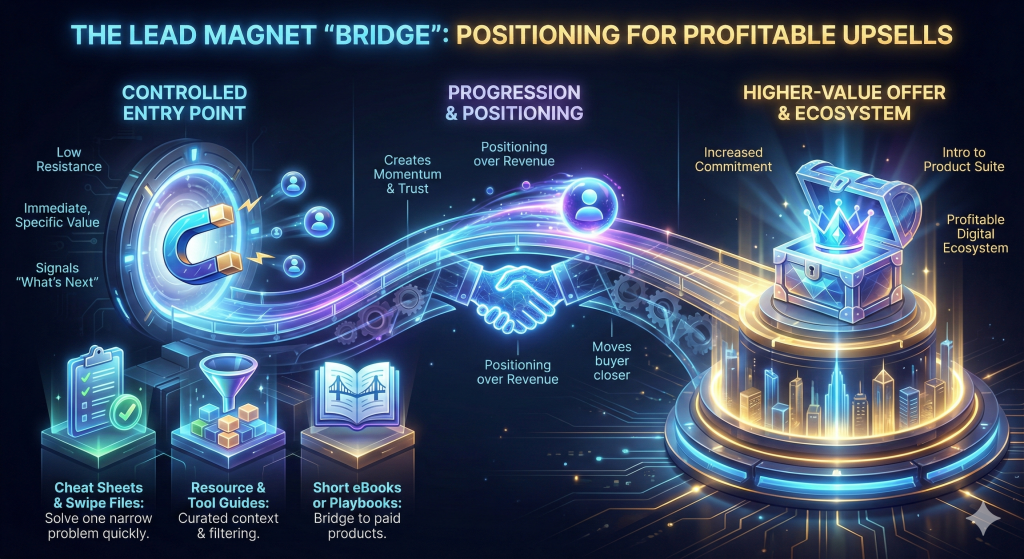
Lead magnets are often underestimated because they are low-cost or free, but they play a critical role in profitable digital product ecosystems. Their primary function is not revenue, it is positioning and progression. A well-designed lead magnet moves the buyer closer to a higher-value offer.
These products work when they deliver immediate, specific value while clearly signaling what comes next. Instead of trying to teach everything, they create momentum and trust.
Effective lead magnet formats include:
- Cheat Sheets and Swipe Files
Concise reference materials that summarize processes, frameworks, or examples. These are most effective when they solve one narrow problem quickly. - Resource and Tool Guides
Curated lists of platforms, tools, or workflows organized around a specific goal. Buyers value filtering and context more than raw information. - Short eBooks or Playbooks
Lightweight guides that combine explanation with templates or checklists. These often serve as a bridge between free content and paid products.
Lead magnets are powerful because they lower resistance while increasing commitment. For creators, they provide a controlled entry point into a product suite and make it easier to introduce tools, templates, or platforms later in the funnel.
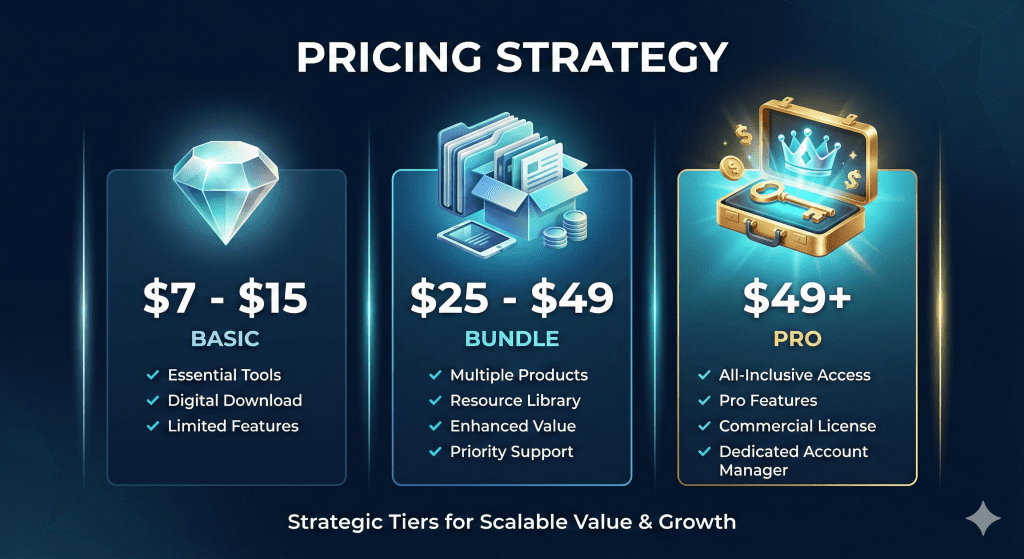
Pricing Strategy: How to Sell Smart
Pricing digital products is less about finding a perfect number and more about matching price to perceived value. Because digital products have no marginal production cost, pricing should reflect the outcome, time saved, or clarity delivered to the buyer, not the effort it took to create the product.
In 2026, most successful creators use tiered pricing to serve different levels of commitment. This allows beginners to enter easily while giving serious buyers a reason to spend more.
Common pricing ranges by product type include:
- Single Templates or Planners
Typically priced between $7 and $15, these products are designed for quick wins. They work best when they solve one clear problem and require little explanation. - Bundles and Kits
Grouping related products into a bundle increases perceived value without increasing complexity. These are often priced between $25 and $49, especially when paired with short guides or bonus content. - Premium or Commercial-Use Assets
Products that save significant time or can be used for client work justify higher pricing. Assets in this category are commonly priced at $49 or more, particularly when licenses or advanced functionality are included.
Effective pricing also depends on how products are positioned. Clear descriptions, examples of use, and defined outcomes often have more impact on conversions than discounts or promotions. For creators, pricing works best when it supports long-term trust rather than short-term volume.
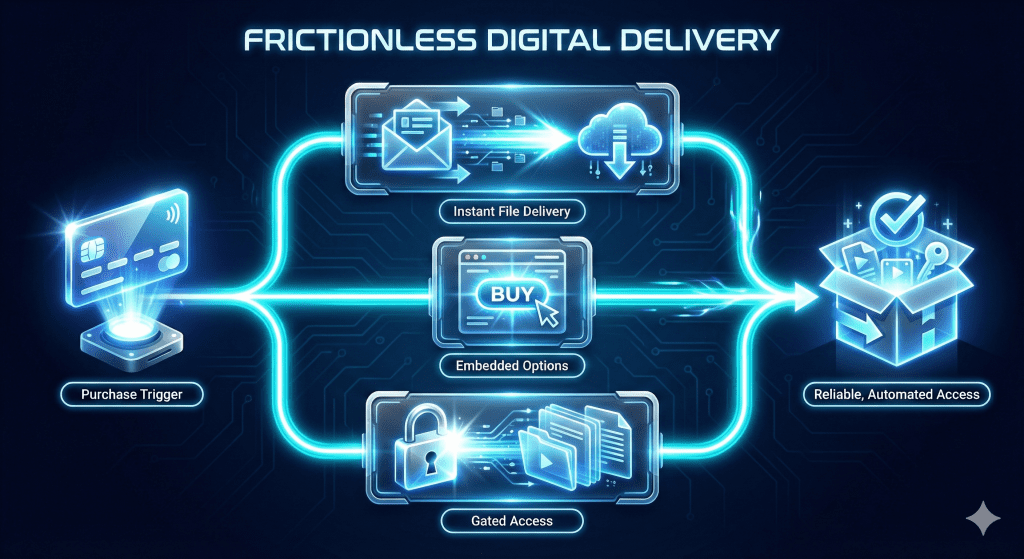
Technical Setup: How to Deliver Digital Products
Delivering digital products does not require custom development or complex infrastructure. The goal is to make access immediate, reliable, and automated so customers receive what they purchased without manual follow-up.
Most creators succeed by choosing tools that handle file delivery, access control, and basic customer management in the background. This allows them to focus on improving the product rather than managing fulfillment.
Common delivery approaches include:
- Automated File Delivery
Digital delivery tools send files or access links immediately after purchase. This works well for templates, planners, audio files, and downloadable assets. - Embedded Purchase Options
Products can be sold directly from existing websites, blogs, or landing pages using embedded checkout or purchase buttons. This approach avoids the need to build a full storefront upfront. - Subscription and Membership Access
Ongoing products such as content drops, template libraries, or updates are often delivered through gated access. This model supports recurring revenue and long-term customer relationships.
A good delivery setup is invisible when it works correctly. For creators, the priority is choosing systems that scale smoothly, integrate with other tools, and reduce friction for both the buyer and the seller.
Conclusion
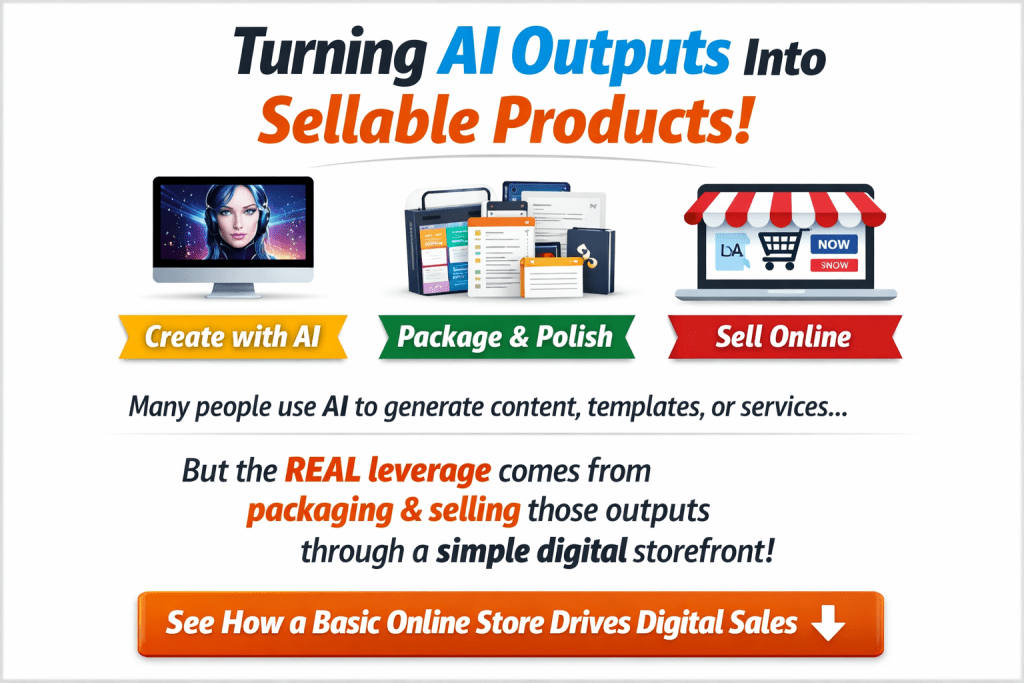
Digital products offer creators a way to build leverage instead of complexity. By focusing on assets that can be created once and delivered repeatedly, you shift effort from fulfillment to refinement.
The most successful products are not defined by the tools used to build them, but by how clearly they solve a problem for a specific audience.
Whether the product takes the form of templates, planners, educational content, or systems, the underlying principle is the same: value comes from structure, context, and usability.
Platforms and tools exist to support that process, not replace it. Choosing the right product category is often the biggest decision you’ll make and it has more impact than the technology behind it.
A practical starting point is to select one product idea that aligns with your existing skills or experience and build a simple version first. From there, you can expand, bundle, or refine based on real feedback. Digital products reward focus, clarity, and iteration more than scale on day one.

Frequently Asked Questions
Do I need technical or design skills to create digital products?
No. Many high-performing digital products are built using existing tools and simple frameworks rather than custom design or development. What matters more is clarity, understanding the problem you’re solving and packaging the solution in a usable format.
How long does it take to create a digital product?
Simple products like templates, planners, or guides can often be created in a few days once the concept is clear. More complex products, such as courses or systemized kits, take longer because they require structure, testing, and refinement rather than just content creation.
What types of digital products are best for beginners?
Products that package existing knowledge or workflows such as templates, planners, or content kits are usually the easiest to start with. These require less upfront validation and can be improved iteratively based on feedback.
How do creators protect digital products from being copied?
No digital product can be completely protected from misuse. Most creators focus instead on delivering ongoing value through updates, support, branding, or ecosystems that make the original product more useful than unauthorized copies.
Is it better to sell one product or multiple products?
Starting with one focused product is usually more effective. A single well-defined product allows you to validate demand, refine positioning, and build trust before expanding into bundles or higher-tier offerings.
Do digital products still sell well in competitive markets?
Yes, but competition shifts the focus from novelty to positioning. Products that address specific audiences or use cases tend to perform better than generic offerings, even in crowded categories.

0 Comments