Introduction
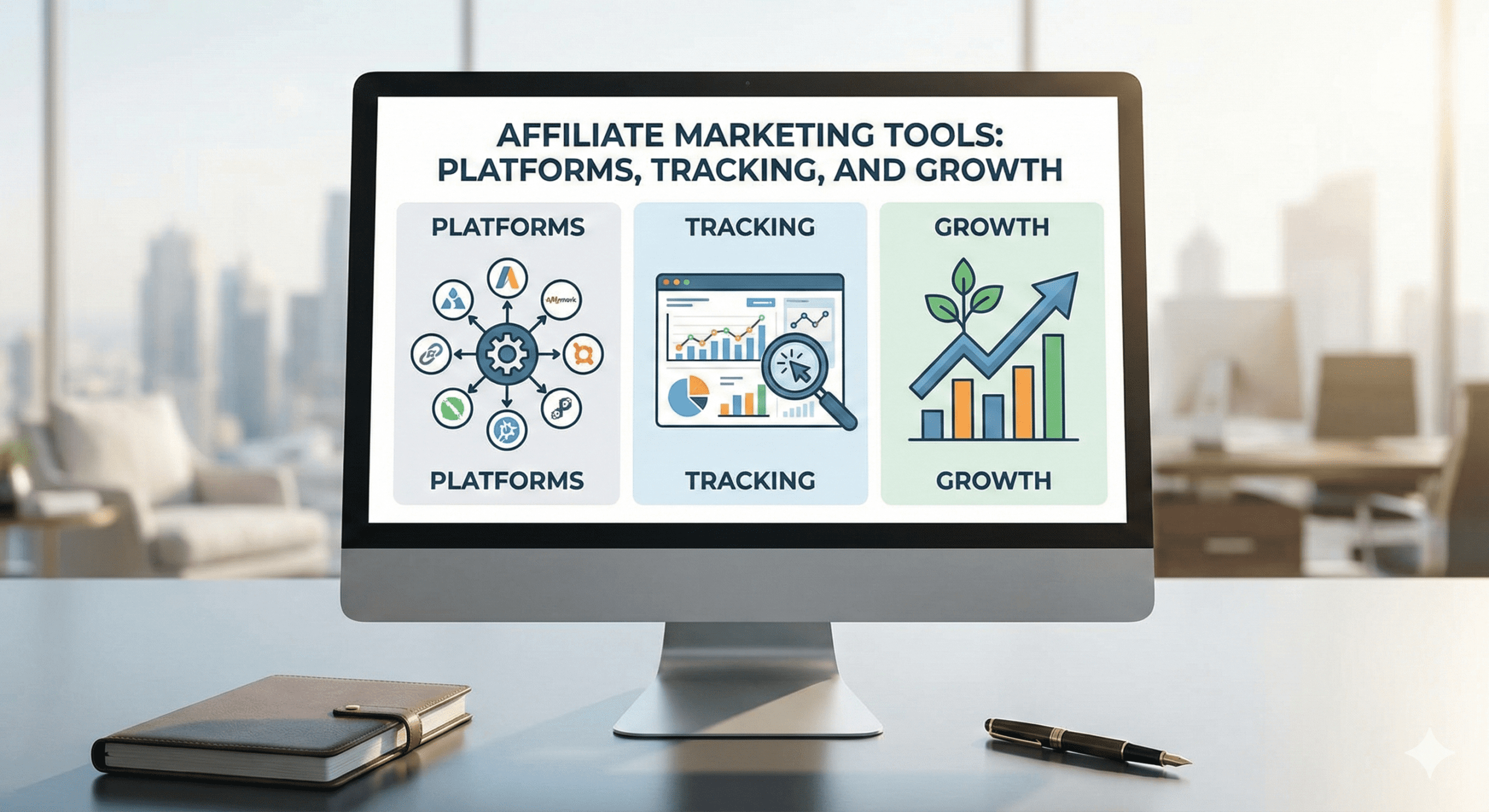
Affiliate marketing is simple in theory, but execution depends on the right tools. The difference between inconsistent commissions and scalable revenue often comes down to tracking accuracy, conversion systems, and automation.
In 2026, the affiliate landscape is more competitive than ever. Traffic costs more. Attention spans are shorter. Margins depend on optimization. The right affiliate marketing tools help you protect revenue, increase conversions, and build long-term income instead of chasing one-off sales.
This guide breaks down the best affiliate marketing tools across every critical category, from tracking and funnels to email, SEO, and analytics. Whether you’re building your first affiliate site or scaling an established business, these tools form the foundation.
Key Takeaways
- The right affiliate marketing tools increase efficiency, tracking accuracy, and conversion rates.
- Tracking and link management protect revenue and reveal what actually drives commissions.
- Funnel builders and landing page tools turn traffic into leads and sales.
- Email marketing tools multiply lifetime value through automation and follow-ups.
- SEO, content, and analytics tools help scale traffic and optimize performance.
- Tool selection should match your traffic strategy and business stage, not trends.
Disclaimer: I am an independent Affiliate. The opinions expressed here are my own and are not official statements. If you follow a link and make a purchase, I may earn a commission.
Affiliate Tracking & Link Management Tools
Affiliate marketing runs on data. If you cannot track clicks, conversions, and attribution properly, you cannot scale profitably. Tracking tools help you identify which traffic sources convert, which campaigns lose money, and where optimization matters.
Here are the most reliable tracking and link management tools in 2026.
ClickMagick
ClickMagick is one of the most popular affiliate tracking platforms for solo affiliates and small teams. It tracks clicks, detects bots, monitors link health, and supports split testing.
Why it stands out:
- Real-time click tracking
- Funnel tracking
- Split testing
- Bot filtering
- Link cloaking
Best for: affiliates running paid traffic, email campaigns, or multi-step funnels.
ClickMagick balances power and usability, which makes it a strong choice for performance-focused affiliates.
Voluum
Voluum is built for serious media buyers and performance marketers. It provides advanced tracking, automation rules, and deep campaign analytics.
Why it stands out:
- Advanced traffic distribution
- AI optimization rules
- Multi-channel attribution
- Detailed reporting
Best for: high-volume affiliates running paid ads across multiple networks.
Voluum is more advanced and priced accordingly. It is ideal for scaling campaigns rather than testing casually.
RedTrack
RedTrack positions itself as a tracking platform for affiliates, ecommerce brands, and agencies. It integrates with ad platforms and centralizes performance reporting.
Why it stands out:
- Unified dashboard
- Conversion API integrations
- Automation features
- Agency-friendly reporting
Best for: affiliates managing multiple traffic channels and needing structured reporting.
ThirstyAffiliates
ThirstyAffiliates focuses on link management rather than deep analytics. It is a WordPress plugin that helps organize, cloak, and categorize affiliate links.
Why it stands out:
- Link cloaking
- Link categorization
- Easy link insertion
- Broken link checking
Best for: bloggers and SEO-driven affiliates using WordPress.
While not a full tracking platform, it protects and organizes affiliate links efficiently.
Bottom Line: Tracking is not optional. It protects revenue and reveals what drives profit. Without clear attribution, scaling becomes guesswork.

Landing Page & Funnel Builders
Traffic alone does not generate affiliate revenue. Conversion systems do. Landing page and funnel builders help you capture leads, pre-sell offers, and increase average commission value instead of sending cold traffic directly to affiliate links.
Here are the most effective funnel and landing page tools for affiliates in 2026.
ClickFunnels
ClickFunnels remains one of the most recognized funnel builders in the affiliate and digital marketing space. It allows you to build landing pages, opt-in funnels, sales pages, and upsell sequences without coding.
Why it stands out:
- Pre-built funnel templates
- Integrated email and automation options
- A/B testing features
- Upsell and order bump support
Best for: affiliates promoting high-ticket offers, webinars, and digital products.
ClickFunnels works well when you want to warm up traffic before sending visitors to affiliate offers.
Leadpages
Leadpages focuses on high-converting landing pages and opt-in forms. It is simpler than full funnel platforms and easier to deploy quickly.
Why it stands out:
- Drag-and-drop builder
- Conversion-optimized templates
- Fast page load speeds
- Affordable pricing tiers
Best for: affiliates building email lists and promoting offers through lead magnets.
Leadpages is ideal when you need clean, focused landing pages without complex funnel architecture.
Systeme.io
Systeme.io combines funnels, email marketing, and automation into one platform. It appeals to affiliates who want an all-in-one system without managing multiple tools.
Why it stands out:
- Funnel builder
- Email automation
- Membership site capability
- Competitive pricing
Best for: beginners and budget-conscious affiliates who want a unified platform.
Systeme.io reduces tool stacking complexity and can simplify early-stage affiliate setups.
Bottom Line: Funnel tools increase control. Instead of relying entirely on merchant pages, you capture leads, pre-frame offers, and improve conversion rates over time.

Email Marketing Tools for Affiliates
Email remains one of the highest-return channels in affiliate marketing. Unlike direct linking, email allows you to follow up, build trust, and promote multiple offers over time. The right email platform turns a single visitor into long-term recurring revenue.
Here are the most reliable email marketing tools for affiliates in 2026.
Kit (formerly ConvertKit)
Kit is built specifically for creators and affiliates. It focuses on simplicity, automation, and monetization workflows.
Why it stands out:
- Visual automation builder
- Subscriber tagging and segmentation
- Creator-friendly templates
- Strong deliverability reputation
Best for: bloggers, YouTubers, and content-driven affiliates building audience-first businesses.
Kit works especially well when your strategy revolves around newsletters, lead magnets, and evergreen sequences.
GetResponse
GetResponse combines email marketing with automation, webinars, and funnel tools. It offers more advanced marketing features than entry-level platforms.
Why it stands out:
- Advanced automation workflows
- Ecommerce email integrations
- Webinar hosting capability
- Conversion funnels
Best for: affiliates running ecommerce traffic or promoting digital products through structured funnels.
GetResponse supports more complex campaigns for affiliates who need segmentation and automation depth.
AWeber
AWeber remains a reliable, beginner-friendly platform. It focuses on simplicity while still offering automation features.
Why it stands out:
- Easy setup
- Solid deliverability
- Automation templates
- Affordable pricing tiers
Best for: new affiliates building their first email list.
AWeber reduces technical barriers and allows affiliates to focus on content and promotion.
ActiveCampaign
ActiveCampaign offers advanced automation and CRM capabilities. It is more sophisticated than most creator-focused tools.
Why it stands out:
- Advanced behavioral automation
- CRM integration
- Deep segmentation
- Sales pipeline features
Best for: affiliates running complex funnels or high-ticket promotions.
ActiveCampaign works best when you need precision targeting and long-term customer journeys.
Email marketing increases lifetime value. Instead of relying on one-click commissions, you build relationships and promote multiple offers over time.

SEO & Traffic Generation Tools
Traffic is the growth engine of affiliate marketing. Without consistent visitors, even the best offers and funnels stall. SEO and traffic tools help you identify profitable keywords, analyze competitors, and optimize content for long-term rankings.
Here are the most effective SEO and traffic tools for affiliates in 2026.
Ahrefs
Ahrefs remains one of the most powerful SEO research tools available. It provides keyword data, backlink analysis, and competitive insights.
Why it stands out:
- Keyword difficulty metrics
- Competitor traffic analysis
- Backlink tracking
- Content gap analysis
Best for: affiliates building content-driven websites and niche authority sites.
Ahrefs helps you identify ranking opportunities before creating content, which reduces wasted effort.
SEMrush
SEMrush offers a broad digital marketing toolkit, including SEO, keyword research, and competitor tracking.
Why it stands out:
- Domain analytics
- Keyword research database
- PPC research
- Position tracking
Best for: affiliates who want both SEO and paid traffic insights in one platform.
SEMrush is especially useful when analyzing competitor strategies and discovering traffic gaps.
Surfer SEO
Surfer SEO focuses on on-page optimization. It helps affiliates structure content to match top-ranking pages.
Why it stands out:
- Real-time content scoring
- SERP-based optimization guidelines
- NLP keyword suggestions
- Content audit tools
Best for: affiliates who want to improve rankings on existing pages.
Surfer helps refine content to compete in saturated niches.
Google Search Console
Google Search Console provides direct insight into how your site performs in Google search results.
Why it stands out:
- Click and impression tracking
- Query performance data
- Index coverage reporting
- Technical issue alerts
Best for: every affiliate running a website.
It is free and essential for monitoring organic growth.
Traffic tools help affiliates make data-driven decisions. Instead of guessing which keywords convert, you build content around measurable demand and competitive gaps.
Content & Creative Tools
Content drives affiliate marketing. Whether you focus on blogs, YouTube, email, or social media, your ability to produce high-quality content consistently determines traffic growth and conversion rates. Creative tools help you write faster, design better visuals, and repurpose content efficiently.
Here are the most effective content and creative tools for affiliates in 2026.
ChatGPT
ChatGPT helps affiliates generate outlines, draft content, brainstorm headlines, create email sequences, and refine messaging. It speeds up research and idea generation significantly.
Why it stands out:
- Content ideation
- Draft creation
- Headline generation
- Email and funnel copy assistance
- Research summaries
Best for: affiliates who publish consistently and want to increase output without sacrificing structure.
Used correctly, it accelerates production while still requiring human editing and positioning.
Jasper
Jasper focuses on AI-assisted marketing copy. It is designed for structured campaigns, ad copy, and conversion-focused writing.
Why it stands out:
- Conversion templates
- Campaign workflows
- Brand voice controls
- Ad copy generation
Best for: affiliates running paid traffic campaigns or structured funnel promotions.
Jasper supports faster testing of messaging variations.
Canva
Canva simplifies graphic design for affiliates. It allows you to create blog visuals, social posts, thumbnails, and lead magnet assets without professional design skills.
Why it stands out:
- Drag-and-drop design
- Thumbnail templates
- Social media graphics
- Presentation tools
Best for: affiliates building visual brands on blogs, Pinterest, YouTube, or Instagram.
Strong visuals increase click-through rates and perceived authority.
Descript
Descript helps with video editing, podcast editing, and audio repurposing. It allows affiliates to turn long-form content into multiple formats.
Why it stands out:
- Text-based video editing
- Audio cleanup
- Caption generation
- Screen recording tools
Best for: affiliates producing YouTube videos, webinars, or podcasts.
Repurposing content improves reach without increasing workload.
Bottom line: Creative tools improve consistency. Consistency improves visibility. Visibility drives affiliate revenue.

Analytics & Optimization Tools
Affiliate marketing improves through measurement. Without analytics, you cannot identify which pages convert, where visitors drop off, or which campaigns generate profit. Optimization tools turn traffic data into actionable insights.
Here are the most important analytics and optimization tools for affiliates in 2026.
Google Analytics 4 (GA4)
Google Analytics remains the foundation of website performance tracking. GA4 provides insights into traffic sources, user behavior, and conversion paths.
Why it stands out:
- Traffic source breakdown
- Conversion tracking
- User journey analysis
- Cross-device reporting
Best for: all affiliates running websites.
GA4 helps you understand where visitors come from and how they interact with your content before converting.
Hotjar
Hotjar focuses on behavior tracking rather than traffic volume. It provides heatmaps, session recordings, and on-page feedback tools.
Why it stands out:
- Click heatmaps
- Scroll depth tracking
- Session replays
- On-site surveys
Best for: affiliates optimizing landing pages and improving conversion rates.
Hotjar reveals friction points that standard analytics tools do not show.
Google Optimize Alternatives (A/B Testing Tools)
Although Google Optimize has sunset, A/B testing tools remain essential for affiliates running funnels and landing pages.
Popular options include:
- VWO
- Optimizely
- Built-in testing features within ClickFunnels and Leadpages
Why A/B testing matters:
- Test headlines
- Test call-to-action buttons
- Test page layouts
- Improve conversion rates incrementally
Small conversion improvements compound significantly over time.
Microsoft Clarity
Microsoft Clarity provides free heatmaps and session recordings. It serves as a lightweight alternative to paid behavior tools.
Why it stands out:
- Free heatmaps
- User session replays
- Easy integration
- No traffic caps for most sites
Best for: affiliates who want behavioral insights without additional cost.
Analytics and optimization tools protect profit margins. Instead of guessing which pages work, you refine campaigns based on measurable behavior.

How to Choose the Right Affiliate Marketing Tools for You
Not every affiliate needs every tool. The right stack depends on your traffic source, monetization model, and business stage. Choosing based on trends or hype often leads to tool overload and unnecessary expenses.
Start with your primary traffic strategy.
If you rely on SEO and content marketing, prioritize keyword research tools, link management plugins, and analytics platforms. If you run paid ads, tracking software and funnel builders become critical. If your model centers on email marketing, automation and segmentation features matter more than advanced design tools.
Next, consider your business stage.
Early-stage affiliates benefit from simple, all-in-one tools that reduce complexity. Growth-stage affiliates often need more specialized software for tracking, split testing, and automation. Advanced operations require deeper analytics and multi-channel attribution.
Budget also matters. Expensive tools do not guarantee higher revenue. Tools should increase efficiency, improve conversion rates, or protect revenue. If a tool does not contribute to one of those outcomes, it may not be necessary yet.
Finally, avoid stacking tools that duplicate functions. Many platforms now include built-in features for automation, testing, or analytics. Evaluate overlap before subscribing.
The goal is not to collect tools. The goal is to build a lean, effective system that supports your traffic and monetization strategy.
Common Mistakes When Choosing Affiliate Marketing Tools
Many affiliates overspend on tools without improving performance. The problem is rarely the tool itself. It is the lack of strategy behind the purchase.
Here are the most common mistakes to avoid.
Buying Too Many Tools Too Early
New affiliates often subscribe to multiple platforms at once. Funnel builders, premium SEO tools, tracking software, automation tools, and analytics dashboards can quickly become expensive.
Without steady traffic or revenue, this creates pressure without measurable return.
Start with tools that directly support your current strategy. Expand only when the next tool solves a real bottleneck.
Choosing Tools Based on Popularity
A tool being popular does not mean it fits your model. Some platforms are built for media buyers. Others are optimized for bloggers or creators.
Choose tools based on your traffic source and monetization method, not brand recognition.
Ignoring Tracking and Attribution
Many affiliates focus heavily on content and funnels but neglect proper tracking. Without accurate attribution, scaling becomes guesswork.
Before increasing traffic, ensure you can measure performance clearly.
Overlapping Functionality
Modern platforms include built-in automation, landing pages, and testing features. Subscribing to separate tools that duplicate those features increases costs without improving results.
Audit your stack regularly. Eliminate redundancy.
Not Evaluating ROI
Every tool should answer one question: does this improve revenue, efficiency, or optimization?
If it does not increase conversions, save time, or protect earnings, reconsider its necessity.
Bottom Line: Affiliate marketing tools are leverage. Used strategically, they multiply results. Used carelessly, they increase complexity and cost.
Conclusion
Affiliate marketing tools do not create revenue on their own. Strategy, traffic, and positioning still drive results. However, the right tools increase efficiency, protect commissions, and improve conversion rates.
In 2026, competition is higher, advertising costs are rising, and organic traffic requires stronger optimization. Affiliates who rely on manual processes fall behind. Those who use tracking software, conversion tools, email automation, and analytics platforms operate with leverage.
The key is not owning every tool. It is building a focused system that supports your primary traffic and monetization strategy. Start with what directly impacts revenue, then expand as your business grows.
When chosen carefully, affiliate marketing tools stop being expenses and become infrastructure. Infrastructure scales. Guesswork does not.

FAQs: Affiliate Marketing Tools
What are the most important affiliate marketing tools to start with?
The most important tools depend on your traffic model. At minimum, affiliates should use link management or tracking software and basic analytics. If you are building long-term income, an email marketing platform becomes essential.
Do I need paid tools to succeed in affiliate marketing?
Not always. Many affiliates start with free tools like Google Search Console, Google Analytics, and basic WordPress plugins. Paid tools become valuable when they increase traffic efficiency, improve conversions, or protect revenue through better tracking.
What is the best affiliate tracking tool?
There is no universal best tool. ClickMagick is popular for solo affiliates, while Voluum and RedTrack suit performance marketers running paid ads. The right choice depends on traffic volume and budget.
Which email marketing tool is best for affiliates?
Kit works well for content-driven affiliates and creators. GetResponse and ActiveCampaign offer deeper automation for complex funnels. AWeber remains beginner-friendly and reliable.
Are all-in-one affiliate marketing tools worth it?
All-in-one platforms like Systeme.io can reduce complexity, especially for beginners. However, as your business grows, specialized tools often provide better optimization and tracking depth.
How many affiliate marketing tools do I really need?
Most affiliates only need one tool per core function: tracking, funnel building, email, and analytics. Adding more tools should solve a specific performance bottleneck, not just add features.
Can AI tools replace traditional affiliate marketing software?
AI tools accelerate content creation and research, but they do not replace tracking, email automation, or analytics infrastructure. AI enhances workflow efficiency, but core systems still matter.

0 Comments