Master Resell Rights (MRR) are more than just permission to sell someone else’s digital product. What makes this licensing model different is that you can sell the product, keep 100% of the profits from your sales, and pass resale rights to customers who can do the same.
That opens up possibilities beyond a single sale. Instead of spending months creating an ebook, course, or other digital product from scratch, you can acquire a ready-made product and focus on bringing it to market. And because your customers can become resellers themselves, the same product can reach new audiences through multiple sellers, expanding its distribution beyond your own reach.
But the real opportunity isn’t simply having a product you can resell. It’s knowing how to choose the right product, understand the licensing terms, and market it to people who will find it useful.
This guide explains how Master Resell Rights work, how they differ from Private Label Rights (PLR), and how to use them to build a profitable online business.
- MRR lets you sell digital products and pass on resale rights. You can keep 100% of the profits from your own sales, while customers who purchase the rights can resell the product themselves.
- Ready-made products can help you launch faster. Instead of creating an ebook, course, or other digital product from scratch, you can focus on building your offer and reaching customers.
- Resale rights create opportunities for wider distribution. Each buyer who becomes a reseller can introduce the same product to a different audience, extending its potential reach.
- MRR and PLR offer different advantages. MRR focuses on reselling products and transferring resale rights, while PLR typically allows greater customization and rebranding. The specific license determines what you can do.
- Product quality and marketing matter more than simply owning resale rights. Choosing relevant products, understanding their licenses, and presenting worthwhile offers are essential to building a sustainable business.
- Recurring revenue depends on how you structure your offers. MRR products can support memberships, subscriptions, and other income models when the license permits, but resale rights alone do not create recurring payments.
Disclaimer: I am an independent Affiliate. The opinions expressed here are my own and are not official statements. If you follow a link and make a purchase, I may earn a commission.
What Are Master Resell Rights (MRR)?
Master Resell Rights (MRR) are a type of digital product license that allows you to sell an existing product and pass resale rights to your customers. Unlike a standard resale license, MRR gives buyers the opportunity to become resellers themselves.
The license provides two important advantages:
- Sell the product and keep 100% of the profits. You can sell ebooks, courses, templates, software, and other digital products without sharing a percentage of each sale with the original creator.
- Pass resale rights to your customers. Buyers can resell the same product, keep 100% of their own profits, and transfer resale rights to their customers, as permitted by the license.
This creates a different kind of selling opportunity. You’re not only offering a digital product. You’re also giving customers the ability to sell that product through their own businesses. As more people become resellers, the product can reach new audiences through multiple independent sellers.
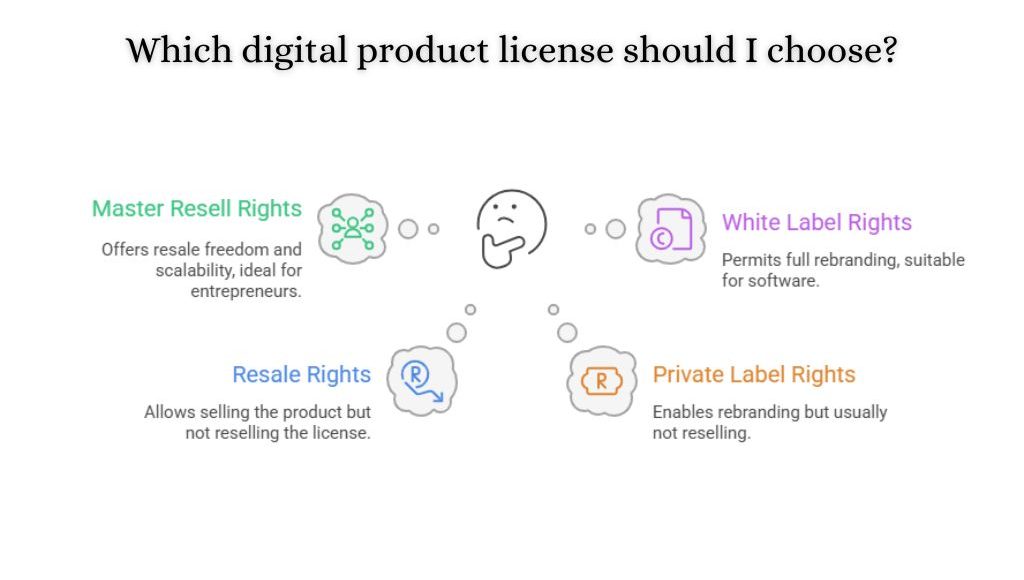
The distinction becomes clearer when you compare MRR with other licensing models.
- Resell Rights (RR): Allow you to sell the product, but your customers generally cannot resell it.
- Private Label Rights (PLR): Typically allow you to edit, customize, and rebrand a product, although transferring those rights depends on the license.
- White Label Rights: Allow you to market a product under your own brand, commonly with software and other ready-made solutions.
How Master Resell Rights Work
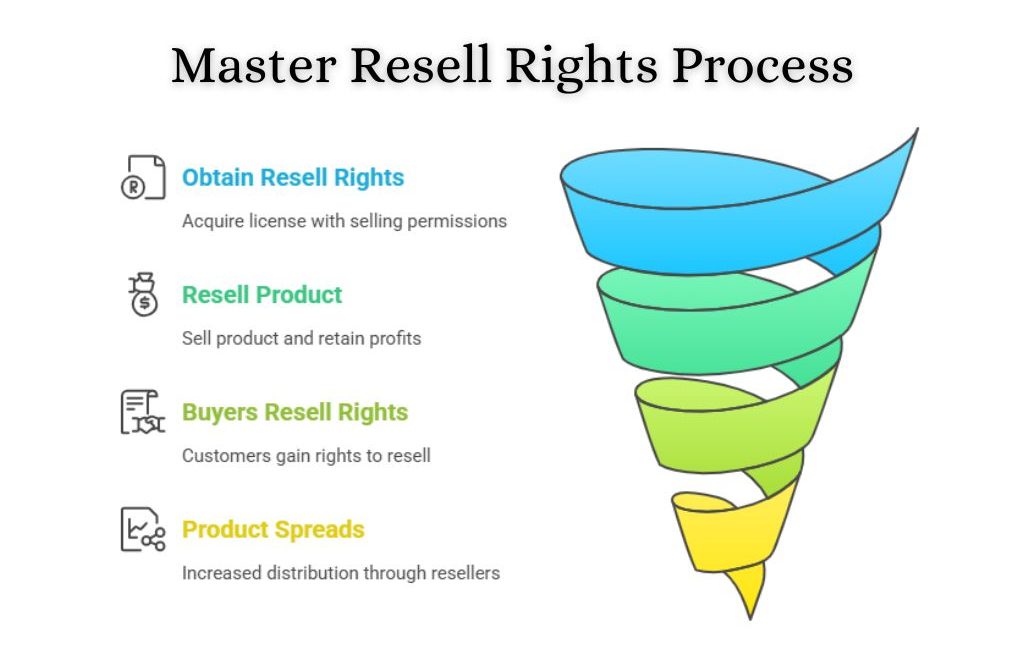
One of the biggest advantages of Master Resell Rights is that you can start selling an existing digital product without creating it yourself. The process is straightforward, and the resale rights allow the same product to be sold by multiple independent sellers.
Here’s how it works:
1. Purchase an MRR Product
Choose a digital product that comes with Master Resell Rights. This could be an ebook, online course, template collection, software package, or another digital resource.
2. Understand Your Resale License
Your license allows you to sell the product and pass resale rights to your customers. Check the terms for any restrictions on pricing, modifications, distribution, or how the product can be marketed.
3. Sell the Product and Keep 100% of the Profits
Create your offer, set your price according to the license terms, and market the product to potential buyers. You keep 100% of the profits from your own sales without paying ongoing commissions or royalties to the original creator.
4. Give Your Customers the Same Resale Opportunity
When customers purchase the product with MRR, they also receive the right to resell it. They can market it to their own audiences, keep the profits from their sales, and pass along the same resale rights, subject to the license terms.
5. Expand the Product’s Distribution Through Resellers
As more buyers become resellers, the product can reach audiences beyond your own. Each reseller operates independently, creating additional opportunities for the product to circulate in different markets.
Who Is Master Resell Rights For?
Master Resell Rights can be a practical option for entrepreneurs who want to sell digital products without developing everything from scratch. The model is especially useful for people looking to save time, keep 100% of their profits, and expand their product offerings.
Here are five types of entrepreneurs who can benefit from MRR.
1. Digital Entrepreneurs Who Want Lower Startup Costs
Creating a digital product takes time, research, and often money. MRR lets you skip much of the development process by purchasing the rights to an existing product.
This allows you to focus your resources on building an offer, attracting customers, and making sales instead of starting with a blank page.
2. Affiliate Marketers Who Want More Control Over Their Profits
Affiliate marketers typically earn a commission when someone purchases a product through their referral link. With MRR, you can sell a licensed digital product directly and keep 100% of the profits from your sales.
You also gain more control over your pricing, sales process, and customer relationships, within the terms of the license.
3. Coaches and Consultants Who Need Ready-Made Resources
Coaches and consultants can use suitable MRR products to expand their offerings without creating every resource themselves.
An ebook, workbook, template, or training course could complement an existing service, serve as a standalone offer, or become part of a larger package when the license allows it.
The key is choosing resources that genuinely support what your clients are trying to accomplish.
4. Beginners Who Want to Start Selling Digital Products
For someone new to online business, creating a product and learning how to sell it at the same time can be overwhelming.
MRR removes the need to develop the product first, making it easier to concentrate on essential business skills such as identifying an audience, presenting an offer, generating traffic, and following up with potential customers.
It’s a practical way to gain selling experience while working with an existing product.
5. Experienced Marketers Who Want to Expand Their Offers
If you already have a website, email list, sales funnel, or established audience, MRR products can help you introduce additional offers without building each one from the ground up.
Depending on the license, you might use them as standalone products, upsells, complementary offers, or resources within a membership.
This gives experienced marketers another way to serve their audience and create additional revenue opportunities using systems they already have in place.
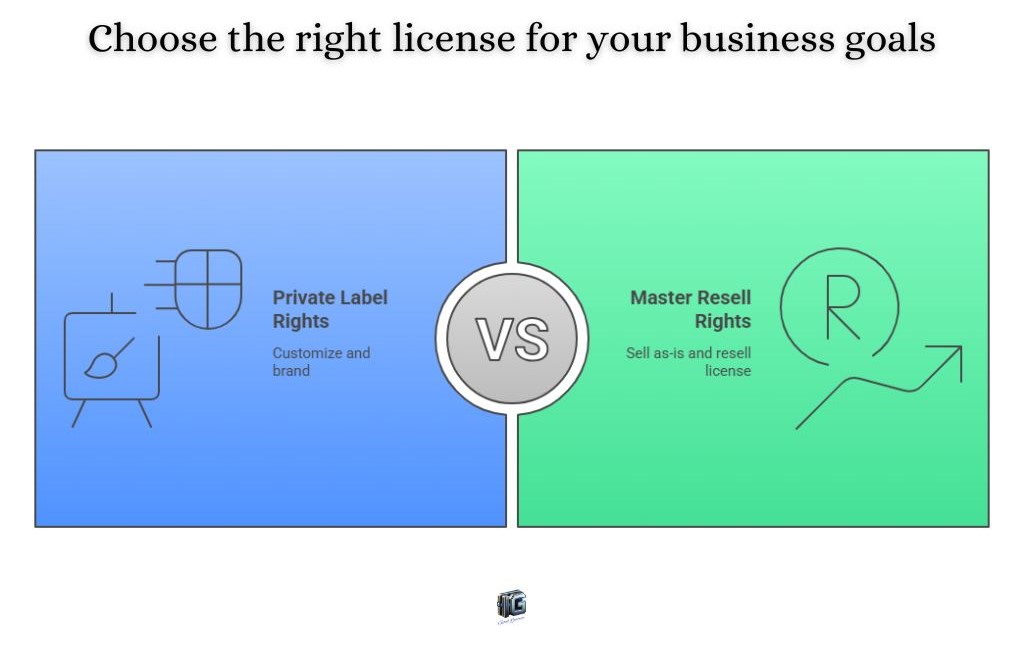
Master Resell Rights vs. PLR: What’s the Difference?
Master Resell Rights (MRR) and Private Label Rights (PLR) both allow you to sell digital products you didn’t create. However, they differ in what you can do with the content and which rights you can pass on to your customers.
MRR focuses on resale and distribution. You can sell an existing product, keep 100% of the profits, and give customers the right to resell it themselves.
PLR focuses on customization and branding. You can typically edit, rebrand, and adapt the content to fit your business, but that doesn’t automatically give your customers the same rights.
MRR vs. PLR Comparison at a Glance
| Feature | Master Resell Rights (MRR) | Private Label Rights (PLR) |
|---|---|---|
| Primary Purpose | Sell digital products and pass on resale rights. | Customize and repurpose existing content. |
| Profit Retention | Keep 100% of the profits from your sales. | Keep 100% of the profits from your sales. |
| Resale Rights for Buyers | Customers can also resell the product under the license terms. | Usually restricted unless the license specifically permits it. |
| Editing and Rebranding | Typically limited unless additional permissions are granted. | Generally allows editing, customization, and rebranding. |
| Speed to Market | Often faster because the product can be sold as provided. | May require additional time for editing and branding. |
| Business Advantage | Expand distribution through multiple independent resellers. | Develop differentiated content and branded offers. |
| Best Fit | Entrepreneurs interested in selling ready-made products with transferable resale rights. | Entrepreneurs who want greater control over content and presentation. |
Which Licensing Model Makes More Sense?
The choice depends on what you want to accomplish.
If your priority is selling a ready-made digital product while giving customers the same resale opportunity, MRR offers that flexibility.
If you want to rewrite content, customize its appearance, and develop products that reflect your brand, PLR generally provides more creative freedom.
Neither model is inherently better, and the two aren’t always mutually exclusive. Some products include both types of permissions. The important thing is to read the individual license before buying or selling, since the rights and restrictions can vary between products.
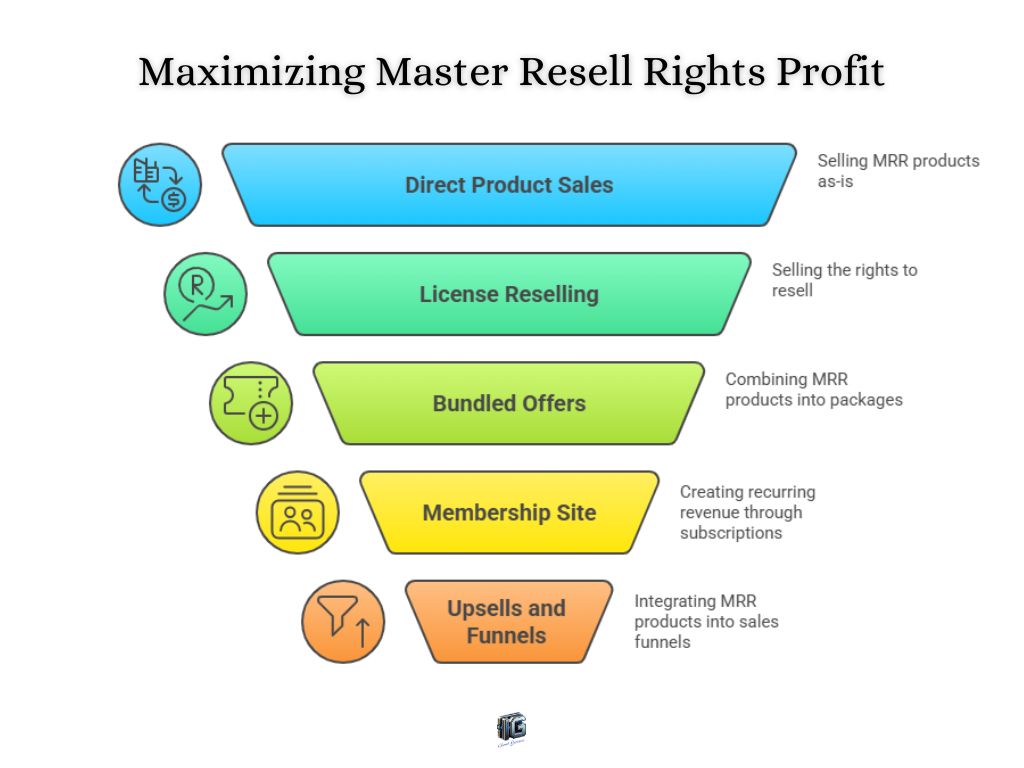
How to Profit From Master Resell Rights
The real value of Master Resell Rights isn’t limited to selling a digital product once. Depending on the license, you can use MRR products in different offers, sales funnels, and business models to create multiple income opportunities without developing every product yourself.
Here are six ways to make money with MRR products.
1. Sell Digital Products Directly
The simplest approach is to sell an MRR product through your website, landing page, or online store.
You can promote an existing ebook, course, template, or other digital resource, set your selling price within the license terms, and keep 100% of the profits from your sales.
The advantage is that you can focus on finding customers and marketing the product instead of creating it from scratch.
2. Sell Products With Resale Rights
One of MRR’s defining advantages is the ability to offer customers more than the product itself.
When you sell a product with transferable Master Resell Rights, your buyers also receive the opportunity to sell it themselves and keep the profits from their own sales.
This adds another reason for entrepreneurs to consider your offer, particularly when the product is useful and the resale terms are clearly explained.
3. Create Digital Product Bundles
Combining related MRR products into one package can make your offer more useful to a specific audience.
For example, you could package an email marketing course, a collection of email templates, and a lead generation guide into a single digital marketing bundle.
The goal is to give customers a more complete solution rather than simply adding more products. Make sure each license permits the way you intend to package and distribute the content.
4. Build Membership Sites and Content Libraries
MRR products can also support membership businesses when their licenses permit subscription-based distribution.
Instead of selling individual resources, you can organize a collection of ebooks, courses, templates, or training materials into a library that members pay to access.
A membership creates the opportunity for recurring revenue, while adding relevant resources and maintaining the library gives members a reason to continue their subscriptions.
5. Use MRR Products in Sales Funnels
You can introduce MRR products at different stages of your sales funnel to create additional sales opportunities.
A lower-priced digital guide might serve as an introductory offer, while a related course or resource package could become an upsell.
This allows you to build on an existing customer relationship and offer additional products that match the buyer’s interests, without creating every resource yourself.
6. Offer Business-in-a-Box Packages
Some MRR products come with more than educational content. They may include ready-made sales pages, marketing graphics, email sequences, training materials, and other business resources.
When the license permits, you can sell these packages to entrepreneurs who want a starting point for launching their own digital product businesses.
The appeal is convenience. Buyers receive a collection of resources they can use to get started, while retaining responsibility for setting up, marketing, and operating their businesses.
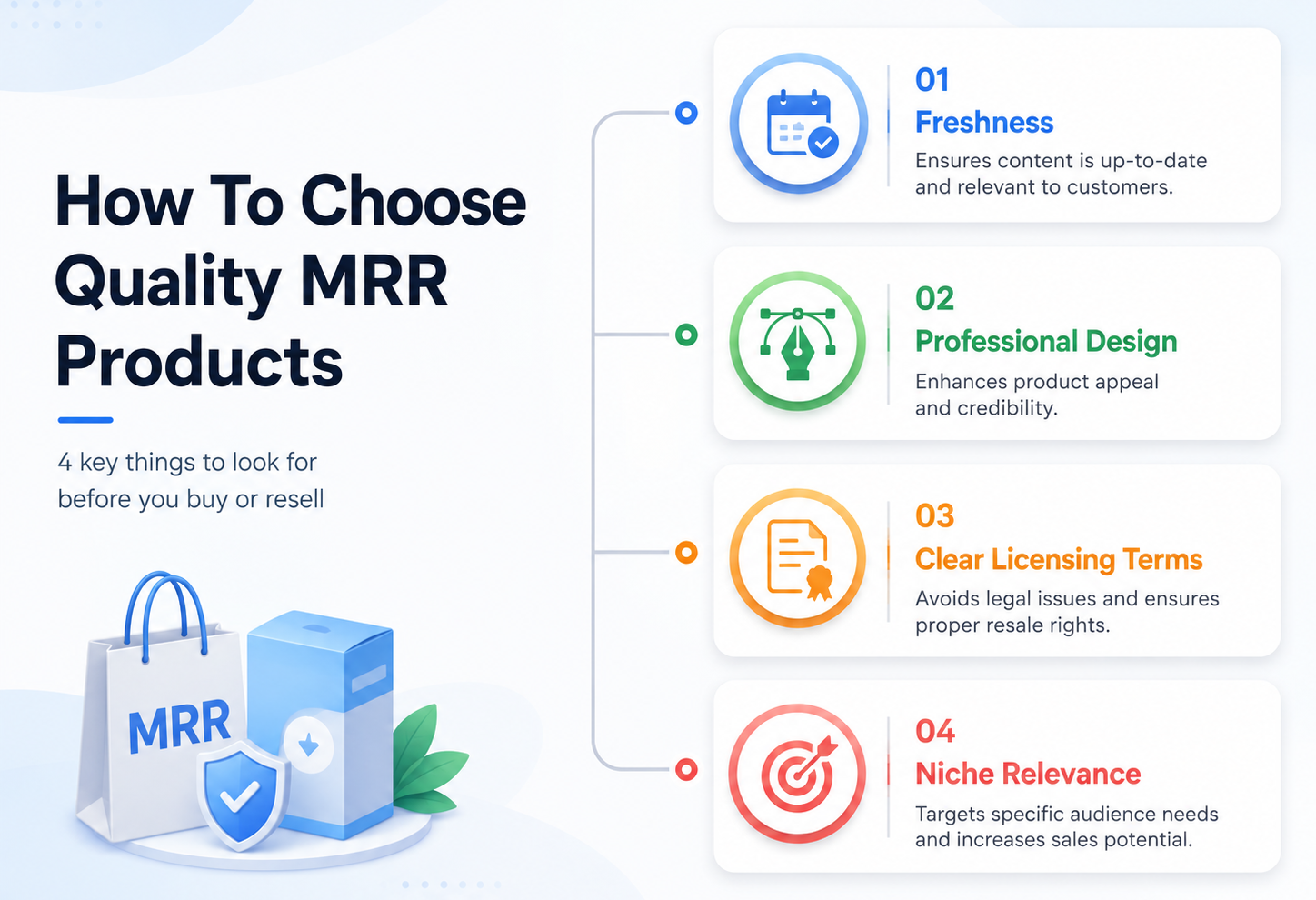
How to Choose Quality Master Resell Rights Products
Not every Master Resell Rights product is worth selling. Some offer useful, well-developed content, while others are outdated, poorly designed, or too generic to stand out. Choosing the right product matters because its quality directly affects the value you can offer customers and the reputation you build around your business.
Before purchasing an MRR product, consider these five factors:
- Content Quality and Relevance: Review the material to make sure it’s accurate, useful, and up to date. A product that addresses a real problem is more valuable than one filled with generic or outdated information.
- Professional Presentation: Look for clean formatting, readable layouts, attractive graphics, and organized content. A professional appearance helps customers understand the product and builds confidence in what they’re buying.
- Clear Licensing Terms: Confirm that the product includes genuine Master Resell Rights and that you’re allowed to pass those rights to your customers. Check for restrictions on pricing, editing, rebranding, bundling, and distribution.
- Audience Demand: Choose products that match the interests and needs of people you’re trying to reach. Even a well-made product can be difficult to sell if your audience has little reason to buy it.
- Market Competition: Research how similar products are being sold. Since multiple resellers can offer the same MRR product, consider how you can differentiate your offer through positioning, customer experience, or additional resources permitted by the license.
Choosing a Profitable MRR Niche
MRR products are available across many topics, but some categories offer more opportunities to build related offers and reach a clearly defined audience.
Examples worth exploring include:
- AI and Automation: Guides, templates, and training materials that help people understand and use AI tools.
- Personal Finance and Side Hustles: Budgeting resources, financial education, and guides about starting small businesses.
- Health and Wellness: Fitness programs, nutrition guides, and resources focused on healthy habits.
- Self-Improvement: Productivity systems, goal-setting worksheets, and personal development courses.
- Online Marketing and Business: Email marketing, lead generation, sales funnels, social media, and digital business training.
These are potential markets to evaluate, not guarantees of profitability. The right niche depends on your audience, the quality of available products, and your ability to reach interested buyers.
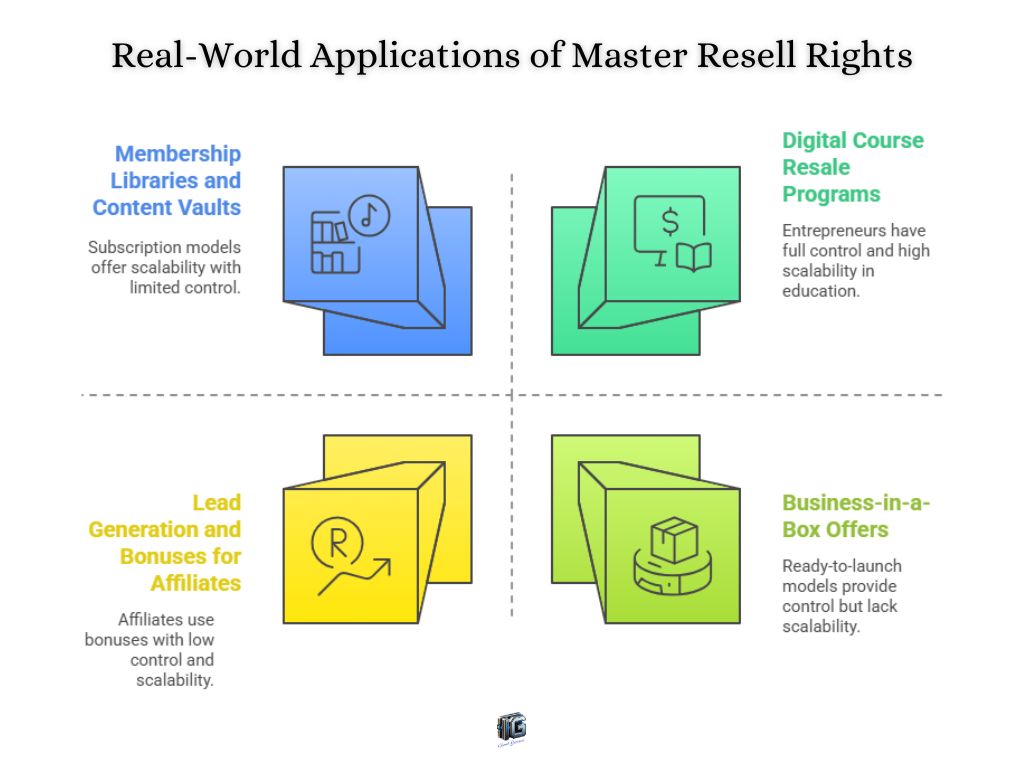
Real-World Uses of Master Resell Rights
Master Resell Rights aren’t limited to selling individual ebooks or courses. They can also fit into existing businesses, helping entrepreneurs expand their product offerings, serve different audiences, and create additional sales opportunities.
The following examples show how MRR products can be used across different business models.
Digital Course Resale Programs
An entrepreneur interested in teaching email marketing could purchase a ready-made course with Master Resell Rights and sell it through a website or sales funnel.
Instead of creating every lesson, video, and worksheet, the seller can focus on attracting customers and explaining how the course addresses their needs.
Buyers who receive MRR can also resell the course through their own businesses, allowing the same educational product to reach different audiences.
Business-in-a-Box Offers
Some MRR packages include more than the digital product itself. They may come with sales page templates, promotional graphics, email sequences, and instructions for setting up an online offer.
These packages can appeal to entrepreneurs who want a starting point without assembling every resource themselves.
For example, a digital marketing package might include a training course, ready-made sales materials, and transferable resale rights. Buyers receive tools they can use to launch their offers, although attracting customers and operating the business remain their responsibility.
Membership Libraries and Content Vaults
Membership owners can use appropriately licensed digital products to build collections of educational resources for their subscribers.
A business-focused membership, for example, might offer ebooks, marketing templates, checklists, and training courses in one organized library.
Members gain access to useful materials in a convenient location, while the business owner can generate recurring revenue through subscriptions. The license must permit the intended membership distribution, including any resale rights offered to members.
Lead Generation and Affiliate Marketing Bonuses
Digital products can complement affiliate promotions by giving customers additional resources related to what they’re purchasing.
For example, someone promoting an email marketing platform might offer a beginner’s guide or email template collection as a bonus.
When the license permits promotional giveaways, an MRR product can serve this purpose without requiring the marketer to create the bonus from scratch.
The important distinction is that Master Resell Rights don’t automatically include permission to give products away for free. The specific license determines whether the product can be distributed as a bonus.
Agency and Consulting Add-Ons
Marketing agencies, coaches, and consultants can incorporate licensed digital resources into their services.
A consultant helping small businesses improve their online marketing might offer ready-made guides, worksheets, or training materials as additional resources.
This can reduce the time spent developing supporting materials while giving clients something useful beyond the main service.
If the resources need to be edited or customized for individual clients, the license must explicitly allow those modifications.
E-Commerce and Hybrid Business Models
Online store owners can expand their offerings by pairing physical products with relevant digital resources.
For example, a fitness equipment store could sell a licensed workout guide alongside resistance bands or exercise accessories. A business selling gardening supplies might offer a digital gardening course as a complementary product.
These combinations give customers access to related information while creating additional sales opportunities for the store.
When an MRR product is included as a free bonus rather than sold separately, the license must permit that type of distribution.

Common Mistakes With Master Resell Rights (And How to Avoid Them)
Master Resell Rights can save you time on product creation, but having a product to sell doesn’t guarantee customers will buy it. Some sellers struggle because they overlook product quality, misunderstand licensing terms, or rely on the resale opportunity instead of building a solid marketing strategy.
Here are five common MRR mistakes and how to avoid them.
Selling Outdated or Low-Quality Products
A product isn’t worth selling simply because it comes with Master Resell Rights. Outdated information, poor formatting, and generic content can leave customers disappointed and damage your credibility.
How to avoid it: Review the entire product before purchasing or promoting it. Look for accurate information, useful content, and professional presentation. Choose products you would feel comfortable recommending to your own audience.
Ignoring the License Terms
Not all MRR licenses provide identical permissions. Some restrict pricing, editing, rebranding, bundling, or distribution. Assuming you can do anything with a product because you purchased its resale rights can create problems.
How to avoid it: Read the complete license and confirm what you’re allowed to sell, modify, and pass on to customers. Keep a copy of the agreement and verify any unclear restrictions with the rights holder before selling.
Selling the Same Offer as Every Other Reseller
When multiple sellers promote the same product using identical sales pages and marketing materials, customers have little reason to choose one seller over another.
How to avoid it: Differentiate your offer through better positioning, clearer explanations, useful bonuses, or a more relevant customer experience. You don’t necessarily need to modify the original product to stand out. Focus on what you can improve within the license terms.
Making Unrealistic Income Promises
Keeping 100% of the profits from your sales is a legitimate advantage of MRR. However, that doesn’t mean every buyer will make money or achieve the same results.
Promoting MRR with guaranteed earnings, exaggerated success stories, or unsupported income claims can create false expectations and undermine customer trust.
How to avoid it: Explain the actual benefits of the product and its resale rights. Be transparent about what customers receive and avoid presenting potential earnings as guaranteed outcomes.
Neglecting Marketing and Customer Relationships
Purchasing an MRR product gives you something to sell, but it doesn’t automatically bring customers to your business. Without a clear audience and a way to reach potential buyers, even a quality product can struggle to generate sales.
How to avoid it: Build a marketing strategy around your audience and offer. Use relevant content, landing pages, email marketing, and other appropriate channels to attract interested buyers. Focus on earning trust, following up, and developing customer relationships rather than relying entirely on the resale rights.

Action Plan: Launching an MRR Business
Starting an online business with Master Resell Rights doesn’t require creating your own digital products or building a complicated system. With a quality product, a clear offer, and a practical marketing plan, you can get started without spending months on product development.
Here’s a six-step process for launching your MRR business.
Step 1: Choose Your Niche
Start by identifying the audience you want to serve and the problems they’re trying to solve.
A focused niche makes it easier to choose relevant products, develop your marketing message, and reach people who may be interested in buying. Rather than targeting everyone, concentrate on an audience whose needs you understand.
Step 2: Select a High-Quality MRR Product
Find a product that addresses a specific need within your niche. Review the content, check its accuracy, and evaluate whether it offers something useful to potential customers.
Read the license carefully to confirm your resale permissions, including any restrictions on pricing, branding, modifications, or redistribution.
Step 3: Package Your Offer
A good product needs a clear reason for someone to buy it from you.
Develop an offer that explains what the product includes, who it’s for, and how it can help. If the license permits, you can strengthen the package with complementary resources or bonuses that make it more useful to your audience.
When selling transferable resale rights, explain that benefit clearly so customers understand both the product and the opportunity to resell it.
Step 4: Build a Simple Sales Funnel
You don’t need a large website to get started. A focused landing page can introduce your product, explain its benefits, and give visitors a clear way to purchase.
Connect your sales page to a reliable checkout and product delivery system. You can also use email marketing to follow up with interested visitors, answer questions, and introduce relevant offers.
Keep the process simple enough to manage and improve as you learn what works.
Step 5: Launch and Promote Your Product
Once your offer and sales process are ready, start introducing the product to potential customers.
Depending on your audience, you might use blog content, social media, email marketing, paid advertising, or a combination of channels.
Focus on communicating the product’s benefits, answering common questions, and helping buyers understand what they’re purchasing. You don’t need a perfect marketing system before launching, but you do need a clear offer and a reliable buying experience.
Step 6: Grow Your Business Through Marketing and Resale Rights
As you begin making sales, pay attention to customer feedback, conversion rates, and which marketing channels attract interested buyers.
Use what you learn to improve your offer, strengthen your follow-up, and reach more potential customers.
MRR also creates opportunities for wider product distribution. Customers who receive transferable resale rights can promote the product to their own audiences, allowing it to circulate through multiple independent sellers.
Over time, you can expand your business by introducing related products, creating additional offers, and building stronger relationships with your customers.
How to Market MRR Products Ethically
The biggest risk with Master Resell Rights isn’t the business model itself. It’s the exaggerated income claims, misleading promises, and unrealistic expectations sometimes used to promote it.
MRR offers legitimate advantages. You can sell existing digital products, keep 100% of the profits from your sales, and pass resale rights to customers. Those benefits are worth highlighting without suggesting that everyone who purchases a license will achieve financial success.
Ethical MRR marketing starts with presenting the opportunity accurately.
- Be honest about income potential. Avoid guaranteed earnings, misleading income screenshots, and promises of effortless success. Explain what the resale rights provide without predicting what buyers will earn.
- Make the product’s value clear. Show customers what they’re purchasing, what the product helps them accomplish, and why it may be useful beyond its resale potential.
- Explain the licensing terms. Be transparent about resale permissions, pricing restrictions, customization rights, and other conditions buyers need to understand.
- Set realistic expectations. Purchasing an MRR product provides something to sell, but generating sales still requires marketing, customer acquisition, and business management.
- Build trust through transparency. Use accurate product descriptions, support your claims, and make it easy for customers to understand what they’re getting before purchasing.
Conclusion
Master Resell Rights offer a practical way to start selling digital products without creating them from scratch. You can acquire a ready-made product, keep 100% of the profits from your sales, and pass resale rights to customers who can do the same. That combination of speed, flexibility, and distribution is what makes MRR an attractive business model.
But the opportunity means little if you never put it to use. It’s easy to spend too much time researching products, collecting licenses, or trying to build the perfect sales funnel. A better approach is to choose a quality product, create a clear offer, and start reaching potential customers. You can improve your marketing and expand your business as you gain experience.
The real advantage of MRR is that it removes much of the product creation work, allowing you to focus on selling, serving customers, and building a sustainable business. You don’t need everything figured out before getting started. You need a worthwhile product, a practical marketing plan, and the willingness to put it into action.

FAQs About Master Resell Rights
What Does Master Resell Rights Mean?
Master Resell Rights (MRR) are a type of license that allows you to sell a digital product and pass resale rights to your customers. You keep 100% of the profits from your sales, and buyers who receive those rights can sell the product themselves.
How Are Master Resell Rights Different From PLR?
MRR focuses on selling existing products and transferring resale rights to customers. Private Label Rights (PLR) typically allow you to edit, customize, and rebrand content as your own. Both models have different licensing permissions, so always review the terms before using a product.
Can You Make Money With Master Resell Rights?
Yes. You can earn money by selling MRR products directly, offering resale rights, creating product bundles, or including appropriately licensed products in memberships and sales funnels. Your results depend on product quality, audience demand, pricing, and marketing.
Are Master Resell Rights Legal?
Yes. Master Resell Rights are a legitimate licensing arrangement when the rights holder has the authority to grant those permissions. Make sure the seller provides a valid license and that your intended use complies with its terms.
What Types of Products Come With Master Resell Rights?
Common MRR products include ebooks, online courses, templates, software, graphics, training materials, and business-in-a-box packages. The available products and resale permissions vary by vendor.
What Niches Work Best for MRR?
Popular categories to explore include AI and automation, personal finance, health and wellness, self-improvement, and online marketing. The best niche is one where you understand the audience, can identify genuine demand, and have access to quality products that address specific needs.
Where Can I Find Master Resell Rights Products?
You can find MRR products through digital product vendors, licensing marketplaces, and creators who offer transferable resale rights. Look for reputable sellers with clear licensing agreements, product previews, and updated content. Avoid purchasing large bundles based on quantity alone.
Do I Need a Website to Sell MRR Products?
No. You can sell MRR products using a landing page, sales funnel, or an online marketplace that permits them. A dedicated website can give you more control over your offers, branding, email list, and customer relationships as your business grows.

5 Comments
Ronald Slyderink · November 25, 2025 at 6:23 pm
Hi Ismel, Is it possible to edit the MRR at all to make it better and align it more to your own brand of products?
Thank you
Ronald
Ismel Guerrero. · November 25, 2025 at 8:26 pm
Great question, Ronald! Technically, MRR products are meant to be sold “as-is,” but you can often make small improvements to align them with your brand.
For example, you could update the cover design, adjust the copy, or add a bonus resource that’s unique to you. While you can’t always fully rebrand like with PLR, even small tweaks help you stand out and add extra value for your audience.
The key is positioning showing how your version solves a problem better or fits your niche more directly.
Ismel Guerrero
PLR Digital Products: Turn Them Into Passive Income - Ismel Guerrero. · October 18, 2025 at 8:19 am
[…] platform mixes PLR with Master Resale Rights (MRR), so you’ll find both content and licenses that let your buyers resell too. Plus, it includes […]
MRR vs PLR: What You Need to Know in 2025 - Ismel Guerrero. · November 4, 2025 at 7:53 pm
[…] Master Resell Rights allow you to resell the product to others and give them the right to resell it as well. However, you usually cannot edit or rebrand the content. You must sell it as-is, following the original creator’s terms. […]
PLR Explained: The Complete Guide - Ismel Guerrero · June 21, 2026 at 8:16 am
[…] MRR (Master Resell Rights): You can sell the product and the resale rights, but usually can’t edit it. […]