User-generated content is everywhere online, even when nobody labels it UGC.
A customer uploads a product video. Someone leaves a detailed review after buying software. A Reddit user explains how a service worked for them. Another person posts photos from a hotel, restaurant, or event.
All of that can contribute to the larger world of user-generated content.
The term has also taken on a second meaning in creator marketing. Brands now hire people to produce UGC-style videos, photos, demonstrations, and testimonials specifically for marketing use. Those paid assets can resemble ordinary customer content, but the commercial relationship behind them is different.
This guide explains what user-generated content is, the main types you see online, why it matters, how paid UGC creator work fits into the picture, and what you should understand before trying it yourself.
- User-generated content generally refers to reviews, posts, videos, photos, comments, tutorials, and other content created by users or community members rather than traditional brand advertising.
- Organic UGC and paid UGC-style creator content can look similar, but the relationship behind them is different.
- Reviews, product demonstrations, social posts, customer photos, tutorials, and community discussions are common forms of UGC.
- UGC can help people understand products through real experiences, additional perspectives, and practical demonstrations.
- Paid UGC creators are usually hired for the content they produce rather than primarily for access to a large personal audience.
- Follower count is not a universal requirement for direct UGC creator work, although individual platforms, agencies, or campaigns may set their own eligibility rules.
- Paid creator agreements should clarify deliverables, payment, revisions, ownership, usage rights, advertising permissions, and any posting requirements.
- Public endorsements connected to payment, free products, or another material relationship may require clear disclosure.
Disclaimer: I am an independent Affiliate. The opinions expressed here are my own and are not official statements. If you follow a link and make a purchase, I may earn a commission.
What Is User-Generated Content (UGC)?
User-generated content, usually shortened to UGC, is content created by people who use, discuss, review, demonstrate, or participate in a product, service, platform, brand, or community.
Common examples include:
- Customer reviews
- Social media posts
- Product photos
- Videos
- Tutorials
- Ratings
- Comments
- Forum discussions
- Unboxing videos
- Community posts
The simplest way to understand UGC is to look at who created the content and why.
Traditional brand content originates with the company or an agency working on its behalf. Organic UGC begins with users, customers, or community members sharing their own contributions.
The IAB’s UGC guidance uses a particularly narrow marketing definition, describing UGC as voluntarily created content from individuals without a material connection to the featured brand.
That distinction becomes important once compensation enters the picture.
Organic UGC and Paid UGC-Style Content
Organic UGC develops naturally.
A customer may write a review because they want to share an opinion. Someone might post an unboxing without being asked. A forum member could answer another user’s question based on personal experience.
No brand contract is necessary.
Paid UGC-style content works differently.
A company hires a creator to produce something that resembles the type of content people already encounter naturally online. The creator might film a demonstration, record a testimonial-style video, photograph a product, or deliver several short-form ad variations.
The finished content can look similar to organic UGC, but the brand relationship changes how it should be understood.
Even major advertising platforms now use UGC terminology around creator content. TikTok, for example, describes creator material within its content tools as UGC and allows authorized creator posts to be incorporated into advertising.
For clarity throughout this article:
Organic UGC means content created voluntarily through ordinary customer or community participation.
Paid UGC-style creator content means content commissioned from a creator for commercial use.
The marketing industry often uses “UGC” for both. Keeping the distinction clear prevents confusion later.
How UGC Differs From Influencer, Brand, and Employee Content
Content can look casual without being organic UGC. The relationship behind the content matters.
| Content Type | Who Creates It | Main Purpose | Brand Relationship |
|---|---|---|---|
| Organic UGC | Customer, user, or community member | Share an experience, opinion, or contribution | Usually none |
| Paid UGC-Style Content | Independent creator | Produce content assets for commercial use | Paid, gifted, or otherwise contracted |
| Influencer Content | Creator with an audience | Create and distribute promotional content | Usually compensated or affiliated |
| Brand Content | Company, employee, or agency | Communicate an official marketing message | Direct brand control |
| Employee-Generated Content | Employee or founder | Share company-related experiences or perspectives | Employment relationship |
These categories can overlap.
An influencer might also create assets that a company later uses in advertising. A UGC creator could produce content without publishing anything to their own followers. Employees sometimes create informal videos that visually resemble customer content even though they have an obvious relationship with the company.
Style alone does not determine the category.
Who created the content, why they created it, and what relationship exists with the brand provide a clearer answer.
Why User-Generated Content Matters Online
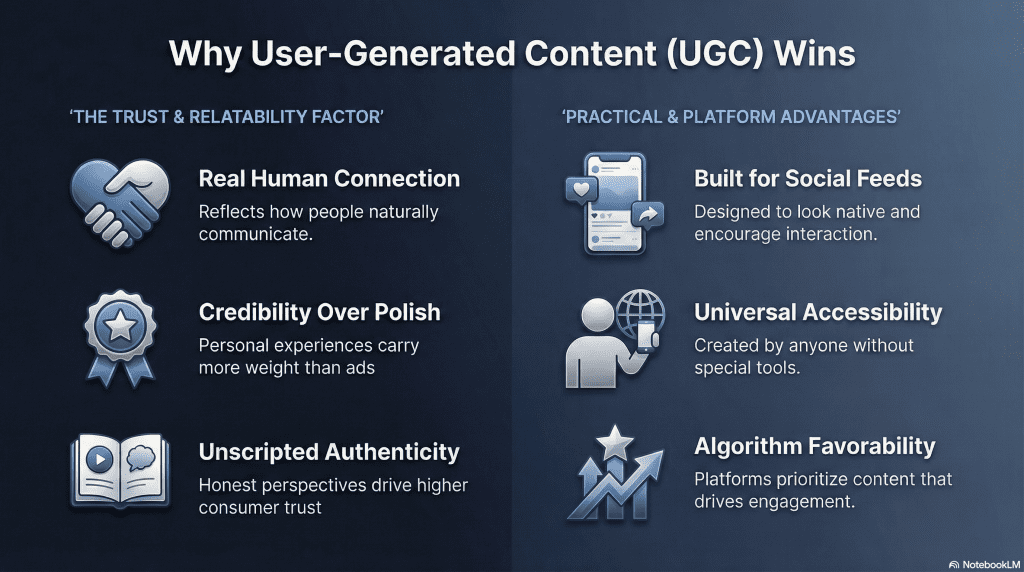
UGC gives people information that official brand content cannot always provide by itself.
A company can explain how a product is designed to work. Users can show how that product fits into real situations.
Both perspectives can be useful.
Real Experiences Add Context
A polished product page may show ideal photography and carefully selected features.
Customer content can answer more practical questions.
Someone might demonstrate how large a piece of furniture looks in a normal room. A software user could explain a difficult setup process. Another customer might show how clothing fits outside a studio photoshoot.
These details help people understand the experience around the product, not just its advertised specifications.
More Perspectives Can Reduce Information Gaps
Potential customers rarely evaluate important purchases from one source alone.
They may compare:
- Official product descriptions
- Customer reviews
- Videos
- Independent comparisons
- Discussion threads
- Photos
- Tutorials
- Comments from existing users
UGC contributes another layer of information.
That does not make every user opinion accurate or unbiased. Individual experiences vary, reviews can be manipulated, and one person’s result may not represent what another buyer should expect.
The value comes from having additional perspectives available for evaluation.
UGC Fits Naturally Into Social Environments
Social platforms are already built around content from individual accounts.
That makes customer and creator material visually familiar within feeds.
Advertising systems increasingly accommodate this format as well. TikTok’s Spark Ads documentation explains that advertisers can use their own organic posts or authorized posts from other creators within paid campaigns.
The existence of these formats does not prove that UGC always performs better than traditional creative.
It shows that user and creator content has become one established part of modern digital advertising.
Community Participation Creates More Content Around a Topic
UGC is not limited to buying decisions.
People also contribute:
- Answers
- Opinions
- Stories
- Tutorials
- Discussions
- Troubleshooting advice
- Creative interpretations
A large community can therefore produce far more perspectives than the organization behind it could create alone.
Forums, social networks, marketplaces, review platforms, and community sites depend heavily on that participation.
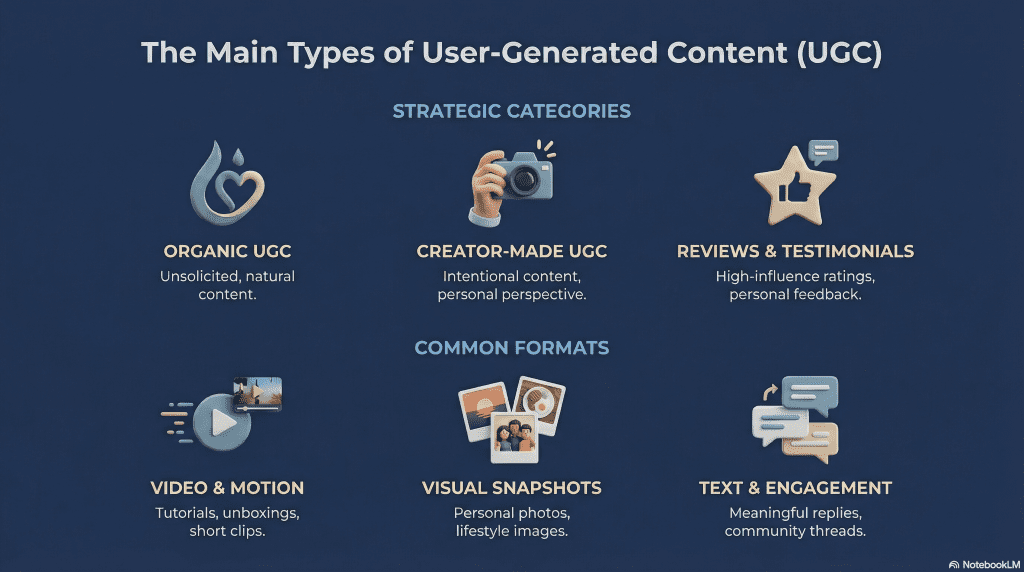
Types of User-Generated Content
User-generated content appears in many formats.
Some types are strongly associated with products and purchases. Others emerge from communities, conversations, or shared interests.
Reviews and Ratings
Reviews are among the clearest forms of UGC.
They may appear as:
- Star ratings
- Written feedback
- Customer photos
- Video reviews
- Detailed experience reports
A review can highlight strengths, weaknesses, usability problems, or unexpected benefits that a product description does not cover.
Readers should still treat individual reviews as individual experiences rather than universal evidence.
Social Media Posts
People regularly create UGC when they voluntarily mention products, services, destinations, events, or experiences on social media.
A post might include:
- A recommendation
- A complaint
- A product photo
- A demonstration
- A reaction
- A personal story
Some users tag the company directly. Others never mention the brand account at all.
Customer Photos and Videos
Visual UGC shows products in situations outside official photography.
Examples include:
- Clothing worn by customers
- Furniture inside real homes
- Meals served at restaurants
- Travel experiences
- Fitness products in use
- Technology setups
- Before-and-after organization projects
These assets can help viewers understand appearance, scale, setup, and everyday use.
Tutorials and How-To Content
Tutorials focus on practical use.
Someone might explain how to:
- Configure a device
- Use a software feature
- Apply a beauty product
- Prepare a recipe
- Assemble furniture
- Complete a home project
Useful tutorials solve problems that buyers or existing customers may encounter after discovering the product.
Unboxings and First Impressions
Unboxing content captures the beginning of the customer experience.
Typical elements include:
- Packaging
- Included accessories
- Initial setup
- Product appearance
- First reactions
A first impression should not be confused with a long-term review.
Someone opening a product for the first time cannot yet speak credibly about months of durability or long-term results.
Comments and Community Discussions
UGC can be extremely simple.
A Reddit response, forum thread, customer question, Discord discussion, or comment under a video may all qualify.
These conversations often reveal the exact questions, concerns, and experiences people have around a subject.
Testimonials and Results Stories
Customers sometimes share positive outcomes voluntarily.
A testimonial might explain how a product helped, what changed, or why the person recommends it.
Commercial use requires more care.
When a company solicits, incentivizes, or pays for a testimonial, the relationship behind the endorsement becomes relevant. Claims about unusual results also need to be presented responsibly.
Paid UGC-Style Creator Content
Paid creator content sits next to organic UGC rather than being identical to it.
A company may commission:
- Product demonstrations
- Short-form videos
- Voiceovers
- Testimonial-style content
- Lifestyle photos
- Unboxings
- Tutorials
- Raw footage
- Multiple advertising hooks
The creator is producing marketing material under an agreement.
That commercial relationship affects disclosure, rights, claims, and how the content can be used.
Where You See UGC in Everyday Life
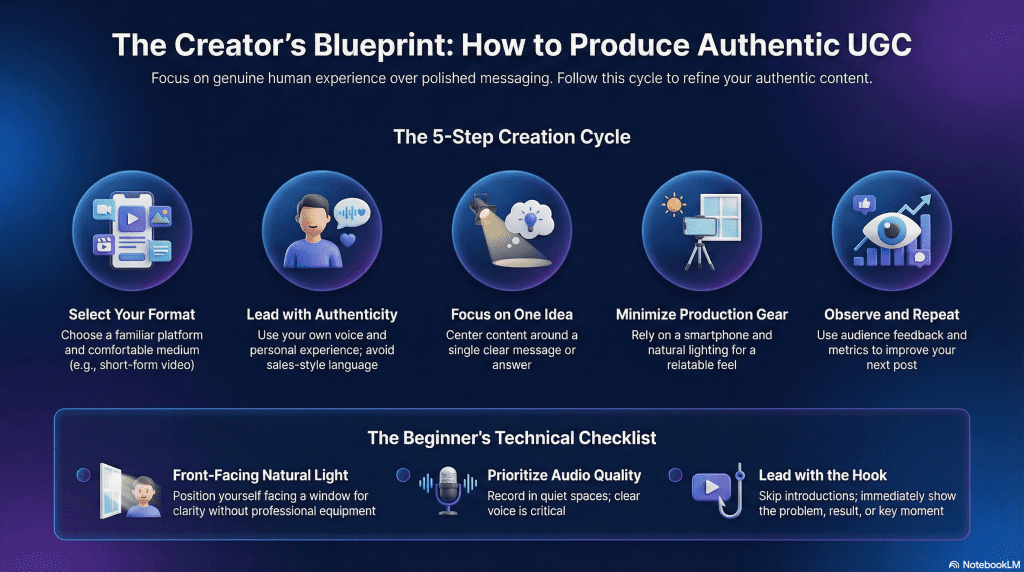
UGC appears across far more than TikTok and Instagram.
Common locations include:
- Ecommerce product pages
- Online marketplaces
- Review websites
- App stores
- YouTube
- Forums
- Social media feeds
- Travel platforms
- Restaurant listings
- Community sites
- Brand websites
- Comment sections
One customer can create several forms of UGC around the same experience.
Someone might post a short video after buying a product, upload photos to a retailer, write a detailed review, and later answer questions about the item in an online community.
The format changes.
The underlying participation does not.
What a UGC Creator Actually Does
A paid UGC creator produces content assets for companies.
That work often involves filming, photography, scripting, editing, voiceover, product demonstration, or some combination of those skills.
The brand may publish the finished content on:
- Social media
- Product pages
- Landing pages
- Email campaigns
- Advertising
- Ecommerce listings
- Other digital channels
Unlike organic UGC, this content begins with a commercial agreement.
UGC Creator vs. Influencer
The difference is easiest to understand by looking at what the company is buying.
Influencer partnerships usually include distribution. A company values the creator’s ability to reach an existing audience as part of the arrangement.
UGC creator work can focus primarily on production. The company hires the creator to make useful content and may distribute that content itself.
The roles are not mutually exclusive.
One creator could charge for producing a video, charge separately for publishing it to their audience, and license the same asset for additional advertising use.
Follower Count and UGC Creator Work
A large following is not inherently necessary when a company only wants the finished asset.
For direct client work, the portfolio may matter far more than audience size.
Brands can evaluate whether you:
- Communicate clearly
- Demonstrate products effectively
- Follow a brief
- Produce usable footage
- Deliver reliable work
Individual marketplaces or campaigns can still impose their own follower or account requirements.
Those platform rules should not be mistaken for a universal definition of who can become a UGC creator.
Common UGC Creator Deliverables
A project may involve one asset or an entire package.
Common deliverables include:
- Short-form vertical videos
- Product demonstrations
- Voiceovers
- Lifestyle footage
- Product photography
- Raw footage
- Edited variations
- Multiple opening hooks
- Tutorials
- Testimonial-style videos
The exact deliverable should be agreed upon before production begins.

How Paid UGC Creator Work Works
Paid UGC functions like a creative freelance service.
A company needs content. The creator agrees to produce specific assets under defined terms. Payment reflects the work required and the rights attached to the finished material.
Understanding that structure is more useful than viewing UGC as simply “getting paid to make videos.”
What Determines the Price
There is no universal UGC rate.
Project value can change based on:
- Number of deliverables
- Video length
- Scripting
- Filming complexity
- Editing
- Raw footage
- Turnaround time
- Revision requirements
- Exclusivity
- Usage duration
- Paid advertising rights
Two creators could both deliver a 30-second video while providing very different commercial value.
One agreement may permit a brand to post the video organically for three months. Another could grant broad advertising rights for a year.
Those are not equivalent projects.
Where UGC Creators Find Work
Opportunities can come from:
- Direct brand outreach
- Inbound inquiries
- Referrals
- Creator marketplaces
- Freelance platforms
- Agencies
- Professional networks
- Social media
No single channel is required.
A creator who builds relationships directly with companies may work differently from someone who relies on a marketplace for assignments.
What Should Be Agreed Before Production
A project should be clear before filming begins.
Important terms include:
- Deliverables
- Deadline
- Payment amount
- Payment timing
- Revisions
- Usage rights
- Advertising permissions
- Exclusivity
- Posting requirements
- Raw footage
- Ownership where relevant
Written terms reduce the chance that the creator and client are imagining different projects.
How to Start as a UGC Creator
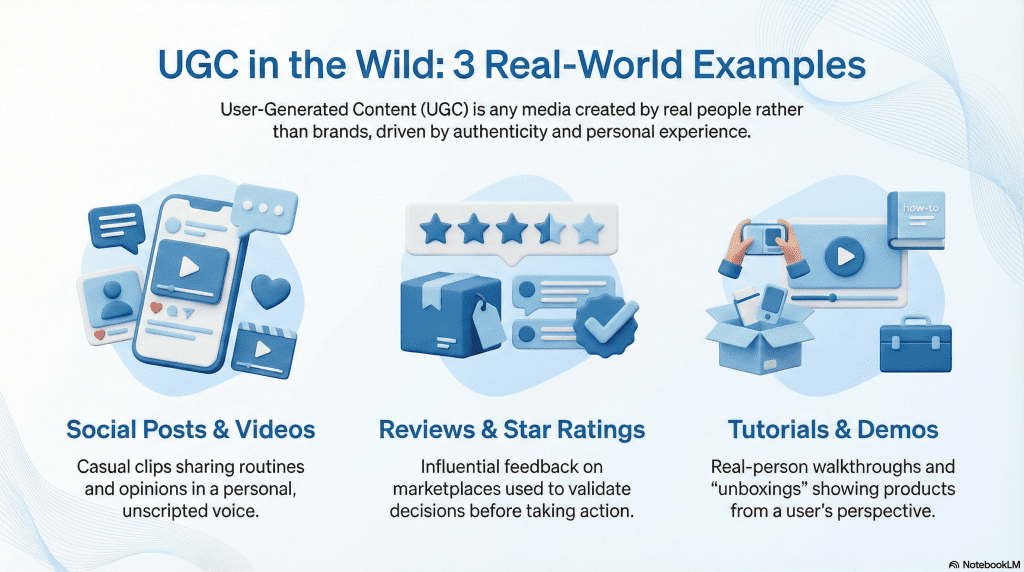
Starting does not require waiting for a brand to discover you.
The first goal is to demonstrate that you can create useful content.
Step 1: Start With Products You Understand
Choose a category that already feels familiar.
Possible starting points include:
- Beauty
- Skincare
- Technology
- Fitness
- Food
- Home
- Fashion
- Apps
- Travel
- Pet products
Familiarity makes it easier to identify useful demonstrations, customer questions, and realistic talking points.
You can expand later.
Step 2: Create Portfolio Samples
Use products you already own.
Build examples such as:
- A tutorial
- An unboxing
- A product demonstration
- A voiceover
- A problem-solution video
- A lifestyle clip
Portfolio samples do not need to pretend they came from paid partnerships.
Labeling them honestly keeps the work credible.
Step 3: Build a Small, Focused Portfolio
Quality matters more than volume at the beginning.
Three to six strong examples can demonstrate:
- Presentation
- Editing
- Product handling
- Structure
- Camera presence
- Voiceover ability
- Visual style
Different examples should show different strengths rather than repeating the same video six times.
Step 4: Define the Service
Know what you are offering before approaching a client.
A basic package might specify:
- Number of videos
- Approximate length
- Editing included
- Delivery timeline
- Revision limit
- Raw footage availability
- Basic usage terms
Clear scope makes pricing and negotiation easier.
Step 5: Approach Relevant Companies
Target businesses where your portfolio makes sense.
A skincare portfolio is more persuasive to a beauty company than a generic message saying you can create content for any industry.
Keep outreach concise.
Show the work, explain the fit, and make the next step obvious.
Step 6: Learn From Real Projects
Each completed assignment reveals something about your process.
You may discover that editing takes longer than expected, briefs need more clarification, certain product categories suit you better, or some deliverables should cost more.
Use that information to improve the next agreement.
What Makes Strong UGC Creator Content
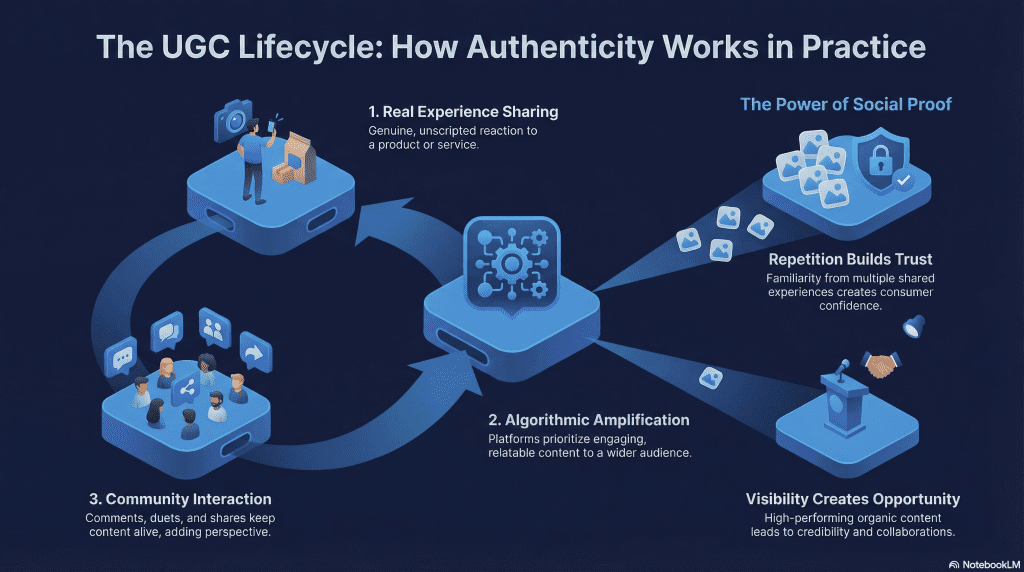
Good UGC-style content feels accessible without feeling careless.
The creator still needs structure.
A Clear Purpose
Every asset should communicate something specific.
One video may demonstrate a feature. Another could address a common problem. A third might show the product in a realistic routine.
Trying to explain everything at once usually weakens the message.
An Opening That Establishes Context
Short-form content benefits from getting to the point quickly.
An effective opening might introduce:
- A question
- A problem
- A use case
- A product in action
- A surprising detail
There is no universal hook formula that guarantees performance.
The opening simply needs to make the next part worth understanding.
Demonstration Instead of Empty Claims
Showing the product can often communicate more than describing it.
A software walkthrough demonstrates the workflow. A kitchen tool can be shown in use. A beauty product can be applied rather than merely praised.
Concrete demonstration gives viewers something they can evaluate.
Conversational Delivery
Natural delivery does not require improvising every word.
Creators can plan, script, and rehearse while still sounding like themselves.
Corporate phrasing, exaggerated enthusiasm, and claims nobody would naturally make can make the content less believable.
Clean Technical Execution
Professional does not mean cinematic.
A smartphone can be sufficient when the fundamentals are handled well:
- Clear audio
- Adequate lighting
- Stable framing
- Visible product shots
- Clean edits
- Appropriate dimensions
- Correct captions when needed
Technical quality should make the message easier to consume rather than drawing attention to itself.
Rights, Contracts, and Disclosure in Paid UGC
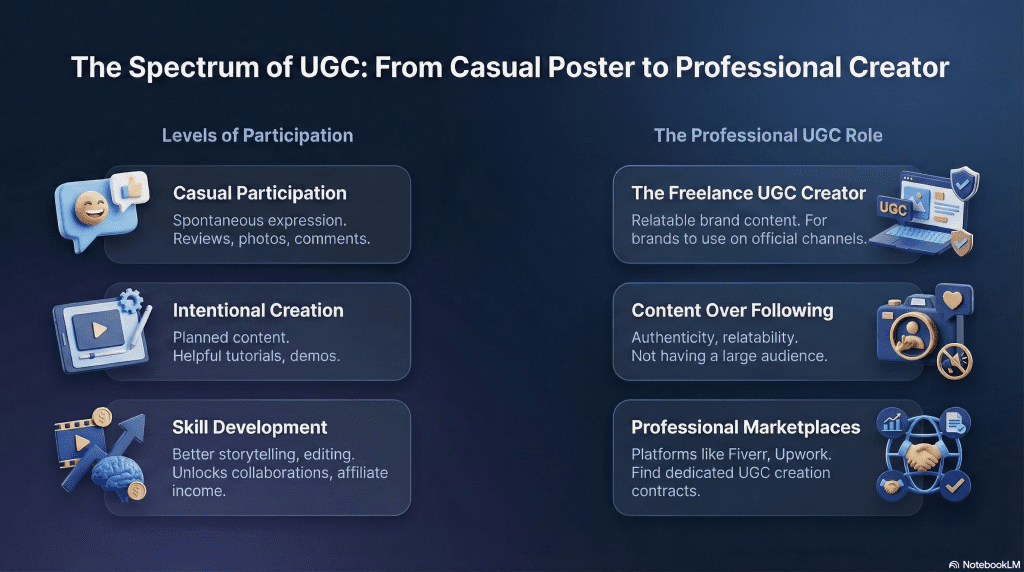
Paid creator work introduces questions that casual posting usually does not.
Creators should understand the basic distinctions before agreeing to commercial use.
The following discussion is general U.S.-focused information and is not legal advice.
Copyright Ownership and Client Rights
Creating content and giving a client permission to use it are not automatically the same as transferring ownership.
The U.S. Copyright Office’s copyright ownership overview explains that the creator of an original fixed work is generally its initial copyright owner. Important exceptions include qualifying works made for hire, and ownership can also be transferred through an agreement.
A UGC contract should therefore clarify what the client actually receives.
Possible arrangements include:
- Limited usage rights
- Exclusive rights
- Nonexclusive rights
- Copyright assignment
- Editing rights
- Raw-footage rights
- Perpetual rights
Never assume that the phrase “paid content” answers those questions.
Usage Rights
Usage rights describe where and how the brand can use the content.
Important terms can include:
- Organic social use
- Paid advertising
- Websites
- Product pages
- Landing pages
- Duration
- Territory
- Exclusivity
A six-month license for paid social advertising carries different terms from permission to post one video organically.
Those distinctions should be settled before delivery.
Creator Authorization and Paid Advertising
Sometimes a brand wants to advertise using an existing creator post rather than uploading the asset to its own account.
TikTok handles this through Spark Ads. Its Spark Ads documentation explains that advertisers can use organic posts from other creators after receiving authorization.
Creators should understand what they are authorizing, how long the permission lasts, and whether the compensation reflects that additional use.
Account access should never be treated casually.
Disclosure of Brand Relationships
A paid relationship can affect how an audience interprets a recommendation.
The FTC’s social media disclosure guidance explains that material connections can include payment, free products, discounts, employment relationships, and other benefits.
When a creator publicly endorses a product under such a relationship, the disclosure should be clear and difficult to miss.
Hiding it at the bottom of a long caption or relying on vague language can be inadequate.
Product Claims Still Need to Be Truthful
A brand brief does not remove the creator’s responsibility to communicate honestly.
Health, income, financial, business, and transformation claims deserve particular care.
The FTC’s Endorsement Guides explain that endorsers should not make claims about experiences they did not have or repeat objective claims that lack appropriate support.
If you did not experience a stated result, do not present it as your own.
Common UGC Mistakes to Avoid
Treating Organic UGC and Paid Creator Content as Identical
The two formats can look similar while involving different relationships.
Keeping the distinction clear makes discussions about disclosure, credibility, and rights much easier.
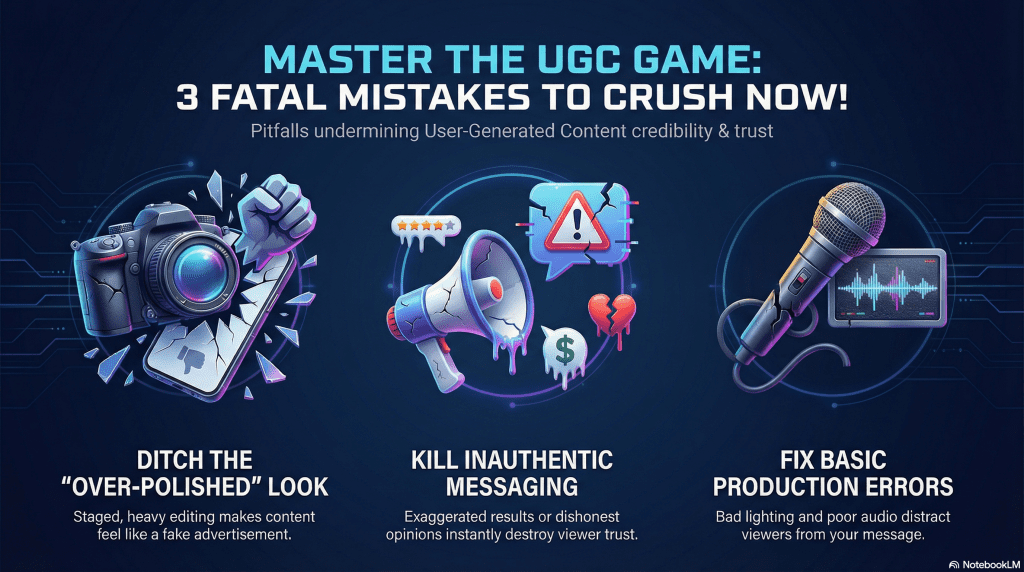
Assuming Informal Content Can Be Careless
Casual presentation does not excuse confusing audio, poor communication, inaccurate claims, missed deadlines, or unusable footage.
Natural and professional can exist at the same time.
Overproducing Every Asset
UGC-style content does not need to imitate a television commercial.
Excessive scripting, elaborate editing, and corporate language can work against the conversational format.
Production should support the idea.
Ignoring Usage Rights
Quoting a price for “one video” leaves an important question unanswered.
Where can the company use it?
For how long?
Will the footage become advertising?
Usage should be part of the agreement, not an afterthought.
Making Claims You Cannot Support
Creators sometimes receive scripts containing stronger language than they would naturally use.
Do not turn an unverified marketing statement into a personal testimonial.
Accuracy matters even when the client supplied the script.
Expecting Predictable Income Immediately
Creating a portfolio is accessible.
Building consistent client demand is a separate challenge.
Results vary with skills, outreach, portfolio quality, pricing, niche, client relationships, competition, and available opportunities.
Paid UGC is better understood as a freelance service to develop than as guaranteed income.
Conclusion
User-generated content is much broader than paid product videos.
Reviews, photos, tutorials, discussions, ratings, comments, and social posts all contribute to the information people create around products, services, communities, and experiences.
Organic UGC begins with users themselves.
Paid UGC creator work builds on the familiar style of that content while introducing a commercial relationship. Brands hire creators to produce assets they can use across social media, product pages, advertising, and other marketing channels.
Understanding that distinction makes the rest of the topic much clearer.
If the creator side interests you, start with a few products you already understand. Produce focused samples, build a small portfolio, define what you are offering, and learn how usage rights and project terms work before accepting paid assignments.
The goal is not to pretend a paid advertisement is an ordinary customer recommendation.
Strong UGC creator work combines relatable communication with professional execution and transparency about the relationship behind the content.

Frequently Asked Questions
What Does UGC Stand For?
UGC stands for user-generated content.
The term generally refers to reviews, photos, videos, comments, tutorials, posts, and other content created by users or community members rather than through traditional brand production.
What Is the Difference Between Organic UGC and Paid UGC?
Organic UGC is created voluntarily by customers, users, or community members without a commercial arrangement.
Paid UGC-style content is commissioned by a brand. The finished content may look similar to organic UGC, but the creator is working under a paid or otherwise compensated agreement.
Is UGC the Same as Influencer Marketing?
No.
Influencer marketing usually includes access to the creator’s audience and distribution. Paid UGC creator work can focus primarily on producing the content asset itself.
One creator can offer both services.
Do You Need Followers to Become a UGC Creator?
Not necessarily.
For direct client work, a brand may care more about your portfolio, communication, and ability to create usable content than the size of your audience.
Creator platforms and individual campaigns may set their own follower requirements.
Can Beginners Become UGC Creators?
Yes.
Beginners can create portfolio samples using products they already own, then use those examples to demonstrate filming, editing, product presentation, and communication skills.
A small collection of strong samples is usually more useful than a large portfolio of repetitive work.
How Much Do UGC Creators Earn?
There is no standard UGC rate or guaranteed income level.
Pricing varies based on the number of deliverables, editing, revisions, turnaround time, creator experience, usage rights, advertising permissions, exclusivity, and the complexity of the project.
The full agreement matters more than the base price of one video.
Who Owns Paid UGC Content?
Ownership depends on the agreement between the creator and the client.
A contract may give the brand limited usage rights, broader licensing rights, exclusive rights, or ownership of the finished work.
Creators should clarify ownership and usage before delivering final files.
What Are UGC Usage Rights?
Usage rights define how a brand is allowed to use the creator’s content.
They may cover organic social posts, paid advertising, websites, email, product pages, duration, territory, exclusivity, and editing permissions.
Broader usage generally creates a different commercial agreement from limited organic use.
Do Paid UGC Creators Need to Disclose Brand Relationships?
Sometimes.
When a creator publicly endorses a product and has received payment, free products, discounts, or another material benefit, disclosure requirements may apply.
Private content created only for the brand to publish can involve different obligations depending on how the content is ultimately used.
Do You Need Professional Equipment to Create UGC?
No.
A modern smartphone can be enough for many beginner projects when the content has clear audio, adequate lighting, stable framing, and clean editing.
Upgrade equipment when a specific production need justifies it.
Is Paid UGC a Good Way to Make Money?
It can be a legitimate freelance service, but income is not automatic.
Results depend on your portfolio, client acquisition, pricing, reliability, niche, communication, and ability to deliver content brands can actually use.
Treat UGC as a service to develop rather than a guaranteed income opportunity.

1 Comment
Influencer Marketing: How Attention Turns Into Influence and Sales - Ismel Guerrero. · February 22, 2026 at 1:40 pm
[…] primary difference between influencer marketing and user-generated content lies in […]