Before the internet, multilevel marketing, or MLM, depended heavily on personal contact.
Distributors invited friends into their homes, passed out printed catalogs, made phone calls, and traveled to meetings. Their businesses were often limited by where they lived and whom they knew.
The internet changed that system.
Today, an MLM distributor can recruit someone in another state, train a team through video, and sell products through an online store. A single social media post can reach more people than weeks of face-to-face meetings once could.
These tools made MLM faster and easier to scale. They also created new problems. Spam, hidden sales relationships, misleading earnings claims, and unsupported product claims can now spread to thousands of people within minutes.
To understand modern MLM, it helps to look at how the internet changed its three main activities: recruiting, training, and selling.
- The internet allowed MLM distributors to reach people far beyond their local circles.
- Video calls, recorded lessons, apps, and group chats made training easier to repeat across large teams.
- Online stores and referral links made ordering faster and more convenient for customers.
- Social media turned personal profiles into recruiting, selling, and testimonial channels.
- Automation saved time, but it also encouraged impersonal messages, spam, and weak relationship-building.
- Digital tools made misleading earnings claims, hidden financial relationships, and unsupported product claims easier to spread.
- Technology changed how MLM operates, but it did not remove the need for honest selling, real customer demand, clear disclosures, and responsible recruiting.
Disclaimer: I am an independent Affiliate. The opinions expressed here are my own and are not official statements. If you follow a link and make a purchase, I may earn a commission.
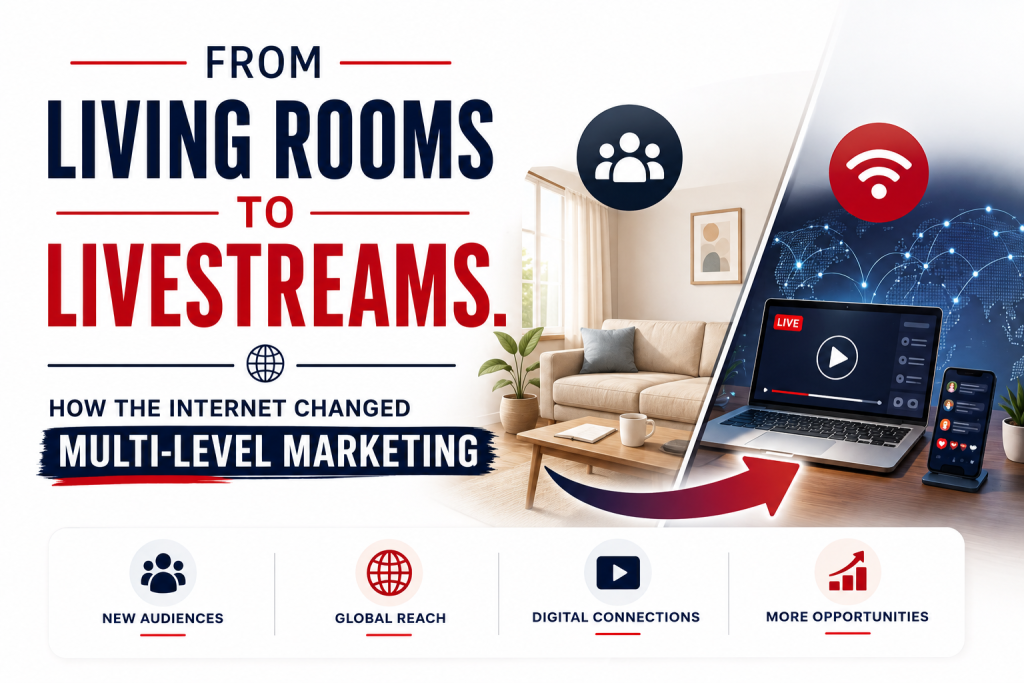
What MLM Looked Like Before the Internet
Traditional MLM grew through personal relationships.
A distributor might begin by making a list of relatives, friends, neighbors, and coworkers. They would call these people, invite them to a home presentation, or bring them to a local meeting.
Products were shown in person. Business opportunities were explained with printed charts, brochures, catalogs, and recorded audio presentations.
Training also happened face to face. New distributors attended local meetings, hotel events, conferences, and product demonstrations. They learned by watching more experienced members of their upline.
Orders often required paperwork. A distributor might collect money from customers, send the order to the company, receive the products, and deliver each item personally.
This system had limits.
A person could only attend so many meetings. A distributor could only make so many calls. Travel cost money. Printed materials became outdated. Most recruiting happened inside a limited geographic area.
The internet removed many of those limits.
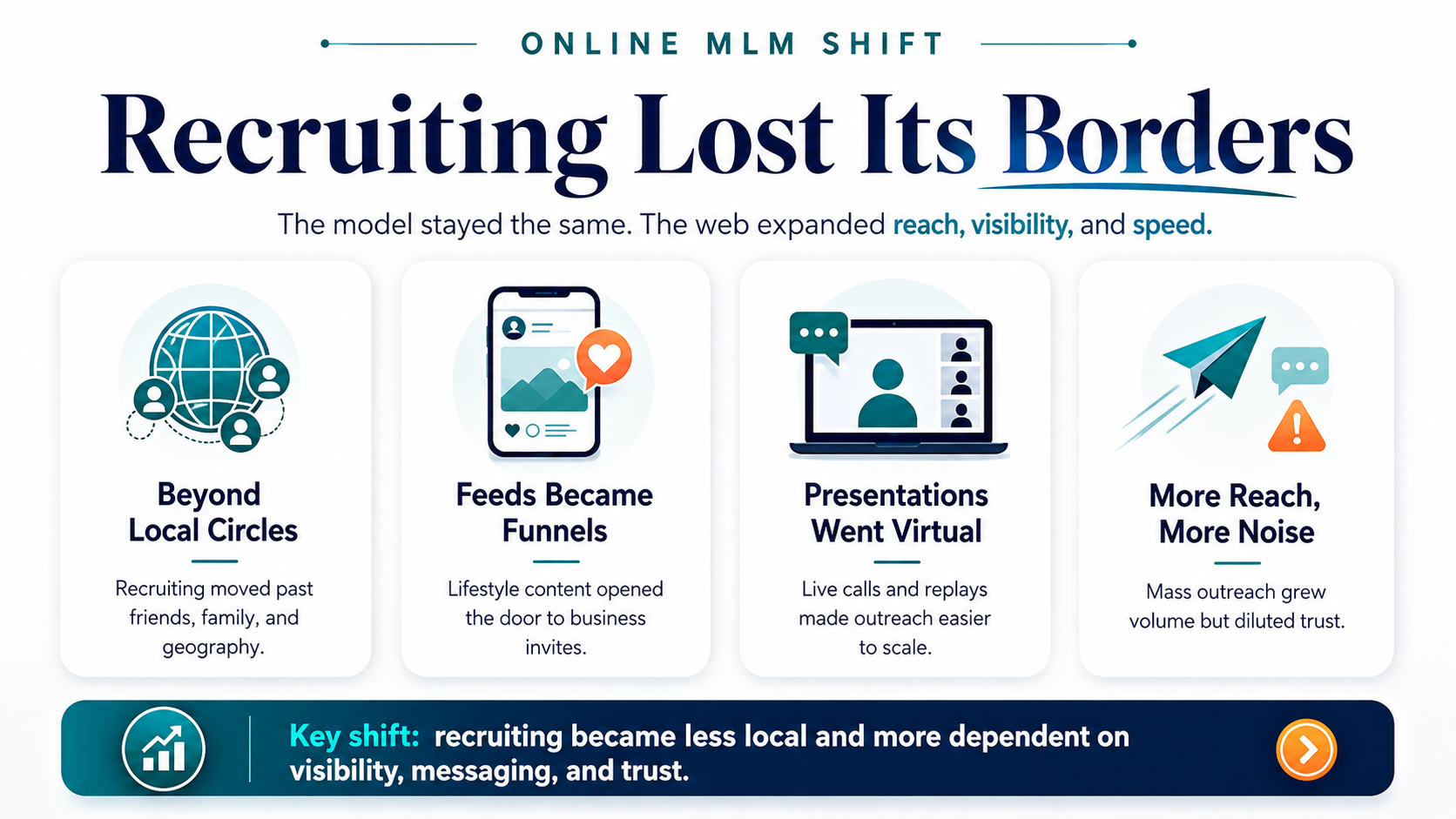
How the Internet Changed MLM Recruiting
MLM companies normally distribute products through networks of participants. Existing participants may recruit new people, who can then build downlines of their own.
The internet did not create this recruiting model. It gave the model a much larger stage.
FTC business guidance explains that an MLM is evaluated by how its structure works in practice, including whether compensation depends on genuine retail sales or is driven too heavily by recruitment.
That distinction matters even more online because recruiting can now happen at a much larger scale.
Recruiting Moved Beyond Friends and Family
Before social media, most distributors began with people they already knew.
Once those contacts had been approached, finding new prospects became harder.
Online platforms gave distributors access to much larger audiences. They could join communities, publish videos, start blogs, build email lists, run ads, and connect with people they had never met.
A distributor was no longer limited to a neighborhood or town. Someone in Florida could recruit a person in Oregon without traveling. International teams could communicate across time zones.
This increased the number of possible contacts. It also changed the skills needed to recruit.
Modern distributors may need to understand:
- Social media content
- Online conversations
- Personal branding
- Email communication
- Video presentations
- Lead collection
- Digital advertising
Recruiting became less dependent on physical location and more dependent on online visibility.
Social Media Made Recruiting Look More Personal
Social media allowed distributors to mix business messages with daily life.
A person could post family photos, personal struggles, travel pictures, product stories, and business invitations on the same account. This made recruiting feel less like a formal sales presentation.
The opportunity might appear through a post about freedom, confidence, friendship, extra income, or working from home. A distributor could create interest without immediately naming the company or explaining the full business model.
This approach can feel more natural than a cold sales pitch. It can also make advertising harder to recognize.
A follower may not realize that a friendly recommendation is also part of a business relationship. The FTC’s social media disclosure guidance says financial relationships should be disclosed clearly when viewers would not expect them.
Opportunity Meetings Became Virtual
Online video tools changed the traditional MLM meeting.
Instead of driving to someone’s home or attending a hotel event, a prospect could join a live video call. Recorded presentations could be watched at any time. Leaders could explain the opportunity to hundreds of people at once.
This made recruiting more efficient because distributors no longer had to repeat the same presentation in person every night. A company or upline leader could create one video and let the entire team use it.
Virtual meetings also reduced travel costs. Parents, remote workers, and people living far from major cities could attend from home.
Convenience created a new risk. A recorded presentation could continue spreading even when it contained old, incomplete, or misleading information.
Online Recruiting Increased Spam
The low cost of digital communication encouraged some distributors to focus on volume.
Instead of speaking carefully with a few interested people, they could send the same message to hundreds of strangers. This led to unwanted direct messages, copied scripts, mass emails, and vague invitations.
Messages such as “I have an opportunity for you” or “You would be perfect for my team” became common.
This approach is fast, but it can damage trust. People may feel that the distributor is not interested in them as individuals. They may also begin to view every friendly conversation as a possible sales attempt.
The internet expanded the recruiting pool, but it also made poor recruiting behavior more visible.
How the Internet Changed MLM Training
Training has always mattered in MLM.
New distributors need to learn how to explain products, find customers, follow company rules, and support their teams. Before the internet, that training was harder to deliver. Leaders needed to hold meetings, mail materials, or travel to different areas.
Digital tools made training almost instant.
Training Became Available at Any Time
Companies and team leaders could place lessons online.
New distributors gained access to:
- Recorded videos
- Live webinars
- Digital handbooks
- Online courses
- Product demonstrations
- Group chats
- Podcasts
- Downloadable scripts
- Frequently asked question pages
A person could watch a lesson late at night, repeat a difficult section, or review a product demonstration before speaking with a customer.
This made training more flexible. It also helped people begin learning soon after joining instead of waiting for the next local meeting.
Companies Could Repeat One System Across Large Teams
MLM leaders often talk about duplication.
The idea is that a simple process should be easy for new distributors to copy.
The internet made this easier. A leader could record one welcome video, one sales lesson, and one recruiting presentation. Every new member could receive the same material.
This helped companies create more consistent messages. Updates could also be shared quickly. A new product guide or policy change could reach thousands of distributors without being printed and mailed.
Large teams became easier to manage because leaders could communicate through email, video, apps, and private online groups.
Online Communities Added Constant Support
Group chats and social media communities gave distributors faster access to their teams.
A new member could ask a question and receive an answer within minutes. Leaders could share reminders, celebrate sales, announce promotions, and encourage members each day.
These groups often created a strong sense of belonging. Members could connect with people who had similar goals and challenges.
Constant communication could also create pressure.
Some groups encouraged members to post every day, contact a certain number of people, attend every call, or share personal details online. A person who questioned the system might feel ignored or treated as negative.
Digital support could become digital supervision.
Information Overload Became a New Problem
More training does not always mean better training.
A new distributor might receive videos from the company, advice from an upline leader, scripts from team members, social media tips from influencers, and motivational messages from several group chats.
These lessons may disagree with one another. One leader might teach relationship building. Another might encourage mass messaging. A company may forbid a certain claim while an independent distributor continues using it online.
The amount of available information can make it hard for beginners to know what is accurate, ethical, or allowed.
The same digital system that makes training easier to share can also make bad advice easier to repeat.
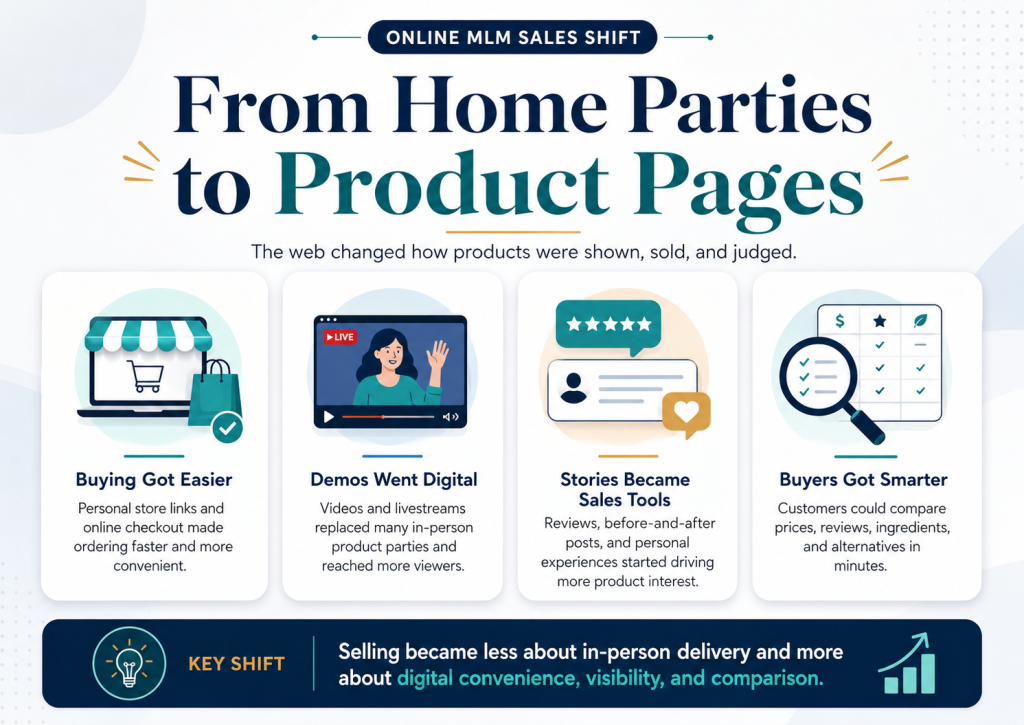
How the Internet Changed MLM Selling
The internet did more than expand recruiting.
It changed how products were presented, ordered, paid for, and delivered. In many cases, the distributor no longer needed to handle each part of the sale.
Online Stores Made Buying Easier
Many MLM companies gave distributors personal store pages or referral links.
A customer could visit the page, review products, place an order, and pay online. The company could then ship the product directly to the customer.
This reduced paperwork and made buying more convenient. Customers could shop at any hour instead of waiting for a meeting or product party.
Distributors also gained digital records of orders and customer activity. Some systems sent reminders about repeat purchases or subscription dates.
The process became faster for both sides, but the distributor’s role also changed. A seller who once explained products and delivered orders could become mainly a source of links.
Product Demonstrations Moved Online
Video gave distributors new ways to show products.
They could record makeup tutorials, cooking demonstrations, cleaning tests, clothing displays, or personal product reviews. Livestreams allowed customers to ask questions while watching.
A single demonstration could remain online and attract viewers long after it was created.
This was a major improvement over a one-time home party. It also made exaggerated claims more dangerous.
A false statement made in a living room might reach ten people. The same statement in a popular video could reach thousands.
Online sellers still need support for claims about what a product can do. A personal story does not automatically make a product claim fair, complete, or reliable.
Testimonials Became a Powerful Sales Tool
Social media is built around stories.
Distributors could share before-and-after pictures, customer reviews, lifestyle posts, and personal experiences. These stories often felt more believable than traditional company advertising because they came from ordinary people.
That trust made testimonials valuable. It also created a need for clear disclosure.
A viewer may not realize that the person recommending a product earns money from the sale. Without a clear disclosure, a friendly recommendation can become misleading.
Customers Could Compare Products More Easily
The internet gave customers more power too.
A shopper could compare prices, read independent reviews, search for complaints, study ingredients, and find competing products within minutes.
This made it harder for a distributor to depend only on enthusiasm or personal trust. The product had to compete with other choices available online.
A customer could ask:
- Is the product priced fairly?
- Can I find something similar elsewhere?
- Are the claims supported?
- What do people outside the company say?
- Is the subscription easy to cancel?
- Does the company offer a clear refund policy?
The same internet that helped distributors promote products also helped customers question them.
How Automation Changed MLM Work
Digital systems allowed many tasks to happen automatically.
A distributor could schedule social media posts, send email sequences, collect names through online forms, track customer orders, and remind people about upcoming events.
Automation saved time and helped distributors stay in contact with larger groups.
It also created problems when used without care.
An automatic message cannot always tell whether a person is interested, upset, busy, or facing a difficult situation. Poor automation can make personal relationships feel like entries in a sales database.
Repeated messages may also become spam.
The most useful automation handles simple tasks while leaving important conversations to real people. Technology can organize follow-up. It should not replace judgment, honesty, or respect.
The Main Benefits of the Internet for MLM
The internet gave MLM companies and distributors several clear advantages.
Wider Reach
Distributors could connect with people outside their towns, states, and countries.
A small local network could become a large online audience.
Lower Communication Costs
Email, group chats, and video meetings reduced the need for printing, postage, hotel rooms, and frequent travel.
Faster Training
Companies could deliver updated lessons and product information to large groups almost immediately.
Easier Ordering
Customers could buy directly through online stores.
Payments, receipts, shipping, and repeat orders could be handled digitally.
Flexible Work
Distributors could create content, answer questions, and hold meetings from home.
This flexibility made the opportunity attractive to people with jobs, children, health concerns, or travel limits.
Greater Public Visibility
Potential customers and recruits could research the company before making a decision.
Honest businesses could publish policies, product details, refund terms, and income disclosures for people to review.
The Risks Created by Digital MLM
The internet did not only expand good practices.
It also made harmful practices easier to repeat.
Misleading Earnings Claims
Social media rewards exciting stories.
Posts about large checks, free trips, luxury cars, and leaving a job often receive more attention than ordinary results. This can create a false picture of what most participants earn.
In a 2024 FTC staff review of MLM income disclosure statements, the agency analyzed 70 publicly available statements. FTC staff reported that most participants shown in those statements made $1,000 or less per year, often before expenses. In at least 17 of the MLMs reviewed, most participants made no money.
This does not mean every participant has the same result. It does show why unusual success stories should not be presented as normal.
False or Unsupported Product Claims
Health, beauty, and wellness products are common in MLM.
A distributor may be tempted to say that a product cures an illness, causes major weight loss, removes pain, or creates guaranteed results. Personal stories can make these statements sound harmless.
They are still advertising claims.
Online sellers need proper support for claims about what a product can do. Saying “this happened to me” does not automatically make a claim fair or legal.
Hidden Financial Relationships
A social media follower may think a distributor is simply recommending a favorite product.
The follower may not know that the distributor receives a commission or other benefit.
Clear disclosure helps the audience understand the relationship. Without it, a friendly recommendation can become misleading advertising.
Reputation Damage
Spam and exaggerated claims do not only hurt one distributor.
Screenshots, videos, and complaints can spread quickly and damage the reputation of an entire company or industry.
Online content can also remain searchable for years. A careless post may continue causing problems long after it is deleted from the original account.
Platform Dependence
Distributors often build their businesses on social media platforms they do not control.
An account can lose reach, face restrictions, or be removed. A platform can change its rules. Followers can disappear when an account is closed.
A business built entirely on one platform is vulnerable.
More Public Scrutiny
Online activity creates a visible record.
Customers, journalists, regulators, former distributors, and consumer groups can examine public posts and training videos. Misleading claims that once disappeared after a private meeting can now be saved and shared.
The internet made MLM easier to promote. It also made the industry easier to investigate.
What Still Matters Despite the Technology
Digital tools changed the method.
They did not change the basic test of a healthy business.
A product still needs real customers.
The price still needs to make sense.
Claims still need evidence.
Recruiting still needs honesty.
Customers still need good service.
Distributors still need to understand their costs and likely earnings.
Technology cannot turn weak demand into strong demand. It cannot make an overpriced product competitive. It cannot make a misleading claim truthful. It cannot guarantee that a distributor will earn a profit.
The FTC’s consumer guidance on multi-level marketing businesses and pyramid schemes advises people to look closely at retail sales, expenses, refund rules, earnings after costs, and whether recruiting is being emphasized more than selling products to real customers.
The strongest digital system will fail when the business beneath it is weak.
Conclusion
The internet changed nearly every part of MLM.
Recruiting moved from personal contact lists to global social networks. Training moved from hotel meetings to videos, apps, and group chats. Selling moved from paper catalogs and home parties to online stores, livestreams, and referral links.
These changes made MLM faster, cheaper, and easier to scale. They also increased the speed at which spam, false claims, and unrealistic success stories could spread.
Personal relationships became sales channels. Private training became public content. A single claim could reach thousands of people.
The internet did not make MLM automatically better or worse. It made the system more powerful.
How that power is used depends on the company and the distributor. Digital tools can support honest product sales, useful training, and clear communication. They can also magnify pressure, deception, and poor business practices.
Technology may change the way people recruit, train, and sell.
It does not replace trust, real customer demand, fair claims, and ethical behavior.
Frequently Asked Questions
How Did Social Media Change MLM Recruiting?
Social media allowed distributors to reach people outside their personal networks.
It also let them use videos, lifestyle posts, private groups, and direct messages to create interest in products and business opportunities.
Did the Internet Make MLM Easier?
The internet made communication, training, ordering, and follow-up easier.
It did not guarantee that distributors would find customers, build a stable business, or make a profit.
How Do MLM Distributors Sell Products Online?
They may use personal online stores, referral links, social media posts, livestreams, email, and digital product demonstrations.
The company often processes payment and ships the order directly to the customer.
What Are the Risks of Online MLM Recruiting?
The main risks include spam, hidden financial relationships, misleading earnings claims, pressure tactics, and recruiting messages that focus more on adding members than serving real retail customers.
Do MLM Distributors Need to Disclose That They Earn Commissions?
A financial relationship should be clearly disclosed when viewers may not expect it and when it could affect how they judge the recommendation.
The disclosure should be easy to notice and understand.
Can an MLM Operate Without Face-to-Face Meetings?
Yes. Recruiting presentations, training, product demonstrations, customer service, and ordering can all take place online.
Some companies still use in-person events to build relationships and community.
Is Every MLM a Pyramid Scheme?
No. MLM and pyramid scheme are not automatically the same thing.
Regulators examine how the compensation structure works in practice. A major warning sign is a system that rewards recruiting more than genuine retail sales to customers outside the participant network.

0 Comments