Most lead magnets do not fail because they are poorly designed.
They fail because they offer something the audience does not need enough to exchange an email address for it.
A strong lead magnet solves one clear problem, gives the reader a useful next step, and connects naturally to the offer behind it. That can be a checklist, template, calculator, quiz, webinar, report, or free trial. The format matters, but the fit matters more.
This guide breaks down 10 lead magnet examples you can adapt for your audience. You will see what each format does, why it can work, where it fits best, and how to make it specific enough to attract the right leads instead of just more subscribers.
- A strong lead magnet solves one specific problem for one specific audience.
- The best format depends on the reader’s stage, the offer, and how much trust the decision requires.
- Checklists, cheat sheets, templates, and scripts work well when the audience wants a quick win or shortcut.
- Calculators, quizzes, and interactive tools can help personalize the experience and qualify leads.
- Webinars, reports, and gated content are better suited for higher-trust offers, B2B audiences, or more complex decisions.
- A lead magnet should connect naturally to the next step in the funnel, such as a consultation, product trial, email sequence, or paid offer.
- Simple lead magnets often perform better than complex ones when the promise is clear and the value is immediate.
Disclaimer: I am an independent Affiliate. The opinions expressed here are my own and are not official statements. If you follow a link and make a purchase, I may earn a commission.
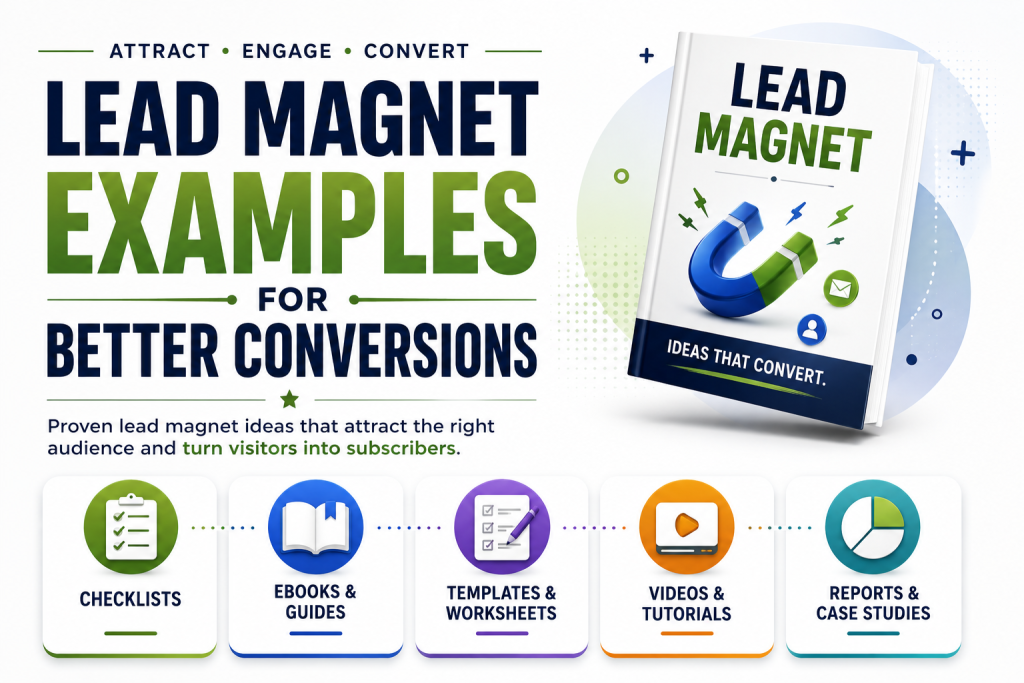
What Makes A Lead Magnet Effective?
A lead magnet is effective when the exchange feels obvious.
The visitor gives you an email address because the resource promises a useful result, shortcut, answer, or next step they want right now.
That does not mean the lead magnet needs to be long or complex. In many cases, a short checklist, template, quiz, or calculator is more useful than a long guide because it helps the reader act faster.
Strong lead magnets usually have five qualities.
Specific Audience
The lead magnet should speak to a clear person.
A general “marketing checklist” is easy to ignore. A “5-Step Local SEO Checklist For Home Service Businesses” is more specific, more useful, and easier to connect to a real need.
The more specific the audience, the easier it is to write a promise that feels relevant.
Clear Problem
A lead magnet should solve one problem, not several.
If the promise is too broad, the resource feels generic. If the problem is clear, the value is easier to understand.
For example, “Improve Your Marketing” is vague. “Plan Your Next 30 Days Of Instagram Posts” is clear.
Immediate Value
People should understand the benefit before they download.
The resource should help them save time, avoid a mistake, make a decision, complete a task, compare options, or understand what to do next.
A strong lead magnet gives value quickly.
Natural Next Step
The lead magnet should connect to the offer behind it.
A checklist can lead to a service. A calculator can lead to a consultation. A quiz can lead to a segmented email sequence. A free trial can lead to a paid plan.
The resource should not feel random. It should prepare the reader for the next logical action.
Easy Delivery
A lead magnet should be easy to access and use.
If the signup process is confusing, the file is too large, the instructions are unclear, or the resource feels like work, people may lose interest.
Simple delivery often improves completion.
10 Lead Magnet Examples You Can Adapt
Many effective lead magnets use familiar formats because the value is easy to understand. The difference comes from how specific the promise is, how well it fits the audience, and how naturally it connects to the next step in the funnel.
Use the examples below as starting points. The goal is not to copy the format exactly. The goal is to adapt the idea to one audience, one problem, and one clear outcome.
Checklists, Swipe Files, And Cheat Sheets
Checklists, swipe files, and cheat sheets work because they help people act quickly. They are short, easy to use, and focused on a practical result. They work especially well for cold traffic because the visitor does not need to commit to a long guide, webinar, or course.
Example ideas:
- 5-Step Local SEO Audit Checklist For Home Service Businesses
- 30 Email Subject Lines For Coaches Launching A New Offer
- Product Launch Checklist For First-Time Course Creators
Best for: Bloggers, agencies, freelancers, consultants, SaaS companies, creators, and small businesses.
Why it works: This format gives the reader a fast win. It reduces the thinking required to take the first step.
How to make it convert better: Keep it short. Promise one practical outcome. Make the title specific enough that the right reader immediately knows it is for them.
Templates And Scripts
Templates and scripts work because they remove the blank page. Instead of giving people advice they still have to interpret, this format gives them a structure they can copy, customize, and use. That makes it useful for audiences who already know what they need to do but want a faster way to do it.
Example ideas:
- Client Onboarding Email Template For Freelancers
- Instagram Reel Caption Templates For Product-Based Brands
- Sales Call Script For Coaches And Consultants
Best for: Freelancers, agencies, coaches, consultants, creators, ecommerce brands, and service providers.
Why it works: This format reduces effort and increases confidence. The reader does not have to build the asset from scratch.
How to make it convert better: Make the template specific to one task or situation. Add short notes showing when to use it, how to customize it, and what result it should help create.
Calculators And Interactive Tools
Calculators and interactive tools work because they give people a personalized result. Instead of asking the visitor to read a static resource, this format asks for a few inputs and returns something useful, such as an estimate, score, recommendation, or next step. That makes the experience feel more relevant.
Example ideas:
- Ad Spend ROI Calculator For Small Businesses
- Freelance Rate Calculator For Designers And Writers
- Website Conversion Scorecard For Service Providers
Best for: SaaS companies, agencies, consultants, financial educators, business coaches, and service providers.
Why it works: This format creates engagement and helps qualify leads. The answers people provide can also help you segment follow-up emails or recommend the next offer.
How to make it convert better: Keep the inputs simple. Show the result quickly. Then connect the result to a clear next step, such as downloading a report, booking a call, or starting a trial.
Resource Lists And Planners
Resource lists and planners work because they save people time. Instead of asking the reader to research, organize, or plan everything alone, this format gives them a curated starting point they can use right away.
Example ideas:
- 50 Free Stock Photo Sites For Bloggers And Designers
- 90-Day Marketing Planner For Small Business Owners
- SEO Content Calendar Template For Affiliate Bloggers
Best for: Creators, consultants, educators, marketers, bloggers, agencies, and small business owners.
Why it works: This format reduces research and planning time. It also positions you as a helpful guide because you have already organized the options or next steps.
How to make it convert better: Keep the list current and easy to scan. Group resources by use case, priority, or difficulty so the reader knows where to start.
Guides, Workbooks, And Printables
Guides, workbooks, and printables work because they help people move from learning to doing. They give the reader structure, prompts, or steps they can follow. This makes them useful when the topic needs more explanation than a checklist but still needs to feel practical.
Example ideas:
- Career Change Workbook For Mid-Career Professionals
- LinkedIn Lead Generation Guide For B2B Consultants
- Weekly Marketing Execution Planner For Solopreneurs
Best for: Coaches, consultants, educators, creators, service providers, and personal brands.
Why it works: This format creates a sense of progress. The reader is not just collecting information. They are working through a process.
How to make it convert better: Focus on one clear transformation. Add prompts, examples, or short exercises that help the reader take action instead of just reading.
Educational Videos And Email Courses
Educational videos and email courses work because they build trust over time. Instead of delivering one static download, this format gives the audience a short learning experience. That can make it useful when the reader needs guidance, repetition, or a clearer path before they are ready for the next step.
Example ideas:
- 5-Day Cold Email Course For Freelancers
- 3-Part Video Training On Building A Shopify Store
- 7-Day Content Planning Email Course For Creators
Best for: Educators, SaaS companies, coaches, consultants, creators, and service providers.
Why it works: This format keeps the audience engaged beyond the first signup. Each lesson creates another touchpoint and another chance to build credibility.
How to make it convert better: Keep each lesson short and focused on one action. End with a clear next step so the reader knows what to do before the next lesson arrives.
Webinars, Events, And Community Offers
Webinars, events, and community offers work because they create a direct connection. Instead of only giving the reader a downloadable resource, this format gives them access to a live session, expert discussion, group experience, or private space where they can learn and interact. That makes it useful when trust matters before the sale.
Example ideas:
- Live Workshop On Scaling A Service Business Without Hiring
- Virtual Summit On AI Tools For Digital Marketers
- Private Community For First-Time Founders And Creators
Best for: Coaches, consultants, educators, SaaS companies, service providers, creators, and community-led brands.
Why it works: This format gives prospects more time with your ideas, your process, and your point of view. That can make the next step feel more natural.
How to make it convert better: Make the promise specific before people register. Tell them what they will learn, who it is for, and what they should be able to do after attending.
Free Trials And Special Offers
Free trials and special offers work because they give people access instead of information. This format is useful when the audience is already close to a decision and wants to experience the product, service, or offer before committing.
Example ideas:
- 14-Day Free Trial For A Project Management Tool
- Free 30-Minute Strategy Call For Service Business Owners
- Limited Sample Lesson From A Paid Online Course
Best for: SaaS companies, coaches, consultants, service providers, course creators, ecommerce brands, and membership businesses.
Why it works: This format attracts higher-intent leads. People who sign up for a trial, call, or sample are often more interested than people who only download a general resource.
How to make it convert better: Make the terms clear. Explain what is included, what happens next, and how the person can continue if the offer is a good fit.
Gated Content And Industry Reports
Gated content and industry reports work because they offer deeper insight in exchange for contact information. This format is useful when the audience wants research, analysis, benchmarks, trends, or expert guidance before making a decision. It often works best for B2B, SaaS, agencies, consultants, and technical industries where trust and authority matter.
Example ideas:
- Annual Digital Marketing Trends Report For Agency Clients
- Advanced Facebook Ads Guide For Paid Media Teams
- Cybersecurity Risk Briefing For Small Business Owners
Best for: B2B companies, SaaS brands, consultants, agencies, financial services, IT providers, and research-driven businesses.
Why it works: This format can attract more serious leads because the resource feels more substantial than a basic checklist or template. It also helps position your brand as a knowledgeable source.
How to make it convert better: Make the report genuinely useful. Include current insights, clear takeaways, examples, or data your audience cannot easily find elsewhere. Avoid gating thin content that does not deliver on the promise.
Quizzes, Challenges, And Interactive Funnels
Quizzes, challenges, and interactive funnels work because they make the lead magnet feel personal. Instead of giving everyone the same resource, this format asks the visitor to participate. Their answers, progress, or results can help guide them toward a more relevant next step.
Example ideas:
- What Type Of Entrepreneur Are You? Quiz For Coaches
- 7-Day Digital Product Launch Challenge For Creators
- Website Sales Readiness Assessment For Service Businesses
Best for: Coaches, consultants, creators, educators, SaaS companies, agencies, and personal brands.
Why it works: This format creates engagement before the opt-in or immediately after it. It can also help you segment leads based on their answers, goals, or readiness level.
How to make it convert better: Keep the experience short and clear. For quizzes, five to seven questions is usually enough. For challenges, give one small action each day. Then send follow-up content that matches the person’s result or progress.
Tools To Build These Lead Magnets
You do not need expensive software to build a useful lead magnet.
The right tool depends on the format. A checklist may only need a document editor. A quiz may need a form builder. A webinar may need video hosting or a live event platform. A calculator may need a spreadsheet, form, or simple interactive tool.
Start with the simplest tool that can deliver the resource clearly.
| Lead Magnet Type | Simple Tool Option | More Advanced Option |
|---|---|---|
| Checklists, Cheat Sheets, And Swipe Files | Google Docs, Canva, Notion | Canva Pro, Figma, Adobe Express |
| Templates And Scripts | Google Docs, Google Sheets, Notion | Airtable, Typeform, paid template platforms |
| Calculators And Interactive Tools | Google Sheets, Tally, Fillout | Typeform, ScoreApp, Outgrow |
| Resource Lists And Planners | Google Docs, Google Sheets, Canva | Notion, Airtable, Coda |
| Guides, Workbooks, And Printables | Canva, Google Docs, Adobe Express | Figma, InDesign, paid workbook templates |
| Educational Videos And Email Courses | Loom, YouTube Unlisted, Mailchimp | ConvertKit, Teachable, Podia, Vimeo |
| Webinars, Events, And Communities | Zoom, Google Meet, Discord | WebinarJam, Circle, Kajabi, GoHighLevel |
| Free Trials And Special Offers | Landing page, checkout page, booking form | ClickFunnels, Leadpages, Systeme.io, CRM automation |
| Gated Content And Reports | Google Drive, PDF download, email form | HubSpot, ConvertKit, ActiveCampaign |
| Quizzes, Challenges, And Interactive Funnels | Tally, Google Forms, email sequence | Typeform, ScoreApp, Interact, Outgrow |
The tool should not become the project.
A simple PDF, Google Sheet, Notion page, or email sequence is enough if the promise is clear and the resource helps the reader take action.
Upgrade only when the lead magnet proves useful and the workflow needs better design, automation, segmentation, or delivery.
Common Mistakes When Creating Lead Magnets
A lead magnet can have a strong format and still fail if the execution is weak.
Most problems come from unclear promises, broad audiences, poor delivery, or a weak connection to the next step in the funnel.
Making The Topic Too Broad
Broad lead magnets are easy to ignore.
A resource called “Marketing Tips” does not tell the reader what problem it solves or why they should care now.
A stronger lead magnet speaks to a specific audience and outcome.
For example, “5-Step Local SEO Checklist For Home Service Businesses” is clearer than “SEO Checklist” because the reader knows who it is for and what it helps with.
Offering Information Without A Clear Outcome
People do not usually want more information.
They want a result, shortcut, answer, decision, or next step.
A lead magnet should make the outcome obvious before someone signs up. If the resource sounds like general education, the visitor may not feel enough reason to exchange their email address.
Instead of promising “A Guide To Better Email Marketing,” promise something more concrete, such as “Write Your First 5-Email Welcome Sequence.”
Creating Something Too Long
A lead magnet does not need to be large to be valuable.
In many cases, shorter is better. A two-page checklist, one-page template, or five-question quiz can be more useful than a long ebook that feels like homework.
The goal is not to impress people with volume.
The goal is to help them make progress quickly.
Attracting The Wrong Leads
A lead magnet should attract people who may reasonably want your next offer.
If the free resource is too disconnected from your product or service, you may grow your list but attract subscribers who never convert.
For example, a business coach offering a free social media caption pack may attract people who want content shortcuts, not necessarily people who want business coaching.
The lead magnet should create a bridge to the paid offer.
Hiding The Next Step
A lead magnet should not end abruptly.
After the person downloads the resource, completes the quiz, attends the webinar, or finishes the email course, they should know what to do next.
That next step might be reading a related guide, booking a consultation, starting a trial, watching a demo, joining a waitlist, or receiving a follow-up sequence.
The transition should feel helpful, not forced.
Using A Weak Landing Page
Even a good lead magnet needs a clear landing page.
The page should explain what the resource is, who it is for, what problem it solves, and what the person will receive after signing up.
Avoid vague copy, cluttered layouts, excessive form fields, and unclear calls to action.
The landing page should make the exchange feel simple.
Forgetting To Deliver Quickly
Once someone signs up, delivery should be immediate and easy.
If the confirmation email is delayed, the download link is confusing, or the resource is hard to access, trust drops before the relationship starts.
Make the delivery simple.
Send the resource right away, include clear instructions, and make sure the file, link, or access page works on desktop and mobile.
Letting The Lead Magnet Go Outdated
Some lead magnets need regular updates.
Resource lists, reports, tool guides, templates, calculators, and industry-specific examples can lose value when links break, data changes, tools update, or tactics stop working.
Review important lead magnets at least once or twice a year.
A stale lead magnet can hurt trust, especially if it promises current advice.
Asking For Too Much Too Soon
Long forms can reduce signups.
For most lead magnets, an email address is enough. Asking for a phone number, company size, budget, website, and job title may make sense for high-intent B2B offers, but it can feel excessive for a simple checklist or template.
Match the form to the value of the offer.
The more information you ask for, the more valuable the lead magnet needs to feel.
Not Following Up
The opt-in is only the beginning.
A lead magnet should start a relationship, not end it. If there is no follow-up, the subscriber may forget why they signed up or lose interest before seeing the next offer.
Send a simple follow-up sequence that helps the person use the resource, gives additional context, and introduces the next logical step.
Conclusion
A strong lead magnet does not need to be complicated.
It needs to solve one clear problem for one clear audience and make the next step easier to take.
The examples in this guide show that many formats can work. A checklist can help someone act quickly. A template can remove the blank page. A calculator can personalize the result. A webinar can build trust. A quiz can segment the audience. A free trial can attract people who are closer to a decision.
The format matters, but the promise matters more.
Start with the problem your audience already wants to solve. Choose the simplest format that can help them make progress. Then connect the lead magnet to a natural follow-up, such as a related guide, email sequence, consultation, product trial, or paid offer.
The best lead magnets are useful before they are persuasive.
They earn the email address by helping first.
Frequently Asked Questions
What Is A Good Example Of A Lead Magnet?
A good example of a lead magnet is a resource that solves one specific problem quickly.
For example, a “5-Step Local SEO Checklist For Home Service Businesses” is stronger than a general SEO guide because it speaks to a clear audience and gives them a practical next step.
What Type Of Lead Magnet Converts Best?
The best-converting lead magnet depends on the audience and offer.
Checklists, templates, and cheat sheets often work well for quick wins. Quizzes, calculators, and assessments can work well when personalization matters. Webinars, reports, and free trials may work better when the buying decision requires more trust.
How Do I Choose The Right Lead Magnet?
Start with the problem your audience already wants to solve.
Then choose the simplest format that helps them make progress. If they need a shortcut, use a template. If they need a decision, use a checklist or comparison guide. If they need a personalized answer, use a quiz or calculator.
What Should A Lead Magnet Include?
A lead magnet should include a clear promise, useful content, simple instructions, and a natural next step.
It does not need to include everything you know about the topic. It should help the reader solve one problem or move one step closer to a result.
How Long Should A Lead Magnet Be?
A lead magnet should be as short as possible while still delivering value.
A one-page checklist, simple template, short email course, or five-question quiz can work better than a long ebook if it helps the reader act faster.
Should A Lead Magnet Be Free?
Yes, most lead magnets are free because their purpose is to start a relationship and grow your email list.
The value comes later through follow-up, trust building, product recommendations, consultations, trials, or paid offers.
Can I Have More Than One Lead Magnet?
Yes. Many businesses use more than one lead magnet because different visitors have different problems, goals, and stages of awareness.
For example, a beginner may want a checklist, while a more serious prospect may want a calculator, webinar, or industry report.
Where Should I Put My Lead Magnet?
Place your lead magnet where it matches the reader’s intent.
Useful placements include blog posts, landing pages, homepage sections, exit-intent popups, social media bios, paid ads, YouTube descriptions, email signatures, and resource pages.
What Tools Can I Use To Create A Lead Magnet?
You can create simple lead magnets with tools like Google Docs, Google Sheets, Canva, Notion, Tally, Typeform, Loom, Mailchimp, ConvertKit, or Systeme.io.
The best tool depends on the format. A checklist may only need a PDF. A quiz may need a form builder. An email course needs an email platform.
How Do I Know If My Lead Magnet Is Working?
Track whether people are signing up and whether those subscribers take the next step.
Useful signals include opt-in rate, email open rate, email click rate, lead quality, consultation bookings, trial signups, purchases, and replies.
Why Is My Lead Magnet Not Converting?
A lead magnet may not convert if the promise is too broad, the audience is unclear, the landing page is weak, the form asks for too much, or the resource does not connect to a problem people care about.
Start by tightening the promise and making the outcome more specific.
How Often Should I Update A Lead Magnet?
Update lead magnets at least once or twice a year, especially if they include tools, data, links, screenshots, examples, trends, or platform-specific instructions.
Outdated resources can reduce trust and make your follow-up feel less credible.

2 Comments
Lead Magnets 101: What They Are & How to Use Them - Ismel Guerrero. · March 30, 2025 at 9:54 am
[…] Next Step: Want help choosing a high-converting lead magnet idea?Check out our guide on Lead Magnet Ideas for Every Niche and start building your list with […]
Lead Magnet Ideas Your Audience Can’t Ignore - Ismel Guerrero. · May 19, 2025 at 8:45 pm
[…] proven lead magnet examples working across industries and formats to see how these ideas translate into real-world […]