Introduction
User-generated content (UGC) is one of the most common types of content on the internet today, yet many people don’t clearly understand what it actually means.
Every time someone posts a video, writes a review, shares a tutorial, or comments on a product, they are creating UGC. This type of content matters because it influences opinions, trends, and buying decisions far more than traditional advertising.
As social platforms continue to reward authenticity over polish, UGC has become central to how content spreads and creates value online.
This guide explains exactly what UGC is, how it works, and why it has become so important.
Key Takeaways
- User-generated content (UGC) is content made by real people, and it drives opinions and buying decisions more than polished brand messaging in many categories.
- UGC wins because it feels familiar and credible. It mirrors how people actually communicate online, which lowers skepticism and increases engagement.
- Brands value UGC because it performs well in native environments like feeds, ads, and product pages, where authenticity often beats production value.
- UGC is a content type, not a job, but it has created a paid role. UGC creators are hired to produce content brands can publish, not to promote to their own followers.
- You do not need followers to start. You need clear communication, simple product demonstration, and content built around one focused message.
- The difference between casual UGC and paid creator work is professionalism. Usage rights, contracts, deadlines, and basic quality standards protect your value.
- Long-term success comes from treating UGC like a service. Specialize, build repeat clients, raise rates with clarity, and improve through consistent practice.
Disclaimer: I am an independent Affiliate. The opinions expressed here are my own and are not official statements. If you follow a link and make a purchase, I may earn a commission.
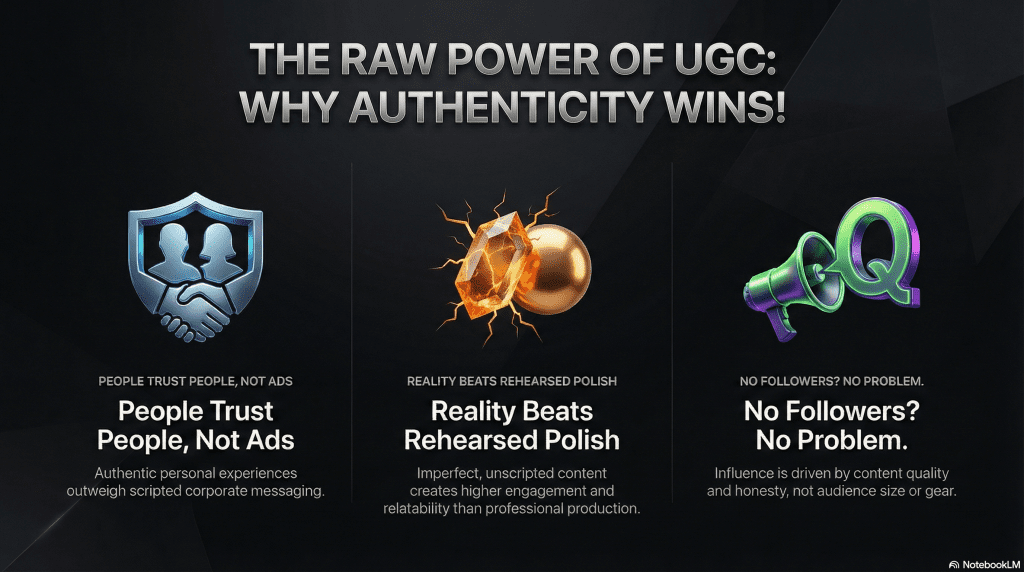
What Is User-Generated Content (UGC)?
User-generated content (UGC) is any content created by people rather than brands or companies. It includes videos, photos, reviews, comments, posts, tutorials, and other media shared online based on personal experience or opinion.
What defines UGC is who creates it, not where it appears or how polished it looks. If the content comes from a real person speaking in their own voice, it qualifies as UGC. This is true whether the content is shared casually or created with intention.
UGC is different from brand-created content because it is typically less scripted and less tightly controlled than company-produced content. It reflects how people naturally communicate, which is why it often feels more relatable and can build trust with audiences.
Today, UGC is a major force behind how information spreads online. It shapes trends, influences decisions, and plays a central role across social media, communities, and digital platforms.
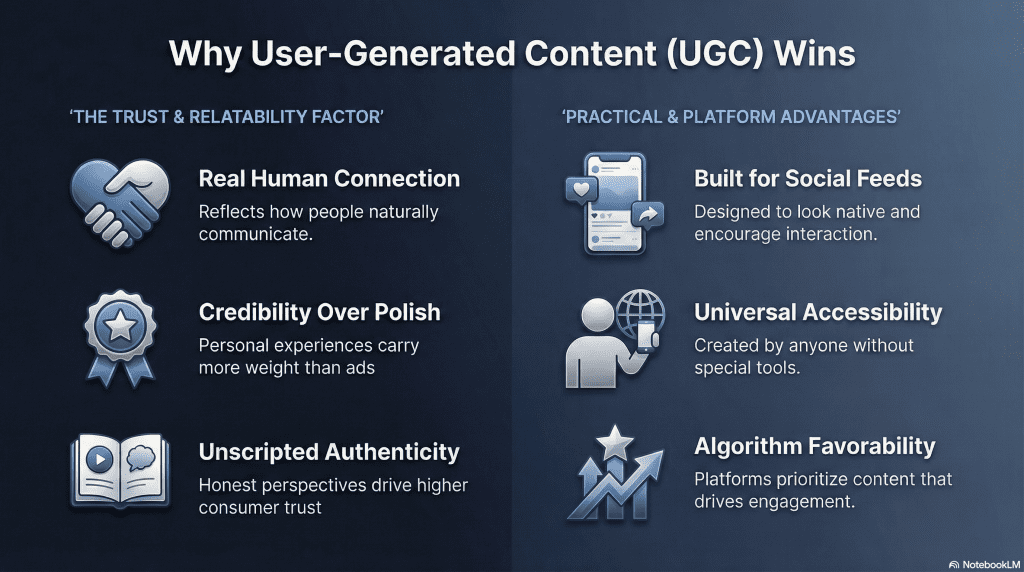
Why Brands Value User-Generated Content
User-generated content performs well because it mirrors how people naturally communicate online. Instead of polished persuasion, UGC feels personal and familiar. That familiarity lowers resistance and increases engagement.
Credibility is another factor. When content appears to come from real individuals sharing experience, it carries more weight than traditional advertising. Reviews, demonstrations, and casual videos influence decisions because they feel grounded in real use.
Platforms also reward content that feels native. Social feeds and recommendation systems prioritize material that blends into user behavior. UGC aligns with that environment, which is why brands frequently use it in ads and organic placements.
Finally, UGC is efficient. It allows brands to produce relatable content at scale without relying solely on studio production. For creators, this demand creates consistent opportunity.

What a UGC Creator Actually Does
A UGC creator produces content that feels like it came from a real customer. Brands use this content across their marketing, including ads, product pages, emails, and social channels.
The core job is content creation, not distribution. You are not paid for your audience. You are paid to deliver assets that a brand can publish through its own accounts and campaigns.
That is what separates a UGC creator from an influencer.
UGC creator vs influencer
An influencer earns money by promoting products to their followers. A UGC creator earns money by creating content that a brand uses in its marketing, regardless of follower count.
You do not need:
- A large following
- High engagement rates
- A personal brand identity built for reach
You do need:
- Clear, natural communication
- Basic filming and editing ability
- Comfort presenting a product on camera
Brands value UGC when it feels believable and easy to understand. If the content communicates benefits clearly and holds attention, it becomes useful creative.
Where UGC creator content gets used
UGC creators commonly deliver content for:
- Paid social ads
- TikTok and Instagram Reels style placements
- Product detail pages
- Email campaigns
- Landing pages
- Shoppable feeds and galleries
A lot of modern advertising is designed to blend into the feed. UGC fits that environment because it feels like real usage, not a studio commercial.
What brands typically expect from a UGC creator
Most brands want content that is simple, direct, and easy to repurpose. Common expectations include:
- Short-form vertical videos
- Clear product demonstration
- Natural, conversational delivery
- A strong opening hook early in the video
- A simple call to action that matches the message
You are not performing a character. You are presenting the product like a real person who understands it.
The skill that makes UGC work
UGC succeeds when it matches how people actually watch content. Strong UGC usually follows a clear structure:
- A relatable moment or problem
- Quick product introduction
- Demonstration or proof
- One clear benefit
- Simple next step
When you consistently deliver that structure with a natural tone, you move from “making videos” to producing marketing assets. That is what makes you valuable and repeat-hire worthy.
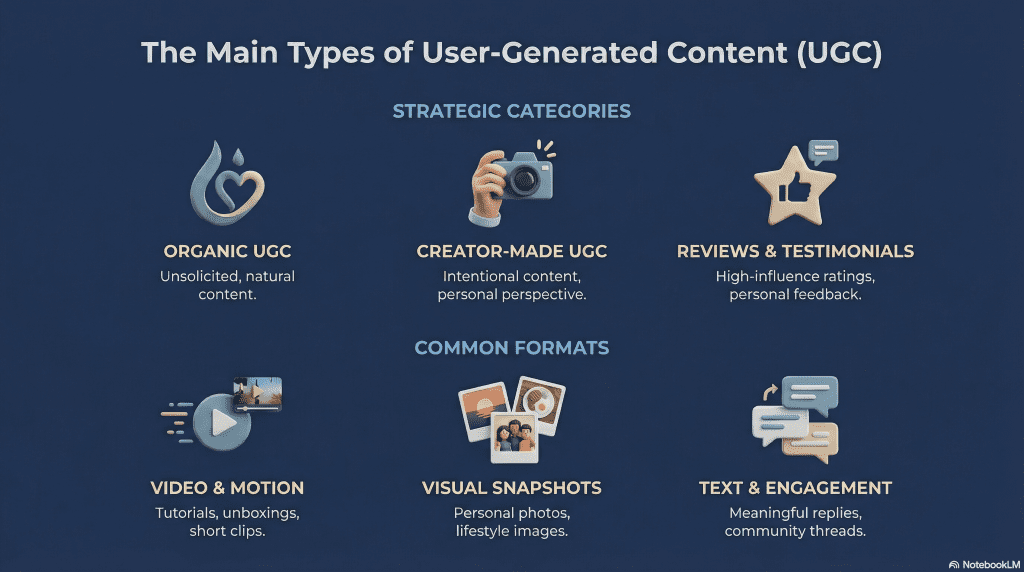
Types of User-Generated Content
User-generated content comes in many forms, but all of it shares one defining trait: it is created by individuals rather than companies. Understanding the different types helps you recognize where UGC appears and how it influences decisions online.
Below are the primary categories of user-generated content.
1. Organic UGC
Organic UGC is created naturally, without payment or direct prompting. It happens when someone genuinely wants to share their experience.
Examples include:
- A customer tagging a brand in a post
- A spontaneous product recommendation
- A forum discussion about a recent purchase
Because it is unsolicited, organic UGC often carries the highest level of perceived authenticity. People view it as honest and unbiased, which makes it powerful in shaping opinions.
2. Incentivized UGC
Incentivized UGC is created in exchange for something of value. The creator receives a benefit, but the content still reflects a personal perspective.
This may include:
- Free products in exchange for feedback
- Discount codes for posting content
- Contest entries tied to hashtags
- Affiliate-based commissions
While compensation is involved, transparency plays a key role in maintaining credibility.
3. Co-Created Content
Co-created UGC results from collaboration between a brand and an individual. The brand may provide guidelines, themes, or messaging direction, while the creator produces the content in their own voice.
This type is common in:
- Sponsored social media videos
- Collaborative campaigns
- Brand storytelling projects
It balances structure with authenticity, allowing brands to maintain messaging while keeping the content relatable.
4. Employee-Generated Content (EGC)
Employee-generated content is created by individuals who work inside the company. Instead of corporate messaging, the content highlights real people behind the brand.
Examples include:
- Behind-the-scenes workplace clips
- Founder updates
- Day-in-the-life videos
EGC humanizes organizations and helps audiences connect with the people who build or support the product.
5. Product Reviews
Product reviews are one of the most influential forms of UGC. They provide direct feedback based on personal experience.
Reviews can appear as:
- Star ratings
- Written testimonials
- Detailed video breakdowns
Because reviews address specific pros and cons, they reduce uncertainty and heavily influence buying decisions.
6. Testimonials and Transformation Stories
Testimonials focus on results rather than simple opinions. They show what changed after using a product or service.
This type often includes:
- Before-and-after comparisons
- Personal success stories
- Specific outcome statements
Transformation-based UGC builds credibility by demonstrating measurable impact.
7. Unboxing and First-Impression Content
Unboxing content captures the moment someone first interacts with a product. It focuses on the initial experience rather than long-term results.
This type often includes:
- Opening the packaging
- Showing product presentation
- Sharing first reactions
- Highlighting immediate impressions
Because it documents the first encounter, unboxing content creates anticipation and shapes early perception.
8. Tutorials and How-To Content
Tutorial UGC demonstrates how a product works in practical situations. It focuses on functionality and usability.
Examples include:
- Step-by-step demonstrations
- Setup walkthroughs
- Application techniques
By removing confusion and answering common questions, tutorial content increases buyer confidence and reduces hesitation.
9. Visual Lifestyle Content
Visual lifestyle UGC shows products integrated into everyday life. Instead of explaining benefits verbally, it demonstrates them visually.
This may include:
- Photos of a product in use
- Casual selfie-style videos
- Real-life environment shots
Lifestyle content helps viewers imagine themselves using the product, which strengthens emotional connection.
10. Community-Driven Content
Community-driven UGC emerges from conversations among users rather than direct brand involvement.
Examples include:
- Comment threads
- Forum discussions
- Hashtag challenges
- Community events
This type scales social proof because it reflects collective engagement rather than individual endorsement.
How UGC Can Appear Online
User-generated content can appear in multiple formats depending on the platform:
- Video, such as short-form clips or testimonials
- Images, including photos and visual posts
- Text, such as reviews, captions, or forum discussions
- Audio, including podcast mentions or voice recordings
Different platforms emphasize different formats, but the underlying principle remains the same: the content originates from individuals.
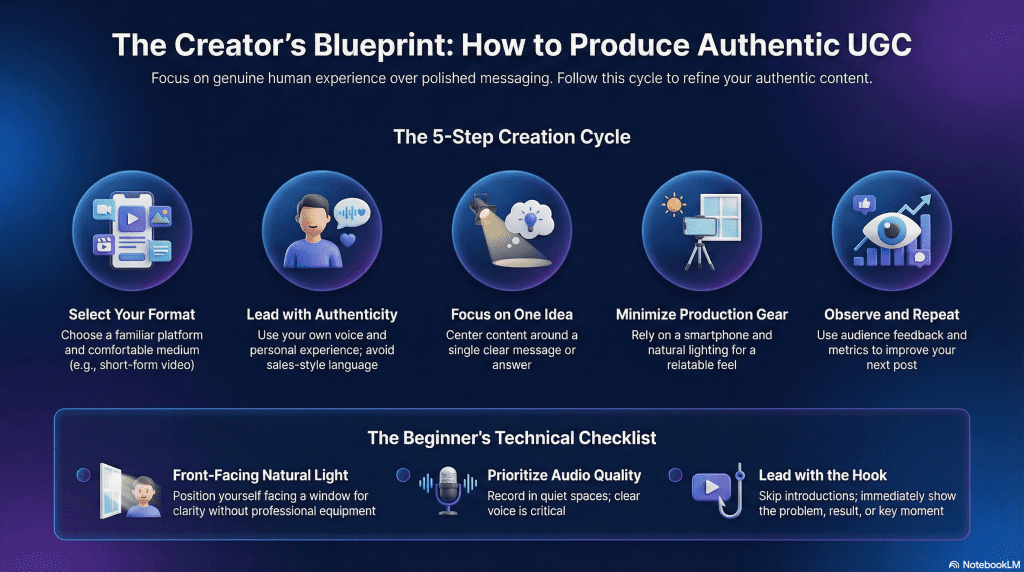
How to Start as a UGC Creator With No Experience
Becoming a UGC creator is less about waiting for permission and more about practicing structured communication. You build skill by creating, observing, and refining.
The process is simple, but each step builds credibility and clarity.
Step 1: Choose a Starting Niche
Selecting a niche gives direction to your portfolio and messaging. While you are not locked into one category permanently, starting focused makes your content stronger.
Common beginner niches include:
- Skincare and beauty
- Fitness and wellness
- Technology and gadgets
- Home and lifestyle products
- Food and beverages
Choose a niche you already understand or actively use. Familiarity improves delivery, confidence, and authenticity on camera.
A focused niche also helps brands quickly see where you fit.
Step 2: Choose One Platform and One Core Format
Start with a platform you already understand. Short-form vertical video is currently the most in-demand format, but photos, written reviews, and simple demonstrations also qualify as UGC.
Instead of trying to master everything at once, narrow your focus to:
- One primary platform
- One consistent content style
- One repeatable structure
Reducing variables allows you to improve faster and build confidence without overwhelm.
Step 3: Create From a Real User Perspective
Effective UGC reflects genuine experience. Even when creating samples, frame the content as if you are a real customer.
You might:
- Demonstrate how you use a product
- Explain what problem it solves
- Share what stood out to you
- Compare it to alternatives
Avoid scripted language. Clear, natural communication is more persuasive than rehearsed delivery.
Step 4: Focus on One Clear Idea Per Video
Strong UGC communicates one idea at a time.
For example:
- Highlight a single feature
- Address one objection
- Show one specific result
Trying to explain everything reduces clarity. Focus increases impact.
Step 5: Keep Production Clean and Natural
You do not need advanced equipment. Basic tools are sufficient when used correctly.
Prioritize:
- Front-facing lighting
- Clear audio
- Stable framing
- Simple backgrounds
High production value does not replace clarity.
Step 6: Build a Small Portfolio as You Practice
Every sample you create should serve two purposes: improving skill and building proof.
Aim to produce 3 to 6 strong examples across different styles such as:
- Review
- Problem-solution
- Tutorial
- Testimonial
Organize them in a clean, shareable format. This becomes the foundation of your outreach.
Step 7: Publish, Observe, and Refine
Whether you publish publicly or keep content private, treat it as test material.
Pay attention to:
- Viewer retention
- Clarity of explanation
- Strength of your hook
- Audience questions
Improvement comes through iteration. Consistency builds both skill and confidence.

The Beginner UGC Quality Checklist
Before recording or sending content to a brand, review these fundamentals. Small details significantly impact how professional and effective your content feels.
Lighting
Position your primary light source in front of you. Natural window light works well when facing it directly.
Avoid:
- Backlighting
- Harsh overhead shadows
- Uneven lighting across your face
Clear visibility improves credibility immediately.
Audio Clarity
Poor audio ruins strong visuals.
Prioritize:
- Recording in a quiet environment
- Minimizing background noise such as fans or traffic
- Speaking at a steady, natural pace
- Using a simple clip-on microphone when possible
Your voice should sound clear, balanced, and easy to understand.
Framing and Stability
Keep the camera steady and at eye level.
Ensure:
- Your face is centered or intentionally framed
- The product is clearly visible
- The background is simple and uncluttered
Visual stability increases trust.
The Hook (First 3 Seconds)
The opening determines whether someone keeps watching.
Start with:
- A relatable problem
- A strong result
- A clear benefit
- A direct question
Avoid long introductions or unnecessary greetings.
One Clear Message
Each piece of UGC should communicate one focused idea.
Before recording, ask:
- What is the single takeaway?
- What action should the viewer consider?
Clarity improves retention and conversion.
Natural Delivery
Speak as you would in a real conversation.
Avoid:
- Over-rehearsed scripts
- Corporate language
- Exaggerated enthusiasm
Authenticity builds connection.
Clear Call to Action
End with direction.
This may include:
- “Check it out.”
- “I would recommend trying it.”
- “Here’s where you can learn more.”
A soft, natural call to action completes the structure.
Technical Check Before Sending
Before sharing content with a brand, confirm:
- No background distractions
- No editing glitches
- Proper vertical format
- Correct pronunciation of brand name
- No copyrighted background music
These small checks protect your professionalism.
Why This Checklist Matters
UGC works because it feels real, but real does not mean careless. Authentic content still requires structure and clarity.
When you consistently apply these fundamentals, your content stands out not because it looks polished, but because it communicates effectively.
Where You See UGC in the Real World
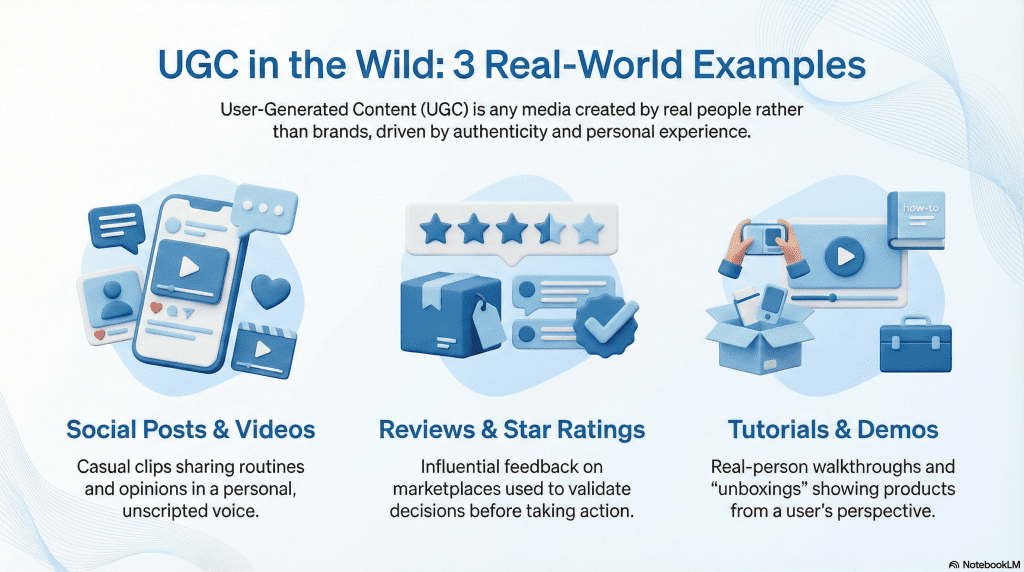
User-generated content is not theoretical. It already surrounds you online. Recognizing it helps you understand the opportunities available as a creator.
Once you know what to look for, you will start seeing paid UGC everywhere.
Social Media Ads That Look Like Regular Posts
Many short-form videos on TikTok, Instagram, and YouTube Shorts are not posted by influencers. They are UGC-style ads created by everyday creators.
These videos often:
- Start with a relatable problem
- Use conversational language
- Show real product use
- Feel native to the platform
If it looks like a normal post but is labeled “Sponsored” or appears as an ad, it is often UGC.
This is one of the largest paid opportunities for creators today.
Product Pages Featuring Real Customer Content
Scroll through modern e-commerce websites and you will often see:
- Customer photos
- Video testimonials
- Lifestyle images from real users
- Written reviews with detailed feedback
Brands use this content to build trust before purchase. Much of it is now sourced intentionally from UGC creators.
Reviews and Ratings on Marketplaces
Amazon listings, app stores, and software platforms rely heavily on:
- Star ratings
- Written reviews
- User-uploaded images
- Experience-based feedback
These are some of the oldest forms of UGC, and they continue to influence buying behavior daily.
Tutorials and “How I Use This” Videos
Search for almost any product on TikTok or YouTube and you will find:
- Setup walkthroughs
- Skincare routines
- Fitness demonstrations
- Before-and-after results
Some are organic. Others are paid collaborations structured as UGC. The format looks similar, but the intent may differ.
Comments and Community Conversations
Even short comments and discussion threads contribute to how opinions spread.
- Reddit threads
- Product discussions
- Community Q&A
- Comment replies
These interactions shape perception and influence decisions, often more than official marketing does.
Why This Matters for You
When you recognize where UGC appears, you begin to see demand.
Brands need:
- Fresh ad creative
- Social proof on product pages
- Demonstration videos
- Relatable testimonials
Each of those examples represents paid work for skilled creators.
UGC is not a niche trend. It is embedded into how products are marketed online.
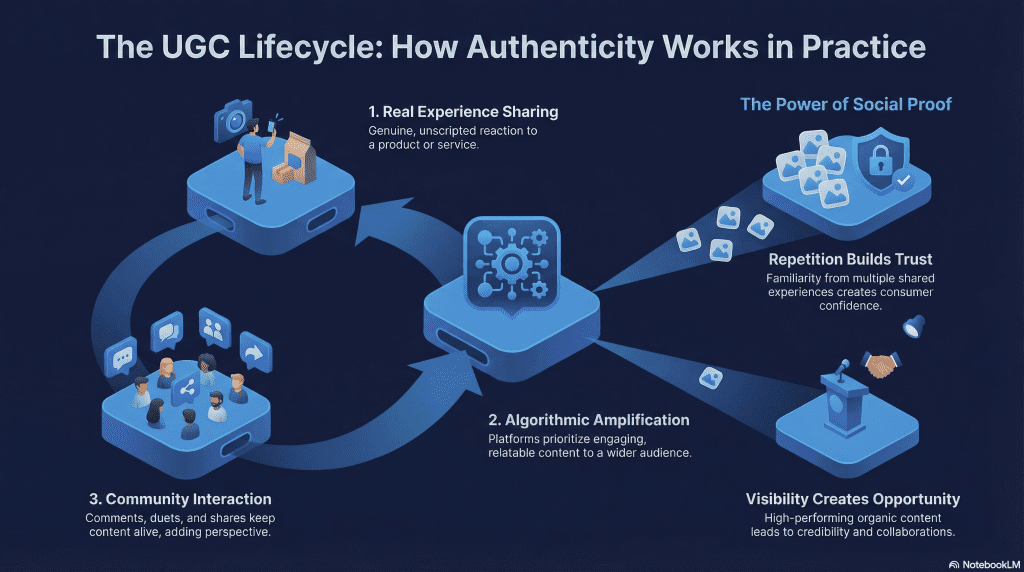
The Legal Basics Every UGC Creator Should Understand
Creating content for brands is a business transaction. Even if you are just starting out, understanding basic legal principles protects your work and your income.
You do not need to become a legal expert. You do need to understand the fundamentals.
1. Content Ownership
By default, you own the content you create unless a contract states otherwise.
This means:
- You control how it is used
- You can license it to others
- You retain rights unless transferred
Some brands may request full ownership. Others may request limited usage rights. Always clarify this before delivering final files.
2. Usage Rights
Usage rights define how a brand can use your content.
Key factors include:
- Duration, such as 30 days, 3 months, or one year
- Platform, such as organic social, paid ads, or website use
- Geographic scope, such as local or global use
Unlimited, perpetual usage should be priced higher than short-term use.
Clear boundaries protect long-term earning potential.
3. Paid Ad Usage
Running content as paid advertising increases its commercial value.
If your content is used in:
- Social media ads
- Retargeting campaigns
- Sponsored placements
It is contributing directly to revenue generation.
Because of that, paid ad usage often justifies separate pricing or licensing terms.
4. Whitelisting and Creator Licensing
Whitelisting occurs when a brand runs ads through your social media profile instead of their own.
In this arrangement:
- The ad appears under your name
- The brand controls targeting and budget
- You provide access for campaign use
This requires clear agreements and often higher compensation due to account access and brand association.
5. Contracts and Agreements
Even small projects should include written agreements.
At minimum, clarify:
- Deliverables
- Payment terms
- Usage rights
- Revision limits
- Timeline
A simple written agreement protects both parties and reduces misunderstandings.
6. Disclosure and Transparency
If you post content publicly and receive compensation or free products, you may be required to disclose that relationship depending on platform and region.
Transparency maintains credibility and avoids regulatory issues.
When in doubt, disclose clearly.
Why Legal Awareness Increases Professionalism
Many beginner creators focus only on filming. Professionals understand usage, licensing, and boundaries.
You do not need complex contracts at the beginning. You do need clarity.
When you understand ownership and usage rights, you stop underselling your work and start operating as a service provider.
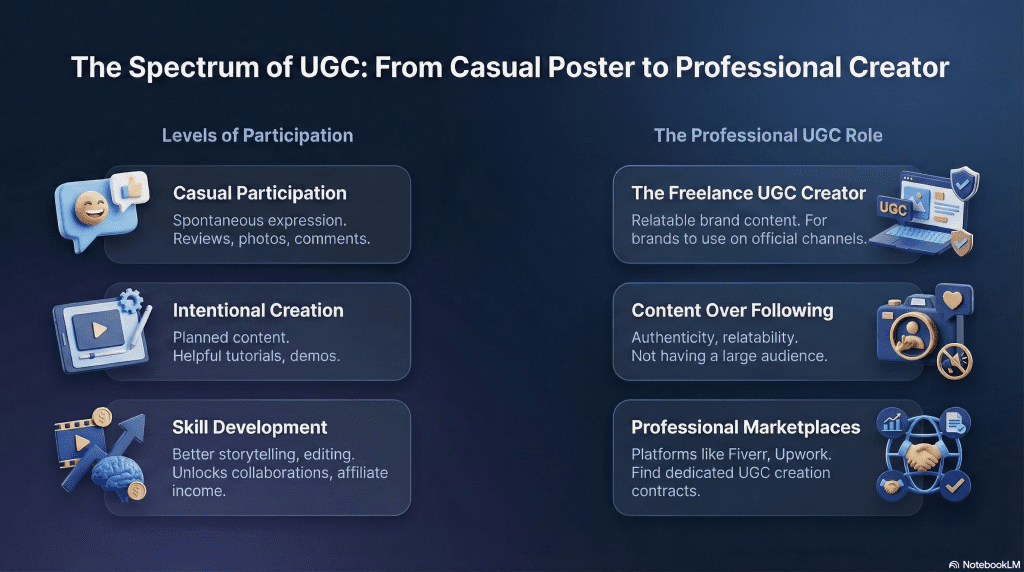
How to Grow From Beginner to Full-Time UGC Creator
Starting is about building proof. Growth is about building systems.
Many creators plateau because they focus only on making videos. Long-term growth comes from positioning, consistency, and professional execution.
Here is how creators move from beginner to full-time.
1. Refine Your Positioning
As you gain experience, your niche should become clearer.
Instead of being “a UGC creator,” you may position yourself as:
- A skincare UGC specialist
- A fitness-focused short-form creator
- A tech product demonstrator
- A direct-response ad style creator
Clear positioning makes it easier for brands to understand your value. Specialization often increases rates.
2. Increase Your Rates Strategically
Raising your rates should follow increased experience and stronger results.
You can justify higher pricing when you:
- Improve content quality
- Deliver on time consistently
- Understand ad-style structure
- Offer usage clarity
Rate increases do not require dramatic jumps. Gradual adjustments reflect professional growth.
3. Focus on Repeat Clients
Repeat clients reduce income instability.
Instead of constantly searching for new brands, prioritize:
- Clear communication
- On-time delivery
- Organized file sharing
- Professional follow-ups
Reliable creators often receive ongoing work without repeated pitching.
4. Build a Simple Workflow System
Efficiency becomes critical as workload increases.
Develop systems for:
- Content planning
- Filming setup
- Editing templates
- File naming and delivery
- Contract storage
Structured workflow reduces stress and improves turnaround time.
5. Expand Into Higher-Value Deliverables
As skill increases, you can expand beyond basic videos.
Examples include:
- Multiple ad variations for testing
- Scriptwriting assistance
- Creative strategy input
- Performance-focused hooks
The more you understand marketing psychology, the more valuable your content becomes.
6. Track Your Performance and Results
Whenever possible, ask brands for feedback or performance insights.
Metrics such as:
- Click-through rate
- Conversion rate
- Engagement rate
Help you understand what works.
Even without direct data access, observing patterns improves strategic thinking.
The Long-Term Perspective
Full-time UGC creation is built on:
- Consistent output
- Clear positioning
- Professional communication
- Smart pricing
- Ongoing refinement
It is less about going viral and more about becoming dependable.
Creators who treat UGC as a structured service rather than a side experiment are the ones who scale sustainably.
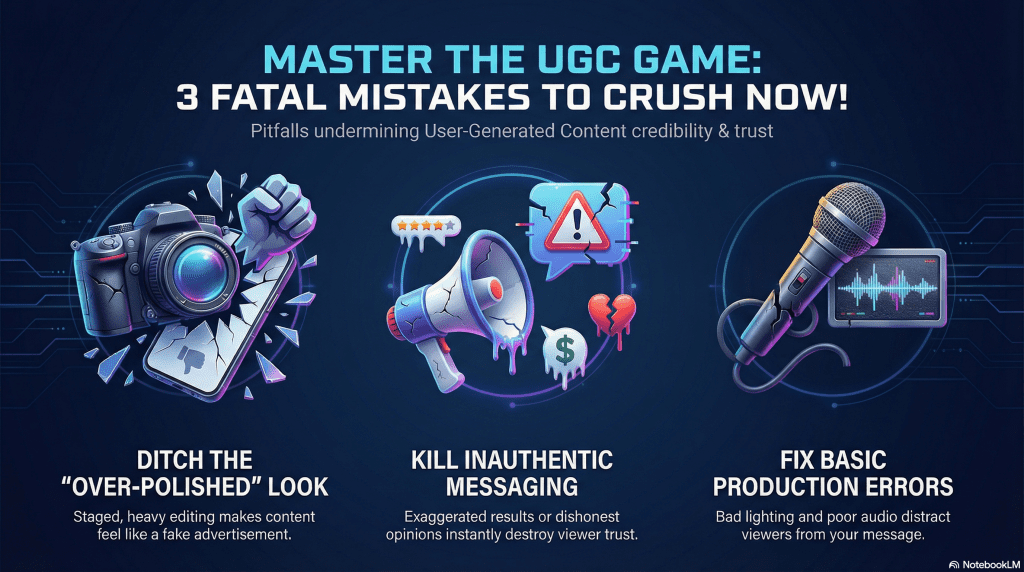
Common Mistakes New UGC Creators Make
Starting is simple. Building a sustainable income requires awareness.
Many new creators struggle not because of talent, but because of avoidable mistakes. Understanding these early prevents frustration and underpayment.
1. Undercharging Without Understanding Usage Rights
One of the most common mistakes is charging only for “a video” without clarifying how it will be used.
If a brand plans to:
- Run paid ads
- Use the content long-term
- Distribute it across multiple platforms
The value increases.
Failing to define usage rights often leads to underpricing your work.
2. Overproducing Content
UGC loses effectiveness when it feels overly scripted or polished.
Heavy editing, corporate language, and staged delivery reduce relatability. The goal is clarity and authenticity, not cinematic production.
Professional does not mean theatrical.
3. Copying Trends Without Strategy
Trends can increase visibility, but copying them blindly weakens credibility.
Before using a format, ask:
- Does this support the product’s message?
- Does it feel natural for me?
- Is the structure clear?
Strategic creativity outperforms imitation.
4. Ignoring Communication and Deadlines
Skill matters. Reliability matters more.
Missing deadlines, delivering incomplete files, or responding slowly damages trust. Brands prefer dependable creators who communicate clearly and meet expectations.
Professional behavior often determines repeat work.
5. Not Having Clear Agreements
Even small projects should define:
- Deliverables
- Payment terms
- Revision limits
- Usage duration
Without clarity, misunderstandings occur. Clear agreements protect both sides.
6. Expecting Immediate Income
UGC creation is a skill-based service. Like any freelance path, it takes practice and repetition.
Early projects build experience. Consistency builds credibility. Over time, that credibility supports higher rates and steadier contracts.
Sustainable growth is built gradually.
The Pattern Behind These Mistakes
Most problems come from treating UGC casually instead of professionally.
When you approach UGC as a structured service with clear boundaries, consistent quality, and strategic pricing, growth becomes more predictable.
Avoiding these common missteps accelerates progress.
Conclusion
Becoming a UGC creator does not require fame, expensive equipment, or years of experience. It requires clarity, consistency, and an understanding of how brands use content to build trust.
Throughout this guide, you’ve seen that UGC is not just casual posting. It is a structured service. Brands need relatable content for ads, product pages, and social platforms. When you learn how to create clear, natural videos and understand usage rights, pricing, and professionalism, you position yourself as more than a hobbyist.
The path is straightforward:
- Choose a niche.
- Create focused samples.
- Build a clean portfolio.
- Communicate professionally.
- Improve with repetition.
Over time, skill compounds. Positioning sharpens. Rates increase.
UGC rewards creators who treat it as a craft and a business. If you are willing to practice deliberately and operate professionally, the opportunity is real and growing.

Frequently Asked Questions
What qualifies as user-generated content (UGC)?
User-generated content is any content created by individuals rather than brands or companies. This includes videos, photos, reviews, comments, posts, tutorials, and testimonials shared online. The defining characteristic is that it originates from a personal perspective rather than a corporate voice.
Is user-generated content always unpaid?
No. Most UGC is created organically without compensation. However, many creators are now paid to produce UGC for brands. Payment does not change whether something qualifies as UGC. What matters is that the content is created from an individual’s point of view.
Do you need followers to create UGC?
No. UGC focuses on content quality and authenticity, not audience size. Brands hire UGC creators to produce assets they can publish on their own platforms. You do not need a personal following to get started.
Is UGC the same as influencer marketing?
No. Influencer marketing is a strategy that pays creators for access to their audience and distribution reach. UGC focuses on creating authentic content that brands can use on their own platforms, regardless of the creator’s following.
An influencer can create UGC, but UGC creators are hired for production skill, not audience size.
Who owns user-generated content?
By default, the creator owns the content they produce. Ownership can change if rights are transferred or licensed through a written agreement. This is why usage rights and licensing terms are important in paid UGC work.
How do beginners start creating UGC?
Beginners can start by choosing a niche, creating sample videos with products they already own, and building a simple portfolio. The goal is to demonstrate clarity, relatability, and structure rather than perfection. Consistent practice builds confidence and skill.
How much can UGC creators earn?
Earnings vary based on experience, niche, and usage rights. Beginners often charge flat project fees, while experienced creators increase rates for ad usage, licensing, and ongoing contracts. Income grows as positioning, skill, and professionalism improve.
How long does it take to get paid as a UGC creator?
Timelines vary depending on portfolio quality and outreach consistency. Some creators secure early projects within weeks, while others take longer to refine their approach. Skill development and clear communication significantly impact speed.
Is the UGC market saturated?
Demand continues to grow because brands need constant new content for advertising and social platforms. While competition exists, creators who specialize, improve quality, and operate professionally remain competitive.
Do you need professional equipment to create UGC?
No. A smartphone, natural lighting, and clear audio are sufficient for most beginner projects. UGC performs best when it feels natural and relatable rather than overly produced.

1 Comment
Influencer Marketing: How Attention Turns Into Influence and Sales - Ismel Guerrero. · February 22, 2026 at 1:40 pm
[…] primary difference between influencer marketing and user-generated content lies in […]