Introduction
What if your content could earn not just attention but income?
Whether you’re writing newsletters, recording videos, running a podcast, or posting on LinkedIn, the question eventually hits: “How do I turn this into money?” Most people assume it takes viral reach, a massive audience, or some kind of digital product wizardry. It doesn’t.
The truth? Monetizing content isn’t about going big it’s about going strategic. Choosing the right model based on your platform, audience, and goals unlocks the path.
In this guide, you’ll discover nine proven ways to monetize content in 2025 even if you’re just getting serious about the money part.
Key Takeaways
- You don’t need a massive audience to monetize your content, you need the right model.
- Affiliate marketing, services, and digital products are strong starting points for most creators.
- Ad revenue rewards scale, while consulting and services reward expertise and trust.
- The most sustainable monetization strategies often combine multiple models.
- Trust and audience alignment matter more than traffic volume.
- Monetization works best when it feels like a natural extension of your content, not a forced add-on.
- Starting with one focused revenue stream is more effective than launching multiple offers at once.
Disclaimer: I am an independent Affiliate. The opinions expressed here are my own and are not official statements. If you follow a link and make a purchase, I may earn a commission.
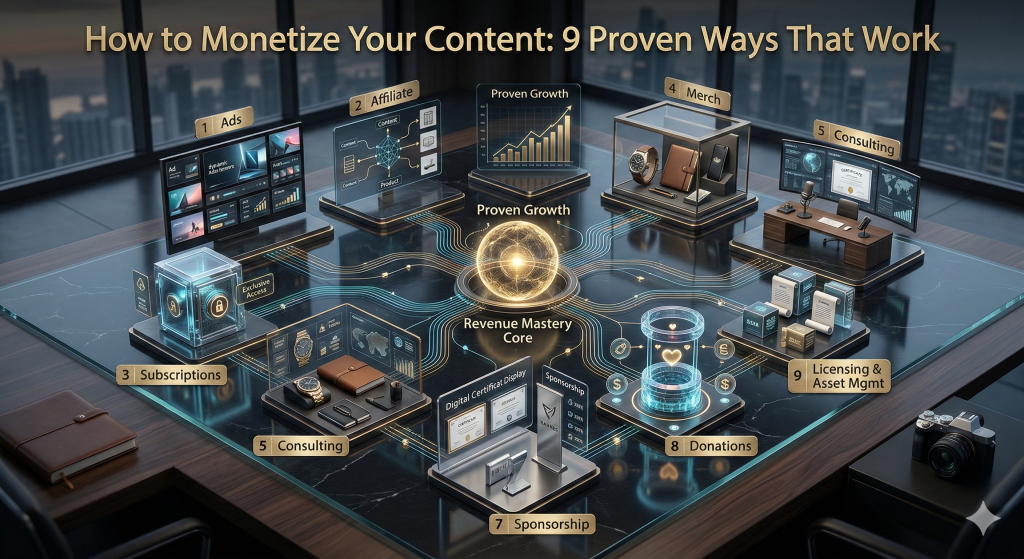
The Content Monetization Framework: Audience, Assets, and Access
Before choosing a monetization method, understand this: content turns into income in three primary ways.
You either monetize attention, assets, or access.
1. Attention-Based Monetization
You earn because people watch, read, or listen.
This includes:
- Ad revenue
- Sponsorships
- Affiliate marketing
These models reward reach and engagement. The more attention you generate, the more income potential you unlock.
2. Asset-Based Monetization
You earn by creating something you own and sell.
This includes:
- Digital products
- Courses
- Templates
- Licensing
These models reward expertise and problem-solving. Instead of renting attention, you package value into an asset.
3. Access-Based Monetization
You earn by offering proximity, personalization, or community.
This includes:
- Consulting
- Coaching
- Paid communities
- Memberships
These models reward trust and depth. They often generate higher revenue per customer but require more involvement.
Most creators start with access-based or affiliate monetization because they require less scale. Over time, many layer in asset-based income to increase leverage.
The goal is not to choose every method. The goal is to choose the right one for where you are now.
Now let’s break down nine proven ways to monetize your content.

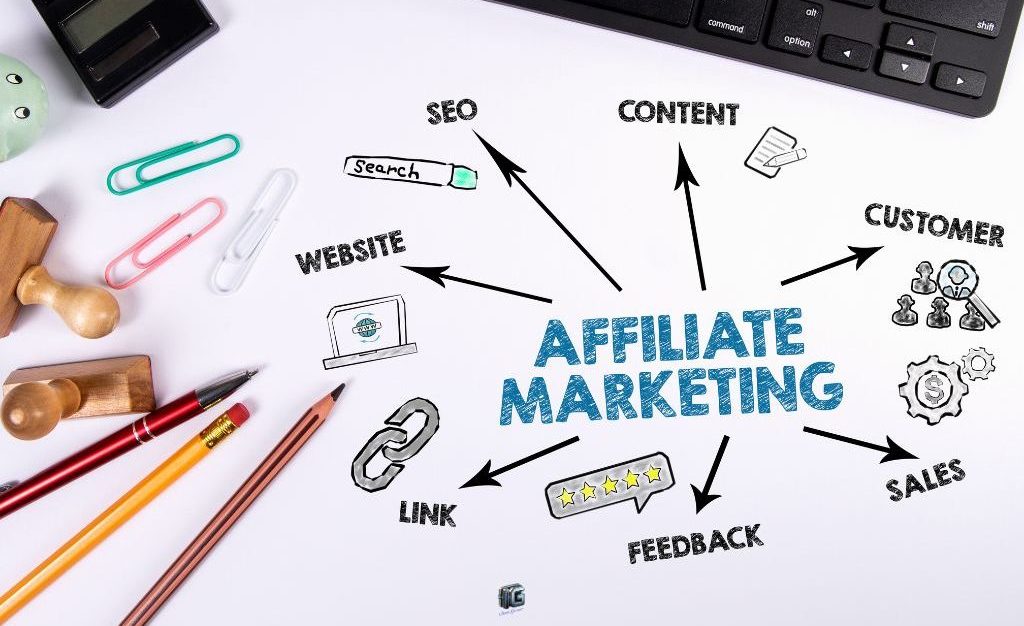
1. Affiliate Marketing: A Low-Lift Way to Start Content Monetization
Affiliate marketing is one of the simplest ways to start monetizing your content because it doesn’t require you to create your own product. Instead, you earn a commission every time someone buys a product or service through your unique referral link.
This model works especially well for creators who review tools, teach how-to content, or publish resource-driven posts. Whether you’re recommending software, books, or physical gear, affiliate links let you monetize without changing your content strategy.
The key is trust. People don’t click affiliate links because they’re available; they click when they believe your recommendation is honest and informed.
You don’t need a massive audience. You need the right match between your content, the product, and the reader’s intent.
2. Sponsored Content: Turn Brand Deals Into Scalable Content Revenue
Sponsored content is when a brand pays you to feature their product, service, or message in your content. This could be a full YouTube video, a single podcast mention, a blog paragraph, or even a LinkedIn post; the format doesn’t matter. What matters is that you’re being paid for access to your audience.
Unlike affiliate marketing, you earn upfront not per click or sale. That makes it especially attractive for creators with a loyal, niche audience, even if it’s small.
But here’s the tradeoff: sponsorships require alignment. If the product doesn’t fit your message or audience values, the post will feel forced and trust suffers.
You’ll also need to disclose sponsored partnerships clearly. Readers aren’t stupid; when a post feels like a cash grab, they disengage. But when the brand fits and your voice stays authentic, sponsorships can be both profitable and respectful.

3. Ad Revenue: When Monetizing Your Content with Traffic Makes Sense
Ad revenue is the most familiar and often the most overrated monetization model. It works like this: you allow a platform or ad network to place advertisements around your content, and you get paid based on impressions, clicks, or views.
This is common on YouTube (via AdSense), blogs (via Mediavine, Ezoic, etc.), and podcasts (through dynamic ad insertion). The upside? It’s passive. Once your content is live and approved, ads run automatically in the background.
But here’s the reality: ad revenue rewards scale, not quality. You’ll need thousands, sometimes tens of thousands of views per month before the payouts become meaningful.
That makes ads a weak starting point for most creators. But if your content is evergreen, high-traffic, or search-optimized, ads can become a stable income layer over time.

4. Digital Products: Own the Entire Content Monetization Funnel
Digital products let you stop selling other people’s stuff and start selling your own. We’re talking about eBooks, templates, online courses, checklists, swipe files, Notion dashboards, and any other downloadable or gated resource you can package once and sell repeatedly.
The appeal? High margins, zero inventory, and full ownership. Once built, digital products can generate income while you sleep assuming they solve a real problem for your audience.
But don’t confuse simplicity with ease. Creating a product that sells means knowing your audience intimately. What are they stuck on? What shortcut do they wish existed? What’s the result they’d gladly pay to get faster?
Start small. You don’t need a 40-module course. A $17 toolkit that solves one clear pain point can outsell a bloated product nobody finishes.

5. Services and Consulting: The Fastest Path to Monetizing Your Content
If your content teaches, explains, or solves you’re already halfway to offering services. Consulting, coaching, audits, strategy sessions, or done-for-you work are all direct ways to monetize what you know.
This method skips passive income and goes straight to high-trust, high-ticket revenue. You’re not selling content, you’re selling transformation, and your content builds the proof.
It works best for creators in business, marketing, design, finance, fitness, and any niche where the audience wants results, not just information. If someone thinks, “I want their brain on my problem,” you have a service to sell.
The catch? Services don’t scale easily. You’re trading time for money at least at first. But as a monetization starting point, nothing converts faster than personalized value.
6. Paid Communities: Recurring Content Monetization Through Access
When people pay to join a community, they’re not buying content, they’re buying connection, access, and speed. Paid memberships turn your audience into a tribe, and your content into a shared experience.
This model works best when your audience wants:
- Direct access to you
- Feedback from peers
- A space to stay motivated or accountable
Think Slack groups, private Discord servers, gated newsletters, or full-on membership platforms like Circle or Patreon. The content doesn’t need to be overwhelming, it just needs to create value through interaction.
The hard part? Retention. Communities require attention and moderation. But if you build with intention and solve a specific ongoing problem members stick around because they’re invested in each other, not just you.

7. Merch and Physical Products: Brand-Led Content Monetization That Sells
Selling merch is where content becomes a brand. Whether it’s T-shirts, mugs, planners, or physical books, this model turns audience attention into tangible goods and ideally, loyal fandom.
It works best when your content already evokes identity. If people say, “That’s so me” when they consume your content, they’re more likely to wear, use, or display something connected to it.
Thanks to print-on-demand platforms like Printful, Spring, or Shopify integrations, you don’t need inventory. You upload the design, set the price, and the platform handles the rest.
But here’s the reality: merch doesn’t sell without meaning. Slapping a logo on a hoodie won’t move units. The product has to reflect a message, joke, or belief your audience already resonates with.
Done right, merch is more than income. It’s marketing people pay for.

8. Licensing and Syndication: How to Monetize Your Existing Content Assets
Licensing and syndication are how you get paid for content you’ve already created by letting other platforms, publishers, or businesses reuse it (legally) in their own channels.
This works especially well for writers, educators, video creators, and anyone producing evergreen content with a clear point of view. Instead of trying to scale traffic yourself, you rent out your content’s value to someone who already has reach.
Examples:
- A brand pays to license a popular article to republish in their newsletter
- A media outlet syndicates your video to fill content gaps
- A company white-labels your tutorial for internal training
It’s quiet income. There’s no public pitch, no launch, and no need for massive distribution. Just high-leverage monetization of work you’ve already done.

9. Donations and “Pay What You Want”: Let Your Audience Fund Your Content
Sometimes, your content doesn’t need to be gated, sold, or licensed, it just needs to be appreciated. Donations and “pay what you want” models give your audience the option to support your work because they value it, not because they’re forced to.
It’s especially effective for creators producing consistent value without a clear monetization structure, think writers, open-source developers, indie artists, or educators.
The key is framing. People don’t donate to support you, they contribute because they want you to keep going. If your content makes their life easier, smarter, or better, they’re often willing to help you sustain it.
Tools like Buy Me a Coffee, Ko-fi, and Patreon make it easy to accept one-time or recurring contributions, no sales funnel required.

What to Avoid When Monetizing Your Content
Monetization gets exciting fast. But rushing into it the wrong way can cost you time, trust, and even your audience. Here’s what to watch out for:
Chasing passive income before proving active value
If you haven’t helped anyone yet, don’t try to automate results. Start with service or direct offers before scaling to digital products or memberships.
Using monetization methods that don’t fit your content type
Not every model works for every platform. For example, ad revenue on a low-traffic blog will disappoint, and merch without a strong brand story won’t convert.
Overloading your audience with too many offers
Trying to sell five things at once splits attention and erodes trust. Pick one or two methods to start. Stack later.
Copying other creators without considering your niche
What works for a tech YouTuber might flop for a wellness writer. Model strategy, not content. Your niche defines the rules.
Prioritizing monetization before building trust
If people don’t see value yet, they won’t pay no matter how great your offer is. Monetization works best when it feels like a natural next step, not a hard sell.
Conclusion
There’s no single right way to monetize your content but there is a right fit for you.
Each model you’ve just seen works. But they don’t all work the same way, or for the same creator. Some require scale. Others rely on depth. A few thrive on speed. Most reward patience and consistency.
Here’s what matters: choosing one or two models that match where you are now, then layering others as your content and audience evolve. You don’t need to launch a course, pitch sponsors, and start a membership all at once. You just need to start.
Monetization isn’t magic. It’s a system. And once you learn to align your content with value, value that solves, guides, or inspires the income follows.
FAQs: Monetization
Can I monetize content if I don’t have a large audience?
Yes. Many monetization models, like affiliate marketing, services, or digital products, work well even with small but engaged audiences. It’s about trust, not traffic.
What’s the fastest way to start earning from my content?
Offering a service or consulting based on your expertise is usually the fastest. It doesn’t require scale, just credibility and a clear offer.
Which monetization method is the most passive?
Digital products and ad revenue are the most passive but only after upfront setup. Passive income still requires active effort to build.
How do I choose the best monetization model for me?
Start by asking: What type of content do I create? Who’s my audience? What do they value? Then pick one model that fits, test it, and expand from there.

0 Comments