Getting paid through online marketing does not always require making the final sale yourself. Cost Per Action (CPA) marketing rewards a defined customer action, such as generating a lead, signup, app install, trial, or purchase, when that action meets the campaign requirements.
For online marketers, that matters because CPA creates opportunities at different points in the customer journey, not only at checkout. But understanding the model takes more than knowing what CPA stands for. Offers, networks, tracking, approval rules, payouts, and traffic quality all influence whether a conversion actually counts.
This guide explains how CPA marketing works from end to end, so you can understand the model, how its different parts fit together, and what matters when evaluating a CPA opportunity.
- The action is the foundation of a CPA campaign. The advertiser defines what must happen before a conversion qualifies for payment.
- A high payout does not automatically make an offer valuable. Conversion rate, EPC, approval rate, traffic cost, and audience fit can matter more than the advertised commission.
- Recorded conversions and approved conversions are different. An action can appear in reporting and still be rejected if it fails the campaign requirements.
- Publishers influence traffic quality but do not control the entire conversion path. The offer, landing page, tracking system, advertiser rules, and approval process also affect performance.
- CPA networks can simplify the relationship between advertisers and publishers. They may provide offers, tracking, reporting, campaign rules, support, and payments through one platform.
- CPA affiliate marketing is part of the larger CPA ecosystem. The broader model also includes advertisers, networks, tracking systems, customers, conversion standards, and campaign economics.
- CPA works best when everyone agrees on what counts as a valid action. Clear terms and reliable tracking are essential because the campaign depends on measurable outcomes.
Disclaimer: I am an independent Affiliate. The opinions expressed here are my own and are not official statements. If you follow a link and make a purchase, I may earn a commission.
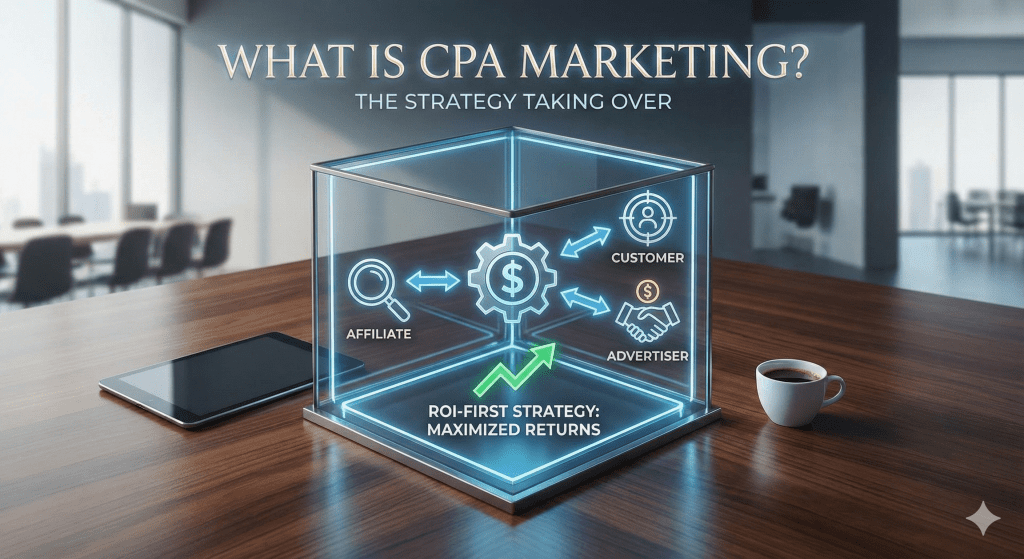
What Cost Per Action Marketing Means in Practice
Cost Per Action (CPA) marketing is a performance-based marketing model in which an advertiser pays when a user completes a predefined action.
The action depends on what the advertiser wants the campaign to produce.
A software company might pay for a free-trial registration. An insurance advertiser might pay for a qualified quote request. A mobile app may pay for an installation or completed registration. An ecommerce campaign may require a purchase.
The important part is that the required action is defined before traffic is sent.
For publishers and marketers, CPA creates an opportunity to earn by generating those qualifying actions. Publishers may include affiliate marketers, content creators, media buyers, comparison websites, email publishers, influencers, lead-generation businesses, and other traffic partners.
The publisher normally does not create the underlying product or service. Its job is to introduce the offer to an appropriate audience and generate traffic under the campaign’s rules.
A conversion must still qualify before it becomes payable. Campaign terms may specify eligible countries, devices, traffic sources, customer characteristics, attribution periods, promotional methods, or other conditions.
That distinction is important because an action occurring and an action qualifying for payment are not always the same thing.
CPA marketing also should not be reduced to affiliate marketing alone.
CPA affiliate marketing focuses specifically on affiliates promoting CPA offers for commissions. Cost Per Action marketing covers the wider system that makes those offers possible, including advertisers, publishers, networks, tracking, attribution, approval standards, and conversion economics.
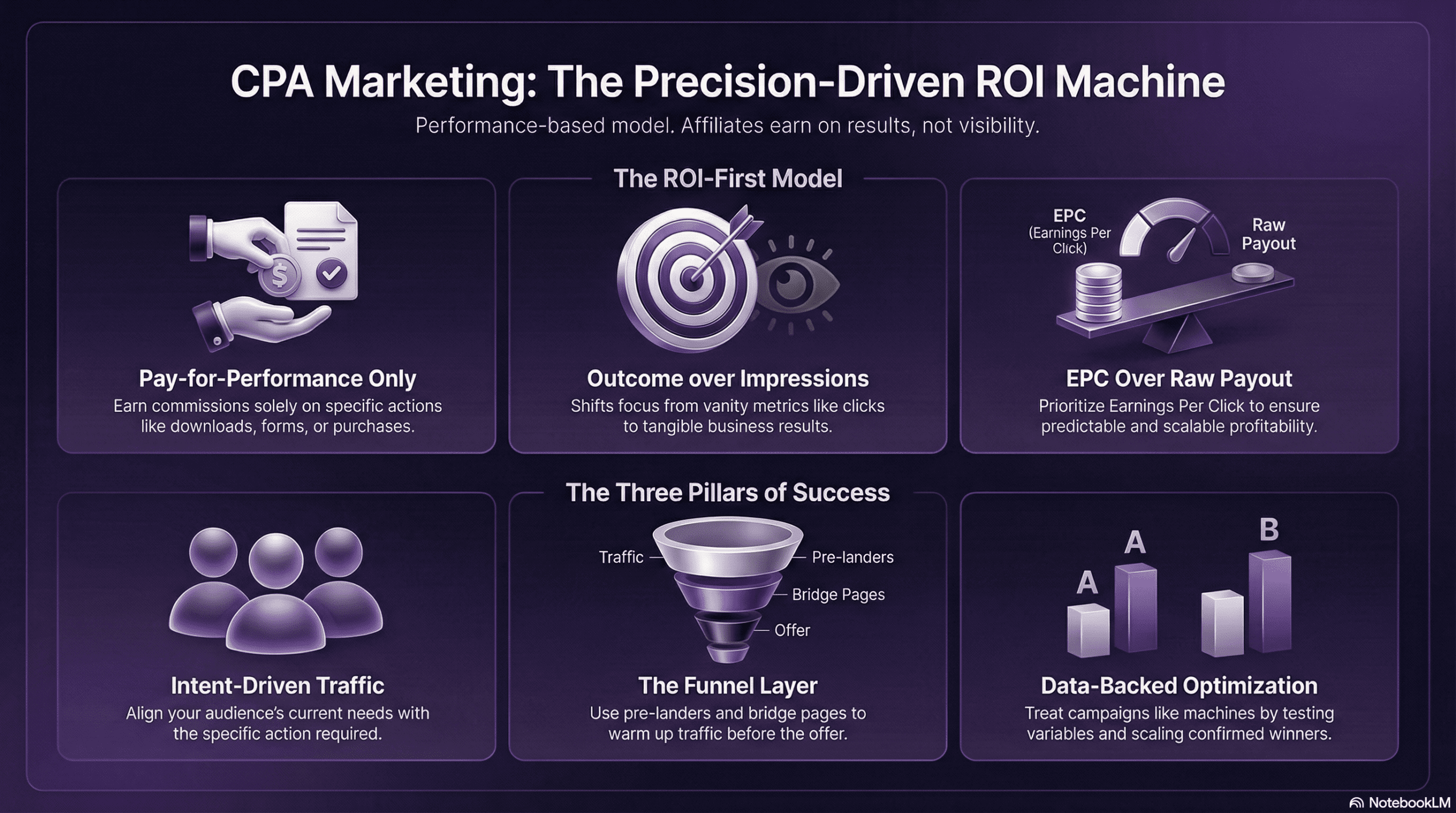
Why CPA Marketing Focuses on Actions
Clicks and impressions can show that people saw or interacted with a promotion. CPA marketing goes a step further by connecting the campaign to a specific action the advertiser considers valuable.
That action might be a lead, account registration, app install, trial, quote request, or completed purchase. The advertiser defines the action before the campaign begins, and publishers earn when qualified users complete it.
Why Advertisers Pay for These Actions
Advertisers are willing to pay because a completed action can move a potential customer closer to becoming a paying customer.
A company may value a qualified lead because its sales team can follow up with that person. A software company may pay for a trial because some trial users later become subscribers. An app company may pay for an installation or registration because it gives the business an opportunity to turn that user into an active customer.
The value of the action also helps explain why CPA payouts vary. A simple signup may pay less than a qualified application or completed purchase because different actions represent different levels of customer intent and potential value.
What This Means for Publishers
For publishers, the important point is that advertisers are not paying simply for traffic. They are paying for traffic that produces the result defined by the campaign.
That is why audience fit, traffic quality, and the offer requirements matter so much in CPA marketing. A large number of clicks may produce little value if those visitors do not complete the action or fail to meet the advertiser’s qualification rules.
The Four Participants Behind a CPA Campaign
A CPA campaign usually involves four main participants. Understanding what each one controls makes the rest of the model easier to follow.
Advertisers define the conversion
The advertiser is the business behind the offer.
It determines which customer action matters and what requirements the conversion must satisfy.
For example, an advertiser may specify that a lead must come from a particular country, contain valid contact information, and belong to a new customer rather than someone already in its database.
The publisher does not need to know every detail of the advertiser’s business economics. It does need to understand the rules that determine whether its traffic can produce valid conversions.
Networks and platforms connect the campaign
A CPA network can sit between the advertiser and the publisher.
The network may host campaign information, generate tracking links, record conversions, provide reporting, communicate offer restrictions, manage publisher accounts, and distribute commissions.
Not every CPA campaign uses a network. Some advertisers work directly with publishers.
Networks are common because they allow publishers to access multiple campaigns without building a separate relationship with every advertiser.
As one current example, MaxBounty describes its network as the point of contact between advertisers and affiliates, with campaign management and tracking handled through the network.
Publishers generate qualified traffic
The publisher promotes the offer.
That promotion can happen through content, paid advertising, email, social media, comparison websites, mobile traffic, or another traffic source permitted by the campaign.
The goal is not simply to produce the largest possible number of visitors.
A publisher needs people who are likely to complete the required action and satisfy the advertiser’s conditions.
Poorly matched traffic may generate clicks while producing few valid conversions.
Customers complete the action
The customer is the person who ultimately performs the conversion event.
They may submit a form, install an app, open an account, request a quote, start a trial, or make a purchase.
A strong CPA campaign aligns all four participants.
The advertiser defines a useful outcome. The network or tracking system records it. The publisher attracts the appropriate audience. The customer completes the required action.

How a CPA Campaign Moves From Click to Approved Conversion
A CPA conversion involves more than sending someone through a tracking link.
The campaign has to identify the referral, record the action, connect it to the correct publisher, and determine whether the conversion satisfies the offer requirements.
A typical CPA campaign follows six stages.
The advertiser defines the qualifying action.
The campaign begins with a specific conversion goal, such as a lead, signup, app install, trial, quote request, or purchase. The advertiser also sets the conditions that determine whether the action qualifies, which may include location, customer status, device type, traffic source, or other campaign rules.
The publisher promotes the offer.
The publisher introduces the campaign to an audience through an approved traffic source. This could include content, paid advertising, email, social media, or another method allowed by the offer. The goal is to attract people who are likely to complete the required action.
Tracking records the referral.
When someone clicks the publisher’s tracking link, the campaign records information that connects the visitor to the publisher and offer. This attribution is important because it determines who should receive credit if the visitor later converts.
The user completes the required action.
The visitor reaches the advertiser’s page and performs the conversion event defined by the campaign. At this point, the action may appear in the publisher’s reporting, but that does not always mean the commission has been approved.
The conversion is validated.
The advertiser, network, or platform checks whether the action meets the campaign requirements. This can include confirming that the user is eligible, the information is valid, the traffic source is permitted, and the conversion is not a duplicate or otherwise invalid.
The approved conversion becomes payable.
Once the conversion passes validation, the publisher becomes eligible for the agreed payout. The commission is then handled according to the network or advertiser’s payment terms and schedule.
Why Some CPA Conversions Don’t Get Approved
One of the most important things to understand about CPA marketing is that a recorded conversion is not always an approved conversion.
A lead may be rejected because the same person already submitted their information. A purchase may be reversed if the customer cancels or receives a refund. A user may fall outside the accepted location, or an app installation may come from someone who does not meet the campaign’s new-user requirement.
Conversions can also be rejected when they come from a traffic source or promotional method that the offer does not allow.
The action may have occurred, but it did not satisfy the conditions required for payment.
That is why publishers should pay attention to approved conversions and approval rates, not just the number of conversions initially shown in their reporting.
The Actions That Can Trigger a CPA Payment
Cost Per Action campaigns can use many different conversion events.
The required action depends on what the advertiser wants the customer to do.
Lead submissions
A lead-generation campaign may pay when a user submits qualifying contact information.
Examples include insurance inquiries, education requests, home-service leads, and other situations where the advertiser wants to speak with a potential customer later.
The lead usually has to satisfy certain conditions. Duplicate entries, incomplete forms, false information, or users outside the target area may be rejected.
Account registrations
Some campaigns pay when a user creates an account.
The registration may need to include email verification, profile information, or another step before the action becomes valid.
This structure can appear in software, online services, marketplaces, and other account-based products.
App installations
Mobile campaigns may use an app installation as the required action.
Some offers stop at the installation. Others require another event, such as opening the app, registering an account, or completing an activity.
The offer terms determine which event triggers the commission.
Trial activations
Software and subscription companies may pay for free-trial registrations or product-demo requests.
The publisher does not need the visitor to become a long-term customer unless the offer specifically requires it.
The qualifying event is whatever the campaign defines.
Quote and consultation requests
Service-related campaigns may pay for quote requests, scheduled appointments, consultations, or similar actions.
These offers often require more information because the advertiser needs enough detail to determine whether the prospect fits its service.
Completed purchases
Some campaigns require a sale.
The publisher earns only after the visitor completes the purchase and satisfies any additional campaign conditions.
A purchase may remain pending during a cancellation or refund period before the commission becomes final.
The broader lesson is simple: never judge a CPA offer by the payout without first understanding the exact action required to earn it.
Two offers can advertise similar commissions while asking the customer to complete very different tasks.

How CPA Compares With CPC, CPM, CPL, and Revenue Share
CPA is one of several compensation models used in online marketing.
The main difference is the event that triggers payment.
| Pricing Model | Payment Trigger | Publisher Earning Model | Typical Use |
|---|---|---|---|
| CPA | A predefined action | Payment for an approved action | Registrations, trials, installs, leads, purchases |
| CPC | A valid click | Payment for each click | Traffic generation and advertising |
| CPM | 1,000 impressions | Payment for exposure | Display advertising and audience reach |
| CPL | A qualifying lead | Payment for an approved lead | Lead-generation campaigns |
| Revenue share | Customer-generated revenue | Percentage of revenue | Sales, subscriptions, recurring purchases |
CPA connects earnings to a defined action
CPA can cover several different conversion events.
That action might happen relatively early in the customer journey, such as an app installation, or later, such as a completed purchase.
The publisher carries more responsibility for what happens after the initial click because payment depends on the visitor progressing to the required action.
CPC pays for the click
Cost Per Click connects payment to the visitor clicking an advertisement or promotional link.
The visitor does not necessarily need to register, submit information, or purchase anything.
That makes CPC useful when the click itself is the billable event.
CPM pays for exposure
Cost Per Mille is based on 1,000 impressions.
The payment event is visibility rather than a click or conversion.
Publishers with large audiences may encounter CPM arrangements in display advertising, video, and other media where reach matters.
CPL focuses specifically on leads
Cost Per Lead is narrower than the broader CPA model because the conversion event is specifically a lead.
The advertiser normally defines the information and qualifications required before the submission is accepted.
Revenue share follows customer revenue
Revenue-share arrangements connect publisher earnings to the amount of money a referred customer generates.
That can create longer-term earning potential, but the final value depends on customer spending, retention, refunds, and the program’s terms.
The Metrics That Matter in CPA Marketing
A payout tells you how much an approved action can earn.
It does not tell you whether the offer performs well.
Several metrics provide a more useful picture.
Payout
The payout is the amount the publisher earns for an approved action.
It is usually the first number marketers notice when comparing CPA offers.
It should not be the only one.
A $100 offer that converts rarely can generate less revenue than a $20 offer that converts consistently.
Conversion rate
Conversion rate shows how often visitors complete the required action.
The basic formula is:
Conversions ÷ total visitors × 100 = conversion rate
If 1,000 visitors produce 50 conversions, the conversion rate is 5%.
A lower rate can reflect weak audience targeting, a difficult action, poor message alignment, landing-page friction, or other problems in the conversion path.
Earnings per click
Earnings per click, commonly called EPC, shows how much revenue the traffic produces on average for each click.
The formula is:
Total earnings ÷ total clicks = EPC
If 1,000 clicks generate $500 in approved earnings, the EPC is $0.50.
EPC can be especially useful when comparing offers with different payouts.
A lower-paying offer can produce the stronger EPC if its visitors convert more often.
Approval rate
Approval rate measures how many recorded conversions eventually qualify.
The formula is:
Approved conversions ÷ recorded conversions × 100 = approval rate
Suppose an offer records 100 conversions but only 80 are approved.
The approval rate is 80%.
The remaining 20 conversions may have been rejected for duplicate information, ineligible users, canceled transactions, traffic violations, or another campaign condition.
Rejection or reversal rate
The rejection rate looks at the same problem from the opposite direction.
A consistently high rejection rate can make an offer far less attractive than its advertised payout suggests.
It can also point to a mismatch between the traffic being sent and the advertiser’s qualification rules.
Cost per approved conversion
Publishers who buy traffic need another calculation.
Traffic cost ÷ approved conversions = cost per approved conversion
Suppose you spend $600 on advertising and generate 30 approved conversions worth $30 each.
Those conversions produce $900 in gross commission revenue.
Your traffic cost per approved conversion is $20.
That leaves $10 per conversion before other expenses.

The Benefits and Trade-Offs of CPA Marketing
CPA marketing can be attractive because the publisher does not necessarily have to create the product, fulfill the service, process the customer’s order, or handle long-term support.
The marketer can focus on the promotional side of the process.
CPA also gives publishers access to different types of conversion goals. Some campaigns require a purchase, while others may pay earlier in the customer journey for a lead, registration, installation, or trial.
That flexibility can make CPA offers useful across many audiences and traffic sources.
There are trade-offs.
Publishers do not control every part of the conversion path.
The advertiser may control the landing page, form, checkout process, qualification criteria, payout, and approval standards. A campaign can also change its terms, reduce its payout, pause, or close.
Paid traffic adds another layer of risk because the publisher pays for visitors before knowing how many actions will eventually be approved.
CPA therefore rewards more than traffic generation.
The marketer has to evaluate what is controllable, what is not, and whether the economics still make sense after approval and traffic costs are considered.
How Tracking, Attribution, and Validation Affect CPA Earnings
Tracking determines whether the campaign knows where a conversion came from.
That makes it one of the most important technical parts of CPA marketing.
A publisher may send high-quality traffic and still have a problem if the tracking system cannot correctly connect the resulting action to the referral.
Tracking methods can include referral identifiers, cookies, pixels, server-to-server postbacks, and platform-specific technologies.
For example, MaxBounty explains that it uses postbacks to track completed actions and credit the appropriate affiliate and campaign.
Attribution determines who gets credit
A user does not always convert during the first visit.
Someone may click a publisher’s link, leave the site, and return later.
The campaign’s attribution rules determine whether that later action still belongs to the original referral.
One part of attribution is the conversion window.
CPA networks and advertisers can use their own attribution systems and time periods, so publishers should check the terms of the specific offer rather than assume every campaign works the same way.
Validation determines whether the action qualifies
Tracking answers one question:
Did the action come from this referral?
Validation answers another:
Does the action meet the campaign rules?
The advertiser or network may check customer information, location, transaction status, traffic source, duplication, or other requirements.
That is why a conversion can be properly tracked and still be rejected.
Fraud affects everyone in the campaign
Fraudulent or manipulated activity can include false leads, automated submissions, stolen payment information, fake accounts, or other actions designed to trigger commissions without producing legitimate customer activity.
Advertisers and networks monitor for this because invalid conversions damage the economics of the campaign.
Publishers also have an interest in preventing questionable traffic because excessive invalid activity can lead to rejected commissions or account problems.
CPA Marketing Rules and Compliance
CPA offers usually come with promotional rules.
Those rules may limit where the campaign can be advertised, which messages can be used, and which customers qualify.
Restrictions may cover:
- Paid search
- Brand-name bidding
- Social media advertising
- Incentivized traffic
- Email promotion
- Specific countries
- Devices
- Misleading claims
- Creative materials
- Customer data
- Particular keywords or traffic sources
Do not assume a traffic source is allowed simply because you know how to use it.
As one example, MaxBounty’s current terms and campaign rules allow advertisers to set conditions around how affiliates promote offers.
Publishers also need to consider advertising and disclosure requirements outside the network itself.
In the United States, the FTC states that advertising claims must be truthful and not misleading. When an endorsement includes a financial relationship that could affect how consumers evaluate the recommendation, that relationship should be disclosed clearly.
Specific legal requirements can depend on the location, promotional method, offer, and industry. Campaign rules do not replace applicable law.

How to Evaluate a CPA Offer Before Promoting It
A large payout can attract attention, but the best offer is not necessarily the one advertising the highest commission.
A useful evaluation looks at the full campaign.
Start with audience fit
Ask whether the people you can realistically reach are likely to care about the offer.
Good audience alignment makes every later part of the campaign easier.
Poor alignment forces the marketer to compensate with more traffic.
Understand the required action
Find out exactly what the visitor has to do.
An email submission is different from a multi-page application. A free trial is different from a paid purchase.
The level of effort affects how easily traffic can convert.
Look at more than the payout
Consider payout together with conversion rate, EPC, approval rate, traffic cost, and any previous performance data available.
An impressive payout can hide weak overall economics.
Read the traffic restrictions
Check whether the campaign accepts the traffic source you plan to use.
Also look for restrictions involving geography, brand bidding, incentives, messaging, devices, and promotional platforms.
Examine the landing page
The publisher may control the traffic, but the advertiser usually controls what happens after the click.
Look at the page from the visitor’s perspective.
Does the message match what was promoted?
Is the action obvious?
Does the form ask for much more than the visitor is likely to expect?
A weak landing page can reduce performance even when the publisher sends relevant traffic.
Understand the approval criteria
Look for conditions that could cause a conversion to be rejected.
These can include duplicate users, invalid information, customer eligibility, prohibited traffic, cancellations, or other campaign-specific requirements.
Check attribution and payment terms
Understand how long the tracking window lasts, when conversions become final, and when approved commissions are paid.
These details affect both reporting and cash flow.
Test before assuming
Early conversions can be useful, but a small sample does not prove that an offer will remain stable at higher volume.
If paid traffic is involved, controlled testing can help reveal whether the conversion rate, approval rate, and traffic cost support the campaign before more money is committed.

Where CPA Marketing Appears Online
Cost Per Action marketing can work across many industries because the advertiser chooses the action that represents value.
The conversion event changes, but the basic CPA structure remains the same.
- Software: trial registrations, demo requests, or account signups.
- Insurance: qualified quote requests or lead forms.
- Mobile apps: installations, registrations, or in-app actions.
- Education: information requests, applications, or enrollment leads.
- Home and professional services: quote requests, appointments, or consultations.
- Ecommerce: completed purchases or other transaction-based actions.
- Financial services: qualifying applications, account registrations, or approved leads.
These examples also show why there is no single “normal” CPA payout.
Different actions represent different levels of customer intent and business value.
A marketer evaluating CPA offers should therefore compare the requirements and economics of each campaign rather than assuming two offers are equivalent because they belong to the same industry.
When CPA Marketing Makes Sense
CPA marketing makes the most sense when you can connect an appropriate audience with a clearly defined offer and measure what happens after the click.
For publishers, several conditions make the model easier to evaluate.
You understand the audience
The strongest starting point is not the payout.
It is knowing who you can reach and what those people are likely to want.
An offer that fits an existing audience may have more potential than a higher-paying campaign aimed at people you do not understand.
The required action is clear
You should know exactly what the visitor must complete and what conditions determine approval.
If the conversion requirements are vague, performance becomes harder to judge.
You can track meaningful numbers
Clicks alone are not enough.
At minimum, marketers should be able to monitor conversions, approved conversions, earnings, and traffic cost when applicable.
Without those numbers, it becomes difficult to distinguish an attractive offer from a profitable one.
The traffic source fits the campaign
A marketer may be good at search traffic, email, social media, paid advertising, or another channel.
That skill only matters if the campaign permits the traffic source and the audience fits the offer.
The economics allow room for testing
CPA results can vary.
Landing pages change. Competition changes. Traffic costs change. Advertisers adjust campaigns.
A marketer using paid traffic needs enough room to test without assuming that every click will immediately produce a return.
CPA marketing becomes harder when the entire strategy depends on one offer, one traffic source, or one short period of results.
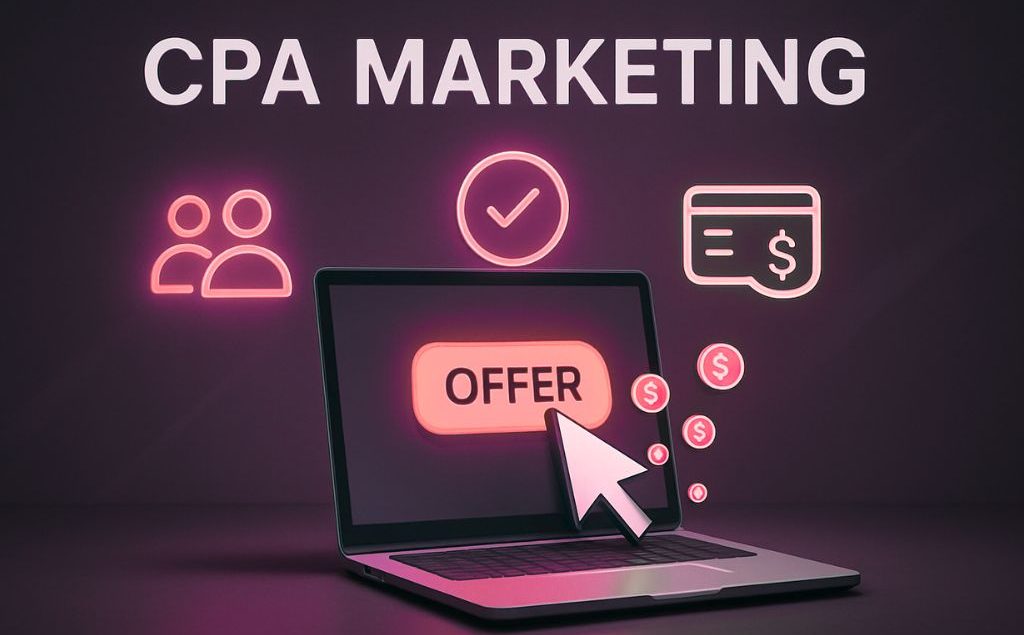
Common CPA Marketing Mistakes That Hurt Performance
Many CPA problems begin before the first visitor reaches the offer.
They come from misunderstanding what actually makes the campaign work.
Choosing offers only by payout
The payout is easy to compare, which makes it easy to overvalue.
A lower-paying offer with better audience fit, stronger conversion rates, and fewer rejected actions can outperform a much larger commission.
Ignoring the campaign rules
Generating a conversion does not automatically make it payable.
Traffic that violates the offer terms can produce real actions that are still rejected.
Read the campaign conditions before promoting.
Sending broad, poorly matched traffic
High click volume can look impressive while producing weak results.
CPA rewards completed actions, so the quality and intent of the visitors matter more than traffic volume alone.
Confusing recorded conversions with earnings
Pending conversions can be rejected or reversed.
Use approved earnings when judging the financial performance of an offer.
Ignoring the rejection rate
A campaign can appear strong at first if the dashboard records many actions.
If a large percentage later disappears, the apparent performance was misleading.
Track approval and rejection patterns over time.
Scaling paid traffic too quickly
A handful of profitable conversions can happen by chance.
Increasing spend too quickly can magnify weak targeting, poor tracking, or unstable conversion economics.
Build enough evidence before treating early results as a repeatable pattern.
Ignoring the landing page
Publishers often focus entirely on their own ad, article, email, or promotional creative.
The advertiser’s landing page still plays a major role after the click.
A mismatch between the promotion and the destination can reduce conversions even when the traffic itself is relevant.
Depending on one campaign
Offers can pause, change payout, reach volume limits, tighten requirements, or disappear.
A marketer who understands an audience has more flexibility than one whose entire strategy depends on a single campaign.
The audience and traffic skill are the durable assets.
The individual offer can change.
Conclusion: CPA Marketing Connects Promotion to Measurable Action
Cost Per Action marketing becomes much easier to understand once you stop looking at it as simply another type of affiliate commission.
It is a complete performance model built around a defined conversion.
The advertiser decides which action matters. The publisher brings the audience. Tracking connects the referral to the result. Validation determines whether the conversion qualifies. The payout rewards the approved action.
That structure creates opportunity for online marketers, but it also creates conditions that clicks alone cannot explain.
A high payout does not guarantee a strong campaign. A recorded conversion does not guarantee a commission. More traffic does not automatically create better results.
The real value of CPA marketing comes from understanding how the pieces work together.
When the offer fits the audience, the action is clear, the tracking is reliable, the rules are understood, and the economics support the traffic, CPA becomes a measurable way to connect marketing activity with customer action.

Frequently Asked Questions
What is CPA marketing in simple terms?
CPA marketing is a performance-based model where payment is connected to a predefined customer action. A publisher promotes an offer and can earn when a referred user completes the required action and the conversion qualifies.
What does CPA stand for in CPA marketing?
In this guide, CPA stands for Cost Per Action. The action may be a lead, registration, app install, trial, quote request, purchase, or another conversion defined by the advertiser.
How do CPA marketers get paid?
Publishers typically earn a fixed payout when a conversion satisfies the CPA offer’s requirements. Payments may be handled directly by the advertiser or through a CPA network.
What is a CPA offer?
A CPA offer is a campaign that specifies the action a user must complete, the payout for an approved conversion, the eligibility requirements, and the promotional rules publishers must follow.
Is CPA marketing the same as affiliate marketing?
No. Affiliate marketing describes the relationship in which a publisher promotes another company’s product or offer. CPA describes a performance model in which a specific action triggers the payout. CPA affiliate marketing is one way publishers participate in the broader CPA ecosystem.
Do you need a website for CPA marketing?
Not necessarily. Depending on the campaign, publishers may use content websites, paid advertising, email, social media, video, mobile traffic, or other approved channels. The individual offer determines which promotional methods are allowed.
Why do CPA conversions get rejected?
Conversions may be rejected because of duplicate information, invalid customer details, prohibited traffic, ineligible users, cancellations, refunds, or another condition specified by the campaign.
Can CPA marketers use paid advertising?
Yes, when the campaign permits it. Some offers restrict specific paid traffic sources, brand bidding, keywords, geographic targeting, or promotional methods, so the offer terms should be checked before spending money.
Is a higher CPA payout always better?
No. A higher payout can still produce weaker earnings if the offer converts poorly or has a low approval rate. Conversion rate, EPC, traffic cost, audience fit, and approval rate provide a more complete picture.
Is CPA marketing better than revenue share?
It depends on the offer and audience. CPA provides a defined payment for an approved action. Revenue share connects earnings to the revenue a customer generates. One can outperform the other depending on conversion behavior, customer value, payout terms, and traffic economics.

0 Comments