Introduction
Network marketing can make starting a business feel more accessible because the product, brand, ordering system, and compensation structure already exist.
For the participant, that removes some of the work involved in creating an offer from scratch. It does not remove the need to attract customers, earn trust, and build a reliable way to generate sales.
A common mistake is to treat the company itself as the marketing strategy. That can lead to copied promotional posts, constant product pitching, heavy reliance on friends and family, and an audience built around a brand the participant does not control.
The stronger approach is to think like an entrepreneur. Build attention around a market you understand, create useful content, develop your own reputation, and introduce products or the business opportunity when they genuinely fit the person in front of you.
In this guide, you’ll learn how network marketing works and how to build it with a smarter customer acquisition strategy, so the effort creates more than activity inside one company.
- Network marketing can lower the barrier to entry, but the participant still has to solve customer acquisition.
- The company provides the product and infrastructure, while the entrepreneur remains responsible for building attention, trust, and demand.
- Friends, family, and company promotional material can create early activity, but they are weak foundations for long-term growth.
- A stronger strategy builds an audience around a market or problem first, then introduces products when they fit.
- Personal brand, original content, direct audience relationships, and customer knowledge can retain value beyond one company.
- Product customers and business prospects should not be treated as the same audience.
- Systems can improve consistency, but they cannot compensate for weak demand, poor economics, or an offer people do not want.
- Business performance should be judged by customers, repeat sales, expenses, profit, and time invested rather than activity alone.
Disclaimer: I am an independent Affiliate. The opinions expressed here are my own and are not official statements. If you follow a link and make a purchase, I may earn a commission.
What Is Network Marketing?
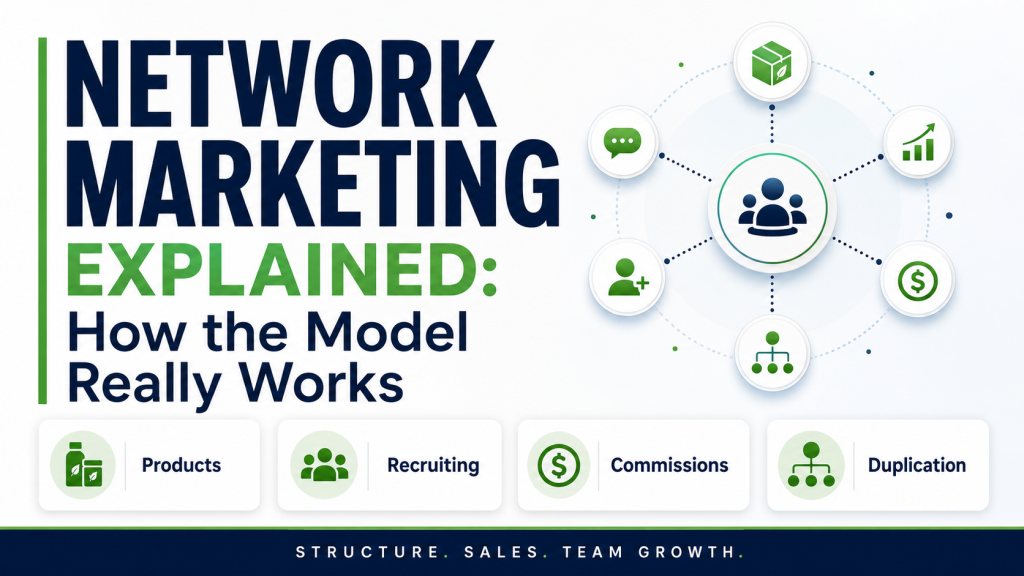
Network marketing is a sales model in which independent participants promote a company’s products or services directly to customers.
Participants may earn from their own sales and, depending on the compensation plan, from sales activity generated through a distributor network they help build.
The company usually controls the product, pricing, ordering system, fulfillment, brand standards, and compensation structure. The participant focuses on finding customers, generating sales, and sometimes supporting other distributors.
That combination can make network marketing easier to enter than building a business from scratch, but it also means much of the underlying business remains outside the participant’s control.
The Basic Business Model
At the center of network marketing is direct selling.
Instead of relying entirely on retail stores or traditional distribution channels, the company uses independent participants to introduce products to customers.
Those participants may sell through personal recommendations, content, social media, events, online channels, or other methods permitted by the company.
The business only becomes meaningful, however, when real customers want what is being sold. Distributor activity alone does not create sustainable demand.
Where the “Network” Comes From
Some participants focus primarily on retail customers.
Others also introduce new distributors who can sell products and potentially build organizations of their own.
Those relationships create the network. A participant may earn additional compensation when qualifying sales occur within that organization, depending on the company’s compensation plan.
This multi-level structure is why network marketing and multi-level marketing are often used to describe the same general business model.
Network Marketing vs. MLM: What’s the Difference?
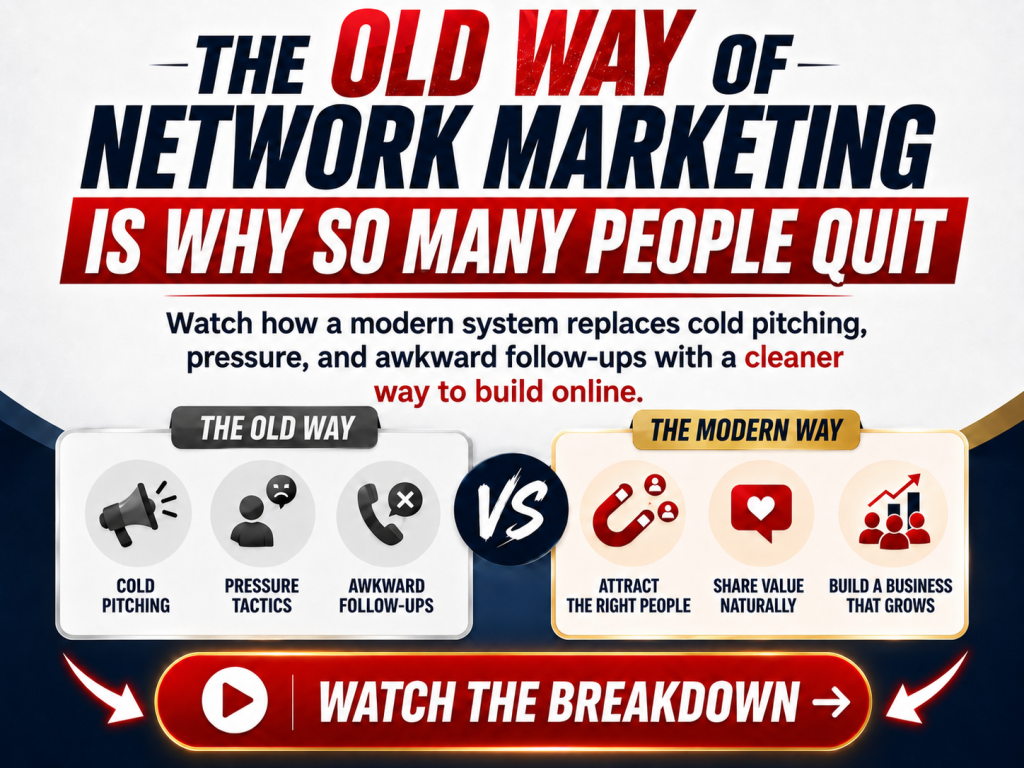
Network marketing and multi-level marketing are often used interchangeably, and in many cases they describe the same basic structure.
Both typically involve independent participants selling a company’s products or services while having the option to earn additional compensation from sales generated within a distributor organization.
The difference is usually one of emphasis rather than a separate business model.
Network marketing tends to highlight relationship-based selling and the network of distributors involved in reaching customers. Multi-level marketing, or MLM, places more emphasis on the compensation structure, where earnings can extend through multiple levels of that network.
The FTC also discusses network marketing and MLM within the same general category in its consumer guidance.
What matters most is not the label a company prefers. The more useful questions are how products are sold, what creates customer demand, and how the compensation plan rewards activity.
For a deeper look at earnings, compensation, legality, red flags, and whether the model is worth joining, see our guide to multi-level marketing.
What Network Marketing Is Not
Network marketing comes with several assumptions that can distort how the business is evaluated.
Some make the model sound easier than it is. Others reduce complicated legal or business questions to simple labels.
Clearing up those misconceptions makes it easier to understand what participation actually involves.
It Is Not Automatically a Pyramid Scheme
Network marketing and pyramid schemes can share visible features, including recruitment and multiple levels of participants.
That does not make them the same thing.
A network marketing structure is not automatically an illegal pyramid scheme. It is also not automatically legitimate because real products are being sold.
The FTC evaluates how the compensation structure actually operates, including what activities it rewards, participant purchasing, recruiting incentives, and genuine product demand. Its business guidance explains that the analysis depends on the facts of the particular program.
The important question is not simply whether a product exists. It is whether the business and compensation structure are supported by genuine customer demand rather than incentives that depend too heavily on activity inside the distributor network.
Passive Income Is Not Built In
A distributor network can create leverage, but that does not make the income passive by default.
Customers may stop buying. Team members can leave. Qualification requirements may need to be maintained. Sales activity can rise or fall.
The amount of ongoing work depends on how the business is structured and how much activity is required to keep it producing.
Calling network marketing passive income too early can hide the work behind the result.
Joining Does Not Mean Owning the Business
Participants may operate independently, but they do not control the company behind the opportunity.
The parent company typically determines major parts of the system, including the products, pricing, compensation plan, brand rules, and distributor policies.
That can reduce the work required to get started.
It also means someone else can change important parts of the business you are building.
Friends and Family Are Not a Complete Marketing Strategy
Personal relationships can create early conversations because trust already exists.
They are still a limited market.
Someone you know is not automatically a good customer, and a friend or relative should not become a prospect simply because they are easy to contact.
Long-term growth requires reaching people because they care about the problem, product category, or subject you serve.
That is where network marketing becomes a marketing problem, not just a recruiting exercise.

The Real Marketing Work Starts After You Join
Joining a network marketing company gives you something to sell.
It does not give you a market.
Customers still need a reason to notice the product, understand its relevance, trust the person presenting it, and decide that it is worth buying.
That is where many participants confuse activity with marketing. Posting company graphics, repeating promotional claims, or contacting more people can create movement without creating meaningful demand.
A stronger approach begins with the audience rather than the company.
Instead of asking how to promote a product more often, focus on who is most likely to need it, what those people already care about, and how you can become useful before asking for a sale.
Once that shift happens, network marketing starts to look less like repeated promotion and more like customer acquisition.
The next step is choosing a market you understand well enough to serve consistently.

Choose a Market Before You Promote a Product
Network marketing becomes easier to approach strategically when the audience comes before the offer.
Starting with the product often leads to broad promotion because the participant is trying to find anyone who might buy. Starting with a defined market creates a clearer path for content, positioning, and customer acquisition.
The goal is not to narrow the audience for the sake of being specific. It is to understand a group well enough to know what they care about, what problems they are trying to solve, and where the product may genuinely fit.
Define Who You Want to Reach
A market such as “people who want better health” is too broad to guide useful marketing.
A clearer audience gives you something concrete to work with.
For example, a participant selling fitness-related products might focus on busy professionals trying to stay consistent with training, beginners learning how to build healthier routines, or adults looking for practical ways to support recovery.
Those groups may overlap, but their questions and priorities are different.
The better you understand the audience, the easier it becomes to create content that feels relevant instead of generic.
Understand the Problems They Already Care About
People rarely wake up wanting to learn about a network marketing company.
They are more likely to care about a problem, goal, frustration, or decision that already exists in their life.
Someone interested in fitness might be trying to improve consistency, plan meals, recover more effectively, or make better use of limited training time.
Those concerns create useful marketing topics before any product enters the conversation.
This also helps separate genuine demand from distributor enthusiasm.
Match the Product to a Genuine Need
Once the audience and its problems are clear, the product has to earn its place.
A strong fit exists when the offer addresses something the customer already values and can understand without needing the business opportunity attached to it.
That is different from forcing every problem to lead back to whatever the company happens to sell.
The compensation plan may give the participant a reason to promote a product. The customer still needs an independent reason to buy it.
Build a Brand People Have a Reason to Follow
The parent company already has a brand.
Your job is not to become a smaller copy of it.
A personal brand gives people a reason to pay attention to you specifically, even when several other distributors offer the same products.
That brand can grow around your experience, perspective, content, communication style, and understanding of the market you serve.
Done well, it creates something the company cannot build on your behalf: a reputation people associate with your name.
Develop a Recognizable Point of View
Being recognizable does not require inventing a persona.
It means becoming consistent about the kind of value people can expect from you.
One person might become known for simplifying fitness for beginners. Another may focus on practical routines for busy professionals. Someone else might specialize in detailed product demonstrations or straightforward comparisons.
The subject can vary.
What matters is giving the audience a clear reason to remember who helped them.
Create Original Content Around the Market
Corporate graphics and prepared posts can save time, but they rarely differentiate one distributor from another.
Original content gives your perspective somewhere to show up.
You can explain common problems, answer questions, demonstrate processes, share lessons from experience, or help people compare options.
The content should still make sense when the company name is removed.
That is a useful test of whether you are building your own presence or simply extending the parent brand.
Give Your Audience Value Beyond the Product
An audience needs more than repeated offers.
People may follow because they want useful information, clearer explanations, practical ideas, or a perspective they trust.
That creates room for a relationship before someone is ready to buy.
When every post leads directly to a product pitch, anyone who is not currently shopping has little reason to stay engaged.
Useful content keeps the relationship broader than the transaction.
Own Some of the Relationship With Your Audience
Social media can help you reach people, but the platform controls the account environment.
The network marketing company controls its own customer systems.
Assets such as a website, email list, original content library, and direct audience relationships can give you more independence.
You still need to follow company policies and applicable marketing rules.
The advantage is strategic: part of what you build remains connected to you rather than existing entirely inside someone else’s platform or brand.
Content That Attracts the Right People
Content gives network marketers a way to reach people before a direct sales conversation begins.
The strongest material does more than mention a product. It helps the audience understand a problem, evaluate an option, or make a better decision.
That creates attention around relevance instead of promotion alone.
Educate Around Problems and Questions
Useful content starts with what the audience is already trying to understand.
A skincare audience may want to know how to build a simple routine, what different ingredients do, or how to choose between product types.
Someone interested in fitness might care about consistency, recovery, meal planning, or training with limited time.
Answering those questions gives people a reason to discover and follow you even when they are not ready to buy.
Show Products in Real Context
A product becomes easier to evaluate when people can see how it fits into everyday use.
Demonstrations, routines, walkthroughs, and practical examples can explain more than a promotional graphic.
Instead of repeatedly saying that a product is useful, show where it fits, how it is used, and what someone should understand before considering it.
That gives the audience information they can actually use.
Share Experience Without Overstating Results
Personal experience can make content more specific and credible.
You can explain why you tried something, how you used it, what you noticed, and where it did or did not fit your expectations.
The key is keeping one person’s experience in proportion.
A result you experienced does not establish what every customer should expect.
That distinction becomes especially important when discussing health, income, or other outcomes that can easily be exaggerated.
Help People Make Better Decisions
Not every piece of content needs to push toward a sale.
Some of the most useful material helps people understand whether a product is right for them at all.
That can include comparisons, use cases, limitations, common mistakes, or situations where another option may make more sense.
Helping someone decide against a poor fit can be just as valuable as helping the right customer move forward.
Over time, that kind of restraint can make the audience more likely to see your content as guidance rather than constant promotion.
Promote Products Without Making Every Post a Pitch
Selling is part of network marketing, but constant promotion can make the audience tune out.
The goal is not to avoid offers. It is to make them more relevant by surrounding them with enough useful context that people understand why the product matters.
A strong promotional strategy gives the audience something to learn, consider, or evaluate before asking them to buy.
Lead With Relevance Instead of Company Hype
Customers usually care less about the company announcement than the problem the product may help them solve.
Start with that connection.
Explain what the product does, who it may suit, how it fits into a routine, or what someone should understand before considering it.
Corporate recognition, rank announcements, and promotional slogans may matter inside the distributor network. They rarely answer the customer’s most important questions.
Demonstration Can Do More Than Repetition
Repeated praise provides little information.
A demonstration can show how the product works in practice.
That might include a routine, walkthrough, setup, application, comparison, or realistic use case.
The product should become easier to evaluate because the content explains something useful, not because the same claims appear more often.
Give Nonbuyers a Reason to Keep Following
Most people who see your content will not be ready to purchase immediately.
Some may be interested in the broader subject long before they care about a specific product.
Educational posts, practical advice, comparisons, and relevant experiences give those people a reason to stay connected.
When the right need eventually appears, the product can enter an existing relationship instead of interrupting a stranger with a pitch.
Keep Product Claims Accurate
Enthusiasm does not make a claim true.
Avoid repeating health, performance, financial, or other objective claims simply because they appear in team conversations or another distributor’s content.
Describe only what you can support, distinguish personal experience from results others should expect, and stay within the company’s marketing requirements.
The FTC requires advertising claims to be truthful and supported by appropriate evidence. Its advertising guidance explains those basic requirements.
Your relationship with the network marketing company may also need to be clearly disclosed when that connection would not otherwise be obvious to the audience. The FTC’s endorsement guidance provides more detail on endorsements and material connections.
Health, wellness, performance, and income claims deserve particular care because personal experience alone does not establish what other people should expect.
Credibility is more valuable than making the product or opportunity sound stronger than the evidence allows.
Reach Customers Beyond Your Personal Network
Friends, relatives, coworkers, and existing contacts can create early conversations because familiarity already exists.
They are not a scalable market.
Long-term growth requires reaching people who care about the problem or product category even if they have never met you.
That shift changes the business from personal prospecting into actual customer acquisition.
Use Content to Expand Your Reach
Useful content can introduce you to people outside your immediate circle.
Search, social media, video, newsletters, communities, and other channels can all create discovery when the content matches what the audience already wants to learn.
The best channel is not necessarily the largest one.
It is the one where you can consistently reach relevant people with a format that suits both the audience and your strengths.
Different Channels Create Different Relationships
Someone who sees a short social post has a different level of interest from someone who reads several articles, joins an email list, or returns to your content repeatedly.
Those signals matter.
A casual viewer may need more context. A subscriber has already chosen a closer relationship. A repeat customer has shown something stronger still.
Treating every contact the same usually leads to poor timing and irrelevant offers.
Referrals Can Extend Existing Trust
Satisfied customers can become a source of new business without joining the distributor network.
A referral carries more weight when it grows from genuine satisfaction rather than pressure.
Make the customer experience strong enough that recommending you feels natural.
That creates reach through trust instead of constant prospecting.
Keep Personal Relationships Separate When There Is No Fit
Not every friend should become a lead.
Someone can support you without buying from you, and a relative can remain outside the business entirely.
Respecting that boundary protects the relationship and keeps the marketing focused on people with actual interest.
A stronger network marketing business expands because the market is relevant, not because the contact list is long.
Turn Attention Into a Customer Acquisition System
Reach alone does not create a business.
People can watch, read, follow, and even engage without ever becoming customers. A customer acquisition system gives that attention somewhere to go.
The process does not need to be complicated. It needs to move people from discovery toward a relevant next step without treating every interaction like an immediate sales opportunity.
A simple path might look like this:
Discovery → useful content → continued relationship → relevant offer → customer
Choose a Primary Discovery Channel
Trying to build everywhere at once usually creates scattered effort.
Choose one primary channel where your audience already spends time and where you can consistently create useful material.
That might be search, short-form video, YouTube, a social platform, local networking, referrals, or another channel that fits the market.
Once that channel begins producing meaningful attention, additional channels can support it rather than compete with it.
Create a Direct Way to Stay Connected
Not everyone who discovers you will be ready to buy.
A direct contact channel gives interested people a way to continue the relationship.
An email list is one option. A useful newsletter, guide, educational series, or community can also give people a reason to stay connected.
The value comes from permission and relevance.
Someone who chooses to hear from you again is different from someone whose contact information was simply added to a prospecting list.
Follow Up Based on Interest
Different actions signal different intentions.
Someone reading educational content may need more information. A person asking about a product is closer to a buying decision. Another person may be curious about the business opportunity.
Follow-up should reflect those differences.
Sending the same message to everyone may be easier to automate, but it ignores what each person actually showed interest in.
Make the Offer When It Fits
A good acquisition system eventually leads to an offer.
The difference is that the offer comes after enough context exists for the person to understand why it may be relevant.
A product can be introduced when it addresses a genuine need. The business opportunity belongs in a different conversation with someone who has shown interest in that possibility.
The system should make the next step clearer, not force every person toward the same outcome.
Where the Business Opportunity Fits
Network marketing usually creates two different audiences.
Some people want the product.
Others may be interested in selling it, earning commissions, or building a distributor organization.
Those groups can overlap, but they should not be treated as the same audience.
Customers and Business Prospects Are Different
A customer can genuinely like the product without wanting anything to do with the business opportunity.
That relationship should be respected.
Trying to recruit every satisfied buyer can weaken trust and turn a straightforward customer experience into something the person never asked for.
The opportunity makes more sense when someone shows interest in the business itself.
Let Interest Create the Opening
A natural conversation might begin when someone asks how you earn, what the work involves, or whether joining is possible.
Those questions create context.
You do not need to force the business opportunity into every product conversation.
Relevance produces a better starting point than assuming everyone should want both the product and the income opportunity.
Explain the Work, Not Just the Lifestyle
A serious opportunity conversation should explain what participation actually requires.
That includes customer acquisition, selling, follow-up, recruiting where applicable, expenses, and the basic compensation structure.
Lifestyle imagery may attract attention, but it does not help someone understand the business.
Clear expectations are more useful than an idealized picture of what success could look like.
Separate Possibility From Expectation
A top earner can show what happened for one person.
That does not establish what a new participant should reasonably expect.
The same applies to unusual rank advancement, large checks, or rapid growth stories.
Present exceptional outcomes as exceptions rather than benchmarks.
Income claims should be based on results that can be supported rather than exceptional examples that create unrealistic expectations.
That caution is supported by broader income data. In its review of 70 publicly available MLM income disclosure statements, the FTC found that most participants represented in those disclosures received $1,000 or less per year, and those figures may not account for expenses. In at least 17 of the MLMs reviewed, most participants received no payments. The FTC’s income disclosure analysis explains those findings in more detail.
Those results do not establish what every company or participant will earn.
They do show why someone considering the opportunity needs enough information to evaluate the work and economics rather than relying on unusual results at the top.

Run Network Marketing Like a Business Owner
Network marketing can generate plenty of activity without generating a strong business.
Posts, messages, team growth, and rank can all look productive.
The more useful test is whether those efforts are creating customers, repeat purchases, and profit.
Track Leads and Actual Customers
Start by separating attention from business results.
A lead has shown interest.
A customer has purchased.
Knowing the difference helps you see whether your marketing is producing real demand or simply more conversations.
Measure Repeat Purchasing
A first sale matters.
Repeat purchases can reveal whether customers continue buying because the product still solves a problem for them.
That pattern is especially important in businesses built around recurring or consumable products.
If most sales depend on constantly finding new buyers, the acquisition system has to work much harder.
Know What Customer Acquisition Costs
Marketing has a cost even when you are not running paid ads.
Software, samples, events, content production, tools, and your own time can all contribute to acquiring a customer.
Tracking those costs gives you a clearer view of whether the sales process is economically worthwhile.
Revenue alone cannot answer that.
Account for Every Business Expense
Commissions are not the same as profit.
Subtract what it takes to operate.
That may include product purchases, shipping, travel, software, event fees, marketing, advertising, and other recurring costs.
The number that matters is what remains after those expenses are paid.
Compare Net Income With the Time Invested
Time is part of the investment.
Two people can earn the same amount while putting in very different levels of effort.
Tracking hours alongside net income helps reveal whether the business is becoming more efficient or simply consuming more time.
That makes the decision more practical.
The goal is not to look busy.
It is to understand whether the business is producing a return that justifies the resources going into it.

Common Network Marketing Mistakes
Weak network marketing strategies often create plenty of motion without building much lasting value.
The problem is rarely a lack of activity. More often, the activity is aimed at the wrong target.
Avoiding the mistakes below can make the business easier to evaluate and less dependent on tactics that are difficult to sustain.
Making the Parent Company Your Entire Identity
Company branding can support the sale.
It should not become the only reason people know who you are.
When every post, profile, and conversation revolves around one company, much of the attention you generate strengthens an asset you do not control.
Your own positioning becomes harder to see.
Copying Corporate or Upline Content
Templates and prepared materials can save time.
Copying them without adding your own perspective makes it difficult to stand out from other distributors selling the same products.
Original explanations, demonstrations, experiences, and insights give people a reason to follow you specifically.
Use company resources as support, not as your entire content strategy.
Depending on Cold Outreach
Cold messages can create conversations, but they are difficult to scale as the main acquisition method.
Every new prospect requires another interruption.
Content, referrals, search visibility, and audience-building create a different path where some people discover you before you contact them.
That changes the conversation from pure prospecting to existing interest.
Turning Every Conversation Into Recruitment
Not every customer wants a business opportunity.
Pushing recruitment into unrelated conversations can make the original product interest feel secondary.
A stronger approach keeps the two paths separate.
Let product customers evaluate the product, and introduce the opportunity when someone shows genuine interest in the business.
Automating Messages Instead of Building Relevance
Automation can improve organization.
It cannot make an irrelevant message useful.
A CRM may help track follow-up. Email sequences can deliver information consistently. Scheduling tools can reduce repetitive work.
None of those systems replaces understanding what the person actually wants.
Mistaking Activity for Business Results
Posting more does not automatically create more customers.
Sending more messages does not guarantee better conversion.
Growing a team does not necessarily mean the business is becoming more profitable.
The useful measures are closer to the economics: customer growth, repeat purchases, acquisition cost, expenses, net income, and time invested.
Repeating Claims You Cannot Support
Enthusiasm can spread quickly through a distributor network.
So can inaccurate information.
Product claims, earnings claims, and customer results should not be repeated simply because they came from an upline, team call, or another distributor.
Your credibility depends on what you choose to say under your own name.
A stronger business is built on claims the audience can trust, not promises designed to make the opportunity sound more impressive.

Build Assets That Outlast One Company
A network marketing opportunity can be temporary.
The skills, audience, content, and market knowledge you develop do not have to be.
That distinction matters because the parent company controls parts of the business you cannot fully protect, including products, policies, compensation, and distributor rules.
A stronger approach is to build value that remains connected to you even if the company changes or you eventually move on.
Your Reputation Can Travel With You
People may first discover you because of a product.
They should have a reason to remember you beyond it.
A reputation built around useful explanations, practical experience, and consistent judgment can remain valuable across different products or business models.
That gives you more continuity than relying entirely on one company name.
Original Content Keeps Its Value
Useful content can continue working after the day it is published.
An article, video, tutorial, comparison, or email series can attract people repeatedly if it addresses a lasting problem.
That makes original content more durable than short-lived promotional material.
Over time, a library of useful content can become one of the strongest assets you build.
Direct Audience Relationships Create More Control
Social platforms and company systems can help you reach people.
They also operate under rules you do not control.
A website, email list, and other direct channels can give you a more stable way to stay connected with people who have chosen to hear from you.
The goal is not complete independence.
It is reducing the risk of having every important relationship tied to one platform or one company.
Marketing Skills Transfer to Other Businesses
Customer acquisition is useful far beyond network marketing.
Learning how to create content, understand an audience, follow up with leads, explain an offer, and measure conversion can support many other business models.
Those skills may later apply to consulting, affiliate marketing, ecommerce, digital products, freelancing, or a business of your own.
The company may change.
What you learn does not disappear with it.
Customer Knowledge Becomes an Entrepreneurial Asset
Repeated conversations with customers reveal patterns.
You begin to notice common questions, objections, buying triggers, frustrations, and reasons people hesitate.
That knowledge can improve your current marketing, but its value goes further.
Understanding a market can help shape future content, offers, services, or products.
In that sense, one of the most valuable things you can build in network marketing is not just a downline.
It is a deeper understanding of the people you know how to serve.
Conclusion
Network marketing can make starting easier because the product, infrastructure, and compensation system already exist.
What it cannot provide automatically is a market.
Customers still need to be attracted, understood, and served. That requires more than posting company promotions, contacting everyone you know, or copying what an upline is doing.
A stronger approach starts with the audience.
Choose a market you understand. Create useful content around real problems. Build a reputation that belongs to you. Develop customer acquisition channels you can control more directly. Introduce products when they genuinely fit, and keep the business opportunity separate until someone has a reason to consider it.
Then measure the economics.
Sales, repeat purchases, expenses, net income, and time invested reveal far more than activity alone.
The larger goal is not simply to become better at promoting one network marketing company. It is to become better at attracting and serving a market while building skills, relationships, content, and business assets that can remain valuable wherever you go next.
Frequently Asked Questions
What Is Network Marketing in Simple Terms?
Network marketing is a business model in which independent participants sell a company’s products or services directly to customers.
Depending on the compensation plan, participants may also earn from qualifying sales activity generated through a distributor network they help build.
Is Network Marketing the Same as MLM?
The terms are commonly used interchangeably.
Network marketing often emphasizes the distributor network and relationship-based selling, while multi-level marketing highlights the compensation structure across multiple levels.
In practice, the underlying model is often the same.
How Does Network Marketing Differ From a Pyramid Scheme?
A legitimate network marketing business depends on genuine product or service sales.
Pyramid schemes rely primarily on recruiting participants and the money generated through that recruitment.
Having a real product does not automatically make a company legitimate. The compensation structure and actual business practices still matter.
Do You Have to Recruit People in Network Marketing?
Not necessarily.
Some compensation plans allow participants to earn through personal retail sales without building a downline.
Recruiting may become more important if someone wants access to team-based commissions, ranks, or bonuses, depending on the company.
Can You Build Network Marketing Without Friends and Family?
Yes.
Personal contacts may create early conversations, but they do not need to become the foundation of the business.
Content, search visibility, referrals, social media, communities, partnerships, and other acquisition channels can help reach people based on relevance rather than an existing relationship.
Should Network Marketers Build a Personal Brand?
A personal brand can give people a reason to follow you instead of simply following the company.
It can also help you build reputation, content, audience relationships, and market knowledge that may remain useful if you later change products or companies.
Company branding rules still apply when its products or trademarks are involved.
What Kind of Content Works for Network Marketing?
Useful content usually starts with the audience’s problems and interests.
Educational posts, demonstrations, tutorials, comparisons, personal experiences, and answers to common questions can all create value before a sales conversation begins.
The strongest content gives people something useful even when they are not ready to buy.
Is Social Media Necessary for Network Marketing?
No.
Social media is one customer acquisition channel among many.
Search, websites, email, referrals, local networking, communities, partnerships, and events can also help reach potential customers.
The better choice depends on where the audience spends time and how you can reach them consistently.
How Do Network Marketers Find Customers?
Customer acquisition can come from content, referrals, search, social media, partnerships, communities, direct outreach, or other relevant channels.
The important distinction is whether those methods consistently reach people who already care about the problem or product category being served.
A larger contact list is not automatically a better market.
Should You Promote the Product or the Business Opportunity First?
Start with the interest the person has actually shown.
Someone researching a product should be able to evaluate that product without being pushed toward recruitment.
The business opportunity belongs in the conversation when a person shows genuine interest in selling, earning commissions, or understanding how participation works.
Can Network Marketing Create Passive Income?
Not automatically.
A distributor network can create leverage, but customers may stop buying, participants can leave, and qualification requirements may need ongoing attention.
Any claim of passive income should be compared with the actual work required to maintain the business.
What Numbers Matter Most in a Network Marketing Business?
Focus on numbers that show business performance.
Useful measures include customer growth, repeat purchases, conversion rate, acquisition costs, operating expenses, net income, and time invested.
Followers, messages, rank, and team size can provide context, but they do not replace profitability.

4 Comments
Affiliate Marketing vs MLM: Don’t Choose Until You Read This - Ismel Guerrero. · May 18, 2025 at 8:29 am
[…] Next: Read our High-Ticket Affiliate Marketing Guide and check out our Network Marketing Guide. […]
Top Network Marketing Companies in 2025 (Ranked & Reviewed) - Ismel Guerrero. · May 18, 2025 at 11:19 am
[…] Next: Check out our Full Network Marketing Guide. […]
CRM for Network Marketing: Tools That Actually Help You Scale - Ismel Guerrero. · May 18, 2025 at 4:51 pm
[…] Next: Read our Network Marketing Guide Here. […]
Network Marketing Funnel: The Smartest Way to Grow in 2025 - Ismel Guerrero. · May 31, 2025 at 6:42 pm
[…] out our Network Marketing Guide and the Top Network Marketing Companies […]